Building Blocks
Questa sezione contiene prodotti fondamentali per la sintesi di composti organici e biologici. Building blocks sono i materiali di partenza essenziali utilizzati per costruire molecole complesse attraverso varie reazioni chimiche. Svolgono un ruolo critico nella scoperta di farmaci, nella scienza dei materiali e nella ricerca chimica. Presso CymitQuimica, offriamo una gamma diversificata di building blocks di alta qualità per supportare le tue ricerche innovative e progetti industriali, assicurandoti di avere i componenti essenziali per una sintesi di successo.
Sottocategorie di "Building Blocks"
- Acidi boronici e derivati dell'acido boronico(5.756 prodotti)
- Building Blocks Chirali(1.242 prodotti)
- Building Blocks Idrocarburici(6.095 prodotti)
- Building Blocks organici(61.037 prodotti)
Trovati 196139 prodotti di "Building Blocks"
Ordinare per
Purezza (%)
0
100
|
0
|
50
|
90
|
95
|
100
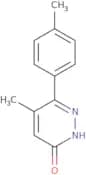
5-Methyl-6-(4-methylphenyl)-2,3-dihydropyridazin-3-one
CAS:<p>Versatile small molecule scaffold</p>Formula:C12H12N2OPurezza:Min. 95%Peso molecolare:200.24 g/molThiomorpholine-3-thione
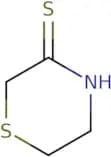
CAS:<p>Thiomorpholine-3-thione is a crystalline compound that has the molecular formula C8H6N2S. It belongs to the group of thiomorpholine derivatives and has been shown to interact with ligands and other compounds in the environment. Thiomorpholine-3-thione has been found to act as a ligand for nitrobenzene, diamagnetic, halogen, and spectra. It can also form molecular complexes with halides and yellow inorganic ions.</p>Formula:C4H7NS2Purezza:Min. 95%Peso molecolare:133.2 g/mol6-(Thiophen-2-yl)hexanoic acid
CAS:<p>Versatile small molecule scaffold</p>Formula:C10H14O2SPurezza:Min. 95%Peso molecolare:198.28 g/mol3-(3-Chloropropyl)pyridine
CAS:<p>Versatile small molecule scaffold</p>Formula:C8H10ClNPurezza:Min. 95%Peso molecolare:155.62 g/mol(e)-3-cyclopropyl-acrylic acid ethyl ester
CAS:<p>Versatile small molecule scaffold</p>Formula:C8H12O2Purezza:Min. 95%Peso molecolare:140.18 g/molEthyl 3-cyclopropylbut-2-enoate
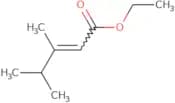
CAS:<p>Versatile small molecule scaffold</p>Formula:C9H14O2Purezza:Min. 95%Peso molecolare:154.21 g/molEthyl 3,4-dimethylpent-2-enoate
CAS:<p>Versatile small molecule scaffold</p>Formula:C9H16O2Purezza:Min. 95%Peso molecolare:156.22 g/mol3-[(4-Methoxyphenyl)amino]propanamide
CAS:<p>Versatile small molecule scaffold</p>Formula:C10H14N2O2Purezza:Min. 95%Peso molecolare:194.23 g/mol3-(Phenylamino)propanamide
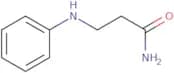
CAS:<p>3-(Phenylamino)propanamide is an alkali agent that is used to hydrolyze esters and dihydrouracils. 3-(Phenylamino)propanamide is a potent inhibitor of the enzyme uracil-DNA glycosylase, which repairs DNA damage caused by UV light or other forms of radiation. This drug also inhibits the enzyme DNA polymerase, which is needed to replicate damaged DNA. The inhibition of these enzymes leads to cell death.</p>Formula:C9H12N2OPurezza:Min. 95%Peso molecolare:164.2 g/molN,5-Dimethyl-1,3-thiazolidin-2-imine
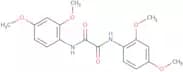
CAS:<p>Versatile small molecule scaffold</p>Formula:C5H10N2SPurezza:Min. 95%Peso molecolare:130.21 g/molN,N'-Bis(2,4-dimethoxyphenyl)ethanediamide
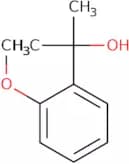
CAS:<p>Versatile small molecule scaffold</p>Formula:C18H20N2O6Purezza:Min. 95%Peso molecolare:360.4 g/mol2-(2-Methoxyphenyl)propan-2-ol
CAS:<p>Versatile small molecule scaffold</p>Formula:C10H14O2Purezza:Min. 95%Peso molecolare:166.22 g/molrac-2-[(1R,2S)-2-Phenylcyclopropyl]acetic acid
CAS:<p>Versatile small molecule scaffold</p>Formula:C11H12O2Purezza:Min. 95%Peso molecolare:176.2 g/molEthyl 3-[(2-aminophenyl)amino]-2-cyanoprop-2-enoate
CAS:<p>Versatile small molecule scaffold</p>Formula:C12H13N3O2Purezza:Min. 95%Peso molecolare:231.25 g/mol3-Bromobut-3-enoic acid
CAS:<p>Versatile small molecule scaffold</p>Formula:C4H5BrO2Purezza:Min. 95%Peso molecolare:164.99 g/molEthyl 3-bromobut-3-enoate
CAS:<p>Ethyl 3-bromobut-3-enoate is a synthetic compound that can be used to synthesize a variety of organic compounds. It is prepared by the reaction of ethyl bromoacetate and butyraldehyde in the presence of an acid catalyst. This product has been shown to have anticancer activity against human epidermoid carcinoma cells. The reactivity of this compound has been demonstrated using NMR spectroscopy, which showed that it undergoes highly stereoselective reactions with chloride ions. Ethyl 3-bromobut-3-enoate also reacts rapidly with imines and tissue culture cells, making it useful for research into these types of reactions.</p>Formula:C6H9BrO2Purezza:Min. 95%Peso molecolare:193.04 g/mol4-(3-Methyl-1-benzothiophen-2-yl)-1,3-thiazol-2-amine
CAS:<p>Versatile small molecule scaffold</p>Formula:C12H10N2S2Purezza:Min. 95%Peso molecolare:246.4 g/mol2H-Pyrido[2,3-d][1,3]oxazine-2,4(1H)-dione
CAS:<p>2H-Pyrido[2,3-d][1,3]oxazine-2,4(1H)-dione is a molecule with the chemical formula C8H7N3O2. It has an exothermic reaction with amines and hydroxyl groups. The carbanion of 2H-pyrido[2,3-d][1,3]oxazine-2,4(1H)-dione is a nucleophile that can be used to form organic compounds with alkali metals such as sodium hypochlorite or triphosgene. This molecule also acts as a diagnostic agent for nitro compounds by forming a red dye called 2h-pyrido[2,3-d][1,3]oxazine-2,4(1H)-dione dianion.</p>Formula:C7H4N2O3Purezza:Min. 95%Peso molecolare:164.12 g/molPyrido[2,3-d]pyrimidine-2,4(1h,3h)-dione
CAS:<p>Pyrido[2,3-d]pyrimidine-2,4(1h,3h)-dione is a synthetic molecule that has been shown to inhibit the production of necrosis factor alpha (TNFα) in human monocytes. Pyrido[2,3-d]pyrimidine-2,4(1h,3h)-dione has also been shown to cause DNA cleavage mediated by an aldehyde group. This chemical is being developed as an inhibitor of tumor necrosis factor and other cytokines with similar activities. Pyrido[2,3-d]pyrimidine-2,4(1h,3h)-dione is under investigation for its potential to prevent breast cancer metastasis. The molecule has been optimized for binding affinity and selectivity against TNFα and other cytokines with similar activity. Pyrido[2,3-d]pyrimidine-2,4(1h,3h)-d</p>Formula:C7H5N3O2Purezza:Min. 95%Peso molecolare:163.14 g/mol1-Cycloheptylpiperazine
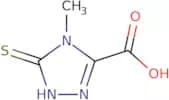
CAS:<p>1-Cycloheptylpiperazine is a drug substance that can be used as an active ingredient in medicines. It is used to treat inflammatory diseases, such as psoriasis, and neurodegenerative diseases, such as Parkinson's disease. 1-Cycloheptylpiperazine has a liposomal formulation and is soluble in organic solvents. The compound has been shown to be bioactive when administered at high doses and may have therapeutic effects on cardiovascular diseases, cancer and adp-ribose metabolism.</p>Formula:C11H22N2Purezza:Min. 95%Peso molecolare:182.31 g/mol4-Methyl-5-sulfanyl-4H-1,2,4-triazole-3-carboxylic acid
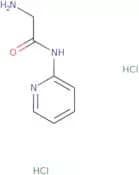
CAS:<p>Versatile small molecule scaffold</p>Formula:C4H5N3O2SPurezza:Min. 95%Peso molecolare:159.17 g/mol2-Amino-N-(pyridin-2-yl)acetamide dihydrochloride
CAS:<p>Versatile small molecule scaffold</p>Formula:C7H11Cl2N3OPurezza:Min. 95%Peso molecolare:224.08 g/mol3-Amino-N-(pyridin-3-yl)propanamide dihydrochloride
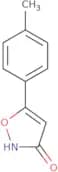
CAS:<p>Versatile small molecule scaffold</p>Formula:C8H13Cl2N3OPurezza:Min. 95%Peso molecolare:238.11 g/mol5-(4-Methylphenyl)-1,2-oxazol-3-ol
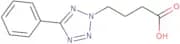
CAS:<p>Versatile small molecule scaffold</p>Formula:C10H9NO2Purezza:Min. 95%Peso molecolare:175.18 g/mol4-(5-Phenyl-2H-1,2,3,4-tetrazol-2-yl)butanoic acid
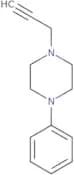
CAS:<p>Versatile small molecule scaffold</p>Formula:C11H12N4O2Purezza:Min. 95%Peso molecolare:232.24 g/mol1-phenyl-4-(prop-2-yn-1-yl)piperazine
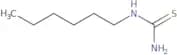
CAS:<p>1-phenyl-4-(prop-2-yn-1-yl)piperazine is a dihalogenated compound with an azide substituent. It was first synthesized from potassium t-butoxide and cyclopropane in the presence of acetic acid. The synthesis was then completed by adding the 1,4-dihaloethane to the intermediate. This reaction proceeds via a sequential, two step cycloaddition reaction that produces a triazole ring system. This compound has been shown to be effective against Giardia lamblia trophozoites and Coccidia trophozoites. 1-phenyl-4-(prop-2-yn-1-yl)piperazine also has antihistamine activity, which may be due to its inhibition of histamine release from mast cells or basophils. It is also capable of inhibiting proliferation of human prostate cancer cells in culture at low concentrations and can induce apoptosis</p>Formula:C13H16N2Purezza:Min. 95%Peso molecolare:200.27 g/mol1-Hexyl-2-thiourea
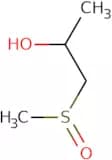
CAS:<p>1-Hexyl-2-thiourea is an aromatic hydrocarbon that has been used as an antidiabetic agent, although its mechanism of action is not well defined. This drug binds to the carboxy group in the receptor site of amines and blocks their activity, which may be related to its antidepressant effects. The reactive nature of 1-hexyl-2-thiourea means it can react with other compounds to form a variety of products, including pharmaceutical preparations.</p>Formula:C7H16N2SPurezza:Min. 95%Peso molecolare:160.28 g/mol1-Methanesulfinylpropan-2-ol
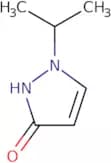
CAS:<p>Versatile small molecule scaffold</p>Formula:C4H10O2SPurezza:Min. 95%Peso molecolare:122.19 g/mol1-Isopropyl-1,2-dihydro-3H-pyrazol-3-one
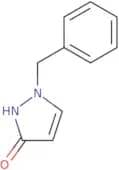
CAS:<p>Versatile small molecule scaffold</p>Formula:C6H10N2OPurezza:Min. 95%Peso molecolare:126.16 g/mol1-Benzyl-2,3-dihydro-1H-pyrazol-3-one
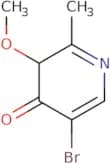
CAS:<p>Versatile small molecule scaffold</p>Formula:C10H10N2OPurezza:Min. 95%Peso molecolare:174.2 g/mol5-bromo-3-methoxy-2-methyl-1,4-dihydropyridin-4-one
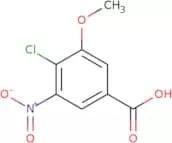
CAS:<p>Versatile small molecule scaffold</p>Formula:C7H8BrNO2Purezza:Min. 95%Peso molecolare:218.05 g/mol4-Chloro-3-methoxy-5-nitrobenzoic acid
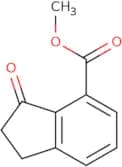
CAS:<p>Versatile small molecule scaffold</p>Formula:C8H6ClNO5Purezza:Min. 95%Peso molecolare:231.59 g/molMethyl 3-oxo-2,3-dihydro-1H-indene-4-carboxylate
CAS:<p>Versatile small molecule scaffold</p>Formula:C11H10O3Purezza:Min. 95%Peso molecolare:190.19 g/mol(3S,8aS)-3-(Hydroxymethyl)-octahydropyrrolo[1,2-a]piperazine-1,4-dione
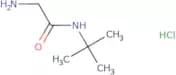
CAS:<p>Versatile small molecule scaffold</p>Formula:C8H12N2O3Purezza:Min. 95%Peso molecolare:184.19 g/mol2-Amino-N-tert-butyl-acetamidehydrochloride
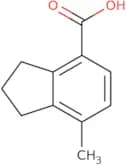
CAS:<p>Versatile small molecule scaffold</p>Formula:C6H15ClN2OPurezza:Min. 95%Peso molecolare:166.65 g/mol7-Methyl-2,3-dihydro-1H-indene-4-carboxylic acid
CAS:<p>Versatile small molecule scaffold</p>Formula:C11H12O2Purezza:Min. 95%Peso molecolare:176.21 g/mol2-[(1,1-Dioxo-1,2-benzothiazol-3-yl)amino]acetic acid
CAS:<p>Versatile small molecule scaffold</p>Formula:C9H8N2O4SPurezza:Min. 95%Peso molecolare:240.24 g/mol4-[(1,1-Dioxo-1,2-benzothiazol-3-yl)amino]butanoic acid
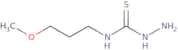
CAS:Prodotto controllato<p>4-[(1,1-Dioxo-1,2-benzothiazol-3-yl)amino]butanoic acid is a ligand of the nicotinic acetylcholine receptor (nAChR). It has been shown to inhibit or activate nAChRs depending on the receptor subtype. 4-[(1,1-Dioxo-1,2-benzothiazol-3-yl)amino]butanoic acid has also been shown to be an effective inhibitor of the sodium channel. 4-[(1,1-Dioxo-1,2-benzothiazol-3-yl)amino]butanoic acid is a peptide with a molecular weight of 269.30 Da and purity greater than 99%. This compound is a research tool that can be used as an antibody for cell biology and immunology experiments.</p>Formula:C11H12N2O4SPurezza:Min. 95%Peso molecolare:268.29 g/mol4-(3-Methoxypropyl)-3-thiosemicarbazide
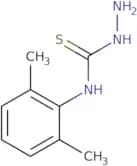
CAS:<p>Versatile small molecule scaffold</p>Formula:C5H13N3OSPurezza:Min. 95%Peso molecolare:163.24 g/mol4-(2,6-Dimethylphenyl)-3-thiosemicarbazide
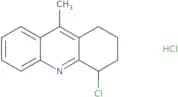
CAS:<p>Versatile small molecule scaffold</p>Formula:C9H13N3SPurezza:Min. 95%Peso molecolare:195.28 g/mol4-Chloro-9-methyl-1,2,3,4-tetrahydroacridine
CAS:<p>Versatile small molecule scaffold</p>Formula:C14H15Cl2NPurezza:Min. 95%Peso molecolare:268.2 g/molC -(4-Methyl-thiazol-2-yl)-methylamine dihydrochloride
CAS:<p>Versatile small molecule scaffold</p>Formula:C5H10Cl2N2SPurezza:Min. 95%Peso molecolare:201.12 g/mol1-(2,2-Dimethylpropanoyl)piperidin-4-one
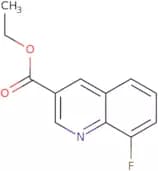
CAS:Prodotto controllato<p>Versatile small molecule scaffold</p>Formula:C10H17NO2Purezza:Min. 95%Peso molecolare:183.25 g/molEthyl 8-Fluoroquinoline-3-carboxylate
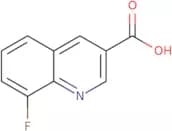
CAS:<p>Versatile small molecule scaffold</p>Formula:C12H10FNO2Purezza:Min. 95%Peso molecolare:219.21 g/mol8-Fluoroquinoline-3-carboxylic acid
CAS:<p>Versatile small molecule scaffold</p>Formula:C10H6FNO2Purezza:Min. 95%Peso molecolare:191.16 g/mol8-Chloroquinoline-3-carboxylic acid
CAS:<p>8-Chloroquinoline-3-carboxylic acid is an industrial chemical that is used as a pharmaceutical. It is also an antibacterial agent that has been shown to be effective against sulfite-reducing bacteria, such as Clostridium difficile and Helicobacter pylori. This drug inhibits bacterial growth by damaging the cell membrane and preventing the production of essential proteins for DNA replication. 8-Chloroquinoline-3-carboxylic acid is produced by treating quinoline with chlorination, followed by reaction with sulfuryl chloride or quinoline carboxylic acid.</p>Formula:C10H6ClNO2Purezza:Min. 95%Peso molecolare:207.61 g/mol8-Methyl-quinoline-3-carboxylic acid
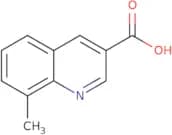
CAS:<p>Versatile small molecule scaffold</p>Formula:C11H9NO2Purezza:Min. 95%Peso molecolare:187.2 g/mol8-Fluoro-3-quinolinecarbonitrile
CAS:<p>Versatile small molecule scaffold</p>Formula:C10H5FN2Purezza:Min. 95%Peso molecolare:172.16 g/mol4-oxo-1,4-Dihydroquinoline-3-carbonitrile
CAS:<p>4-oxo-1,4-Dihydroquinoline-3-carbonitrile (4ODQ) is a synthetic compound that is acidic in nature. It hydrolyzes in acidic conditions to form a carboxylic acid and ammonia. 4ODQ can also react with amines to form azides, chloride to form chloramines, methyl anthranilate to form piperidines, trifluoride to form triflates, and morpholine to form morpholines. The chemical structure of 4ODQ consists of an anthranilate moiety which has been decarboxylated and an amine group which has been enaminated.<br>4ODQ inhibits the growth of cancer cells by binding to the ATP binding site on the enzyme kinase B (BRAF), thereby preventing phosphorylation of downstream proteins that are involved in cell proliferation. This inhibition leads to apoptosis or programmed cell death.</p>Formula:C10H6N2OPurezza:Min. 95%Peso molecolare:170.17 g/mol6-Chloro-4-oxo-1,4-dihydroquinoline-3-carbonitrile
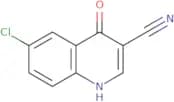
CAS:<p>Versatile small molecule scaffold</p>Formula:C10H5ClN2OPurezza:Min. 95%Peso molecolare:204.61 g/mol



![3-[(4-Methoxyphenyl)amino]propanamide](/_next/image/?url=https%3A%2Fstatic.cymitquimica.com%2Fproducts%2F3D%2Fthumb-webp%2FWAA01746.webp&w=3840&q=75)

![rac-2-[(1R,2S)-2-Phenylcyclopropyl]acetic acid](/_next/image/?url=https%3A%2Fstatic.cymitquimica.com%2Fproducts%2F3D%2Fthumb-webp%2FWAA02466.webp&w=3840&q=75)
![Ethyl 3-[(2-aminophenyl)amino]-2-cyanoprop-2-enoate](/_next/image/?url=https%3A%2Fstatic.cymitquimica.com%2Fproducts%2F3D%2Fthumb-webp%2FWAA02547.webp&w=3840&q=75)


![2H-Pyrido[2,3-d][1,3]oxazine-2,4(1H)-dione](/_next/image/?url=https%3A%2Fstatic.cymitquimica.com%2Fproducts%2F3D%2Fthumb-webp%2FWAA03863.webp&w=3840&q=75)
![Pyrido[2,3-d]pyrimidine-2,4(1h,3h)-dione](/_next/image/?url=https%3A%2Fstatic.cymitquimica.com%2Fproducts%2F3D%2Fthumb-webp%2FWAA03866.webp&w=3840&q=75)


![(3S,8aS)-3-(Hydroxymethyl)-octahydropyrrolo[1,2-a]piperazine-1,4-dione](/_next/image/?url=https%3A%2Fstatic.cymitquimica.com%2Fproducts%2F3D%2Fthumb-webp%2FWCA01804.webp&w=3840&q=75)
![2-[(1,1-Dioxo-1,2-benzothiazol-3-yl)amino]acetic acid](/_next/image/?url=https%3A%2Fstatic.cymitquimica.com%2Fproducts%2F3D%2Fthumb-webp%2FWCA05477.webp&w=3840&q=75)
![4-[(1,1-Dioxo-1,2-benzothiazol-3-yl)amino]butanoic acid](/_next/image/?url=https%3A%2Fstatic.cymitquimica.com%2Fproducts%2F3D%2Fthumb-webp%2FWCA05478.webp&w=3840&q=75)