


Building Blocks
Questa sezione contiene prodotti fondamentali per la sintesi di composti organici e biologici. Building blocks sono i materiali di partenza essenziali utilizzati per costruire molecole complesse attraverso varie reazioni chimiche. Svolgono un ruolo critico nella scoperta di farmaci, nella scienza dei materiali e nella ricerca chimica. Presso CymitQuimica, offriamo una gamma diversificata di building blocks di alta qualità per supportare le tue ricerche innovative e progetti industriali, assicurandoti di avere i componenti essenziali per una sintesi di successo.
Sottocategorie di "Building Blocks"
- Acidi boronici e derivati dell'acido boronico(5.756 prodotti)
- Building Blocks Chirali(1.242 prodotti)
- Building Blocks Idrocarburici(6.095 prodotti)
- Building Blocks organici(61.038 prodotti)
Trovati 196817 prodotti di "Building Blocks"
Ordinare per
Purezza (%)
0
100
|
0
|
50
|
90
|
95
|
100
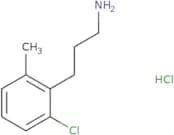
3-(2-Chloro-6-methylphenyl)propan-1-amine hydrochloride
CAS:<p>Versatile small molecule scaffold</p>Formula:C10H15Cl2NPurezza:Min. 95%Peso molecolare:220.14 g/mol2-Amino-2-[2-(trifluoromethoxy)phenyl]ethan-1-ol hydrochloride
CAS:<p>Versatile small molecule scaffold</p>Formula:C9H11ClF3NO2Purezza:Min. 95%Peso molecolare:257.64 g/mol10-Chloro-12-[4-(trifluoromethyl)phenyl]-7-thia-9,11-diazatricyclo[6.4.0.0,2,6]dodeca-1(12),2(6),8,10-tetraene
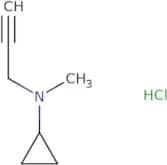
CAS:<p>Versatile small molecule scaffold</p>Formula:C16H10ClF3N2SPurezza:Min. 95%Peso molecolare:354.8 g/molN-Methyl-N-(prop-2-yn-1-yl)cyclopropanamine hydrochloride
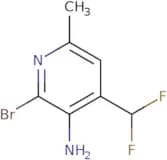
CAS:<p>Versatile small molecule scaffold</p>Formula:C7H12ClNPurezza:Min. 95%Peso molecolare:145.63 g/mol2-Bromo-4-(difluoromethyl)-6-methylpyridin-3-amine
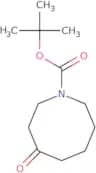
CAS:<p>Versatile small molecule scaffold</p>Formula:C7H7BrF2N2Purezza:Min. 95%Peso molecolare:237.04 g/moltert-Butyl 4-oxoazocane-1-carboxylate
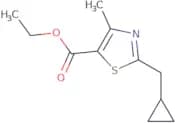
CAS:<p>Versatile small molecule scaffold</p>Formula:C12H21NO3Purezza:Min. 95%Peso molecolare:227.3 g/molEthyl 2-(cyclopropylmethyl)-4-methyl-1,3-thiazole-5-carboxylate
CAS:<p>Versatile small molecule scaffold</p>Formula:C11H15NO2SPurezza:Min. 95%Peso molecolare:225.31 g/mol[1-(2-Chloro-4-fluorophenyl)cyclopentyl]methanamine hydrochloride
CAS:<p>Versatile small molecule scaffold</p>Formula:C12H16Cl2FNPurezza:Min. 95%Peso molecolare:264.16 g/mol[2-(1H-Imidazol-1-yl)ethyl](thiophen-3-ylmethyl)amine hydrochloride
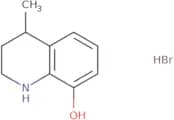
CAS:<p>Versatile small molecule scaffold</p>Formula:C10H14ClN3SPurezza:Min. 95%Peso molecolare:243.76 g/mol4-Methyl-1,2,3,4-tetrahydroquinolin-8-ol hydrobromide
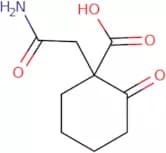
CAS:<p>Versatile small molecule scaffold</p>Formula:C10H14BrNOPurezza:Min. 95%Peso molecolare:244.13 g/mol1-(Carbamoylmethyl)-2-oxocyclohexane-1-carboxylic acid
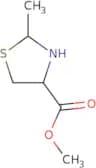
CAS:<p>Versatile small molecule scaffold</p>Formula:C9H13NO4Purezza:Min. 95%Peso molecolare:199.2 g/molMethyl 2-methyl-1,3-thiazolidine-4-carboxylate
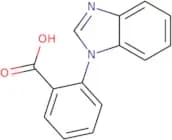
CAS:<p>Versatile small molecule scaffold</p>Formula:C6H11NO2SPurezza:Min. 95%Peso molecolare:161.2 g/mol2-(1H-1,3-Benzodiazol-1-yl)benzoic acid
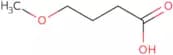
CAS:<p>Versatile small molecule scaffold</p>Formula:C14H10N2O2Purezza:Min. 95%Peso molecolare:238.24 g/mol4-Methoxybutanoic acid
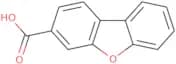
CAS:Prodotto controllato<p>4-Methoxybutanoic acid is an isomer of 4-hydroxybutanoic acid, but with a methoxy group added to the second carbon atom. It can be found in fatty acids and prednisolone, which is a type of steroid hormone. This chemical also has antioxidant properties and can act as an oxidant or glutamate. It also reacts with magnesium, causing allergic reactions such as skin redness and itching. 4-Methoxybutanoic acid can be chemically synthesized by reacting butanol with magnesium in the presence of hydrogen peroxide. This compound has been shown to have antihistamine properties when it binds to histamine H1 receptors.<br> The molecular formula for 4-methoxybutanoic acid is C5H11O2. This molecule contains one oxygen atom, two carbon atoms, four hydrogen atoms, and one oxygen atom. The molecular weight of this molecule is 117.17 grams per mole.</p>Formula:C5H10O3Purezza:Min. 95%Peso molecolare:118.13 g/mol3-Dibenzofurancarboxylic acid
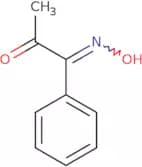
CAS:<p>3-Dibenzofurancarboxylic acid is an aliphatic alcohol that is used as a reagent to synthesize metal salts or metal salt. 3-Dibenzofurancarboxylic acid can be prepared by the reaction of 2-hydroxydibenzofuran with alkali metal. The metal salt is obtained by adding an alkali and carbon atoms to 3-dibenzofurancarboxylic acid.</p>Formula:C13H8O3Purezza:Min. 95%Peso molecolare:212.2 g/mol1-(N-Hydroxyimino)-1-phenylpropan-2-one
CAS:Prodotto controllato<p>Versatile small molecule scaffold</p>Formula:C9H9NO2Purezza:Min. 95%Peso molecolare:163.17 g/mol1-(4-Chlorophenyl)-2,8,9-trioxa-5-aza-1-silabicyclo[3.3.3]undecane
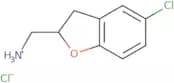
CAS:<p>1-(4-Chlorophenyl)-2,8,9-trioxa-5-aza-1-silabicyclo[3.3.3]undecane is an analog of gamma-aminobutyric acid (GABA) that has been shown to have convulsant activity in rats and exhibits functional correlations with GABA in the cerebral cortex. 1-(4-Chlorophenyl)-2,8,9-trioxa-5-aza-1-silabicyclo[3.3.3]undecane is taken up by cells through a chloride channel and can induce chloride efflux from cells in the cerebral cortex. It also inhibits uptake of gamma aminobutyric acid (GABA), which causes increased levels of GABA in the cerebral cortex and increased seizure activity.</p>Formula:C12H16ClNO3SiPurezza:Min. 95%Peso molecolare:285.8 g/mol1-(5-Chloro-2,3-dihydro-1-benzofuran-2-yl)methanamine hydrochloride
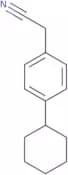
CAS:<p>Versatile small molecule scaffold</p>Formula:C9H11Cl2NOPurezza:Min. 95%Peso molecolare:220.09 g/mol2-(4-Cyclohexylphenyl)acetonitrile
CAS:<p>2-(4-Cyclohexylphenyl)acetonitrile is a prophylactic agent that prevents inflammation. It is an amidated carboxylic acid and has been shown to have chemotherapeutic and prophylactic properties. 2-(4-Cyclohexylphenyl)acetonitrile can be used as a radical scavenger, preventing the formation of reactive oxygen species that may lead to cell damage. This drug also inhibits the production of inflammatory cytokines by inhibiting cyclooxygenase enzymes.</p>Formula:C14H17NPurezza:Min. 95%Peso molecolare:199.29 g/mol2-[4-(1-Benzofuran-2-amido)phenyl]acetic acid
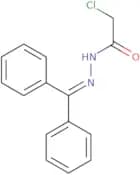
CAS:<p>2-[4-(1-Benzofuran-2-amido)phenyl]acetic acid (BAPAA) is a research tool that belongs to the class of ligands. It has been shown to inhibit ion channels and receptor proteins in the cell membrane. BAPAA binds to peptides and receptors on cells, which leads to activation of those receptors and subsequent changes in the cell. This drug also has been shown to be a potent activator of protein interactions with antibodies.</p>Formula:C17H13NO4Purezza:Min. 95%Peso molecolare:295.29 g/mol2-Chloro-N'-(diphenylmethylidene)acetohydrazide
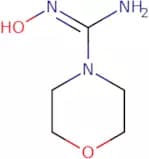
CAS:<p>2-Chloro-N'-(diphenylmethylidene)acetohydrazide is a β-lactam antibiotic that contains a 2-chloro-N'-hydrazino group and an acetamide substituent. It has been shown to be effective in the treatment of Gram-positive bacterial infections, such as MRSA and penicillin resistant Staphylococcus aureus, but not Gram negative bacteria. 2-Chloro-N'-(diphenylmethylidene)acetohydrazide has been used as a starting point for the synthesis of other antibiotics with improved activity against Gram negative bacteria. This drug is also active against Mycobacterium tuberculosis (Mtb), which causes tuberculosis in humans. The heterocycles substituents are responsible for its reactivity and biological properties.</p>Formula:C15H13ClN2OPurezza:Min. 95%Peso molecolare:272.73 g/molN'-Hydroxymorpholine-4-carboxamidine
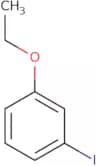
CAS:<p>Versatile small molecule scaffold</p>Formula:C5H11N3O2Purezza:Min. 95%Peso molecolare:145.16 g/mol1-Ethoxy-3-iodobenzene
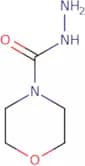
CAS:<p>Versatile small molecule scaffold</p>Formula:C8H9IOPurezza:Min. 95%Peso molecolare:248.06 g/molMorpholine-4-carbohydrazide
CAS:<p>Morpholine-4-carbohydrazide is a carbamate that can be used as a fluorescent sensor. The fluorescence of this compound can be easily detected visually and its intensity can be titrated. Fluorescein is the most common fluorophore used in fluorescent sensors and it has been shown to have a strong interaction with metal ions, which may lead to fluorescence quenching. Morpholine-4-carbohydrazide has been optimized for use as a fluorescent sensor by replacing the fluorescein with semicarbazides, which are not sensitive to metal ions and do not quench the fluorescence. This compound also has an improved emission spectrum in the visible range, which makes it suitable for many applications.</p>Formula:C5H11N3O2Purezza:Min. 95%Peso molecolare:145.16 g/mol7-Bromo-4-chlorothieno[3,2-c]pyridine
CAS:<p>Versatile small molecule scaffold</p>Formula:C7H3BrClNSPurezza:Min. 95%Peso molecolare:248.53 g/mol3-Bromo-4-chloro-thieno[3,2-c]pyridine
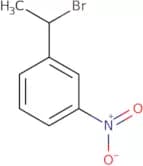
CAS:<p>3-Bromo-4-chloro-thieno[3,2-c]pyridine is a boronic acid that has been shown to be an effective electron donor in the Suzuki reaction. This compound is substituted with a cyclic amine and a fluorescing substituent. The cyclic amine and substituent are orthogonal to each other, which leads to different fluorescence properties. The 3-bromo substituent has been shown to have strong fluorescence properties, while the 4-chloro substituent has weak fluorescence properties.</p>Formula:C7H3BrClNSPurezza:Min. 95%Peso molecolare:248.53 g/mol1-(1-Bromoethyl)-3-nitrobenzene
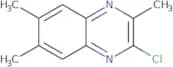
CAS:<p>Versatile small molecule scaffold</p>Formula:C8H8BrNO2Purezza:Min. 95%Peso molecolare:230.06 g/mol2-Chloro-3,6,7-trimethylquinoxaline
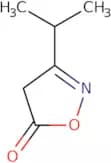
CAS:<p>Versatile small molecule scaffold</p>Formula:C11H11ClN2Purezza:Min. 95%Peso molecolare:206.67 g/mol3-(1-Methylethyl)-5(4H)-isoxazolone
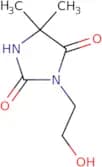
CAS:<p>Versatile small molecule scaffold</p>Formula:C6H9NO2Purezza:Min. 95%Peso molecolare:127.14 g/mol3-(2-Hydroxyethyl)-5,5-dimethylimidazolidine-2,4-dione
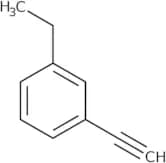
CAS:<p>Versatile small molecule scaffold</p>Formula:C7H12N2O3Purezza:Min. 95%Peso molecolare:172.18 g/mol1-Ethyl-3-ethynylbenzene
CAS:<p>Versatile small molecule scaffold</p>Formula:C10H10Purezza:Min. 95%Peso molecolare:130.19 g/mol7-Chloro-4H,5H-thieno[3,2-c]pyridin-4-one
CAS:<p>Versatile small molecule scaffold</p>Formula:C7H4ClNOSPurezza:Min. 95%Peso molecolare:185.63 g/mol7-Bromothieno[3,2-c]pyridin-4(5H)-one
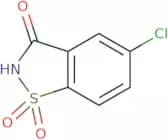
CAS:<p>Versatile small molecule scaffold</p>Formula:C7H4BrNOSPurezza:Min. 95%Peso molecolare:230.08 g/mol5-Chloro-2,3-dihydro-1,2-benzothiazole-1,1,3-trione
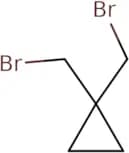
CAS:<p>5-Chloro-2,3-dihydro-1,2-benzothiazole-1,1,3-trione is an organic compound that belongs to the group of anthranilate compounds. It is a white solid with a melting point of 120°C and a boiling point of about 345°C. The chemical formula for 5-chloro-2,3-dihydro-1,2-benzothiazole is C7H5ClNOS. This compound has been used as a dye intermediate and in the synthesis of pharmaceuticals. The most common impurities in 5CHT are carbonyl groups and fatty acids. In animal studies, 5CHT has shown anticancer effects on bladder cancer cells.</p>Formula:C7H4ClNO3SPurezza:Min. 95%Peso molecolare:217.63 g/mol1,1-Bis(bromomethyl)cyclopropane
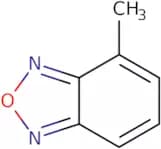
CAS:<p>1,1-Bis(bromomethyl)cyclopropane (1,1-BMC) is a brominated derivative of the cyclopropane molecule that has been used as a tracer to investigate atmospheric reactions. 1,1-BMC can be used as an anion indicator in electrochemical experiments because it is sensitive to the charge on the electrode surface. Kinetic studies have shown that 1,1-BMC reacts with ozone at low concentrations and with hydrogen peroxide at high concentrations. This reactivity is consistent with the sensitivity of 1,1-BMC to anions. The sensitivity of 1,1-BMC may be due to its ability to form enamines or imines when exposed to ozone or hydrogen peroxide. As a result of these reactions, 1,1-BMC becomes oxidized and forms positive charges that are detected by voltmeters. This electrochemical analysis technique has been applied to air samples from the troposphere</p>Formula:C5H8Br2Purezza:Min. 95%Peso molecolare:227.94 g/mol4-Methyl-2,1,3-benzoxadiazole
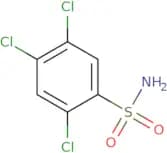
CAS:<p>4-Methyl-2,1,3-benzoxadiazole is a hexamethylenetetramine derivative that is used as an excipient in pharmaceuticals. It has been shown to have high yield and good solubility properties. 4-Methyl-2,1,3-benzoxadiazole can be hydrolyzed by acidolysis to form the corresponding carboxylic acid. The optimal reaction time for this process is between 5 and 10 minutes at room temperature. The product of this reaction can be purified by boiling with water or cooled with ether. 4-Methyl-2,1,3-benzoxadiazole can react with bromosuccinimide to form the corresponding bromohydrin derivative in a peroxide reaction. The optimal reaction time for this process is between 2 and 3 hours at room temperature. Hydrolysis of the bromohydrin yields the corresponding alcohol. This product can</p>Formula:C7H6N2OPurezza:Min. 95%Peso molecolare:134.14 g/mol2,4,5-Trichlorobenzenesulphonamide
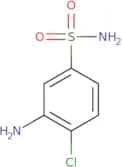
CAS:<p>Versatile small molecule scaffold</p>Formula:C6H4Cl3NO2SPurezza:Min. 95%Peso molecolare:260.53 g/mol3-Amino-4-chloro-benzenesulfonamide
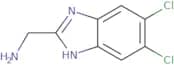
CAS:<p>Versatile small molecule scaffold</p>Formula:C6H7ClN2O2SPurezza:Min. 95%Peso molecolare:206.65 g/mol1-(5,6-Dichloro-1H-1,3-benzodiazol-2-yl)methanamine
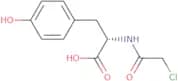
CAS:<p>Versatile small molecule scaffold</p>Formula:C8H7Cl2N3Purezza:Min. 95%Peso molecolare:216.06 g/molN-Chloroacetyl-L-tyrosine
CAS:<p>N-Chloroacetyl-L-tyrosine is a synthetic, proteolytic enzyme that hydrolyzes proteins containing the amino acid L-tyrosine. It has been shown to inhibit the growth of bacteria by inhibiting the activity of enzymes involved with protein synthesis and peptide bond formation. N-Chloroacetyl-L-tyrosine inhibits the activity of diazonium salt and conjugates, which are involved in polypeptide synthesis and DNA replication. It also has an inhibitory effect on functional groups, such as hydroxyl, amine, sulfhydryl, carboxylate, phosphate, and phosphoric acid.</p>Purezza:Min. 95%Peso molecolare:257.67 g/mol1-[4-Methyl-2-(4-methylphenyl)-1,3-thiazol-5-yl]ethan-1-one
CAS:<p>Versatile small molecule scaffold</p>Formula:C13H13NOSPurezza:Min. 95%Peso molecolare:231.32 g/mol1-[2-(4-Methoxyphenyl)-4-methyl-1,3-thiazol-5-yl]ethan-1-one
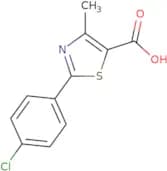
CAS:<p>Versatile small molecule scaffold</p>Formula:C13H13NO2SPurezza:Min. 95%Peso molecolare:247.31 g/mol2-(4-Chlorophenyl)-4-methyl-1,3-thiazole-5-carboxylic acid
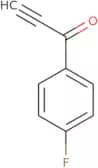
CAS:Versatile small molecule scaffoldFormula:C11H8ClNO2SPurezza:Min. 95%Peso molecolare:253.71 g/mol1-(4-Fluorophenyl)prop-2-yn-1-one
CAS:<p>Versatile small molecule scaffold</p>Formula:C9H5FOPurezza:Min. 95%Peso molecolare:148.13 g/molEthyl 5-hydroxypyrazine-2-carboxylate
CAS:<p>Versatile small molecule scaffold</p>Formula:C7H8N2O3Purezza:Min. 95%Peso molecolare:168.15 g/mol5-Chloro-2-(1H-tetrazol-5-yl)aniline
CAS:<p>Versatile small molecule scaffold</p>Formula:C7H6ClN5Purezza:Min. 95%Peso molecolare:195.61 g/mol1-[2-(Propan-2-yloxy)phenyl]piperazine
CAS:Prodotto controllato<p>Versatile small molecule scaffold</p>Formula:C13H20N2OPurezza:Min. 95%Peso molecolare:220.31 g/mol(5-Phenyl-1,3,4-oxadiazol-2-yl)methanol
CAS:<p>Versatile small molecule scaffold</p>Formula:C9H8N2O2Purezza:Min. 95%Peso molecolare:176.17 g/mol[5-(3-Methylphenyl)-1,3,4-oxadiazol-2-yl]methanol
CAS:<p>Versatile small molecule scaffold</p>Formula:C10H10N2O2Purezza:Min. 95%Peso molecolare:190.2 g/mol[5-(4-Chlorophenyl)-1,3,4-oxadiazol-2-yl]methanol
CAS:<p>Versatile small molecule scaffold</p>Formula:C9H7ClN2O2Purezza:Min. 95%Peso molecolare:210.62 g/mol

![2-Amino-2-[2-(trifluoromethoxy)phenyl]ethan-1-ol hydrochloride](/_next/image/?url=https%3A%2Fstatic.cymitquimica.com%2Fproducts%2F3D%2Fthumb-webp%2FDXC59986.webp&w=3840&q=75)
![10-Chloro-12-[4-(trifluoromethyl)phenyl]-7-thia-9,11-diazatricyclo[6.4.0.0,2,6]dodeca-1(12),2(6),8…](/_next/image/?url=https%3A%2Fstatic.cymitquimica.com%2Fproducts%2F3D%2Fthumb-webp%2FDXC59987.webp&w=3840&q=75)
![[1-(2-Chloro-4-fluorophenyl)cyclopentyl]methanamine hydrochloride](/_next/image/?url=https%3A%2Fstatic.cymitquimica.com%2Fproducts%2F3D%2Fthumb-webp%2FDXC59993.webp&w=3840&q=75)
amine hydrochloride](/_next/image/?url=https%3A%2Fstatic.cymitquimica.com%2Fproducts%2F3D%2Fthumb-webp%2FDXC59996.webp&w=3840&q=75)
![1-(4-Chlorophenyl)-2,8,9-trioxa-5-aza-1-silabicyclo[3.3.3]undecane](/_next/image/?url=https%3A%2Fstatic.cymitquimica.com%2Fproducts%2F3D%2Fthumb-webp%2FEBA02567.webp&w=3840&q=75)
![2-[4-(1-Benzofuran-2-amido)phenyl]acetic acid](/_next/image/?url=https%3A%2Fstatic.cymitquimica.com%2Fproducts%2F3D%2Fthumb-webp%2FEBA03777.webp&w=3840&q=75)
![7-Bromo-4-chlorothieno[3,2-c]pyridine](/_next/image/?url=https%3A%2Fstatic.cymitquimica.com%2Fproducts%2F3D%2Fthumb-webp%2FEBA06476.webp&w=3840&q=75)
![3-Bromo-4-chloro-thieno[3,2-c]pyridine](/_next/image/?url=https%3A%2Fstatic.cymitquimica.com%2Fproducts%2F3D%2Fthumb-webp%2FEBA06482.webp&w=3840&q=75)
![7-Chloro-4H,5H-thieno[3,2-c]pyridin-4-one](/_next/image/?url=https%3A%2Fstatic.cymitquimica.com%2Fproducts%2F3D%2Fthumb-webp%2FEBA07993.webp&w=3840&q=75)
![7-Bromothieno[3,2-c]pyridin-4(5H)-one](/_next/image/?url=https%3A%2Fstatic.cymitquimica.com%2Fproducts%2F3D%2Fthumb-webp%2FEBA07994.webp&w=3840&q=75)
![1-[4-Methyl-2-(4-methylphenyl)-1,3-thiazol-5-yl]ethan-1-one](/_next/image/?url=https%3A%2Fstatic.cymitquimica.com%2Fproducts%2F3D%2Fthumb-webp%2FECA00103.webp&w=3840&q=75)
![1-[2-(4-Methoxyphenyl)-4-methyl-1,3-thiazol-5-yl]ethan-1-one](/_next/image/?url=https%3A%2Fstatic.cymitquimica.com%2Fproducts%2F3D%2Fthumb-webp%2FECA00106.webp&w=3840&q=75)


![1-[2-(Propan-2-yloxy)phenyl]piperazine](/_next/image/?url=https%3A%2Fstatic.cymitquimica.com%2Fproducts%2F3D%2Fthumb-webp%2FECA01391.webp&w=3840&q=75)

![[5-(3-Methylphenyl)-1,3,4-oxadiazol-2-yl]methanol](/_next/image/?url=https%3A%2Fstatic.cymitquimica.com%2Fproducts%2F3D%2Fthumb-webp%2FECA01405.webp&w=3840&q=75)
![[5-(4-Chlorophenyl)-1,3,4-oxadiazol-2-yl]methanol](/_next/image/?url=https%3A%2Fstatic.cymitquimica.com%2Fproducts%2F3D%2Fthumb-webp%2FECA01407.webp&w=3840&q=75)