Building Blocks
Questa sezione contiene prodotti fondamentali per la sintesi di composti organici e biologici. Building blocks sono i materiali di partenza essenziali utilizzati per costruire molecole complesse attraverso varie reazioni chimiche. Svolgono un ruolo critico nella scoperta di farmaci, nella scienza dei materiali e nella ricerca chimica. Presso CymitQuimica, offriamo una gamma diversificata di building blocks di alta qualità per supportare le tue ricerche innovative e progetti industriali, assicurandoti di avere i componenti essenziali per una sintesi di successo.
Sottocategorie di "Building Blocks"
- Acidi boronici e derivati dell'acido boronico(5.778 prodotti)
- Building Blocks Chirali(1.243 prodotti)
- Building Blocks Idrocarburici(6.098 prodotti)
- Building Blocks organici(61.046 prodotti)
Trovati 203857 prodotti di "Building Blocks"
Ordinare per
Purezza (%)
0
100
|
0
|
50
|
90
|
95
|
100
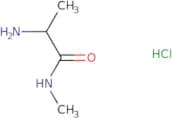
2-Amino-N-methylpropanamide hydrochloride
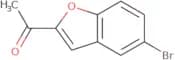
CAS:Versatile small molecule scaffoldFormula:C4H11ClN2OPurezza:Min. 95%Peso molecolare:138.6 g/mol1-(5-Bromo-1-benzofuran-2-yl)ethanone
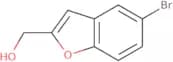
CAS:1-(5-Bromo-1-benzofuran-2-yl)ethanone (5BBF) is an activated brominated benzofuran derivative. It has been shown to inhibit the formation of heterocyclic amines, which are known to be carcinogenic. 5BBF also inhibits the activation of chalcone into chloroacetone by cross-coupling reactions with hydrochloric acid and ethylidene chloride. This compound is a potential candidate for the prevention of cancer from dietary sources due to its ability to inhibit the formation of carcinogens in food.Formula:C10H7BrO2Purezza:Min. 95%Peso molecolare:239.07 g/mol(5-Bromo-1-benzofuran-2-yl)methanol
CAS:<p>Versatile small molecule scaffold</p>Formula:C9H7BrO2Purezza:Min. 95%Peso molecolare:227.05 g/mol2-Chloro-6-hydroxy-3-nitrobenzaldehyde
CAS:Versatile small molecule scaffoldFormula:C7H4ClNO4Purezza:Min. 95%Peso molecolare:201.56 g/mol2-Methyltetradecan-1-ol
CAS:<p>2-Methyltetradecan-1-ol is an attractant and extract that is obtained by reesterification and saponification of sawflies. It has been shown to be effective as an attractant against neodiprion, a type of insect. 2-Methyltetradecan-1-ol has also been synthesized in the laboratory. The synthesis of this chemical is racemic, which means that it can react with either enantiomer of other organic compounds. Esterification reactions are used to make esters from carboxylic acids and alcohols, which are the main building blocks for many synthetic chemicals.</p>Formula:C15H32OPurezza:Min. 95%Peso molecolare:228.41 g/mol3-Chloro-4-sulfanylbenzonitrile
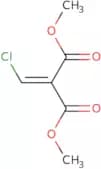
CAS:Versatile small molecule scaffoldFormula:C7H4ClNSPurezza:Min. 95%Peso molecolare:169.63 g/mol1,3-Dimethyl 2-(chloromethylidene)propanedioate
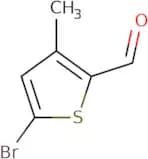
CAS:Versatile small molecule scaffoldFormula:C6H7ClO4Purezza:Min. 95%Peso molecolare:178.57 g/mol5-Bromo-3-methylthiophene-2-carbaldehyde
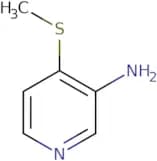
CAS:Versatile small molecule scaffoldFormula:C6H5BrOSPurezza:Min. 95%Peso molecolare:205.07 g/mol4-(Methylsulfanyl)pyridin-3-amine
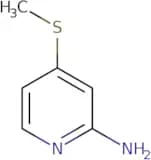
CAS:<p>Versatile small molecule scaffold</p>Formula:C6H8N2SPurezza:Min. 95%Peso molecolare:140.21 g/mol4-(Methylsulfanyl)pyridin-2-amine
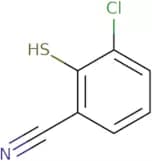
CAS:Versatile small molecule scaffoldFormula:C6H8N2SPurezza:Min. 95%Peso molecolare:140.21 g/mol3-Chloro-2-mercaptobenzonitrile
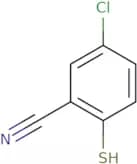
CAS:<p>Versatile small molecule scaffold</p>Formula:C7H4ClNSPurezza:Min. 95%Peso molecolare:169.63 g/mol5-Chloro-2-sulfanylbenzonitrile
CAS:Versatile small molecule scaffoldFormula:C7H4ClNSPurezza:Min. 95%Peso molecolare:169.63 g/mol(2R)-2-Amino-3-[(2-hydroxyethyl)disulfanyl]propanoic acid
CAS:Acetaminophen is a drug that has been used as an analgesic, antipyretic, and anti-inflammatory agent. It is most commonly used in the United States for pain relief from headaches, muscle aches, arthritis, colds and other minor ailments. Acetaminophen can cause liver injury when taken in large doses or on an empty stomach. This drug's toxicity may be due to its ability to inhibit the synthesis of glutathione ethyl ester (GTE) by cytochrome P450 isozymes. The GTE is a major antioxidant that protects cells against oxidative stress and it has been shown to be hepatoprotective in animals. The acetaminophen-induced hepatotoxicity may also be due to the inhibition of protein synthesis by acetaminophen at physiological levels.Formula:C5H11NO3S2Purezza:Min. 95%Peso molecolare:197.3 g/mol(1R,2S,4S)-rel-7-Oxabicyclo[2.2.1]heptane-2-carboxylic acid
CAS:(1R,2S,4S)-rel-7-Oxabicyclo[2.2.1]heptane-2-carboxylic acid is a carbamate that is a selective antagonist of the a2a receptor. It can be used for the treatment of glaucoma and other diseases involving the a2a receptor. The lipase enzyme catalyzes the hydrolysis of (1R,2S,4S)-rel-7-Oxabicyclo[2.2.1]heptane-2-carboxylic acid to yield an enantiomerically pure butyl ester that is then converted by hydrazine into an enantiomerically pure heptane-2-carboxylic acid product. This process occurs in microreactors at high yields and with minimal use of organic solvents, making it scalable and economically viable for industrial production.Formula:C7H10O3Purezza:Min. 95%Peso molecolare:142.15 g/molPK11007
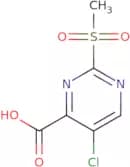
CAS:<p>PK11007 is a novel anticancer drug that has been shown to have an anti-cancer effect on breast cancer cell lines. PK11007 binds to DNA and inhibits the transcriptional regulation of genes. It also has been shown to be a predictive biomarker for prognosis, as well as being sensitive to changes in cellular environment. This drug is synthesized from the secondary metabolite dibenzo[a,j]pyrene-7,8-diol, which is found in Astragalus membranaceus. The synthesis method involves the use of palladium catalyzed reductive amination and oxidation of dibenzo[a,j]pyrene-7,8-diol with sodium sulfide.</p>Formula:C6H5ClN2O4SPurezza:Min. 95%Peso molecolare:236.63 g/mol5-Chloro-2-(methylsulfonyl)pyrimidine
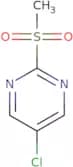
CAS:5-Chloro-2-(methylsulfonyl)pyrimidine (CMP) is a herbicide that inhibits the growth of plants by blocking photosynthesis. It prevents the production of chlorophyll, which is necessary for photosynthesis to occur. CMP has been shown to be effective against weeds in Australia, where it is used as a preemergence herbicide on rice fields. This compound also has a tendency to decarboxylate and form methyl sulfates when heated or when exposed to ultraviolet light. CMP is an electrophile and reacts with nucleophiles such as sulfates, hydroxyl groups, and aromatic rings.Formula:C5H5ClN2O2SPurezza:Min. 95%Peso molecolare:192.63 g/molDodecanedial
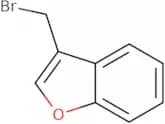
CAS:Dodecanedial is a biological compound that is activated by radiation and has been shown to have cancer-fighting properties. Dodecanedial can be used in the synthesis of polyvinyl alcohol, which is used in the production of vinyl alcohol, a precursor for many organic compounds. Dodecanedial binds to insulin receptors and has been shown to prevent the development of insulin resistance. It also inhibits pancreatitis by suppressing lipase activity. Dodecanedial has been shown to react with potassium phosphate, forming dodecane-1,2-diolate potassium phosphate. This reaction vessel is an important step in the synthesis of various biologically active compounds such as insulin and thyroxine.Formula:C12H22O2Purezza:Min. 95%Peso molecolare:198.3 g/mol3-(Bromomethyl)-1-benzofuran
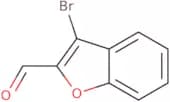
CAS:3-Bromomethyl-1-benzofuran (3BMBF) is a dopamine D2 receptor antagonist. It is structurally related to the antipsychotic drug benperidol, but has a higher affinity for the dopamine D2 receptor. 3BMBF has shown selectivity for the dopamine D2 receptor, with little effect on other receptors such as the serotonin 5HT1A and 5HT2A receptors. 3BMBF is an aromatic compound with a heteroaromatic ring system that has been shown to have high affinity for the dopamine D2 receptor.Formula:C9H7BrOPurezza:Min. 95%Peso molecolare:211.05 g/mol3-Bromo-1-benzofuran-2-carbaldehyde
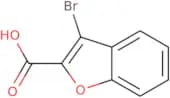
CAS:Versatile small molecule scaffoldFormula:C9H5BrO2Purezza:Min. 95%Peso molecolare:225.04 g/mol3-bromo-1-benzofuran-2-carboxylic acid
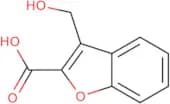
CAS:Versatile small molecule scaffoldFormula:C9H5BrO3Purezza:Min. 95%Peso molecolare:241 g/mol3-(Hydroxymethyl)-1-benzofuran-2-carboxylic acid
CAS:Versatile small molecule scaffoldFormula:C10H8O4Purezza:Min. 95%Peso molecolare:192.17 g/mol2-{[(tert-butoxy)carbonyl]amino}-4-hydroxybutanoic acid
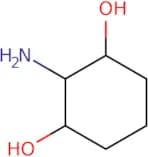
CAS:<p>Versatile small molecule scaffold</p>Formula:C9H17NO5Purezza:Min. 95%Peso molecolare:219.2 g/molrac-(1R,2R,3S)-2-Aminocyclohexane-1,3-diol
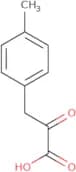
CAS:Versatile small molecule scaffoldFormula:C6H13NO2Purezza:Min. 95%Peso molecolare:131.17 g/mol3-(4-Methylphenyl)-2-oxopropanoic acid
CAS:3- (4-Methylphenyl)-2-oxopropanoic acid is an aromatic amino acid that is formed by the biotransformations of phenylpyruvic acid. The compound has been found to be a substrate for transaminases and can be converted to semicarbazone, an intermediate in the synthesis of many drugs. 3-(4-methylphenyl)-2-oxopropanoic acid has also been used as a catalyst for escherichia coli recombinant cells and e. coli recombinant cells.Formula:C10H10O3Purezza:Min. 95%Peso molecolare:178.18 g/mol[(Oxolan-2-yl)methyl]urea
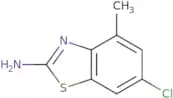
CAS:Versatile small molecule scaffoldFormula:C6H12N2O2Purezza:Min. 95%Peso molecolare:144.17 g/mol6-Chloro-4-methyl-benzothiazol-2-ylamine
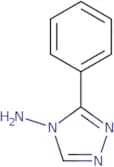
CAS:<p>Versatile small molecule scaffold</p>Formula:C8H7ClN2SPurezza:Min. 95%Peso molecolare:198.68 g/mol3-Phenyl-4H-1,2,4-triazol-4-amine
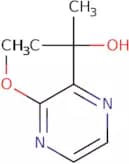
CAS:Versatile small molecule scaffoldFormula:C8H8N4Purezza:Min. 95%Peso molecolare:160.18 g/mol2-(1-Hydroxy-1-methylethyl)-3-methoxypyrazine
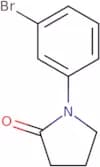
CAS:2-(1-Hydroxy-1-methylethyl)-3-methoxypyrazine is a metabolite of the compound crocatus, which is found in the soil. Crocatus has been shown to inhibit the biosynthesis of geosmin, a volatile organic compound that can be responsible for the earthy or musty smells often associated with wet soils. 2-(1-Hydroxy-1-methylethyl)-3-methoxypyrazine is also produced by the myxobacterium species Chondromyces crocatus, and it has been shown that this metabolite inhibits bacterial growth by binding to RNA polymerase. This process prevents transcription, leading to cell death.Formula:C8H12N2O2Purezza:Min. 95%Peso molecolare:168.19 g/mol1-(3-Bromophenyl)pyrrolidin-2-one
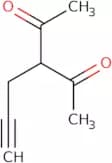
CAS:<p>Versatile small molecule scaffold</p>Formula:C10H10BrNOPurezza:Min. 95%Peso molecolare:240.1 g/mol3-(Prop-2-yn-1-yl)pentane-2,4-dione
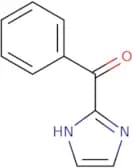
CAS:Versatile small molecule scaffoldFormula:C8H10O2Purezza:Min. 95%Peso molecolare:138.16 g/mol2-Benzoyl-1H-imidazole
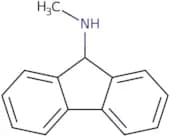
CAS:<p>2-Benzoyl-1H-imidazole is a cancer drug that has been shown to be effective against prostate cancer. 2-Benzoyl-1H-imidazole is a reaction product of 1,2,4-triazole and benzamide. It was synthesized by solid-phase synthesis on a resin containing the corresponding nitro groups. The nitrogen atoms are neutralized with sodium salts and the detergent compositions are reactive to form an antitumor agent. This agent is not active against other types of cancer cells and has been shown to be resistant in some cases. 2-Benzoyl-1H-imidazole has also been used in a medicinal preparation for the treatment of prostate cancer.</p>Formula:C10H8N2OPurezza:Min. 95%Peso molecolare:172.18 g/molN-Methyl-9H-fluoren-9-amine
CAS:Versatile small molecule scaffoldFormula:C14H13NPurezza:Min. 95%Peso molecolare:195.26 g/mol6-Methyl-3H,4H-thieno[2,3-d][1,2,3]triazin-4-one
CAS:<p>Versatile small molecule scaffold</p>Formula:C6H5N3OSPurezza:Min. 95%Peso molecolare:167.19 g/mol5,6-Dimethyl-3H,4H-thieno[2,3-d][1,2,3]triazin-4-one
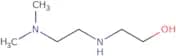
CAS:Versatile small molecule scaffoldFormula:C7H7N3OSPurezza:Min. 95%Peso molecolare:181.22 g/mol2-(2-Dimethylamino-ethylamino)-ethanol
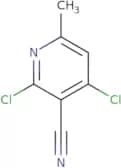
CAS:2-(2-Dimethylamino-ethylamino)-ethanol is an organogold compound that has been synthesized by irradiating 2-(2-dimethylamino-ethyl)aminopyridine with gamma rays. This compound is a ligand for the phthalocyanine axial coordination complex and is cationic in nature. It reacts with sulfur to form a sulfide, which can be used as a reagent for the synthesis of other compounds. 2-(2-Dimethylamino-ethylamino)-ethanol has shown hydrophilicity and can be used as an additive in cosmetic products. 2-(2-Dimethylamino-ethylamino)-ethanol has been found to have high reactivity with ammonium ions and may be useful in the preparation of amides.Formula:C6H16N2OPurezza:Min. 95%Peso molecolare:132.2 g/mol2,4-dichloro-6-methylpyridine-3-carbonitrile
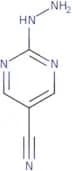
CAS:Versatile small molecule scaffoldFormula:C7H4Cl2N2Purezza:Min. 95%Peso molecolare:187 g/mol2-Hydrazinylpyrimidine-5-carbonitrile
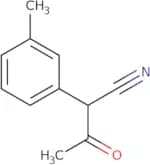
CAS:<p>2-Hydrazinylpyrimidine-5-carbonitrile is an anticancer drug that inhibits cell proliferation by binding to transition metal ions. It has cytostatic activity and is used to treat cancer. 2-Hydrazinylpyrimidine-5-carbonitrile also has antibacterial properties and can be used to treat infections caused by staphylococcus. The drug inhibits bacterial growth by binding to the sulfhydryl groups of enzymes such as methionine adenosyltransferase and acylhydrazone synthase, which are involved in fatty acid synthesis. This inhibition leads to a decrease in the production of fatty acids, thereby leading to bacterial death. 2-Hydrazinylpyrimidine-5-carbonitrile has been shown to have antiplatelet effects and can be immobilized for in vitro anticancer activity studies.</p>Formula:C5H5N5Purezza:Min. 95%Peso molecolare:135.13 g/mol2-(3-Methylphenyl)-3-oxobutanenitrile
CAS:<p>Versatile small molecule scaffold</p>Formula:C11H11NOPurezza:Min. 95%Peso molecolare:173.21 g/mol8-Iodooct-1-ene
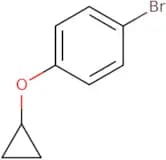
CAS:8-Iodooct-1-ene is a potential precursor in the synthesis of octadiene. It can be synthesized by dehydrating ethylene with magnesium. 8-Iodooct-1-ene is a coproduct of the Grignard reaction, which is used to synthesize an alkene from a vinyl group and a reactive organic halide. The preparation of 8-iodooct-1-ene has been described in detail using techniques such as focusing on chirality and using coproducts to avoid unwanted reactions.Formula:C8H15IPurezza:Min. 95%Peso molecolare:238.1 g/mol1-Bromo-4-cyclopropoxybenzene
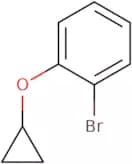
CAS:Versatile small molecule scaffoldFormula:C9H9BrOPurezza:Min. 95%Peso molecolare:213.07 g/mol1-Bromo-2-cyclopropoxybenzene
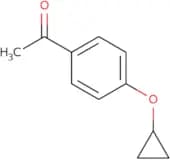
CAS:<p>Versatile small molecule scaffold</p>Formula:C9H9BrOPurezza:Min. 95%Peso molecolare:213.07 g/mol1-(4-Cyclopropoxyphenyl)ethan-1-one
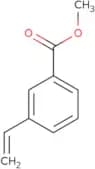
CAS:<p>1-(4-Cyclopropoxyphenyl)ethan-1-one is a stable, colorless ether. It is used in the acylation of aromatic or aliphatic compounds and has been shown to undergo acylation reactions with nitric acid, sulfuric acid, or phosphoric acid. This compound can also be cleaved with hydrochloric acid to form propionaldehyde.</p>Formula:C11H12O2Purezza:Min. 95%Peso molecolare:176.21 g/molMethyl 3-vinylbenzoate
CAS:Versatile small molecule scaffoldFormula:C10H10O2Purezza:Min. 95%Peso molecolare:162.19 g/molN-[3-(Dimethylamino)propyl]-2-hydroxybenzamide
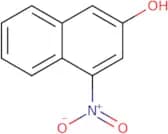
CAS:Versatile small molecule scaffoldFormula:C12H18N2O2Purezza:Min. 95%Peso molecolare:222.28 g/mol4-Nitronaphthalen-2-ol
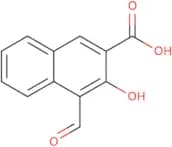
CAS:<p>Versatile small molecule scaffold</p>Formula:C10H7NO3Purezza:Min. 95%Peso molecolare:189.17 g/mol4-Formyl-3-hydroxynaphthalene-2-carboxylic acid
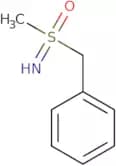
CAS:4-Formyl-3-hydroxynaphthalene-2-carboxylic acid (4FHN) is an antibacterial agent. It is bacteriostatic and has been shown to be effective against gram-negative bacteria such as Escherichia coli and Pseudomonas aeruginosa, but not against gram-positive bacteria such as Staphylococcus aureus. 4FHN was found to inhibit the growth of both gram-positive and gram-negative bacteria by binding to the ribosomal RNA in the bacterial cell wall, thereby inhibiting protein synthesis and cell division. 4FHN also shows antimicrobial activity due to its ability to form stable hydrazones with nucleophilic centers in the bacterial cell wall. These compounds react with cellular macromolecules, leading to cell death.Formula:C12H8O4Purezza:Min. 95%Peso molecolare:216.19 g/molbenzyl(imino)methyl-sulfanone
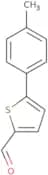
CAS:<p>Versatile small molecule scaffold</p>Formula:C8H11NOSPurezza:Min. 95%Peso molecolare:169.24 g/mol5-(4-Methylphenyl)thiophene-2-carbaldehyde
CAS:Versatile small molecule scaffoldFormula:C12H10OSPurezza:Min. 95%Peso molecolare:202.27 g/mol5-(4-Bromophenyl)thiophene-2-carbaldehyde
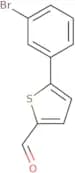
CAS:Versatile small molecule scaffoldFormula:C11H7BrOSPurezza:Min. 95%Peso molecolare:267.14 g/mol5-(3-Bromo-phenyl)-thiophene-2-carbaldehyde
CAS:Versatile small molecule scaffoldFormula:C11H7BrOSPurezza:Min. 95%Peso molecolare:267.14 g/mol



![(2R)-2-Amino-3-[(2-hydroxyethyl)disulfanyl]propanoic acid](/_next/image/?url=https%3A%2Fstatic.cymitquimica.com%2Fproducts%2F3D%2Fthumb-webp%2FNBA25463.webp&w=3840&q=75)
![(1R,2S,4S)-rel-7-Oxabicyclo[2.2.1]heptane-2-carboxylic acid](/_next/image/?url=https%3A%2Fstatic.cymitquimica.com%2Fproducts%2F3D%2Fthumb-webp%2FNBA26356.webp&w=3840&q=75)

![2-{[(tert-butoxy)carbonyl]amino}-4-hydroxybutanoic acid](/_next/image/?url=https%3A%2Fstatic.cymitquimica.com%2Fproducts%2F3D%2Fthumb-webp%2FNBA30892.webp&w=3840&q=75)
![[(Oxolan-2-yl)methyl]urea](/_next/image/?url=https%3A%2Fstatic.cymitquimica.com%2Fproducts%2F3D%2Fthumb-webp%2FNBA33610.webp&w=3840&q=75)
![6-Methyl-3H,4H-thieno[2,3-d][1,2,3]triazin-4-one](/_next/image/?url=https%3A%2Fstatic.cymitquimica.com%2Fproducts%2F3D%2Fthumb-webp%2FNBA35984.webp&w=3840&q=75)
![5,6-Dimethyl-3H,4H-thieno[2,3-d][1,2,3]triazin-4-one](/_next/image/?url=https%3A%2Fstatic.cymitquimica.com%2Fproducts%2F3D%2Fthumb-webp%2FNBA35985.webp&w=3840&q=75)

![N-[3-(Dimethylamino)propyl]-2-hydroxybenzamide](/_next/image/?url=https%3A%2Fstatic.cymitquimica.com%2Fproducts%2F3D%2Fthumb-webp%2FNBA39443.webp&w=3840&q=75)