Building Blocks
Questa sezione contiene prodotti fondamentali per la sintesi di composti organici e biologici. Building blocks sono i materiali di partenza essenziali utilizzati per costruire molecole complesse attraverso varie reazioni chimiche. Svolgono un ruolo critico nella scoperta di farmaci, nella scienza dei materiali e nella ricerca chimica. Presso CymitQuimica, offriamo una gamma diversificata di building blocks di alta qualità per supportare le tue ricerche innovative e progetti industriali, assicurandoti di avere i componenti essenziali per una sintesi di successo.
Sottocategorie di "Building Blocks"
- Acidi boronici e derivati dell'acido boronico(5.778 prodotti)
- Building Blocks Chirali(1.243 prodotti)
- Building Blocks Idrocarburici(6.098 prodotti)
- Building Blocks organici(61.057 prodotti)
Trovati 200716 prodotti di "Building Blocks"
Ordinare per
Purezza (%)
0
100
|
0
|
50
|
90
|
95
|
100
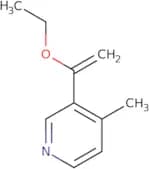
3-(1-Ethoxyvinyl)-4-methylpyridine
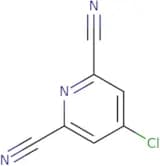
CAS:<p>3-(1-Ethoxyvinyl)-4-methylpyridine is a dipolar molecule that has been synthesised. It has been shown to undergo hydrolysis and decarboxylative reactions. The systematic study of the pyridine derivatives revealed the formation of isomeric 3-ethoxycarbonyl-4-methylpyridines, which were synthesized by reacting phenylhydrazine with esters of pyridine or pyrazole. The carbon atom in the pyridine ring can be either an ester or a hydroxyl group, which gives rise to different structural isomers. These compounds have been shown to have antihistaminic effects, which may be due to their ability to inhibit histamine release from mast cells.</p>Formula:C10H13NOPurezza:Min. 95%Peso molecolare:163.22 g/mol4-Chloropyridine-2,6-dicarbonitrile
CAS:4-Chloropyridine-2,6-dicarbonitrile (4CP) is a ruthenium(II) complex that has been used in solar cells because of its high efficiency. It has been shown to be an efficient acceptor for singlet excitation and has a long fluorescence lifetime. 4CP is also able to generate electron transfer from the excited state to the ground state, leading to increased efficiencies in solar cells. 4CP is a pyridine compound that can be synthesized by reacting benzene with pyridine in the presence of activated charcoal at 400 °C.Formula:C7H2ClN3Purezza:Min. 95%Peso molecolare:163.56 g/molEthyl N-(2-nitropyridin-3-yl)carbamate
CAS:Versatile small molecule scaffoldFormula:C8H9N3O4Purezza:Min. 95%Peso molecolare:211.17 g/mol(2,6-Dichloro-3-pyridinyl)methanol
CAS:<p>Versatile small molecule scaffold</p>Formula:C6H5Cl2NOPurezza:Min. 95%Peso molecolare:178.02 g/mol2,6-Dibromo-3-chloropyridine
CAS:<p>Versatile small molecule scaffold</p>Formula:C5H2Br2ClNPurezza:Min. 95%Peso molecolare:271.34 g/mol2,5,6-Trichloropyridin-3-amine
CAS:Versatile small molecule scaffoldFormula:C5H3Cl3N2Purezza:Min. 95%Peso molecolare:197.45 g/mol1-Isocyanato-3-(propan-2-yl)benzene
CAS:<p>1-Isocyanato-3-(propan-2-yl)benzene is a chiral molecule that has been synthesized and characterized by spectroscopic techniques. It is a colorless liquid with a boiling point of 137°C and an elution time of 12 minutes in high-performance liquid chromatography (HPLC). The compound exhibits strong absorption bands at 220 nm, 276 nm, and 332 nm in the UV region. NMR spectroscopy shows that the compound has a phenyl group nature. The compound also displays dichroism characteristics with correlation to the amylose content.</p>Formula:C10H11NOPurezza:Min. 95%Peso molecolare:161.2 g/mol3H,6H,7H,8H,9H-Imidazo[4,5-F]quinoline dihydrochloride
CAS:Versatile small molecule scaffoldFormula:C10H13Cl2N3Purezza:Min. 95%Peso molecolare:246.13 g/mol4,5,6,7-Tetrahydro-1H-1,3-benzodiazol-5-amine dihydrochloride
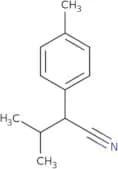
CAS:Versatile small molecule scaffoldFormula:C7H13Cl2N3Purezza:Min. 95%Peso molecolare:210.1 g/mol3-Methyl-2-(4-methylphenyl)butanenitrile
CAS:Versatile small molecule scaffoldFormula:C12H15NPurezza:Min. 95%Peso molecolare:173.25 g/mol2-chloro-7-methyl-7H-purine
CAS:Versatile small molecule scaffoldFormula:C6H5ClN4Purezza:Min. 95%Peso molecolare:168.58 g/molEthyl 2-cyclopropylidenepropanoate
CAS:<p>Versatile small molecule scaffold</p>Formula:C8H12O2Purezza:Min. 95%Peso molecolare:140.18 g/mol3-Cyclohexyl-5-methyl-1,2-oxazole-4-carboxylic acid
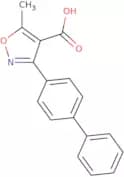
CAS:<p>Versatile small molecule scaffold</p>Formula:C11H15NO3Purezza:Min. 95%Peso molecolare:209.24 g/mol5-Methyl-3-(4-phenylphenyl)-1,2-oxazole-4-carboxylic acid
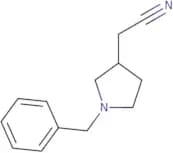
CAS:<p>Versatile small molecule scaffold</p>Formula:C17H13NO3Purezza:Min. 95%Peso molecolare:279.29 g/mol2-(1-Benzylpyrrolidin-3-yl)acetonitrile
CAS:Versatile small molecule scaffoldFormula:C13H16N2Purezza:Min. 95%Peso molecolare:200.28 g/mol2-Amino-1-(4-methoxyphenyl)ethanol
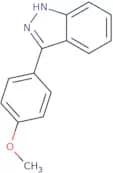
CAS:<p>2-Amino-1-(4-methoxyphenyl)ethanol is a lactam that is minimally reactive with biological systems. It has been shown to inhibit the binding of the linker molecule to calcitriol, which is a vital component of vitamin D synthesis. This compound can also be used in intra-articular injections for the treatment of arthritis and other inflammatory disorders. 2-Amino-1-(4-methoxyphenyl)ethanol has been synthesized from an endogenous amino acid precursor and conjugated with a fluorophore, enabling it to be tracked in vivo by fluorescence imaging. It has been demonstrated that 2-Amino-1-(4-methoxyphenyl)ethanol can be used as a traceless bioactive molecule in molecular modelling and simulations.</p>Formula:C9H13NO2Purezza:Min. 95%Peso molecolare:167.21 g/mol3-(4-Methoxy-phenyl)-1H-indazole
CAS:<p>3-(4-Methoxy-phenyl)-1H-indazole is a kinase inhibitor that inhibits the activity of terminal kinases. It has been shown to inhibit the activity of indazole derivatives and may be useful in treating diseases associated with these kinases, such as cancer. 3-(4-Methoxy-phenyl)-1H-indazole is a potent inhibitor of human caspase 9, which plays an important role in apoptosis by activating downstream proteases. It also inhibits the activation of protein kinase B, which is involved in cellular signaling pathways and cell cycle regulation.</p>Formula:C14H12N2OPurezza:Min. 95%Peso molecolare:224.26 g/molrac-[(1R,2R)-1-Amino-2,3-dihydro-1H-inden-2-yl]methanol
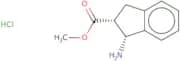
CAS:Versatile small molecule scaffoldFormula:C10H13NOPurezza:Min. 95%Peso molecolare:163.22 g/molrac-Methyl (1R,2R)-1-amino-2,3-dihydro-1H-indene-2-carboxylate hydrochloride
CAS:Versatile small molecule scaffoldFormula:C11H14ClNO2Purezza:Min. 95%Peso molecolare:227.7 g/mol1-[(Propan-2-yl)amino]propan-2-one hydrochloride
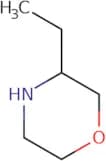
CAS:Versatile small molecule scaffoldFormula:C6H14ClNOPurezza:Min. 95%Peso molecolare:151.63 g/mol3-Ethylmorpholine hydrochloride
CAS:<p>3-Ethylmorpholine hydrochloride is a tryptic that is used to detect fingerprints, viruses, and tissue. It reacts with amines to form a product that can be detected by chromatography. 3-Ethylmorpholine hydrochloride has been shown to react with the transition state of the enzyme trypsin and inhibit its activity. 3-Ethylmorpholine hydrochloride is also reactive towards benzene, which may be due to its ability to form sulphone or primary amine intermediates. This would allow 3-Ethylmorpholine hydrochloride to undergo reactions with other solvents in the environment, such as cellular proteins in host cells.</p>Formula:C6H14ClNOPurezza:Min. 95%Peso molecolare:151.63 g/mol3-Benzylcyclobutanone
CAS:3-Benzylcyclobutanone is a chiral, cyclic, sulfoxide that is synthesized via the asymmetric synthesis of 3-benzoylcyclobutanone and benzaldehyde. It can be used in the preparation of oxazolidinones, which are synthetic drugs with anti-inflammatory, analgesic and antipyretic properties. The optical purity of 3-benzylcyclobutanone has been shown to be greater than 99% by chiral GC analysis. This compound has also been synthesized using a preparative yield of 92%.Formula:C11H12OPurezza:Min. 95%Peso molecolare:160.22 g/mol3-(3-Aminopropyl)phenol hydrochloride
CAS:<p>Versatile small molecule scaffold</p>Formula:C9H14ClNOPurezza:Min. 95%Peso molecolare:187.66 g/molN-Methyl-N-(2-phenylethyl)carbamoyl chloride
CAS:Versatile small molecule scaffoldFormula:C10H12ClNOPurezza:Min. 95%Peso molecolare:197.66 g/mol(5-Ethylpyridin-2-yl)methanamine
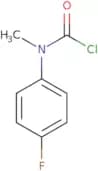
CAS:<p>Versatile small molecule scaffold</p>Formula:C8H12N2Purezza:Min. 95%Peso molecolare:136.19 g/molN-(4-Fluorophenyl)-N-methylcarbamoyl chloride
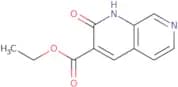
CAS:Versatile small molecule scaffoldFormula:C8H7ClFNOPurezza:Min. 95%Peso molecolare:187.6 g/molEthyl 2-oxo-1,2-dihydro-1,7-naphthyridine-3-carboxylate
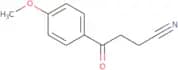
CAS:Versatile small molecule scaffoldFormula:C11H10N2O3Purezza:Min. 95%Peso molecolare:218.21 g/mol4-(4-Methoxyphenyl)-4-oxobutanenitrile
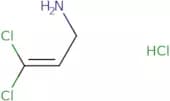
CAS:<p>Versatile small molecule scaffold</p>Formula:C11H11NO2Purezza:Min. 95%Peso molecolare:189.21 g/mol3,3-Dichloroprop-2-en-1-amine hydrochloride
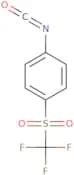
CAS:Versatile small molecule scaffoldFormula:C3H6Cl3NPurezza:Min. 95%Peso molecolare:162.44 g/mol4-(Trifluoromethylsulfonyl)phenylisocyanate
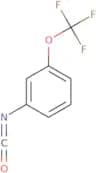
CAS:Versatile small molecule scaffoldFormula:C8H4F3NO3SPurezza:Min. 95%Peso molecolare:251.18 g/mol1-Isocyanato-3-(trifluoromethoxy)benzene
CAS:Versatile small molecule scaffoldFormula:C8H4F3NO2Purezza:Min. 95%Peso molecolare:203.12 g/mol3-(2-Bromophenyl)-2-[(2-bromophenyl)methyl]propanoic acid
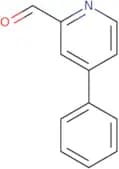
CAS:Versatile small molecule scaffoldFormula:C16H14Br2O2Purezza:Min. 95%Peso molecolare:398.09 g/mol4-Phenylpyridine-2-carboxaldehyde
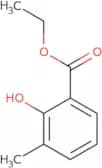
CAS:<p>4-Phenylpyridine-2-carboxaldehyde (4PA) is a crystalline compound with a molecular weight of 198.3. It has been shown to have intramolecular hydrogen bonds and intermolecular hydrogen bonds, which are responsible for the formation of the crystal structure. 4PA is most commonly found in acetone, thiourea, and other organic solvents. The diffraction data for this molecule were obtained using x-ray diffraction methods.</p>Formula:C12H9NOPurezza:Min. 95%Peso molecolare:183.21 g/molEthyl 2-hydroxy-3-methylbenzoate
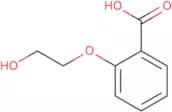
CAS:Ethyl 2-hydroxy-3-methylbenzoate is an organic compound with the chemical formula CH3COCH2CH(OH)COOH. It is a colorless liquid that is soluble in alcohol, ether, and chloroform. It has been used as a precursor to salicylic acid and other compounds with similar function. This product can be synthesized by cyclization of enol ethers with acid derivatives or by cyclization of alkyl phenols with anhydrides. Cyclization reactions are efficient, requiring only a few steps and high temperatures. Salicylic acid can also be obtained from ethyl 2-hydroxy-3-methylbenzoate via hydrolysis of the ester group, which then undergoes decarboxylation to form salicylic acid.Formula:C10H12O3Purezza:Min. 95%Peso molecolare:180.2 g/mol2-(2-Hydroxy-ethoxy)-benzoic acid
CAS:<p>2-(2-Hydroxy-ethoxy)-benzoic acid is a semicrystalline solid with a melting point at about 220°C. It has a concentration range of 0.5 to 10% and a molecular weight of 192.2 g/mol. 2-(2-Hydroxy-ethoxy)-benzoic acid has been used as an additive in polymers and copolymers, lowering the transition temperature of the polymer or copolymer. The compound has also been used as an intermediate in the synthesis of other compounds such as amorphous polymers, polycaprolactone, and polyesters. 2-(2-Hydroxy-ethoxy)-benzoic acid is an organic compound that belongs to the group of benzoic acids and can be synthesized by reacting ethylene glycol with phthalic anhydride.</p>Formula:C9H10O4Purezza:Min. 95%Peso molecolare:182.17 g/mol6-Methyl-1H,2H,3H-pyrazolo[1,5-a]imidazole
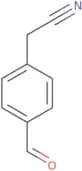
CAS:<p>Versatile small molecule scaffold</p>Formula:C6H9N3Purezza:Min. 95%Peso molecolare:123.16 g/mol2-(4-Formylphenyl)acetonitrile
CAS:<p>2-(4-Formylphenyl)acetonitrile is a nucleophilic solvent that can react with benzyl alcohol in the liquid phase. It is used to produce benzaldehyde and toluene by hydrogenating benzyl alcohol. 2-(4-Formylphenyl)acetonitrile has a constant boiling point, which makes it useful for adsorption. It also reacts with hydrogen in the presence of a catalyst to produce benzylamine and hydrogen gas. The kinetic study of this reaction has shown that it follows first order kinetics.</p>Formula:C9H7NOPurezza:Min. 95%Peso molecolare:145.16 g/mol3-Bromo-1-(propan-2-yl)piperidin-2-one
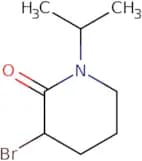
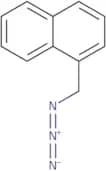
CAS:Versatile small molecule scaffoldFormula:C8H14BrNOPurezza:Min. 95%Peso molecolare:220.11 g/mol1-(Azidomethyl)naphthalene
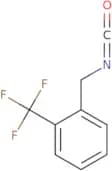
CAS:<p>Versatile small molecule scaffold</p>Formula:C11H9N3Purezza:Min. 95%Peso molecolare:183.21 g/mol1-(Isocyanatomethyl)-2-(trifluoromethyl)benzene
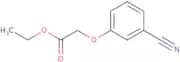
CAS:<p>Versatile small molecule scaffold</p>Formula:C9H6F3NOPurezza:Min. 95%Peso molecolare:201.14 g/molEthyl 2-(3-cyanophenoxy)acetate
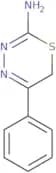
CAS:<p>Versatile small molecule scaffold</p>Formula:C11H11NO3Purezza:Min. 95%Peso molecolare:205.21 g/mol5-Phenyl-6H-1,3,4-thiadiazin-2-amine
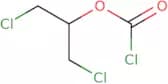
CAS:<p>Phenyl-6H-1,3,4-thiadiazin-2-amine is a bidentate ligand that has been used in analyses to study the binding of various substances. It is a phenolic compound with an azomethine group and nitrogen atoms. Phenyl-6H-1,3,4-thiadiazin-2-amine can be synthesized by reacting 1,5-diaminonaphthalene with 2,6-dihydroxyphenol. This reaction can be followed by elemental analysis and elemental identification. Phenyl-6H-1,3,4-thiadiazin-2 amine also has magnetic properties and phenolic oxygen. It displays thermogravimetric properties that can be analyzed using a TGA instrument. The electronic spectra of this substance can also be analyzed using UV/Vis spectroscopy or NMR spectroscopy. Phenyl-[H]-</p>Formula:C9H9N3SPurezza:Min. 95%Peso molecolare:191.26 g/mol1,3-Dichloropropan-2-yl chloroformate
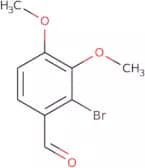
CAS:<p>Versatile small molecule scaffold</p>Formula:C4H5Cl3O2Purezza:Min. 95%Peso molecolare:191.44 g/mol2-Bromo-3,4-dimethoxybenzaldehyde
CAS:2-Bromo-3,4-dimethoxybenzaldehyde (BDMB) is a fluorescent aldehyde that can be used as an analog for 2,4-dinitrofluorobenzene. It has been shown to have cytotoxic effects on cancer cells. BDMB binds to microtubules and inhibits their polymerization and depolymerization, preventing the formation of the cytoskeleton in the cell. This leads to cell death by apoptosis. The affinity of BDMB for microtubules is much higher than its affinity for other cellular components. BDMB also has been shown to inhibit DNA synthesis in cancer cells through inhibition of RNA polymerase II transcription.Formula:C9H9BrO3Purezza:Min. 95%Peso molecolare:245.07 g/mol5-Methyl-5-hexenoic acid
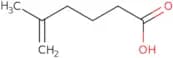
CAS:5-Methyl-5-hexenoic acid is a synthetic chemical that can be used as a marker for biochemical pathways. It is synthesized from hydrochloric acid and boron trifluoride etherate, which are heated together at 130°C until all the HCI has been evaporated. 5-Methyl-5-hexenoic acid is then reacted with an amide to produce a fatty acid. Oxazolidinones are often used to synthesize this compound, although it can also be made through dehydrating and anhydrous sodium chloride. The product contains impurities and diastereomers that must be removed before it can be used in the manufacture of pharmaceuticals.Formula:C7H12O2Purezza:Min. 95%Peso molecolare:128.17 g/mol4-(2-Chloroethyl)thiomorpholine 1,1-dioxide
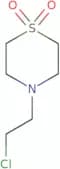
CAS:<p>Versatile small molecule scaffold</p>Formula:C6H12ClNO2SPurezza:Min. 95%Peso molecolare:197.68 g/mol3-(2-Phenylacetamido)propanoic acid
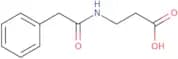
CAS:<p>Versatile small molecule scaffold</p>Formula:C11H13NO3Purezza:Min. 95%Peso molecolare:207.23 g/mol1-Bromo-4-(2-fluoroethyl)benzene
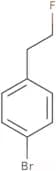
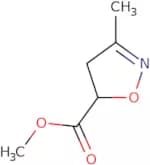
CAS:<p>Versatile small molecule scaffold</p>Formula:C8H8BrFPurezza:Min. 95%Peso molecolare:203.05 g/molMethyl 3-methyl-4,5-dihydro-1,2-oxazole-5-carboxylate
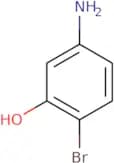
CAS:Methyl 3-methyl-4,5-dihydro-1,2-oxazole-5-carboxylate (MMDC) is a heterocyclic compound that is used as a raw material for the production of various chemicals. It can be used to produce aniline and acetaldehyde. MMDC is also used in the synthesis of other heterocyclic compounds, such as methyl 2-(3,4-dimethoxybenzoyl)-1H-imidazole-5-carboxylate. This chemical has been found to be an effective inhibitor of bacterial nitrite reductase activity.Formula:C6H9NO3Purezza:Min. 95%Peso molecolare:143.14 g/mol5-Amino-2-bromophenol
CAS:<p>Versatile small molecule scaffold</p>Formula:C6H6BrNOPurezza:Min. 95%Peso molecolare:188.02 g/mol



![3H,6H,7H,8H,9H-Imidazo[4,5-F]quinoline dihydrochloride](/_next/image/?url=https%3A%2Fstatic.cymitquimica.com%2Fproducts%2F3D%2Fthumb-webp%2FFCA29998.webp&w=3840&q=75)




![rac-[(1R,2R)-1-Amino-2,3-dihydro-1H-inden-2-yl]methanol](/_next/image/?url=https%3A%2Fstatic.cymitquimica.com%2Fproducts%2F3D%2Fthumb-webp%2FFCA27004.webp&w=3840&q=75)
![1-[(Propan-2-yl)amino]propan-2-one hydrochloride](/_next/image/?url=https%3A%2Fstatic.cymitquimica.com%2Fproducts%2F3D%2Fthumb-webp%2FFCA26840.webp&w=3840&q=75)


![3-(2-Bromophenyl)-2-[(2-bromophenyl)methyl]propanoic acid](/_next/image/?url=https%3A%2Fstatic.cymitquimica.com%2Fproducts%2F3D%2Fthumb-webp%2FFCA22323.webp&w=3840&q=75)
![6-Methyl-1H,2H,3H-pyrazolo[1,5-a]imidazole](/_next/image/?url=https%3A%2Fstatic.cymitquimica.com%2Fproducts%2F3D%2Fthumb-webp%2FFCA21175.webp&w=3840&q=75)