Building Blocks
Questa sezione contiene prodotti fondamentali per la sintesi di composti organici e biologici. Building blocks sono i materiali di partenza essenziali utilizzati per costruire molecole complesse attraverso varie reazioni chimiche. Svolgono un ruolo critico nella scoperta di farmaci, nella scienza dei materiali e nella ricerca chimica. Presso CymitQuimica, offriamo una gamma diversificata di building blocks di alta qualità per supportare le tue ricerche innovative e progetti industriali, assicurandoti di avere i componenti essenziali per una sintesi di successo.
Sottocategorie di "Building Blocks"
- Acidi boronici e derivati dell'acido boronico(5.778 prodotti)
- Building Blocks Chirali(1.243 prodotti)
- Building Blocks Idrocarburici(6.098 prodotti)
- Building Blocks organici(61.057 prodotti)
Trovati 200716 prodotti di "Building Blocks"
Ordinare per
Purezza (%)
0
100
|
0
|
50
|
90
|
95
|
100
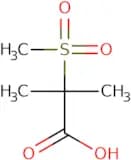
2-Methanesulfonyl-2-methylpropanoic acid
CAS:Versatile small molecule scaffoldFormula:C5H10O4SPurezza:Min. 95%Peso molecolare:166.2 g/mol2-Methanesulfonyl-2-methylpropan-1-ol
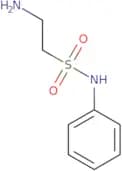
CAS:Versatile small molecule scaffoldFormula:C5H12O3SPurezza:Min. 95%Peso molecolare:152.21 g/mol2-Amino-N-phenylethane-1-sulfonamide
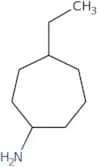
CAS:<p>Versatile small molecule scaffold</p>Formula:C8H12N2O2SPurezza:Min. 95%Peso molecolare:200.26 g/mol4-Ethylcycloheptan-1-amine
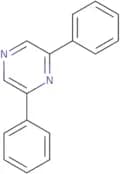
CAS:<p>Versatile small molecule scaffold</p>Formula:C9H19NPurezza:Min. 95%Peso molecolare:141.25 g/mol2,6-Diphenylpyrazine
CAS:<p>2,6-Diphenylpyrazine (2,6-DPP) is a cross-linked complex that contains 4-methoxyphenylboronic acid. It has been shown to react with anions and form coordination complexes with imidazoline ligands. The coordination chemistry of 2,6-DPP is dependent on the structure of the anion. For example, in acetonitrile or nitrate solutions, 2,6-DPP coordinates to the negative charge through two nitrogen atoms and two carbon atoms. In aqueous solutions containing halides such as chloride or fluoride ions, 2,6-DPP coordinates through three nitrogen atoms and one carbon atom.</p>Formula:C16H12N2Purezza:Min. 95%Peso molecolare:232.28 g/mol5-Chloro-3,4-diazatricyclo[9.4.0.0,2,7]pentadeca-1(15),2(7),3,5,11,13-hexaene
CAS:<p>Versatile small molecule scaffold</p>Formula:C13H11ClN2Purezza:Min. 95%Peso molecolare:230.69 g/mol2H,3H,5H,6H-Benzo[H]cinnolin-3-one
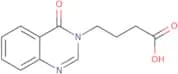
CAS:<p>Versatile small molecule scaffold</p>Formula:C12H10N2OPurezza:Min. 95%Peso molecolare:198.22 g/mol4-(4-Oxoquinazolin-3(4H)-yl)butanoic acid
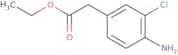
CAS:Versatile small molecule scaffoldFormula:C12H12N2O3Purezza:Min. 95%Peso molecolare:232.24 g/molEthyl 2-(4-amino-3-chlorophenyl)acetate
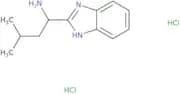
CAS:Versatile small molecule scaffoldFormula:C10H12ClNO2Purezza:Min. 95%Peso molecolare:213.66 g/mol1-(1H-1,3-Benzodiazol-2-yl)-3-methylbutan-1-amine dihydrochloride
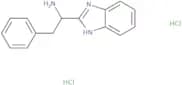
CAS:Versatile small molecule scaffoldFormula:C12H19Cl2N3Purezza:Min. 95%Peso molecolare:276.2 g/mol1-(1H-1,3-Benzodiazol-2-yl)-2-phenylethan-1-amine dihydrochloride
CAS:Versatile small molecule scaffoldFormula:C15H17Cl2N3Purezza:Min. 95%Peso molecolare:310.2 g/molN-[1-(1H-1,3-Benzodiazol-2-yl)ethyl]benzamide
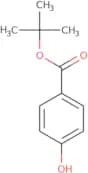
CAS:Versatile small molecule scaffoldFormula:C16H15N3OPurezza:Min. 95%Peso molecolare:265.31 g/moltert-Butyl 4-hydroxybenzoate
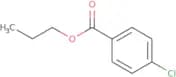
CAS:<p>Tert-butyl 4-hydroxybenzoate is a tyrosine kinase inhibitor. It inhibits the activity of tyrosine kinases, which play a role in cell proliferation and differentiation. The compound has been evaluated for its ability to inhibit vascular endothelial growth factor receptor 2 (VEGFR-2) and Azd2932, two proteins that are involved in tumor angiogenesis. Tert-butyl 4-hydroxybenzoate also has an affinity for reductive cleavage of esters and reductive arylsulfonates.</p>Formula:C11H14O3Purezza:Min. 95%Peso molecolare:194.23 g/molPropyl 4-chlorobenzoate
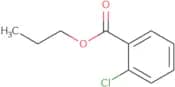
CAS:<p>Versatile small molecule scaffold</p>Formula:C10H11ClO2Purezza:Min. 95%Peso molecolare:198.64 g/molPropyl 2-chlorobenzoate
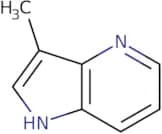
CAS:<p>Versatile small molecule scaffold</p>Formula:C10H11ClO2Purezza:Min. 95%Peso molecolare:198.64 g/mol3-Methyl-4-azaindole
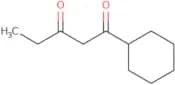
CAS:Versatile small molecule scaffoldFormula:C8H8N2Purezza:Min. 95%Peso molecolare:132.16 g/mol1-Cyclohexylpentane-1,3-dione
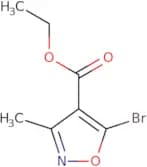
CAS:<p>Versatile small molecule scaffold</p>Formula:C11H18O2Purezza:Min. 95%Peso molecolare:182.26 g/molEthyl 5-Bromo-3-methyl-1,2-oxazole-4-carboxylate
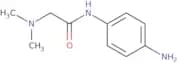
CAS:Versatile small molecule scaffoldFormula:C7H8NO3BrPurezza:Min. 95%Peso molecolare:234.05 g/molN-(4-Aminophenyl)-2-(dimethylamino)acetamide
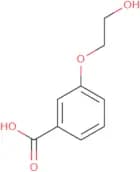
CAS:Versatile small molecule scaffoldFormula:C10H15N3OPurezza:Min. 95%Peso molecolare:193.25 g/mol3-(2-Hydroxy-ethoxy)-benzoic acid
CAS:<p>3-(2-Hydroxy-ethoxy)-benzoic acid (3HBA) is a deprotonating agent that reacts with organolithiums, organomercurials, and mercuric halides to form their corresponding Grignard reagents. 3HBA also reacts with benzophenone to form benzonitrile. 3HBA can be used for the synthesis of various organic compounds, such as chlorides, yields, and methylcyclohexane. 3HBA has been shown to have a crystallographic structure of C20H22O4Cl. The chloride anion in the crystal lattice is coordinated by two magnesium ions. Mercuric chloride can be prepared from 3HBA by treatment with chlorine gas at elevated temperatures.</p>Formula:C9H10O4Purezza:Min. 95%Peso molecolare:182.17 g/mol2-(1H-Pyrazol-1-yl)benzonitrile
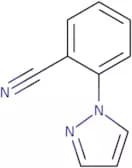
CAS:<p>2-(1H-Pyrazol-1-yl)benzonitrile is used as a catalyst for the synthesis of pharmaceuticals. It can be prepared by reacting pyrrolidine with aniline in chloroform. Pyrrolidine is then reacted with 2-chlorobenzonitrile and the resulting product, 2-(1H-pyrazol-1-yl)benzonitrile, is isolated from the reaction mixture by extraction with diethyl ether. The compound has a ligand that binds to metal ions and is also used as a chelating agent. This property allows it to catalyse reactions involving nucleophiles and halides. It can also be used in amino acid coupling reactions, yielding amides or imines, respectively.</p>Formula:C10H7N3Purezza:Min. 95%Peso molecolare:169.18 g/mol4-chloro-7-fluoro-6-methoxyquinoline
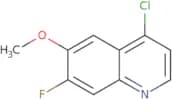
CAS:4-chloro-7-fluoro-6-methoxyquinoline is a nitronium salt that has been shown to be directive. The nitration of 4-chloro-7-fluoro-6-methoxyquinoline with nitric acid and sulfuric acid produces the corresponding quinolines.Formula:C10H7ClFNOPurezza:Min. 95%Peso molecolare:211.62 g/mol2-[(2-Methoxyethyl)sulfanyl]ethan-1-ol
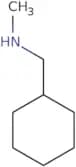
CAS:<p>Versatile small molecule scaffold</p>Formula:C5H12O2SPurezza:Min. 95%Peso molecolare:136.22 g/mol(Cyclohexylmethyl)(methyl)amine
CAS:<p>Versatile small molecule scaffold</p>Formula:C8H17NPurezza:Min. 95%Peso molecolare:127.23 g/mol3-Amino-1-phenylbutan-1-ol
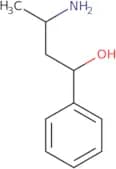
CAS:<p>3-Amino-1-phenylbutan-1-ol is a stereoselective reducing agent that can be used for the reduction of aldehydes and ketones. This reagent is produced by the reaction of lithium metal with borohydride. It can also be synthesized from chlorobenzene and sodium borohydride in a two step process. 3-Amino-1-phenylbutan-1-ol has been shown to selectively reduce aldehydes over ketones, as well as reducing Alder–Ethers, Acetals, and Nitriles. 3-Amino-1-phenylbutan-1-ol has been shown to reduce lithium in the presence of chloride or cerium. The selectivity of this reagent has been attributed to its ability to form strong hydrogen bonds with lithium metal.</p>Formula:C10H15NOPurezza:Min. 95%Peso molecolare:165.23 g/mol6-Phenylimidazo[2,1-b][1,3,4]thiadiazole
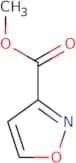
CAS:<p>Versatile small molecule scaffold</p>Formula:C10H7N3SPurezza:Min. 95%Peso molecolare:201.25 g/molMethyl 1,2-oxazole-3-carboxylate
CAS:<p>Methyl 1,2-oxazole-3-carboxylate is a pharmacological agent that belongs to the group of amino acid derivatives. It has been shown to inhibit Hsp70 and Hsp90, which are proteins involved in the folding and stabilization of other proteins. Methyl 1,2-oxazole-3-carboxylate also inhibits cancer cell growth by interacting with valine residues in proteins. Methyl 1,2-oxazole-3-carboxylate has been shown to be effective against human lung cancer cells as well as breast cancer cells. This drug has also been found to be an inhibitor for the interaction between isoxazole and phenylalanine residues in protein structures.</p>Formula:C5H5NO3Purezza:Min. 95%Peso molecolare:127.1 g/mol2-Oxo-2-phenylacetyl chloride
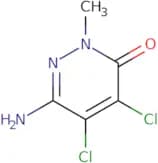
CAS:<p>2-Oxo-2-phenylacetyl chloride is a stable complex that has been used in the asymmetric synthesis of amines. It has been shown to have potential as a drug for autoimmune diseases and inflammatory diseases. 2-Oxo-2-phenylacetyl chloride is a substrate molecule for nitro, propylphosphonic acid, and solid catalyst reactions with carbonyl groups. It also has photochemical properties that allow it to be used as a fluorine or hydroxyl group donor in organic syntheses.</p>Formula:C8H5ClO2Purezza:Min. 95%Peso molecolare:168.57 g/mol6-Amino-4,5-dichloro-2-methyl-2,3-dihydropyridazin-3-one
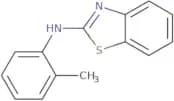
CAS:Versatile small molecule scaffoldFormula:C5H5Cl2N3OPurezza:Min. 95%Peso molecolare:194.02 g/molN-(2-Methylphenyl)-1,3-benzothiazol-2-amine
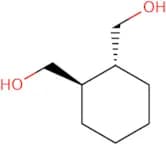
CAS:Versatile small molecule scaffoldFormula:C14H12N2SPurezza:Min. 95%Peso molecolare:240.33 g/moltrans-1,2-Cyclohexanedimethanol
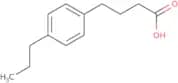
CAS:<p>Trans-1,2-cyclohexanedimethanol is a synthetic compound that can be used for analytical chemistry. It has a variety of impurities and can form enantiomers and diastereomers when treated with an acid catalyst. Trans-1,2-cyclohexanedimethanol is also hydrophobic and can form chlorides, isomers, and epoxides by reacting with other compounds. Trans-1,2-cyclohexanedimethanol has been shown to have photocatalytic activity in the oxidation of organic substances.</p>Formula:C8H16O2Purezza:Min. 95%Peso molecolare:144.21 g/mol4-(4-Propylphenyl)butanoic acid
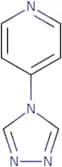
CAS:<p>Versatile small molecule scaffold</p>Formula:C13H18O2Purezza:Min. 95%Peso molecolare:206.28 g/mol4-(4H-1,2,4-Triazol-4-yl)pyridine
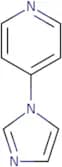
CAS:<p>Versatile small molecule scaffold</p>Formula:C7H6N4Purezza:Min. 95%Peso molecolare:146.15 g/mol4-(1H-Imidazol-1-yl)pyridine
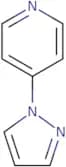
CAS:<p>Versatile small molecule scaffold</p>Formula:C8H7N3Purezza:Min. 95%Peso molecolare:145.16 g/mol4-(1H-Pyrazol-1-yl)pyridine
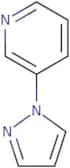
CAS:<p>Versatile small molecule scaffold</p>Formula:C8H7N3Purezza:Min. 95%Peso molecolare:145.16 g/mol3-(1H-Pyrazol-1-yl)pyridine
CAS:<p>3-(1H-Pyrazol-1-yl)pyridine (3PYR) is an insecticide that has been shown to be effective against a number of insects, including houseflies and mosquitoes. 3PYR is a type of pyrazole with a pyridine group on the 1 position. It is highly active as an insecticide due to its high quantum efficiency, which is dependent on the conformation and n-type parameters. The optimization of the population leads to synergistic effects that increase the efficiency of 3PYR as an insecticide. The pesticide also has high efficiencies for both populations and individuals.</p>Formula:C8H7N3Purezza:Min. 95%Peso molecolare:145.16 g/mol2-(1H-Pyrazol-1-yl)pyridine
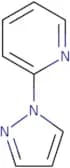
CAS:<p>2-(1H-Pyrazol-1-yl)pyridine is a synthetic compound that has two nitrogen atoms in its pyrazole ring. It is used as an agrochemical and bioassay to control insects, fungi, and other pests. 2-(1H-Pyrazol-1-yl)pyridine is also used as a chemical intermediate in the synthesis of chlorantraniliprole and ryanodine receptor antagonists. The chemical structure of 2-(1H-pyrazol-1-yl)pyridine consists of an imine group with a nitrogen atom on each side of the double bond. This molecule can be converted into a nitrile by reacting it with hydrochloric acid, which is why it's sometimes called "2-(hydroxymethyl)-1H pyrazole."</p>Formula:C8H7N3Purezza:Min. 95%Peso molecolare:145.16 g/mol1-[4-(1H-Benzimidazol-1-yl)phenyl]ethanone
CAS:Versatile small molecule scaffoldFormula:C15H12N2OPurezza:Min. 95%Peso molecolare:236.27 g/mol1-[4-(1H-1,2,4-Triazol-1-yl)phenyl]ethan-1-one
CAS:<p>Versatile small molecule scaffold</p>Formula:C10H9N3OPurezza:Min. 95%Peso molecolare:187.2 g/mol1-[4-(1H-Pyrazol-1-yl)phenyl]ethanone
CAS:<p>1-[4-(1H-Pyrazol-1-yl)phenyl]ethanone is a bipyridine that can be used as a reagent to produce alkenylation products. It has chemoselectivity, meaning it reacts with only one of the two possible functional groups in an organic molecule. 1-[4-(1H-Pyrazol-1-yl)phenyl]ethanone is an oxidant and can be used for ruthenium catalyzed reactions. The compound was also shown to be directive and carboxylic acid catalysis in oxidative solvent systems.</p>Formula:C11H10N2OPurezza:Min. 95%Peso molecolare:186.21 g/mol1-[2-(1H-Pyrazol-1-yl)phenyl]ethan-1-one
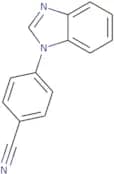
CAS:Versatile small molecule scaffoldFormula:C11H10N2OPurezza:Min. 95%Peso molecolare:186.21 g/mol4-(1H-1,3-Benzodiazol-1-yl)benzonitrile
CAS:<p>4-(1H-1,3-Benzodiazol-1-yl)benzonitrile is a subunit of a coordination polymer that can be used as an organic ligand. The coordination polymer is composed of benzene rings and nitrile groups. It has been shown to have luminescent properties and can be used in the production of polymers with different topologies. These polymers are made up of alternating benzene rings and nitrile groups that form a chain. The luminescence properties depend on the type of organic ligands that are attached to the polymer chain.</p>Formula:C14H9N3Purezza:Min. 95%Peso molecolare:219.24 g/mol3-(1H-1,2,4-Triazol-1-yl)benzonitrile
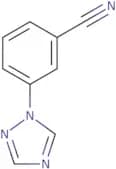
CAS:<p>Versatile small molecule scaffold</p>Formula:C9H6N4Purezza:Min. 95%Peso molecolare:170.17 g/mol3-(1H-Pyrazol-1-yl)benzonitrile
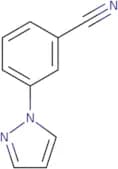
CAS:<p>3-(1H-Pyrazol-1-yl)benzonitrile is a perchlorate with a centrosymmetric dimeric crystal structure. It can be prepared by assembling two molecules of 3-aminobenzonitrile and 1,2,4-triazole in the presence of an oxidant. This compound has been used as a ligand in coordination chemistry and has been shown to be an efficient catalyst for imidazole synthesis. The molecule also exhibits anti-aromatization properties when irradiated. 3-(1H-Pyrazol-1-yl)benzonitrile can be used as an environment friendly alternative to benzotriazoles, which are typically synthesized using toxic chemicals such as chlorine gas or hydrogen peroxide.</p>Formula:C10H7N3Purezza:Min. 95%Peso molecolare:169.18 g/mol(3-Chlorophenyl)methanethiol
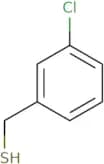
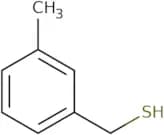
CAS:<p>3-Chlorophenylmethanethiol (3CPMS) is a delocalized molecule with a planar conformation. It has a resonance structure and can be found in the crystal structure of benzene. The hybridization of 3CPMS is sp2, which means that it is planar and has two electron pairs on each carbon atom. 3CPMS has the ability to form bonds with other molecules through hydrogen bonding or through the formation of covalent bonds with other molecules.</p>Formula:C7H7ClSPurezza:Min. 95%Peso molecolare:158.65 g/mol3-Methylbenzylthiol
CAS:<p>Versatile small molecule scaffold</p>Formula:C8H10SPurezza:Min. 95%Peso molecolare:138.23 g/mol4-Amino-3,5,6-trifluorobenzene-1,2-dicarbonitrile
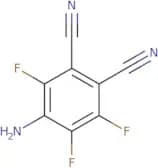
CAS:4-Amino-3,5,6-trifluorobenzene-1,2-dicarbonitrile (4AF) is a chemical compound that has been found to have antimicrobial properties. 4AF inhibits the growth of bacteria by hydrolyzing into 3,5,6-trifluoroaniline and trifluoroacetic acid. It also binds to polyamide and prevents the formation of bacterial cell walls. This process stops the synthesis of DNA and protein in the bacterial cell.Formula:C8H2F3N3Purezza:Min. 95%Peso molecolare:197.12 g/molMethyl (2E)-4-amino-2-methylbut-2-enoate hydrochloride
CAS:<p>Versatile small molecule scaffold</p>Formula:C6H12ClNO2Purezza:Min. 95%Peso molecolare:165.6 g/mol(2-Phenoxyphenyl)thiourea
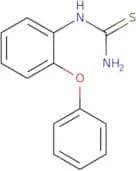
CAS:<p>Versatile small molecule scaffold</p>Formula:C13H12N2OSPurezza:Min. 95%Peso molecolare:244.31 g/mol1-(3-Nitrophenyl)-1H-pyrazole
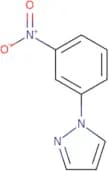
CAS:<p>1-(3-Nitrophenyl)-1H-pyrazole is a small molecule inhibitor of p38 kinase. It can be used to treat arthritis and other diseases that are caused by the overactivation of p38 kinase. 1-(3-Nitrophenyl)-1H-pyrazole also has the potential to be used as a combinatorial library for the discovery of new inhibitors for protein kinases.</p>Formula:C9H7N3O2Purezza:Min. 95%Peso molecolare:189.17 g/mol


![5-Chloro-3,4-diazatricyclo[9.4.0.0,2,7]pentadeca-1(15),2(7),3,5,11,13-hexaene](/_next/image/?url=https%3A%2Fstatic.cymitquimica.com%2Fproducts%2F3D%2Fthumb-webp%2FABA82353.webp&w=3840&q=75)
![2H,3H,5H,6H-Benzo[H]cinnolin-3-one](/_next/image/?url=https%3A%2Fstatic.cymitquimica.com%2Fproducts%2F3D%2Fthumb-webp%2FABA82349.webp&w=3840&q=75)
![N-[1-(1H-1,3-Benzodiazol-2-yl)ethyl]benzamide](/_next/image/?url=https%3A%2Fstatic.cymitquimica.com%2Fproducts%2F3D%2Fthumb-webp%2FABA81058.webp&w=3840&q=75)
![2-[(2-Methoxyethyl)sulfanyl]ethan-1-ol](/_next/image/?url=https%3A%2Fstatic.cymitquimica.com%2Fproducts%2F3D%2Fthumb-webp%2FABA75633.webp&w=3840&q=75)
![6-Phenylimidazo[2,1-b][1,3,4]thiadiazole](/_next/image/?url=https%3A%2Fstatic.cymitquimica.com%2Fproducts%2F3D%2Fthumb-webp%2FABA75218.webp&w=3840&q=75)

![1-[4-(1H-Benzimidazol-1-yl)phenyl]ethanone](/_next/image/?url=https%3A%2Fstatic.cymitquimica.com%2Fproducts%2F3D%2Fthumb-webp%2FABA70010.webp&w=3840&q=75)
![1-[4-(1H-1,2,4-Triazol-1-yl)phenyl]ethan-1-one](/_next/image/?url=https%3A%2Fstatic.cymitquimica.com%2Fproducts%2F3D%2Fthumb-webp%2FABA70004.webp&w=3840&q=75)
![1-[4-(1H-Pyrazol-1-yl)phenyl]ethanone](/_next/image/?url=https%3A%2Fstatic.cymitquimica.com%2Fproducts%2F3D%2Fthumb-webp%2FABA69998.webp&w=3840&q=75)
![1-[2-(1H-Pyrazol-1-yl)phenyl]ethan-1-one](/_next/image/?url=https%3A%2Fstatic.cymitquimica.com%2Fproducts%2F3D%2Fthumb-webp%2FABA69996.webp&w=3840&q=75)