Building Blocks
Questa sezione contiene prodotti fondamentali per la sintesi di composti organici e biologici. Building blocks sono i materiali di partenza essenziali utilizzati per costruire molecole complesse attraverso varie reazioni chimiche. Svolgono un ruolo critico nella scoperta di farmaci, nella scienza dei materiali e nella ricerca chimica. Presso CymitQuimica, offriamo una gamma diversificata di building blocks di alta qualità per supportare le tue ricerche innovative e progetti industriali, assicurandoti di avere i componenti essenziali per una sintesi di successo.
Sottocategorie di "Building Blocks"
- Acidi boronici e derivati dell'acido boronico(5.778 prodotti)
- Building Blocks Chirali(1.242 prodotti)
- Building Blocks Idrocarburici(6.098 prodotti)
- Building Blocks organici(61.034 prodotti)
Trovati 199601 prodotti di "Building Blocks"
Ordinare per
Purezza (%)
0
100
|
0
|
50
|
90
|
95
|
100
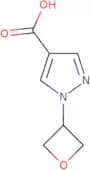
1-(Oxetan-3-yl)-1H-pyrazole-4-carboxylic acid
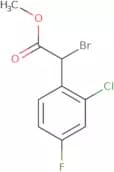
CAS:Versatile small molecule scaffoldFormula:C7H8N2O3Purezza:Min. 95%Peso molecolare:168.15 g/molMethyl 2-bromo-2-(2-chloro-4-fluorophenyl)acetate
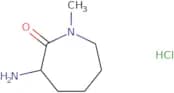
CAS:<p>Versatile small molecule scaffold</p>Formula:C9H7BrClFO2Purezza:Min. 95%Peso molecolare:281.5 g/mol(3R)-3-Amino-1-methylazepan-2-one hydrochloride
CAS:<p>Versatile small molecule scaffold</p>Formula:C7H15ClN2OPurezza:Min. 95%Peso molecolare:178.66 g/mol[(3S)-6-Fluoro-1,2,3,4-tetrahydroisoquinolin-3-yl]methanol
CAS:<p>Versatile small molecule scaffold</p>Formula:C10H12FNOPurezza:Min. 95%Peso molecolare:181.21 g/mol1-{2-Fluoro-4-[(2,4,6-trimethylphenyl)methoxy]phenyl}ethan-1-one
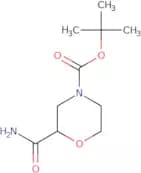
CAS:<p>Versatile small molecule scaffold</p>Formula:C18H19FO2Purezza:Min. 95%Peso molecolare:286.3 g/mol4-BOC-Morpholine-2-carboxamide
CAS:<p>Versatile small molecule scaffold</p>Formula:C10H18N2O4Purezza:Min. 95%Peso molecolare:230.26 g/mol6-[(2,2,6,6-Tetramethylpiperidin-4-yl)amino]pyridine-3-carbonitrile
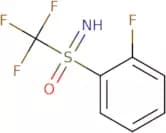
CAS:<p>Versatile small molecule scaffold</p>Formula:C15H22N4Purezza:Min. 95%Peso molecolare:258.36 g/mol(2-Fluorophenyl)(imino)(trifluoromethyl)-λ6-sulfanone
CAS:<p>Versatile small molecule scaffold</p>Formula:C7H5F4NOSPurezza:Min. 95%Peso molecolare:227.18 g/mol(1R,5R)-2-Azabicyclo[3.2.0]heptane hydrochloride
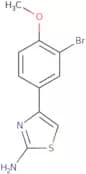
CAS:<p>Please enquire for more information about (1R,5R)-2-Azabicyclo[3.2.0]heptane hydrochloride including the price, delivery time and more detailed product information at the technical inquiry form on this page</p>Formula:C6H11N•HClPurezza:Min. 95%Peso molecolare:133.62 g/mol4-(3-Bromo-4-methoxyphenyl)-1,3-thiazol-2-amine
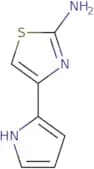
CAS:<p>Versatile small molecule scaffold</p>Formula:C10H9BrN2OSPurezza:Min. 95%Peso molecolare:285.16 g/mol4-(1H-Pyrrol-2-yl)-1,3-thiazol-2-amine
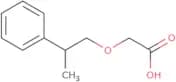
CAS:<p>Versatile small molecule scaffold</p>Formula:C7H7N3SPurezza:Min. 95%Peso molecolare:165.22 g/mol2-(2-Phenylpropoxy)acetic acid
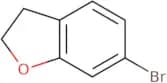
CAS:<p>Versatile small molecule scaffold</p>Formula:C11H14O3Purezza:Min. 95%Peso molecolare:194.23 g/mol6-Bromo-2,3-dihydrobenzofuran
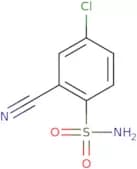
CAS:<p>6-Bromo-2,3-dihydrobenzofuran is an endothelin receptor antagonist that has been shown to have a high affinity for the endothelin receptor. It has been shown to inhibit the binding of endothelin to its receptors and therefore prevent the activation of the cells. 6-Bromo-2,3-dihydrobenzofuran is synthesized by reacting a Grignard reagent with 2,6-dichlorobenzonitrile in an intramolecular reaction. The resulting enolate is then reacted with aryllithium to form the bromide. The bromide can then be alkylated with chloromethyl methyl ether in an asymmetric synthesis, forming the desired product.</p>Formula:C8H7OBrPurezza:Min. 95%Peso molecolare:199.04 g/mol4-Chloro-2-cyanobenzene-1-sulfonamide
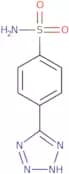
CAS:<p>Versatile small molecule scaffold</p>Formula:C7H5ClN2O2SPurezza:Min. 95%Peso molecolare:216.65 g/mol4-(2H-1,2,3,4-Tetrazol-5-yl)benzene-1-sulfonamide
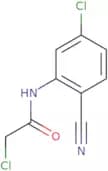
CAS:<p>Versatile small molecule scaffold</p>Formula:C7H7N5O2SPurezza:Min. 95%Peso molecolare:225.23 g/mol2-Chloro-N-(5-chloro-2-cyanophenyl)acetamide
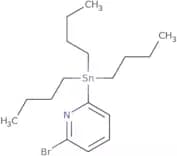
CAS:<p>Versatile small molecule scaffold</p>Formula:C9H6Cl2N2OPurezza:Min. 95%Peso molecolare:229.06 g/mol2-Bromo-6-(tributylstannyl)pyridine
CAS:Prodotto controllato<p>Versatile small molecule scaffold</p>Formula:C17H30BrNSnPurezza:Min. 95%Peso molecolare:447.04 g/mol(6R)-1H,4H,5H,6H,7H-Imidazo[4,5-c]pyridine-6-carboxylic acid
CAS:<p>Versatile small molecule scaffold</p>Formula:C7H9N3O2Purezza:Min. 95%Peso molecolare:167.17 g/mol5,6-dichloro-3H-imidazo[4,5-b]pyridine
CAS:<p>Versatile small molecule scaffold</p>Formula:C6H3Cl2N3Purezza:Min. 95%Peso molecolare:188.01 g/mol6-Chloro-2-(trifluoromethyl)imidazo[1,2-a]pyridine
CAS:Versatile small molecule scaffoldFormula:C8H4ClF3N2Purezza:Min. 95%Peso molecolare:220.58 g/mol2-Amino-2-(2,4-difluorophenyl)acetonitrile
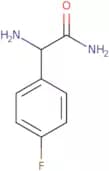
CAS:<p>Versatile small molecule scaffold</p>Formula:C8H6F2N2Purezza:Min. 95%Peso molecolare:168.14 g/mol2-Amino-2-(4-fluorophenyl)acetamide
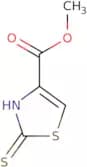
CAS:<p>Versatile small molecule scaffold</p>Formula:C8H9FN2OPurezza:Min. 95%Peso molecolare:168.17 g/molMethyl 2-sulfanyl-1,3-thiazole-4-carboxylate
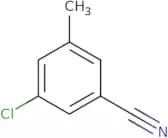
CAS:<p>Versatile small molecule scaffold</p>Formula:C5H5NO2S2Purezza:Min. 95%Peso molecolare:175.2 g/mol3-Chloro-5-methylbenzonitrile
CAS:<p>3-Chloro-5-methylbenzonitrile belongs to the class of carboxylic arylboronic acids, which are used in the synthesis of amides, ketones, and esters. The transformation of 3-chloro-5-methylbenzonitrile can be achieved by nitriles or tetrazoles. Nitriles are converted into cyanation products by treatment with hydrogen cyanide (HCN). Tetrazole is converted into a heteroarene by treatment with sodium azide (NaN3). The resulting heteroarenes can react with an ester to produce a substituted benzene.</p>Formula:C8H6ClNPurezza:Min. 95%Peso molecolare:151.59 g/mol5-Methyl-2-(tributylstannyl)pyridine
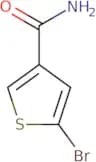
CAS:Prodotto controllato<p>5-Methyl-2-(tributylstannyl)pyridine (MTBP) is a ligand that has been used to polymerize ethylene. It is synthesized by the hydrosilylation of 2-bromopyridine with tributyltin hydride, followed by reaction with trimethylaluminium in a cavity. MTBP has been shown to be an effective catalyst for the hydrosilylation of olefins, where it can be used as a replacement for bulky and expensive transition metals such as platinum. 5-Methyl-2-(tributylstannyl)pyridine can also be used to catalyze the synthesis of supramolecular structures and photophysical processes.</p>Formula:C18H33NSnPurezza:Min. 95%Peso molecolare:382.17 g/mol5-Bromothiophene-3-carboxamide
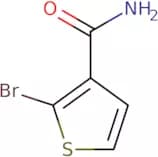
CAS:<p>Versatile small molecule scaffold</p>Formula:C5H4BrNOSPurezza:Min. 95%Peso molecolare:206.06 g/mol2-Bromothiophene-3-carboxamide
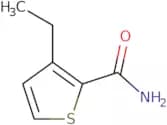
CAS:<p>Versatile small molecule scaffold</p>Formula:C5H4BrNOSPurezza:Min. 95%Peso molecolare:206.06 g/mol3-Ethylthiophene-2-carboxamide
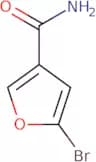
CAS:Versatile small molecule scaffoldFormula:C7H9NOSPurezza:Min. 95%Peso molecolare:155.22 g/mol5-Bromofuran-3-carboxamide
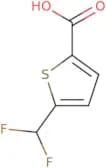
CAS:<p>Versatile small molecule scaffold</p>Formula:C5H4BrNO2Purezza:Min. 95%Peso molecolare:189.99 g/mol5-(difluoromethyl)thiophene-2-carboxylic acid
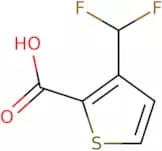
CAS:<p>Versatile small molecule scaffold</p>Formula:C6H4O2F2SPurezza:Min. 95%Peso molecolare:178.15 g/mol3-(Difluoromethyl)thiophene-2-carboxylic acid
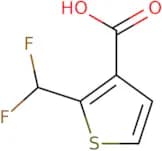
CAS:<p>Versatile small molecule scaffold</p>Formula:C6H4F2O2SPurezza:Min. 95%Peso molecolare:178.16 g/mol2-(Difluoromethyl)thiophene-3-carboxylic acid
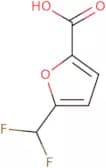
CAS:<p>Versatile small molecule scaffold</p>Formula:C6H4F2O2SPurezza:Min. 95%Peso molecolare:178.16 g/mol5-(Difluoromethyl)furan-2-carboxylic acid
CAS:<p>5-(Difluoromethyl)furan-2-carboxylic acid (5FFA) is a metabolite of the nitrofurantoin antibiotic. It is an orally bioavailable diuretic that has significant enhancement of urinary excretion of water and electrolytes. 5FFA inhibits the activity of the sodium ion transporter, which is responsible for reabsorption of sodium ions in the kidney tubules, and thus increases the excretion rate of sodium ions. In addition, 5FFA inhibits the activity of the potassium ion transporter, and enhances potassium ion excretion. This drug has been shown to have a long-term inhibitory effect on urinary tract infections due to its ability to inhibit bacterial growth. The oral bioavailability of 5FFA is significantly enhanced by combining it with diuretics such as furosemide or ethacrynic acid.<br>5FFA targets bacterial DNA gyrase, topoisomerase IV, and human organic</p>Formula:C6H4F2O3Purezza:Min. 95%Peso molecolare:162.09 g/mol2-Bromo-3-methyl-5-formylthiophene
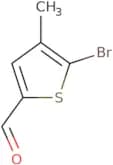
CAS:<p>2-Bromo-3-methyl-5-formylthiophene is a photovoltaic material that can be used in dye-sensitized solar cells. It absorbs light at wavelengths of 300 to 800 nanometers and has a high efficiency of more than 10%. The compound's photophysical properties are sensitive to irradiation, which may be a concern for its use in solar cells. The compound is made up of nanocrystalline thin films that are deposited on an acrylic acid substrate. This process can be done systematically to produce a large number of 2B3MTs.</p>Formula:C6H5BrOSPurezza:Min. 95%Peso molecolare:205.07 g/moltert-Butyl 2-{2-oxo-1-oxa-3,8-diazaspiro[4.5]decan-3-yl}acetate
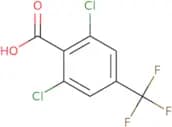
CAS:<p>Versatile small molecule scaffold</p>Formula:C13H22N2O4Purezza:Min. 95%Peso molecolare:270.3 g/mol2,6-Dichloro-4-(trifluoromethyl)benzoic acid
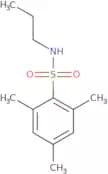
CAS:<p>Versatile small molecule scaffold</p>Formula:C8H3Cl2F3O2Purezza:Min. 95%Peso molecolare:259.01 g/mol2,4,6-Trimethyl-N-propylbenzene-1-sulfonamide
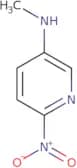
CAS:<p>Versatile small molecule scaffold</p>Formula:C12H19NO2SPurezza:Min. 95%Peso molecolare:241.35 g/molN-Methyl-6-nitropyridin-3-amine
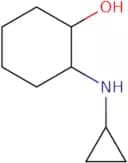
CAS:<p>N-Methyl-6-nitropyridin-3-amine is a pyridine derivative that can stabilize the geometry and conformation of other molecules. It also has a high sensitivity to changes in the environment and is able to react with nitro groups. The nitro group is an electron donor, which stabilizes the nitro group's electrons. This makes it possible for NMPNA to be used as a crystallization agent or to analyze the structure of crystals. The molecule's crystal structure is composed of a pyridine ring with three nitro groups. A parametric analysis was conducted on the effects of different parameters on crystal structures and their diffraction patterns.</p>Formula:C6H7N3O2Purezza:Min. 95%Peso molecolare:153.14 g/molrac-(1R,2R)-2-(Cyclopropylamino)cyclohexan-1-ol
CAS:Versatile small molecule scaffoldFormula:C9H17NOPurezza:Min. 95%Peso molecolare:155.2 g/mol4-(5-Oxo-4,5-dihydro-[1,2,4]oxadiazol-3-yl)-benzoic acid
CAS:<p>Versatile small molecule scaffold</p>Formula:C9H6N2O4Purezza:Min. 95%Peso molecolare:206.15 g/molMethyl 3-amino-6-methoxybenzo[b]thiophene-2-carboxylate
CAS:<p>Versatile small molecule scaffold</p>Formula:C11H11NO3SPurezza:Min. 95%Peso molecolare:237.28 g/mol1-Boc-4-Formyl-4-methylpiperidine
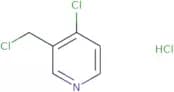
CAS:<p>Versatile small molecule scaffold</p>Formula:C12H21NO3Purezza:Min. 95%Peso molecolare:227.3 g/mol4-Chloro-3-(chloromethyl)pyridine hydrochloride
CAS:<p>Versatile small molecule scaffold</p>Formula:C6H6Cl3NPurezza:Min. 95%Peso molecolare:198.5 g/moltert-Butyl N-[(1H-1,3-benzodiazol-2-yl)methyl]carbamate
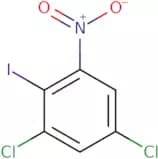
CAS:Versatile small molecule scaffoldFormula:C13H17N3O2Purezza:Min. 95%Peso molecolare:247.29 g/mol1,5-Dichloro-2-iodo-3-nitrobenzene
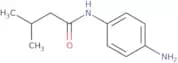
CAS:<p>1,5-Dichloro-2-iodo-3-nitrobenzene is a molecule with a benzene ring and a nitro group. This compound has a dihedral angle of 180° and crystallizes as the orthorhombic system. The crystal structure contains molecules of 1,5-dichloro-2-iodo-3-nitrobenzene that are linked by sharing an edge or corner. The molecule has two chlorines located on the same side of the benzene ring, which gives it a double bond between these two atoms. One of the iodine atoms is located in the 5 position on the benzene ring, while the other is in the 3 position. The nitro group is in the 2 position on the benzene ring. This compound's molecular formula is C 6 H 4 Cl 2 I 2 N 2 O 2 .</p>Formula:C6H2Cl2INO2Purezza:Min. 95%Peso molecolare:317.89 g/molN-(4-Aminophenyl)-3-methylbutanamide
CAS:<p>N-(4-Aminophenyl)-3-methylbutanamide is a chloride ionophore that is used as an antimicrobial agent. It has been shown to be active against E. coli, Staphylococcus aureus, and Proteus mirabilis. The addition of N-(4-aminophenyl)-3-methylbutanamide to the growth medium leads to an increase in the number of protonated molecules on the surface of bacterial cells. This increased proton concentration increases the permeability of bacteria to chloride ions and other halides, thereby causing cell death by osmotic lysis. The activity of this compound is also enhanced by magnetic fields and fluconazole or sulphonamides.</p>Formula:C11H16N2OPurezza:Min. 95%Peso molecolare:192.26 g/mol[(2-Aminophenyl)sulfonyl]acetonitrile
CAS:<p>Versatile small molecule scaffold</p>Formula:C8H8N2O2SPurezza:Min. 95%Peso molecolare:196.23 g/mol4-Chloro-5-(2-thienyl)thieno[2,3-d]pyrimidine
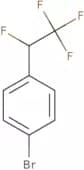
CAS:<p>Versatile small molecule scaffold</p>Formula:C10H5ClN2S2Purezza:Min. 95%Peso molecolare:252.74 g/mol1-Bromo-4-(1,2,2,2-tetrafluoroethyl)benzene
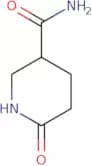
CAS:<p>Versatile small molecule scaffold</p>Formula:C8H5BrF4Purezza:Min. 95%Peso molecolare:257.02 g/mol6-Oxopiperidine-3-carboxamide
CAS:<p>Versatile small molecule scaffold</p>Formula:C6H10N2O2Purezza:Min. 95%Peso molecolare:142.16 g/mol

![[(3S)-6-Fluoro-1,2,3,4-tetrahydroisoquinolin-3-yl]methanol](/_next/image/?url=https%3A%2Fstatic.cymitquimica.com%2Fproducts%2F3D%2Fthumb-webp%2FPFC39115.webp&w=3840&q=75)
![1-{2-Fluoro-4-[(2,4,6-trimethylphenyl)methoxy]phenyl}ethan-1-one](/_next/image/?url=https%3A%2Fstatic.cymitquimica.com%2Fproducts%2F3D%2Fthumb-webp%2FPFC65359.webp&w=3840&q=75)
![6-[(2,2,6,6-Tetramethylpiperidin-4-yl)amino]pyridine-3-carbonitrile](/_next/image/?url=https%3A%2Fstatic.cymitquimica.com%2Fproducts%2F3D%2Fthumb-webp%2FPFC93519.webp&w=3840&q=75)
![(1R,5R)-2-Azabicyclo[3.2.0]heptane hydrochloride](/_next/image/?url=https%3A%2Fstatic.cymitquimica.com%2Fproducts%2F3D%2Fthumb-webp%2FPFE37098.webp&w=3840&q=75)
![(6R)-1H,4H,5H,6H,7H-Imidazo[4,5-c]pyridine-6-carboxylic acid](/_next/image/?url=https%3A%2Fstatic.cymitquimica.com%2Fproducts%2F3D%2Fthumb-webp%2FPHA10050.webp&w=3840&q=75)
![5,6-dichloro-3H-imidazo[4,5-b]pyridine](/_next/image/?url=https%3A%2Fstatic.cymitquimica.com%2Fproducts%2F3D%2Fthumb-webp%2FPHA10297.webp&w=3840&q=75)
![6-Chloro-2-(trifluoromethyl)imidazo[1,2-a]pyridine](/_next/image/?url=https%3A%2Fstatic.cymitquimica.com%2Fproducts%2F3D%2Fthumb-webp%2FPHA11620.webp&w=3840&q=75)

![tert-Butyl 2-{2-oxo-1-oxa-3,8-diazaspiro[4.5]decan-3-yl}acetate](/_next/image/?url=https%3A%2Fstatic.cymitquimica.com%2Fproducts%2F3D%2Fthumb-webp%2FPHA33369.webp&w=3840&q=75)
![4-(5-Oxo-4,5-dihydro-[1,2,4]oxadiazol-3-yl)-benzoic acid](/_next/image/?url=https%3A%2Fstatic.cymitquimica.com%2Fproducts%2F3D%2Fthumb-webp%2FPHA36592.webp&w=3840&q=75)
![Methyl 3-amino-6-methoxybenzo[b]thiophene-2-carboxylate](/_next/image/?url=https%3A%2Fstatic.cymitquimica.com%2Fproducts%2F3D%2Fthumb-webp%2FPHA43955.webp&w=3840&q=75)

![tert-Butyl N-[(1H-1,3-benzodiazol-2-yl)methyl]carbamate](/_next/image/?url=https%3A%2Fstatic.cymitquimica.com%2Fproducts%2F3D%2Fthumb-webp%2FPHA56083.webp&w=3840&q=75)
![[(2-Aminophenyl)sulfonyl]acetonitrile](/_next/image/?url=https%3A%2Fstatic.cymitquimica.com%2Fproducts%2F3D%2Fthumb-webp%2FPHA62469.webp&w=3840&q=75)
![4-Chloro-5-(2-thienyl)thieno[2,3-d]pyrimidine](/_next/image/?url=https%3A%2Fstatic.cymitquimica.com%2Fproducts%2F3D%2Fthumb-webp%2FPHA68104.webp&w=3840&q=75)