Building Blocks
Questa sezione contiene prodotti fondamentali per la sintesi di composti organici e biologici. Building blocks sono i materiali di partenza essenziali utilizzati per costruire molecole complesse attraverso varie reazioni chimiche. Svolgono un ruolo critico nella scoperta di farmaci, nella scienza dei materiali e nella ricerca chimica. Presso CymitQuimica, offriamo una gamma diversificata di building blocks di alta qualità per supportare le tue ricerche innovative e progetti industriali, assicurandoti di avere i componenti essenziali per una sintesi di successo.
Sottocategorie di "Building Blocks"
- Acidi boronici e derivati dell'acido boronico(5.778 prodotti)
- Building Blocks Chirali(1.242 prodotti)
- Building Blocks Idrocarburici(6.098 prodotti)
- Building Blocks organici(61.098 prodotti)
Trovati 199594 prodotti di "Building Blocks"
Ordinare per
Purezza (%)
0
100
|
0
|
50
|
90
|
95
|
100
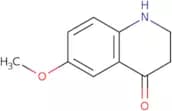
6-Methoxy-2,3-dihydroquinolin-4(1H)-one
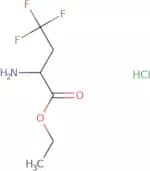
CAS:<p>6-Methoxy-2,3-dihydroquinolin-4(1H)-one is a target compound that can be synthesized in an intramolecular condensation process. In this reaction, two molecules of acetone react with each other to form a cyclic six-membered ring. The hydrolysis of the ester bond then releases the desired product. This process is catalyzed by glutathione reductase and requires NADPH as a cofactor.</p>Formula:C10H11NO2Purezza:Min. 95%Peso molecolare:177.2 g/molEthyl 2-amino-4,4,4-trifluorobutanoate hydrochloride
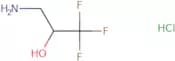
CAS:Versatile small molecule scaffoldFormula:C6H11ClF3NO2Purezza:Min. 95%Peso molecolare:221.6 g/mol3-Amino-1,1,1-trifluoropropan-2-ol hydrochloride
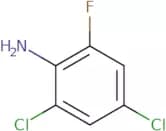
CAS:<p>Versatile small molecule scaffold</p>Formula:C3H7ClF3NOPurezza:Min. 95%Peso molecolare:165.54 g/mol2,4-dichloro-6-fluoroaniline
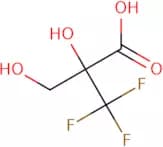
CAS:<p>Versatile small molecule scaffold</p>Formula:C6H4Cl2FNPurezza:Min. 95%Peso molecolare:180 g/mol3,3,3-Trifluoro-2-hydroxy-2-(hydroxymethyl)propanoic acid
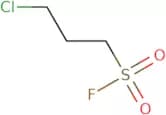
CAS:<p>Versatile small molecule scaffold</p>Formula:C4H5F3O4Purezza:Min. 95%Peso molecolare:174.08 g/mol3-Chloropropane-1-sulfonyl fluoride
CAS:<p>Versatile small molecule scaffold</p>Formula:C3H6ClFO2SPurezza:Min. 95%Peso molecolare:160.6 g/molPiperacetazine
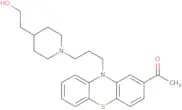
CAS:Prodotto controllato<p>Piperacetazine is a drug used to treat symptoms of depression and anxiety among the elderly. It has also been studied as a treatment for psychiatric patients who have not responded to other treatments. Piperacetazine belongs to the class of drugs known as CNS depressants, and is often prescribed by doctors in conjunction with other medications. Piperacetazine also has anti-inflammatory properties and can be used in the treatment of inflammatory diseases such as rheumatoid arthritis. The drug is not effective against viral infections, but it may be useful in treating some bacterial infections because it inhibits the growth of bacteria by binding to DNA-dependent RNA polymerase, thereby preventing transcription and replication. Piperacetazine is usually administered orally at doses between 10 mg and 50 mg per day, depending on the severity of symptoms.</p>Formula:C24H30N2O2SPurezza:Min. 95%Peso molecolare:410.57 g/molEthyl 2-[(2-methylpropyl)amino]acetate
CAS:<p>Versatile small molecule scaffold</p>Formula:C8H17NO2Purezza:Min. 95%Peso molecolare:159.23 g/mol2-[(2-Methylpropyl)amino]acetic acid hydrochloride
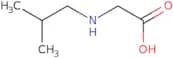
CAS:<p>Versatile small molecule scaffold</p>Formula:C6H14ClNO2Purezza:Min. 95%Peso molecolare:167.63 g/mol2-(2-Methylpropylamino)acetic acid
CAS:<p>2-(2-Methylpropylamino)acetic acid is a proteinogenic amino acid and an inhibitor of the enzyme phospholipase A2. It has been shown to inhibit TNF-alpha production in human monocytes, suggesting a possible therapeutic use for autoimmune diseases. It is also an inhibitor of the receptor activity of gabapentin and may be used as a replacement for this drug in the treatment of epilepsy. 2-(2-Methylpropylamino)acetic acid inhibits apoptosis in some cells, which may have implications for inflammatory diseases. This molecule shows promise as an anti-inflammatory agent that can inhibit the production of cytokines without affecting normal immune responses.</p>Formula:C6H13NO2Purezza:Min. 95%Peso molecolare:131.17 g/mol2-[(Prop-2-en-1-yl)amino]acetic acid hydrochloride
CAS:<p>Versatile small molecule scaffold</p>Formula:C5H10ClNO2Purezza:Min. 95%Peso molecolare:151.59 g/mol3,3-Dimethylpentanoic acid
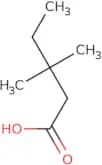
CAS:<p>3,3-Dimethylpentanoic acid is a chiral compound with the molecular formula CH(CH)COOH. It is an organic acid that is naturally produced by plants and animals as a metabolic intermediate. 3,3-Dimethylpentanoic acid has been used in pharmaceuticals, dyestuffs, and carbonaceous materials. The two stereoisomers of this compound are cis-3,3-dimethylpentanoic acid and trans-3,3-dimethylpentanoic acid. Trans-3,3-dimethylpentanoic acid is also known as norvaline because it is found in valine. This molecule can exist in two different conformations: the alpha and beta forms. The alpha form has a linear geometry whereas the beta form has a bent geometry.</p>Formula:C7H14O2Purezza:Min. 95%Peso molecolare:130.18 g/mol3-Methyl[1,2,4]triazolo[3,4-b][1,3,4]thiadiazol-6-amine
CAS:<p>Versatile small molecule scaffold</p>Formula:C4H5N5SPurezza:Min. 95%Peso molecolare:155.18 g/mol[1,2,4]Triazolo[3,4-b][1,3,4]thiadiazol-6-amine
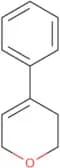
CAS:<p>Versatile small molecule scaffold</p>Formula:C3H3N5SPurezza:Min. 95%Peso molecolare:141.16 g/mol4-Phenyl-5,6-dihydro-2H-pyran
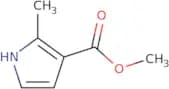
CAS:<p>Versatile small molecule scaffold</p>Formula:C11H12OPurezza:Min. 95%Peso molecolare:160.21 g/molMethyl 2-methyl-1H-pyrrole-3-carboxylate
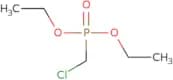
CAS:<p>Versatile small molecule scaffold</p>Formula:C7H9NO2Purezza:Min. 95%Peso molecolare:139.15 g/molDiethyl (Chloromethyl)phosphonate
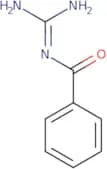
CAS:<p>Diethyl (chloromethyl)phosphonate is a molecule that has been used as a chemical reagent and in the synthesis of other organic compounds. It is an asymmetric synthesis and it has been shown to be effective for the treatment of blood pressure, bowel disease, or infectious diseases. The chemical stability of this compound is due to its resistance to nucleophilic attack by water. Diethyl (chloromethyl)phosphonate also has functional groups that are suitable for detergent compositions. This compound can also be used as a precursor in the synthesis of other substances such as caspases, which are enzymes involved in apoptosis.</p>Formula:C5H12ClO3PPurezza:Min. 95%Peso molecolare:186.57 g/molN-Carbamimidoylbenzamide
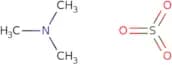
CAS:<p>N-Carbamimidoylbenzamide is a diagnostic agent that is used to diagnose metabolic disorders. It is also used as a pharmaceutical preparation in the treatment of cardiac and neurological disorders. N-Carbamimidoylbenzamide binds to creatine kinase, which is an enzyme involved in the transfer of phosphate groups from ATP to creatine. It inhibits the phosphorylation of creatine and decreases its ability to transfer phosphate groups, leading to decreased cellular energy production. N-Carbamimidoylbenzamide has been shown to inhibit cardiac phosphodiesterases and increase diastolic pressure. The binding affinity of N-Carbamimidoylbenzamide for thrombin receptor is greater than that for myocardial infarct.</p>Formula:C8H9N3OPurezza:Min. 95%Peso molecolare:163.18 g/molSulfur Trioxide Trimethylamine Complex
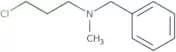
CAS:<p>Sulfur Trioxide Trimethylamine Complex is a metabolic disorder drug that is used to treat hepatic steatosis. It inhibits the production of fatty acids and hydroxyl groups by inhibiting de novo lipogenesis in the liver. The reaction solution of this drug has been shown to inhibit the growth of Hl-60 cells, which are human leukemia cells. The surface methodology for this drug has been shown to be effective against bacteria such as Pseudomonas aeruginosa and Staphylococcus aureus. Sulfur Trioxide Trimethylamine Complex also binds to bacterial 16S ribosomal RNA and inhibits protein synthesis, leading to cell death by inhibiting the production of proteins vital for cell division. This drug also has been shown to have antimicrobial properties through its ability to inhibit bacterial phospholipid synthesis, which may lead to death by lysis or inhibition of cell membrane function.</p>Formula:C3H9NO3SPurezza:Min. 95%Peso molecolare:139.17 g/molBenzyl(3-chloropropyl)methylamine
CAS:<p>Benzyl(3-chloropropyl)methylamine is a chemical compound that has been used as an assay chemical and in pharmacological research. It has been shown to be effective against neuropathic pain and depression, but not psychosis or cancer. In addition, benzyl(3-chloropropyl)methylamine has affinity for the σ1 receptor, which is found in the brain and spinal cord.</p>Formula:C11H16ClNPurezza:Min. 95%Peso molecolare:197.7 g/molMoroxydine hydrochloride
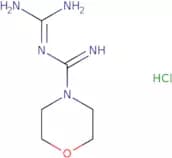
CAS:<p>Moroxydine hydrochloride is a natural compound that has been shown to have anti-infective properties. It has been used as a plate test to identify infectious diseases and resistant mutants, as well as an analytical method for measuring the concentration of proteins in biological samples. Moroxydine hydrochloride is used in experimental models to study the response element and matrix effect, which are factors that affect enzyme activity. This drug also has protein genes that can inhibit viruses. Moroxydine hydrochloride can be used as an inhibitor of virus replication and is effective against HIV-1 and hepatitis C virus (HCV) in human serum. The drug was also shown to be active against herpes simplex virus type I (HSV-1).</p>Formula:C6H13N5O·HClPurezza:Min. 95%Peso molecolare:207.66 g/mol1H,2H,3H,4H,6H,7H,8H,9H-Cyclohexa[G]isoquinoline hydrochloride
CAS:<p>Versatile small molecule scaffold</p>Formula:C13H18ClNPurezza:Min. 95%Peso molecolare:223.74 g/mol2-Cyclopropylbenzoic acid
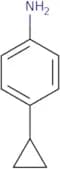
CAS:<p>Versatile small molecule scaffold</p>Formula:C10H10O2Purezza:Min. 95%Peso molecolare:162.19 g/mol4-Cyclopropylaniline
CAS:4-Cyclopropylaniline is a terminal, mesogenic section with the cycloalkyl group. A liquid crystal is a phase of matter that displays an ordered arrangement of molecules and exhibits properties intermediate between those of liquids and solids. The molecules in a liquid crystal are typically rod- or disc-shaped, but can also be spherical. Liquid crystals have some degree of order at all times, but they may become more or less ordered over time. This can happen because the molecules are able to rotate freely within the liquid crystal's structure. Crystals are solid materials that have an orderly internal atomic structure. Crystals form when atoms or molecules attach to each other in a repeating pattern that extends in all three dimensions. Homologous compounds have similar molecular structures, which means they have similar chemical properties and react similarly with other compounds. The linkage between two adjacent carbon atoms is covalent bonding, while the linkage between two adjacent nitrogen atoms is called a single bond.Formula:C9H11NPurezza:Min. 95%Peso molecolare:133.19 g/mol4-Cyclobutylbenzoic acid
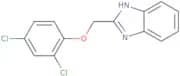
CAS:Prodotto controllato<p>Versatile small molecule scaffold</p>Formula:C11H12O2Purezza:Min. 95%Peso molecolare:176.21 g/mol2-(2,4-Dichlorophenoxymethyl)-1H-1,3-benzodiazole
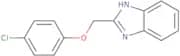
CAS:<p>Versatile small molecule scaffold</p>Formula:C14H10Cl2N2OPurezza:Min. 95%Peso molecolare:293.1 g/mol2-(4-Chlorophenoxymethyl)-1H-1,3-benzodiazole
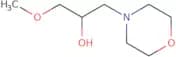
CAS:<p>Versatile small molecule scaffold</p>Formula:C14H11ClN2OPurezza:Min. 95%Peso molecolare:258.7 g/mol1-Methoxy-3-(morpholin-4-yl)propan-2-ol
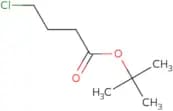
CAS:Versatile small molecule scaffoldFormula:C8H17NO3Purezza:Min. 95%Peso molecolare:175.23 g/moltert-Butyl 4-chlorobutanoate
CAS:<p>Versatile small molecule scaffold</p>Formula:C8H15ClO2Purezza:Min. 95%Peso molecolare:178.65 g/mol2-(Octylcarbamoyl)acetic acid
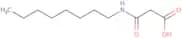
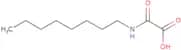
CAS:<p>Versatile small molecule scaffold</p>Formula:C11H21NO3Purezza:Min. 95%Peso molecolare:215.29 g/mol(Octylcarbamoyl)formic acid
CAS:<p>Versatile small molecule scaffold</p>Formula:C10H19NO3Purezza:Min. 95%Peso molecolare:201.26 g/mol2-(3-Methoxyphenyl)propanoic acid
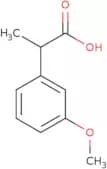
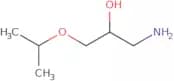
CAS:<p>Versatile small molecule scaffold</p>Formula:C10H12O3Purezza:Min. 95%Peso molecolare:180.2 g/mol1-Amino-3-(propan-2-yloxy)propan-2-ol
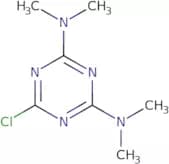
CAS:<p>Versatile small molecule scaffold</p>Formula:C6H15NO2Purezza:Min. 95%Peso molecolare:133.19 g/mol6-Chloro-2-N,2-N,4-N,4-N-tetramethyl-1,3,5-triazine-2,4-diamine
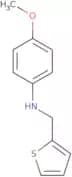
CAS:Hexamethylmelamine, also known as hexamethylenetetramine (HMT), is an organic chemical compound that is a derivative of melamine. Hexamethylmelamine has been shown to inhibit the growth of tumour cells in vitro and in vivo. The antitumour activity of hexamethylmelamine may be due to its ability to interfere with DNA replication and/or protein synthesis by inhibiting the activity of enzymes such as ribonucleotide reductase or topoisomerase II. Hexamethylmelamine binds to the surface of tumour cells and forms a complex with triazine, which prevents the accumulation of formaldehyde. This prevents the formation of dione, which is important for the microstructure and fluidity of cell membranes.Formula:C7H12ClN5Purezza:Min. 95%Peso molecolare:201.66 g/mol4-Methoxy-N-(thiophen-2-ylmethyl)aniline
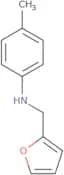
CAS:<p>Versatile small molecule scaffold</p>Formula:C12H13NOSPurezza:Min. 95%Peso molecolare:219.3 g/molN-(Furan-2-ylmethyl)-4-methylaniline
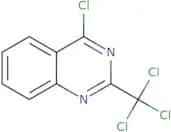
CAS:<p>Versatile small molecule scaffold</p>Formula:C12H13NOPurezza:Min. 95%Peso molecolare:187.24 g/mol4-Chloro-2-(trichloromethyl)quinazoline
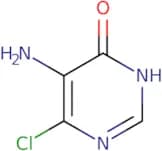
CAS:<p>Versatile small molecule scaffold</p>Formula:C9H4Cl4N2Purezza:Min. 95%Peso molecolare:281.9 g/mol5-Amino-6-chloro-pyrimidin-4-ol
CAS:<p>5-Amino-6-chloro-pyrimidin-4-ol is a triethyl orthoformate. It is prepared by the reaction of anhydrous ammonia with formaldehyde and hydrochloric acid, followed by the addition of ethyl bromide. The product can be converted to 5,6-dichloropyrimidine using base or hydrochloric acid. This compound reacts with water to produce hydrogen chloride gas and 5,6-dichloropyrimidine. 5,6-Dichloropyrimidine can be used as a precursor for other compounds such as 2,5,6-triamino pyrimidinol (2) and 2,5,6-trichloropyridazine (3).</p>Formula:C4H4ClN3OPurezza:Min. 95%Peso molecolare:145.55 g/mol2-(1-Benzothiophen-3-yl)ethan-1-ol
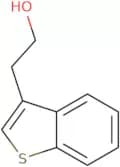
CAS:Versatile small molecule scaffoldFormula:C10H10OSPurezza:Min. 95%Peso molecolare:178.25 g/mol2-Methyl-5-(propan-2-yl)furan-3-carboxylic acid
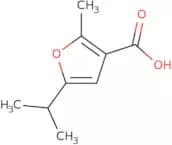
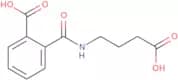
CAS:Versatile small molecule scaffoldFormula:C9H12O3Purezza:Min. 95%Peso molecolare:168.19 g/molN-(3-Carboxy-propyl)-phthalamic acid
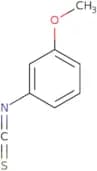
CAS:<p>3-Carboxy-propyl-phthalamic acid is a derivative of 3-mercaptopropionic acid. It has been shown to have ulceration properties in animals, and is currently undergoing clinical trials for the treatment of peptic ulcers. 3-Carboxy-propyl-phthalamic acid is also a potent inhibitor of tnf-α and has been shown to block the synthesis of this cytokine in animals. The anti inflammatory effects are due to its ability to inhibit the production of prostaglandins and leukotrienes. In addition, it blocks the binding of GABA to receptors and inhibits the activity of GABA transaminase. This compound may be used as an antinociceptive agent, but does not provide protection against convulsions or respiratory depression.</p>Formula:C12H13NO5Purezza:Min. 95%Peso molecolare:251.23 g/mol3-Methoxyphenyl isothiocyanate
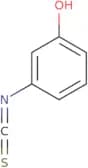
CAS:<p>3-Methoxyphenyl isothiocyanate is a molecule that can be synthesized in the laboratory. It has been shown to have tuberculostatic activity and inhibits the growth of Mycobacterium tuberculosis by inhibiting protein synthesis. This compound also decreases the production of reactive oxygen species, which are implicated in many diseases, including cancer. 3-Methoxyphenyl isothiocyanate has been shown to inhibit the oxidation of thione compounds and also show antioxidant activity.</p>Formula:C8H7NOSPurezza:Min. 95%Peso molecolare:165.21 g/mol3-Isothiocyanatophenol
CAS:<p>Versatile small molecule scaffold</p>Formula:C7H5NOSPurezza:Min. 95%Peso molecolare:151.19 g/mol4-Oxo-1,2,3,4-tetrahydro-[1]naphthoic acid
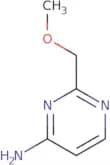
CAS:<p>4-Oxo-1,2,3,4-tetrahydro-[1]naphthoic acid is a versatile compound with various characteristics. It exhibits halides and benzylic properties, making it suitable for different chemical reactions. Additionally, it has been found to interact with 5-HT1A and 5-HT2C receptors, indicating potential applications in the field of neuroscience and mental health research.</p>Formula:C11H10O3Purezza:Min. 95%Peso molecolare:190.2 g/mol2-(Methoxymethyl)pyrimidin-4-amine
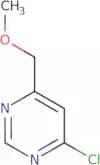
CAS:<p>Versatile small molecule scaffold</p>Formula:C6H9N3OPurezza:Min. 95%Peso molecolare:139.16 g/mol4-Chloro-6-(methoxymethyl)-pyrimidine
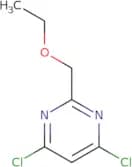
CAS:Versatile small molecule scaffoldFormula:C6H7ClN2OPurezza:Min. 95%Peso molecolare:158.59 g/mol4,6-Dichloro-2-(ethoxymethyl)pyrimidine
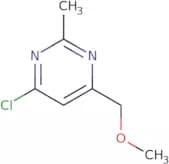
CAS:<p>Versatile small molecule scaffold</p>Formula:C7H8Cl2N2OPurezza:Min. 95%Peso molecolare:207.05 g/mol4-Chloro-6-methoxymethyl-2-methyl-pyrimidine
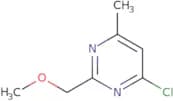
CAS:<p>Versatile small molecule scaffold</p>Formula:C7H9ClN2OPurezza:Min. 95%Peso molecolare:172.61 g/mol4-chloro-2-(methoxymethyl)-6-methylpyrimidine
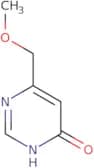
CAS:Versatile small molecule scaffoldFormula:C7H9N2OClPurezza:Min. 95%Peso molecolare:172.61 g/mol6-(Methoxymethyl)-4-pyrimidinol
CAS:<p>Versatile small molecule scaffold</p>Formula:C6H8N2O2Purezza:Min. 95%Peso molecolare:140.14 g/mol

![Ethyl 2-[(2-methylpropyl)amino]acetate](/_next/image/?url=https%3A%2Fstatic.cymitquimica.com%2Fproducts%2F3D%2Fthumb-webp%2FDAA18287.webp&w=3840&q=75)
![2-[(2-Methylpropyl)amino]acetic acid hydrochloride](/_next/image/?url=https%3A%2Fstatic.cymitquimica.com%2Fproducts%2F3D%2Fthumb-webp%2FDAA18286.webp&w=3840&q=75)
![2-[(Prop-2-en-1-yl)amino]acetic acid hydrochloride](/_next/image/?url=https%3A%2Fstatic.cymitquimica.com%2Fproducts%2F3D%2Fthumb-webp%2FDAA18278.webp&w=3840&q=75)
![3-Methyl[1,2,4]triazolo[3,4-b][1,3,4]thiadiazol-6-amine](/_next/image/?url=https%3A%2Fstatic.cymitquimica.com%2Fproducts%2F3D%2Fthumb-webp%2FDAA17651.webp&w=3840&q=75)
![[1,2,4]Triazolo[3,4-b][1,3,4]thiadiazol-6-amine](/_next/image/?url=https%3A%2Fstatic.cymitquimica.com%2Fproducts%2F3D%2Fthumb-webp%2FDAA17650.webp&w=3840&q=75)
![1H,2H,3H,4H,6H,7H,8H,9H-Cyclohexa[G]isoquinoline hydrochloride](/_next/image/?url=https%3A%2Fstatic.cymitquimica.com%2Fproducts%2F3D%2Fthumb-webp%2FDAA16023.webp&w=3840&q=75)
![4-Oxo-1,2,3,4-tetrahydro-[1]naphthoic acid](/_next/image/?url=https%3A%2Fstatic.cymitquimica.com%2Fproducts%2F3D%2Fthumb-webp%2FDAA12346.webp&w=3840&q=75)