Building Blocks
Questa sezione contiene prodotti fondamentali per la sintesi di composti organici e biologici. Building blocks sono i materiali di partenza essenziali utilizzati per costruire molecole complesse attraverso varie reazioni chimiche. Svolgono un ruolo critico nella scoperta di farmaci, nella scienza dei materiali e nella ricerca chimica. Presso CymitQuimica, offriamo una gamma diversificata di building blocks di alta qualità per supportare le tue ricerche innovative e progetti industriali, assicurandoti di avere i componenti essenziali per una sintesi di successo.
Sottocategorie di "Building Blocks"
- Acidi boronici e derivati dell'acido boronico(5.778 prodotti)
- Building Blocks Chirali(1.243 prodotti)
- Building Blocks Idrocarburici(6.098 prodotti)
- Building Blocks organici(61.057 prodotti)
Trovati 200716 prodotti di "Building Blocks"
Ordinare per
Purezza (%)
0
100
|
0
|
50
|
90
|
95
|
100
[2-(Dimethylamino)pyridin-3-yl]methanol
CAS:<p>Versatile small molecule scaffold</p>Formula:C8H12N2OPurezza:Min. 95%Peso molecolare:152.19 g/mol1-[2-(Dimethylamino)phenyl]ethan-1-ol
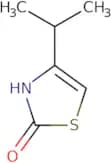
CAS:<p>Versatile small molecule scaffold</p>Formula:C10H15NOPurezza:Min. 95%Peso molecolare:165.23 g/mol4-(Propan-2-yl)-2,3-dihydro-1,3-thiazol-2-one
CAS:<p>Versatile small molecule scaffold</p>Formula:C6H9NOSPurezza:Min. 95%Peso molecolare:143.21 g/mol3-(tert-Butoxy)propanal
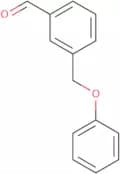
CAS:<p>Versatile small molecule scaffold</p>Formula:C11H24O3Purezza:Min. 95%Peso molecolare:204.31 g/mol3-(Phenoxymethyl)benzaldehyde
CAS:Versatile small molecule scaffoldFormula:C14H12O2Purezza:Min. 95%Peso molecolare:212.24 g/mol2-[(Prop-2-yn-1-yl)amino]acetic acid hydrochloride
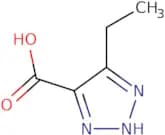
CAS:<p>2-[(Prop-2-yn-1-yl)amino]acetic acid hydrochloride (PAH) is a molecule that is being studied for its potential as a broad-spectrum antimicrobial. PAH has been shown to inhibit the growth of bacteria, fungi, and viruses by binding to the ATP channel on the mitochondrial membrane. This binding inhibits ATP synthesis and prevents cell division. PAH also has antimicrobial activity against Gram negative bacteria through a mechanism that is not yet known. PAH has been shown to decrease muscle cell proliferation in rats by inhibiting protein synthesis and increasing apoptosis. PAH is synthesized from propionic acid and acetamide via asymmetric hydrogenation, which can be accomplished using an organocatalyst such as palladium on carbon or nickel on carbon.</p>Formula:C5H8ClNO2Purezza:Min. 95%Peso molecolare:149.57 g/mol5-Ethyl-1H-1,2,3-triazole-4-carboxylic acid
CAS:Versatile small molecule scaffoldFormula:C5H7N3O2Purezza:Min. 95%Peso molecolare:141.13 g/mol3,3-Dimethyl-1-[2-(trifluoromethyl)phenyl]butan-2-one
CAS:Versatile small molecule scaffoldFormula:C13H15F3OPurezza:Min. 95%Peso molecolare:244.25 g/mol2-Methyl-3-(thiophen-2-yl)propanoic acid
CAS:<p>2-Methyl-3-(thiophen-2-yl)propanoic acid is a mucolytic agent that belongs to the group of benzoic acid derivatives. It is used as an expectorant and mucolytic drug. This drug has been shown to dissolve mucus in the airways, which may be due to its ability to inhibit the activity of glycosidases.</p>Formula:C8H10O2SPurezza:Min. 95%Peso molecolare:170.23 g/mol6,7-Diamino-1,2,3,4-tetrahydroquinolin-2-one
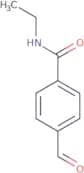
CAS:Versatile small molecule scaffoldFormula:C9H11N3OPurezza:Min. 95%Peso molecolare:177.2 g/molN-Ethyl-4-formylbenzamide
CAS:<p>Versatile small molecule scaffold</p>Formula:C10H11NO2Purezza:Min. 95%Peso molecolare:177.2 g/mol2-[(6-Chloropyridin-2-yl)oxy]ethan-1-ol
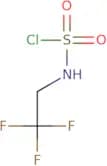
CAS:Versatile small molecule scaffoldFormula:C7H8ClNO2Purezza:Min. 95%Peso molecolare:173.6 g/molN-(2,2,2-Trifluoroethyl)sulfamoyl chloride
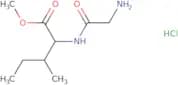
CAS:Versatile small molecule scaffoldFormula:C2H3ClF3NO2SPurezza:Min. 95%Peso molecolare:197.56 g/molMethyl (2S,3S)-2-(2-aminoacetamido)-3-methylpentanoate hydrochloride
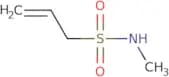
CAS:Versatile small molecule scaffoldFormula:C9H19ClN2O3Purezza:Min. 95%Peso molecolare:238.7 g/molN-Methylprop-2-ene-1-sulfonamide
CAS:<p>Versatile small molecule scaffold</p>Formula:C4H9NO2SPurezza:Min. 95%Peso molecolare:135.19 g/mol3-Amino-N-[2-(diethylamino)ethyl]benzamide
CAS:Versatile small molecule scaffoldFormula:C13H21N3OPurezza:Min. 95%Peso molecolare:235.33 g/mol3-Aminopropane-1-sulfonamide HCl
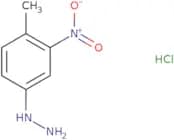
CAS:<p>Versatile small molecule scaffold</p>Formula:C3H10N2O2S·HClPurezza:Min. 95%Peso molecolare:174.65 g/mol(4-Methyl-3-nitrophenyl)hydrazine hydrochloride
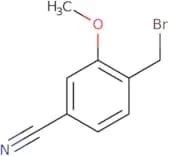
CAS:Versatile small molecule scaffoldFormula:C7H10ClN3O2Purezza:Min. 95%Peso molecolare:203.62 g/mol4-(Bromomethyl)-3-methoxybenzonitrile
CAS:Versatile small molecule scaffoldFormula:C9H8BrNOPurezza:Min. 95%Peso molecolare:226.07 g/molrac-Methyl (3aR,4S,6R,6aS)-6-amino-2,2-dimethyl-hexahydrocyclopenta[D][1,3]dioxole-4-carboxylate hydrochloride
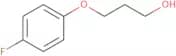
CAS:Versatile small molecule scaffoldFormula:C10H18ClNO4Purezza:Min. 95%Peso molecolare:251.7 g/mol3-(4-Fluorophenoxy)propan-1-ol
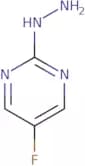
CAS:<p>3-(4-Fluorophenoxy)propan-1-ol is a modification of the parent compound, 3-phenoxypropan-1-ol. The modification is atypical and has been shown to have anti-cancer properties. In addition, this compound has been shown to be an aromatase inhibitor, which prevents the conversion of androgens into estrogens. This may be due to its ability to inhibit the enzyme's activity on substrates such as dopamine, dimethylformamide, or evaporation. 3-(4-Fluorophenoxy)propan-1-ol has also been shown to have serotonin receptor binding profiles that are similar to those of phenoxy compounds such as butyrophenone or piperidine.</p>Formula:C9H11O2FPurezza:Min. 95%Peso molecolare:170.18 g/mol5-Fluoro-2-hydrazinylpyrimidine
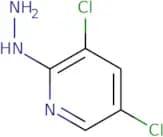
CAS:<p>Versatile small molecule scaffold</p>Formula:C4H5FN4Purezza:Min. 95%Peso molecolare:128.11 g/mol3,5-dichloro-2-hydrazinylpyridine
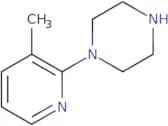
CAS:<p>3,5-Dichloro-2-hydrazinylpyridine is a pyridine derivative that is synthesized by the condensation of pyrazoles with β-unsaturated carbonyl compounds. It is also used as an intermediate for the synthesis of pyrazole derivatives. The compound can be prepared by reacting acetoacetic esters and hydrazine. 3,5-Dichloro-2-hydrazinylpyridine has been shown to interact with pyrazoles, which are intermediates in its synthesis. Pyrazoles are also produced when 3,5-dichloro-2-hydrazinylpyridine reacts with β-unsaturated carbonyl compounds.</p>Formula:C5H5Cl2N3Purezza:Min. 95%Peso molecolare:178.02 g/mol1-(3-Methylpyridin-2-yl)piperazine
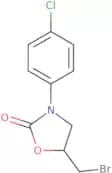
CAS:<p>Versatile small molecule scaffold</p>Formula:C10H15N3Purezza:Min. 95%Peso molecolare:177.25 g/mol5-(Bromomethyl)-3-(4-chlorophenyl)-1,3-oxazolidin-2-one
CAS:Versatile small molecule scaffoldFormula:C10H9BrClNO2Purezza:Min. 95%Peso molecolare:290.54 g/mol2-Bromo-1-[2-(trifluoromethyl)phenyl]propan-1-one
CAS:<p>Versatile small molecule scaffold</p>Formula:C10H8OF3BrPurezza:Min. 95%Peso molecolare:281.06 g/molMethyl (2S)-2-hydroxy-2-(4-methoxyphenyl)acetate
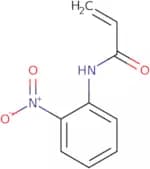
CAS:Versatile small molecule scaffoldFormula:C10H12O4Purezza:Min. 95%Peso molecolare:196.2 g/molN-(2-Nitrophenyl)prop-2-enamide
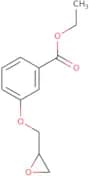
CAS:<p>Versatile small molecule scaffold</p>Formula:C9H8N2O3Purezza:Min. 95%Peso molecolare:192.17 g/molEthyl 3-(oxiran-2-ylmethoxy)benzoate
CAS:Versatile small molecule scaffoldFormula:C12H14O4Purezza:Min. 95%Peso molecolare:222.24 g/mol2-[(1,3-Benzothiazol-2-yl)(methyl)amino]acetic acid
CAS:Versatile small molecule scaffoldFormula:C10H10N2O2SPurezza:Min. 95%Peso molecolare:222.27 g/mol4-[(1,3-Benzothiazol-2-yl)amino]butanoic acid
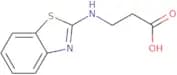
CAS:<p>Versatile small molecule scaffold</p>Formula:C11H12N2O2SPurezza:Min. 95%Peso molecolare:236.29 g/mol3-(Benzothiazol-2-ylamino)-propionic acid
CAS:<p>Versatile small molecule scaffold</p>Formula:C10H10N2O2SPurezza:Min. 95%Peso molecolare:222.27 g/mol2-(Chloromethyl)-N,N-dimethylaniline hydrochloride
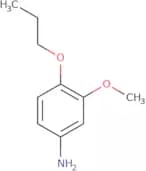
CAS:Versatile small molecule scaffoldFormula:C9H13Cl2NPurezza:Min. 95%Peso molecolare:206.11 g/mol3-Methoxy-4-propoxyaniline
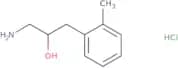
CAS:<p>3-Methoxy-4-propoxyaniline is a chemical compound that belongs to the group of diphenyl ethers. It is used as an insecticide and has shown to be effective against larvae of certain species of Diptera, including Musca domestica. 3-Methoxy-4-propoxyaniline inhibits the synthesis of chitin, leading to the death of insects. 3-Methoxy-4-propoxyaniline has been shown to have a high resistance in vivo and in vitro tests with metarhizium, as well as being effective against other fungi such as Aspergillus niger and Penicillium notatum. This compound can also be found in some plants, such as garlic and onions, where it acts as an alliinase inhibitor.</p>Formula:C10H15NO2Purezza:Min. 95%Peso molecolare:181.23 g/mol1-Amino-3-(2-methylphenyl)propan-2-ol hydrochloride
CAS:Versatile small molecule scaffoldFormula:C10H16ClNOPurezza:Min. 95%Peso molecolare:201.69 g/molN-[2-(2-Methoxyphenyl)ethyl]-N-methylamine
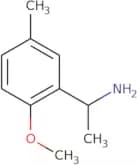
CAS:Prodotto controllatoVersatile small molecule scaffoldFormula:C10H15NOPurezza:Min. 95%Peso molecolare:165.23 g/mol1-(2-Methoxy-5-methylphenyl)ethan-1-amine
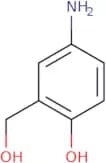
CAS:Versatile small molecule scaffoldFormula:C10H15NOPurezza:Min. 95%Peso molecolare:165.23 g/mol4-Amino-2-(hydroxymethyl)benzenol
CAS:4-Amino-2-(hydroxymethyl)benzenol is a multilayer, which is synthesized in the copper complex. It has synergistic effects with amodiaquine, and can be used to treat blastomycosis. The parameters of 4-Amino-2-(hydroxymethyl)benzenol are dependent on the conditions where it was synthesised.Formula:C7H9NO2Purezza:Min. 95%Peso molecolare:139.16 g/mol10,10-Dimethyl-3λ6-thia-4-azatricyclo[5.2.1.0,1,5]dec-4-ene-3,3-dione
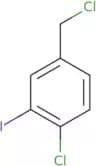
CAS:Versatile small molecule scaffoldFormula:C10H15NO2SPurezza:Min. 95%Peso molecolare:213.3 g/mol1-Chloro-4-(chloromethyl)-2-iodo-benzene
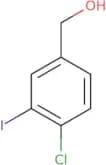
CAS:Versatile small molecule scaffoldFormula:C7H5Cl2IPurezza:Min. 95%Peso molecolare:286.92 g/mol(4-Chloro-3-iodophenyl)methanol
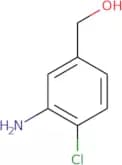
CAS:<p>Versatile small molecule scaffold</p>Formula:C7H6ClIOPurezza:Min. 95%Peso molecolare:268.48 g/mol(3-Amino-4-chlorophenyl)methanol
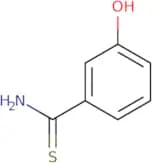
CAS:Versatile small molecule scaffoldFormula:C7H8ClNOPurezza:Min. 95%Peso molecolare:157.6 g/mol3-Hydroxybenzene-1-carbothioamide
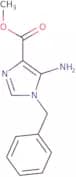
CAS:<p>3-Hydroxybenzene-1-carbothioamide is a methanol derivative that is used to measure the concentration of thiobenzamide in solution. It has a linear calibration curve and can be used in reversed-phase, photometric, and chloride ionization modes. 3-Hydroxybenzene-1-carbothioamide is stable at least for 6 months when stored at room temperature. This compound can be used as an alternative to 3-(2-carboxyethyl)-5,6-dihydrothiazole (TCET) as it has been shown to give similar results with a reproducible response time.</p>Formula:C7H7NOSPurezza:Min. 95%Peso molecolare:153.2 g/molMethyl 5-amino-1-benzyl-1H-imidazole-4-carboxylate
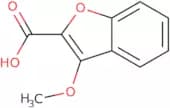
CAS:Versatile small molecule scaffoldFormula:C12H13N3O2Purezza:Min. 95%Peso molecolare:231.25 g/mol3-Methoxy-1-benzofuran-2-carboxylic acid
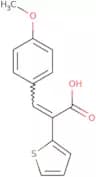
CAS:Versatile small molecule scaffoldFormula:C10H8O4Purezza:Min. 95%Peso molecolare:192.17 g/mol3-(4-Methoxyphenyl)-2-(thiophen-2-yl)prop-2-enoic acid
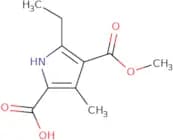
CAS:Versatile small molecule scaffoldFormula:C14H12O3SPurezza:Min. 95%Peso molecolare:260.31 g/mol5-Ethyl-4-(methoxycarbonyl)-3-methyl-1H-pyrrole-2-carboxylic acid
CAS:<p>Versatile small molecule scaffold</p>Formula:C10H13NO4Purezza:Min. 95%Peso molecolare:211.21 g/mol3,4-Diethoxybenzene-1-sulfonamide
CAS:<p>Versatile small molecule scaffold</p>Formula:C10H15NO4SPurezza:Min. 95%Peso molecolare:245.3 g/mol[(2-Ethoxyphenyl)methyl](methyl)amine hydrochloride
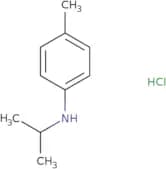
CAS:Versatile small molecule scaffoldFormula:C10H16ClNOPurezza:Min. 95%Peso molecolare:201.69 g/mol4-Methyl-N-(propan-2-yl)aniline hydrochloride
CAS:4-Methyl-N-(propan-2-yl)aniline hydrochloride is a synthetic compound that has been shown to have an inhibitory effect on ion channels, especially the sodium channel. It is used as a research tool and has been shown to activate certain receptors and to be an inhibitor of ligand activation.Formula:C10H16ClNPurezza:Min. 95%Peso molecolare:185.69 g/mol
![[2-(Dimethylamino)pyridin-3-yl]methanol](/_next/image/?url=https%3A%2Fstatic.cymitquimica.com%2Fproducts%2F3D%2Fthumb-webp%2FEEA52465.webp&w=3840&q=75)

![1-[2-(Dimethylamino)phenyl]ethan-1-ol](/_next/image/?url=https%3A%2Fstatic.cymitquimica.com%2Fproducts%2F3D%2Fthumb-webp%2FEEA52450.webp&w=3840&q=75)
![2-[(Prop-2-yn-1-yl)amino]acetic acid hydrochloride](/_next/image/?url=https%3A%2Fstatic.cymitquimica.com%2Fproducts%2F3D%2Fthumb-webp%2FEEA50133.webp&w=3840&q=75)
![3,3-Dimethyl-1-[2-(trifluoromethyl)phenyl]butan-2-one](/_next/image/?url=https%3A%2Fstatic.cymitquimica.com%2Fproducts%2F3D%2Fthumb-webp%2FEEA48368.webp&w=3840&q=75)


![2-[(6-Chloropyridin-2-yl)oxy]ethan-1-ol](/_next/image/?url=https%3A%2Fstatic.cymitquimica.com%2Fproducts%2F3D%2Fthumb-webp%2FEEA47298.webp&w=3840&q=75)
![3-Amino-N-[2-(diethylamino)ethyl]benzamide](/_next/image/?url=https%3A%2Fstatic.cymitquimica.com%2Fproducts%2F3D%2Fthumb-webp%2FEEA45837.webp&w=3840&q=75)

![rac-Methyl (3aR,4S,6R,6aS)-6-amino-2,2-dimethyl-hexahydrocyclopenta[D][1,3]dioxole-4-carboxylate h…](/_next/image/?url=https%3A%2Fstatic.cymitquimica.com%2Fproducts%2F3D%2Fthumb-webp%2FEEA42097.webp&w=3840&q=75)
![2-Bromo-1-[2-(trifluoromethyl)phenyl]propan-1-one](/_next/image/?url=https%3A%2Fstatic.cymitquimica.com%2Fproducts%2F3D%2Fthumb-webp%2FEEA38469.webp&w=3840&q=75)
![2-[(1,3-Benzothiazol-2-yl)(methyl)amino]acetic acid](/_next/image/?url=https%3A%2Fstatic.cymitquimica.com%2Fproducts%2F3D%2Fthumb-webp%2FEEA34492.webp&w=3840&q=75)
![4-[(1,3-Benzothiazol-2-yl)amino]butanoic acid](/_next/image/?url=https%3A%2Fstatic.cymitquimica.com%2Fproducts%2F3D%2Fthumb-webp%2FEEA34478.webp&w=3840&q=75)

![N-[2-(2-Methoxyphenyl)ethyl]-N-methylamine](/_next/image/?url=https%3A%2Fstatic.cymitquimica.com%2Fproducts%2F3D%2Fthumb-webp%2FEEA33826.webp&w=3840&q=75)
![10,10-Dimethyl-3λ6-thia-4-azatricyclo[5.2.1.0,1,5]dec-4-ene-3,3-dione](/_next/image/?url=https%3A%2Fstatic.cymitquimica.com%2Fproducts%2F3D%2Fthumb-webp%2FEEA31935.webp&w=3840&q=75)

amine hydrochloride](/_next/image/?url=https%3A%2Fstatic.cymitquimica.com%2Fproducts%2F3D%2Fthumb-webp%2FEEA29464.webp&w=3840&q=75)