Building Blocks
Questa sezione contiene prodotti fondamentali per la sintesi di composti organici e biologici. Building blocks sono i materiali di partenza essenziali utilizzati per costruire molecole complesse attraverso varie reazioni chimiche. Svolgono un ruolo critico nella scoperta di farmaci, nella scienza dei materiali e nella ricerca chimica. Presso CymitQuimica, offriamo una gamma diversificata di building blocks di alta qualità per supportare le tue ricerche innovative e progetti industriali, assicurandoti di avere i componenti essenziali per una sintesi di successo.
Sottocategorie di "Building Blocks"
- Acidi boronici e derivati dell'acido boronico(5.778 prodotti)
- Building Blocks Chirali(1.243 prodotti)
- Building Blocks Idrocarburici(6.097 prodotti)
- Building Blocks organici(61.048 prodotti)
Trovati 203115 prodotti di "Building Blocks"
Ordinare per
Purezza (%)
0
100
|
0
|
50
|
90
|
95
|
100
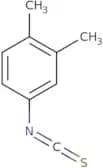
3,4-Dimethylphenyl isothiocyanate
CAS:<p>Versatile small molecule scaffold</p>Formula:C9H9NSPurezza:Min. 95%Peso molecolare:163.24 g/mol1-Ethyl-3-isothiocyanatobenzene
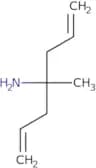
CAS:<p>Versatile small molecule scaffold</p>Formula:C9H9NSPurezza:Min. 95%Peso molecolare:163.24 g/mol1-Allyl-1-methyl-but-3-enylamine
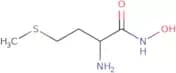
CAS:<p>Versatile small molecule scaffold</p>Formula:C8H15NPurezza:Min. 95%Peso molecolare:125.21 g/mol(2S)-2-Amino-N-hydroxy-4-(methylsulfanyl)butanamide
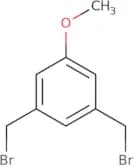
CAS:(2S)-2-Amino-N-hydroxy-4-(methylsulfanyl)butanamide is a ligand that binds to metal ions. It has been shown to bind to the axial coordination site of some transition metals, such as nickel, copper, and zinc. It is classified as a hydroxamic acid and can be used in coordination chemistry. The affinity of (2S)-2-amino-N-hydroxy-4-(methylsulfanyl)butanamide for copper is approximately 100 times stronger than its affinity for nickel. In addition, the red shift of (2S)-2-amino-N-hydroxy-4-(methylsulfanyl)butanamide is a sensitive indicator of the orientation of the ligand in coordination compounds with metal ions.Formula:C5H12N2O2SPurezza:Min. 95%Peso molecolare:164.23 g/mol1,3-Bis(bromomethyl)-5-methoxybenzene
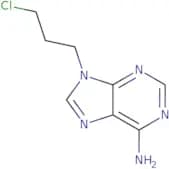
CAS:<p>Versatile small molecule scaffold</p>Formula:C9H10Br2OPurezza:Min. 95%Peso molecolare:293.98 g/mol9-(3-Chloropropyl)-9H-purin-6-amine
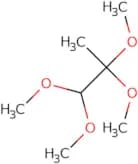
CAS:<p>Versatile small molecule scaffold</p>Formula:C8H10ClN5Purezza:Min. 95%Peso molecolare:211.65 g/mol1,1,2,2-Tetramethoxypropane
CAS:Versatile small molecule scaffoldFormula:C7H16O4Purezza:Min. 95%Peso molecolare:164.2 g/molDibenzo[b,d]furan-4-ol
CAS:<p>Dibenzo[b,d]furan-4-ol is a biodegradable compound that can be synthesized in a stepwise manner. The compound can be assayed by using different methods including mass spectrometric and hplc analyses to determine the number of carbon atoms and functional groups present in the molecule. Dibenzo[b,d]furan-4-ol is used as a carbon source for many microorganisms. The compound has been shown to hydroxylate under aerobic conditions and also reacts with nitro groups to form nitroso derivatives. Magnetic resonance spectroscopy has been used to study the molecular structure of dibenzo[b,d]furan-4-ol, which has revealed that it is monosubstituted with two methyl groups. This compound is naturally found in filamentous fungi found in tropical regions.</p>Formula:C12H8O2Purezza:Min. 95%Peso molecolare:184.19 g/mol2-[(2-Methylphenyl)methyl]butanedioic acid
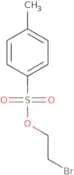
CAS:2-[(2-Methylphenyl)methyl]butanedioic acid is a nitrate that is produced by the conversion of 2-methylbenzylsuccinic acid. It can be used as an electron acceptor in microbial assays and has been shown to have the ability to mineralize carbon sources such as xylene. It has also been shown to be capable of transforming benzoate, benzylsuccinic acid, and other substrates, but it does not form benzaldehyde or other metabolic products. The enzyme responsible for its conversion is a dehydrogenase.Formula:C12H14O4Purezza:Min. 95%Peso molecolare:222.24 g/mol2-Bromoethyl 4-methylbenzenesulfonate
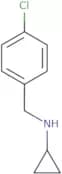
CAS:2-Bromoethyl 4-methylbenzenesulfonate is a molecule that binds to the benzodiazepine receptor and is used in clinical studies. It has been shown to have an uptake of 0.16% per hour, which is much slower than other benzodiazepines such as diazepam. 2-Bromoethyl 4-methylbenzenesulfonate has also been shown to be effective in treating anxiety and depression. The effective dose for this drug is 50 mg/kg, which is much higher than the 10 mg/kg dose of diazepam. This drug has been found to be safe in animals and humans at high doses, but its efficacy against pancreatic cancer remains unknown.Formula:C9H11BrO3SPurezza:Min. 95%Peso molecolare:279.15 g/molN-(4-Chlorobenzyl)-N-cyclopropylamine
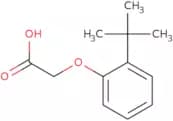
CAS:<p>Versatile small molecule scaffold</p>Formula:C10H12ClNPurezza:Min. 95%Peso molecolare:181.66 g/mol(2-tert-Butyl-phenoxy)-acetic acid
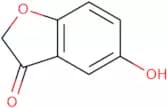
CAS:<p>2-tert-Butyl-phenoxyacetic acid is a chain compound that has a crystal structure with hydrogen bonds. This compound has a disordered conformation and is composed of two dimers connected by hydrogen bonds. The dimers are linked by a benzene ring and form hydrogen-bonded chains. The molecule also has an asymmetric dihedral conformation. 2-tert-Butylphenoxyacetic acid can exist as either of the two conformations, depending on the environment it is in.<br>2-tert-Butylphenoxyacetic acid is soluble in alcohols, ethers, acetone, and chloroform. It has been shown to inhibit the growth of bacteria when used as a preservative agent in food products.</p>Formula:C12H16O3Purezza:Min. 95%Peso molecolare:208.25 g/mol5-Hydroxy-2,3-dihydro-1-benzofuran-3-one
CAS:Versatile small molecule scaffoldFormula:C8H6O3Purezza:Min. 95%Peso molecolare:150.13 g/mol3-{2,4-Dioxo-1,3-diazaspiro[4.5]decan-3-yl}propanoic acid
CAS:Versatile small molecule scaffoldFormula:C11H16N2O4Purezza:Min. 95%Peso molecolare:240.26 g/mol3-{2,4-Dioxo-1,3-diazaspiro[4.5]decan-3-yl}propanenitrile
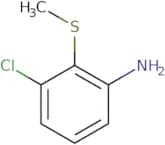
CAS:Versatile small molecule scaffoldFormula:C11H15N3O2Purezza:Min. 95%Peso molecolare:221.26 g/mol3-Chloro-2-(methylsulfanyl)aniline
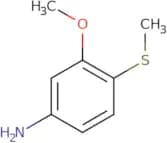
CAS:Versatile small molecule scaffoldFormula:C7H8ClNSPurezza:Min. 95%Peso molecolare:173.66 g/mol3-Methoxy-4-(methylsulfanyl)aniline
CAS:Versatile small molecule scaffoldFormula:C8H11NOSPurezza:Min. 95%Peso molecolare:169.24 g/molN-[(Pentafluorophenyl)methylidene]hydroxylamine
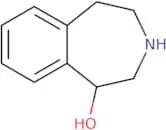
CAS:N-[(Pentafluorophenyl)methylidene]hydroxylamine is a gas that is used as an antibacterial agent. It is proposed to be a triazole derivative and has been shown to inhibit the growth of bacteria by binding to their cell membranes. The mechanism of action may be due to the formation of reactive oxygen species in the bacterial cell membrane, which are generated by cycloadditions with an electron-deficient olefin, such as styrene. This gas is also able to bind with n-oxide groups on benzene molecules, which may explain its effectiveness against benzoyl-containing bacteria.Formula:C7H2F5NOPurezza:Min. 95%Peso molecolare:211.09 g/mol2,3,4,5-Tetrahydro-1H-3-benzazepin-1-ol
CAS:Versatile small molecule scaffoldFormula:C10H13NOPurezza:Min. 95%Peso molecolare:163.22 g/molBenzo[b]thiophen-5-ol
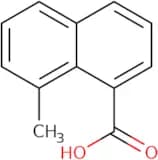
CAS:<p>Benzo[b]thiophen-5-ol is a chiral molecule that has been synthesized to be homochiral. It has an active site and selective epoxide hydration activity, which is the rate-limiting step of epoxide ring opening reactions. The mechanism of this reaction is the cleavage of a C–C bond in an epoxide substrate by an O–H or S–H bond in benzo[b]thiophen-5-ol. The nature of this mechanistic bond cleavage reaction is unknown, but it may be due to catalysis by a benzyl group.</p>Formula:C8H6OSPurezza:Min. 95%Peso molecolare:150.2 g/mol8-Methylnaphthalene-1-carboxylic acid
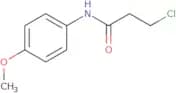
CAS:8-Methylnaphthalene-1-carboxylic acid is an intermediate in the synthesis of acenaphthylene. It is a lactone that can be obtained by irradiation of methanol and acetone with ultraviolet light. 8-Methylnaphthalene-1-carboxylic acid is a dione that can be synthesized from naphthalene and formaldehyde. The chemical reaction involves the formation of a carbene, which reacts with an oxygen molecule to produce a carboxyl group. This intermediate can then undergo pyrolysis to produce acenaphthylene.Formula:C12H10O2Purezza:Min. 95%Peso molecolare:186.21 g/mol3-Chloro-N-(4-methoxyphenyl)propanamide
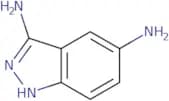
CAS:3-Chloro-N-(4-methoxyphenyl)propanamide (PCMP) is a ligand that binds to aromatic systems. PCMP has been shown to react with alkylating agents, such as methyl iodide and dimethyl sulfate, to form a tetradentate ligand with two chloro groups and two methoxy groups. This compound can be used as a counterion for dianionic complexes, or it can be used for the synthesis of amides by deprotonation followed by intramolecular reaction.Formula:C10H12ClNO2Purezza:Min. 95%Peso molecolare:213.66 g/mol1H-Indazole-3,5-diamine
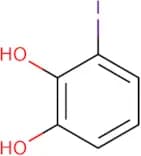
CAS:1H-Indazole-3,5-diamine is a ligand that binds to the active site of the enzyme nitric oxide synthase. The binding of 1H-indazole-3,5-diamine inhibits the conversion of arginine to citrulline and disrupts the interaction between the enzyme and its cofactors. This leads to decreased production of nitric oxide. 1H-Indazole-3,5-diamine has been shown to cause cancer cell death in vitro by inhibiting DNA synthesis and increasing levels of reactive oxygen species. It also inhibits cancer cell growth in vivo by causing apoptosis and necrosis.Formula:C7H8N4Purezza:Min. 95%Peso molecolare:148.17 g/mol3-Iodobenzene-1,2-diol
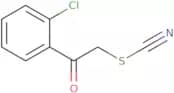
CAS:3-Iodobenzene-1,2-diol is an organic compound with the formula CH3C6H4(OH)2. It is a colorless oil that is insoluble in water and soluble in organic solvents. It can be prepared by reaction of 2,3-dibromobenzene with sodium iodide in ethanol or acetone. 3-Iodobenzene-1,2-diol is used as a reagent for the synthesis of esters from carboxylic acids and alcohols, and for the preparation of boronic acid esters. 3-Iodobenzene-1,2-diol can also be used to synthesize polymers such as polyesters and polycarbonates. The natural product dihydrolycopodine contains a 3-iodo group. It is also used as a synthon in organic chemistry reactions involving electron deficient species.Formula:C6H5IO2Purezza:Min. 95%Peso molecolare:236.01 g/mol1-(2-Chlorophenyl)-2-(cyanosulfanyl)ethan-1-one
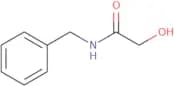
CAS:Versatile small molecule scaffoldFormula:C9H6ClNOSPurezza:Min. 95%Peso molecolare:211.67 g/molN-Benzyl-2-hydroxyacetamide
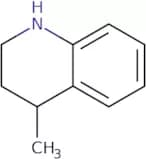
CAS:<p>N-Benzyl-2-hydroxyacetamide is a synthetic molecule that is used in the synthesis of other molecules. It is synthesized by reacting benzaldehyde with 2-aminoethanol in the presence of hydrochloric acid and sodium hydroxide. The yields are typically high, as the reaction proceeds under relatively mild conditions with few side reactions. The mechanism of this reaction is nucleophilic addition of the amino group to the carbonyl carbon atom, followed by elimination of water. N-Benzyl-2-hydroxyacetamide can be converted to various other compounds through intramolecular reactions or substitutions on its molecular structure.</p>Formula:C9H11NO2Purezza:Min. 95%Peso molecolare:165.19 g/mol4-Methyl-1,2,3,4-tetrahydroquinoline
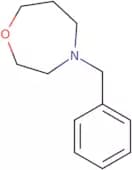
CAS:<p>4-Methyl-1,2,3,4-tetrahydroquinoline is a molecule that is an amine derivative of glycyrrhizin. It has been shown to be an effective vaccine adjuvant that enhances the immune response to antigens in animal models. 4-Methyl-1,2,3,4-tetrahydroquinoline has also been found to inhibit the growth of bacteria by binding to target proteins that are involved in the synthesis of DNA and other macromolecules. This compound can also inhibit the production of hydrogen peroxide from allylamines. 4-Methyl-1,2,3,4-tetrahydroquinoline is also active against bacteria that are resistant to antibiotics such as penicillin and erythromycin. This molecule contains a 1H-[1]benzopyran ring with a methyl substituent at position 4 and a hydroxy group at</p>Formula:C10H13NPurezza:Min. 95%Peso molecolare:147.22 g/mol4-Benzyl-1,4-oxazepane
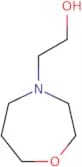
CAS:Versatile small molecule scaffoldFormula:C12H17NOPurezza:Min. 95%Peso molecolare:191.27 g/mol2-(1,4-Oxazepan-4-yl)ethan-1-ol
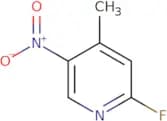
CAS:Versatile small molecule scaffoldFormula:C7H15NO2Purezza:Min. 95%Peso molecolare:145.2 g/mol2-Fluoro-4-Methyl-5-Nitropyridine
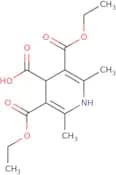
CAS:<p>Versatile small molecule scaffold</p>Formula:C6H5FN2O2Purezza:Min. 95%Peso molecolare:156.11 g/molAV-153 free base
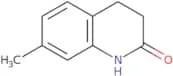
CAS:<p>AV-153 is an organic compound with a carboxylic acid group and an ethyl acetoacetate chain. The crystal structure of this compound is not determined, but it has been found that the molecule is stabilized by hydrogen bonds. It is also known to form dimers and carboxyl groups within its molecular structure. AV-153 has been shown to have antioxidant and glyoxylic acid inhibitory properties, as well as antibacterial activity against methicillin-resistant Staphylococcus aureus (MRSA).</p>Formula:C14H19NO6Purezza:Min. 95%Peso molecolare:297.3 g/mol7-Methyl-1,2,3,4-tetrahydroquinolin-2-one
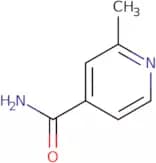
CAS:Versatile small molecule scaffoldFormula:C10H11NOPurezza:Min. 95%Peso molecolare:161.2 g/mol2-Methylisonicotinamide
CAS:<p>2-Methylisonicotinamide is a scalable, functional group with a wide range of oxidative reactions. It has been shown to be selective for the oxidation of heteroarenes. It efficiently oxidizes in a one-pot process, and can be used as an efficient and economical oxidant. 2-Methylisonicotinamide is used in biomolecular chemistry for coupling reactions, including the oxidation of heterocyclic compounds. The compound is also employed as an oxidant in organic synthesis.</p>Formula:C7H8N2OPurezza:Min. 95%Peso molecolare:136.15 g/mol2-[(Pyridin-2-yl)carbamoyl]benzoic acid
CAS:<p>2-[(Pyridin-2-yl)carbamoyl]benzoic acid is an organic compound that contains a benzamide and amide functional group. It is paramagnetic, which means that it has the ability to be attracted by a magnetic field. It also has intramolecular nucleophilic attack properties. 2-[(Pyridin-2-yl)carbamoyl]benzoic acid can be used in elemental analyses and as a catalyst for chemical reactions, such as the conversion of thiocyanate to cyanide. 2-[(Pyridin-2-yl)carbamoyl]benzoic acid is used in the production of dyes and pharmaceuticals, including antihistamines and analgesics.</p>Formula:C13H10N2O3Purezza:Min. 95%Peso molecolare:242.23 g/mol2,2-Dichloro-N-(4-chlorophenyl)-3-oxo-3-phenylpropanamide
CAS:Versatile small molecule scaffoldFormula:C15H10Cl3NO2Purezza:Min. 95%Peso molecolare:342.6 g/mol2-[Hydroxy(phenyl)methyl]prop-2-enenitrile
CAS:<p>2-[Hydroxy(phenyl)methyl]prop-2-enenitrile (2HMPE) is a crystalline compound that has been shown to inhibit the growth of Botrytis cinerea. It does so by binding in an antibonding fashion to the hydrogen atoms on the phenyl ring. This interaction results in a stereoselective interaction with the hydrogen and hydroxyl groups, which leads to a decrease in the rate of dna synthesis. 2HMPE has also been shown to have an antibonding interaction with the C4-C5 double bond of the fluoroquinolone nucleus, which is responsible for its potent antibacterial activity against Mycobacterium tuberculosis. 2HMPE has also been shown to be useful as a fingerprinting reagent. The compound can be used as a standard for x-ray crystallography and molecular orbital theory, because it is soluble and non-toxic.</p>Formula:C10H9NOPurezza:Min. 95%Peso molecolare:159.18 g/mol3-Iodo-pyrazolo[1,5-a]pyridine
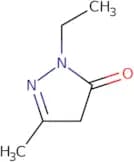
CAS:<p>3-Iodo-pyrazolo[1,5-a]pyridine is a boronic acid that has been optimized for medicinal use. It is chemically synthesized by coupling with a boronic ester. 3-Iodo-pyrazolo[1,5-a]pyridine has shown potent anti-inflammatory properties in mice models.</p>Formula:C7H5IN2Purezza:Min. 95%Peso molecolare:244.03 g/mol1-Ethyl-3-methyl-4,5-dihydro-1H-pyrazol-5-one
CAS:Versatile small molecule scaffoldFormula:C6H10N2OPurezza:Min. 95%Peso molecolare:126.16 g/mol3-{[4-(Trifluoromethyl)phenyl]sulfanyl}propanoic acid
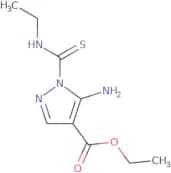
CAS:<p>Versatile small molecule scaffold</p>Formula:C10H9F3O2SPurezza:Min. 95%Peso molecolare:250.24 g/molEthyl 5-amino-1-(ethylcarbamothioyl)-1H-pyrazole-4-carboxylate
CAS:Versatile small molecule scaffoldFormula:C9H14N4O2SPurezza:Min. 95%Peso molecolare:242.3 g/mol3-(2-Aminoethyl)-1,3-thiazolidine-2,4-dione hydrochloride
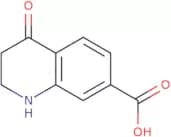
CAS:Versatile small molecule scaffoldFormula:C5H9ClN2O2SPurezza:Min. 95%Peso molecolare:196.66 g/mol4-Oxo-1,2,3,4-tetrahydroquinoline-7-carboxylic acid
CAS:4-Oxo-1,2,3,4-tetrahydroquinoline-7-carboxylic acid is a synthetic compound. It was first synthesized in 1965 and has been used as an analog of quinoline to study the electron transfer mechanism of aromatic aldehyde dehydrogenase. This analog is also used in the condensation reaction of aldehydes.Formula:C10H9NO3Purezza:Min. 95%Peso molecolare:191.18 g/mol3,4-Dimethyl-6H,7H-[1,2]oxazolo[5,4-b]pyridin-6-one
CAS:<p>Versatile small molecule scaffold</p>Formula:C8H8N2O2Purezza:Min. 95%Peso molecolare:164.16 g/mol3,6-Dimethyl-[1,2]oxazolo[5,4-b]pyridin-4-ol
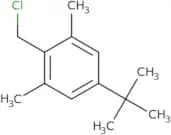
CAS:Versatile small molecule scaffoldFormula:C8H8N2O2Purezza:Min. 95%Peso molecolare:164.16 g/mol4-Tert-butyl-2,6-dimethylbenzylchloroide
CAS:Versatile small molecule scaffoldFormula:C13H19ClPurezza:Min. 95%Peso molecolare:210.74 g/molBicyclo[3.3.1]nonan-3-amine hydrochloride
CAS:<p>Versatile small molecule scaffold</p>Formula:C9H18ClNPurezza:Min. 95%Peso molecolare:175.7 g/molBicyclo[3.3.1]nonan-9-amine hydrochloride
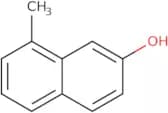
CAS:Versatile small molecule scaffoldFormula:C9H18ClNPurezza:Min. 95%Peso molecolare:175.7 g/mol8-Methylnaphthalen-2-ol
CAS:8-Methylnaphthalen-2-ol is a hydrocarbon with the molecular formula CH3. It is a colorless liquid with an almond odor. It is used in the synthesis of aromatic compounds, including amines and pharmaceuticals. 8-Methylnaphthalen-2-ol is found in marine bacteria and has been shown to be a substrate for bioconversion to benzyl alcohol or benzaldehyde. Recombinant E. coli cells have been used to produce high yields of 8-methylnaphthalen-2-ol from inexpensive starting materials such as glycerol, formaldehyde, and ammonia.Formula:C11H10OPurezza:Min. 95%Peso molecolare:158.2 g/molCedrelopsin
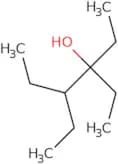
CAS:Cedrelopsin is a coumarin derivative that is used as a pesticide. It inhibits the growth of cancer cells by binding to the cell membrane, which prevents the entry of many substances into the cell. Cedrelopsin also has an inhibitory effect on mammalian monoamine oxidase (MAO) enzymes, which are important for neurotransmitter metabolism. This compound is active in a variety of different types of cancer cells, including breast cancer and prostate cancer cells. Cedrelopsin shows pesticidal activity against many insects and mites, although it has no effect on mammals. Cedrelopsin has been shown to have a significant effect on blood pressure and heart rate in rats, with moderate hypotensive effects in humans. This compound is not considered toxic to humans or animals, because it does not bind to proteins in high concentrations and does not accumulate in tissues.Formula:C15H16O4Purezza:Min. 95%Peso molecolare:260.28 g/mol3,4-Diethyl-3-hexanol
CAS:<p>3,4-Diethyl-3-hexanol is a chemical compound that is used as an ophthalmic agent. It is a colorless or white solid. 3,4-Diethyl-3-hexanol has been shown to be an antiviral agent that blocks the virus from entering the cells of the body. It also prevents the virus from replicating its genetic material and spreading throughout the body. This drug can be used in infants, pregnant women, and adults. 3,4-Diethyl-3-hexanol binds to plasma proteins and may interfere with levothyroxine metabolism in some cases. It has been shown to have no adverse effects on dihedral angles or boceprevir activity and has low toxicity levels in rats.</p>Formula:C10H22OPurezza:Min. 95%Peso molecolare:158.28 g/mol


![Dibenzo[b,d]furan-4-ol](/_next/image/?url=https%3A%2Fstatic.cymitquimica.com%2Fproducts%2F3D%2Fthumb-webp%2FUAA26106.webp&w=3840&q=75)
![2-[(2-Methylphenyl)methyl]butanedioic acid](/_next/image/?url=https%3A%2Fstatic.cymitquimica.com%2Fproducts%2F3D%2Fthumb-webp%2FUAA26311.webp&w=3840&q=75)
![3-{2,4-Dioxo-1,3-diazaspiro[4.5]decan-3-yl}propanoic acid](/_next/image/?url=https%3A%2Fstatic.cymitquimica.com%2Fproducts%2F3D%2Fthumb-webp%2FUAA28294.webp&w=3840&q=75)
![3-{2,4-Dioxo-1,3-diazaspiro[4.5]decan-3-yl}propanenitrile](/_next/image/?url=https%3A%2Fstatic.cymitquimica.com%2Fproducts%2F3D%2Fthumb-webp%2FUAA28300.webp&w=3840&q=75)
![N-[(Pentafluorophenyl)methylidene]hydroxylamine](/_next/image/?url=https%3A%2Fstatic.cymitquimica.com%2Fproducts%2F3D%2Fthumb-webp%2FUAA29227.webp&w=3840&q=75)
![Benzo[b]thiophen-5-ol](/_next/image/?url=https%3A%2Fstatic.cymitquimica.com%2Fproducts%2F3D%2Fthumb-webp%2FUAA30135.webp&w=3840&q=75)
![2-[(Pyridin-2-yl)carbamoyl]benzoic acid](/_next/image/?url=https%3A%2Fstatic.cymitquimica.com%2Fproducts%2F3D%2Fthumb-webp%2FUAA35710.webp&w=3840&q=75)

![2-[Hydroxy(phenyl)methyl]prop-2-enenitrile](/_next/image/?url=https%3A%2Fstatic.cymitquimica.com%2Fproducts%2F3D%2Fthumb-webp%2FUAA36296.webp&w=3840&q=75)
![3-Iodo-pyrazolo[1,5-a]pyridine](/_next/image/?url=https%3A%2Fstatic.cymitquimica.com%2Fproducts%2F3D%2Fthumb-webp%2FUAA36399.webp&w=3840&q=75)
![3-{[4-(Trifluoromethyl)phenyl]sulfanyl}propanoic acid](/_next/image/?url=https%3A%2Fstatic.cymitquimica.com%2Fproducts%2F3D%2Fthumb-webp%2FUAA37288.webp&w=3840&q=75)
![3,4-Dimethyl-6H,7H-[1,2]oxazolo[5,4-b]pyridin-6-one](/_next/image/?url=https%3A%2Fstatic.cymitquimica.com%2Fproducts%2F3D%2Fthumb-webp%2FUAA38556.webp&w=3840&q=75)
![3,6-Dimethyl-[1,2]oxazolo[5,4-b]pyridin-4-ol](/_next/image/?url=https%3A%2Fstatic.cymitquimica.com%2Fproducts%2F3D%2Fthumb-webp%2FUAA38559.webp&w=3840&q=75)
![Bicyclo[3.3.1]nonan-3-amine hydrochloride](/_next/image/?url=https%3A%2Fstatic.cymitquimica.com%2Fproducts%2F3D%2Fthumb-webp%2FUAA38864.webp&w=3840&q=75)
![Bicyclo[3.3.1]nonan-9-amine hydrochloride](/_next/image/?url=https%3A%2Fstatic.cymitquimica.com%2Fproducts%2F3D%2Fthumb-webp%2FUAA38867.webp&w=3840&q=75)