Building Blocks
Sottocategorie di "Building Blocks"
- Acidi boronici e derivati dell'acido boronico(5.778 prodotti)
- Building Blocks Chirali(1.243 prodotti)
- Building Blocks Idrocarburici(6.098 prodotti)
- Building Blocks organici(61.042 prodotti)
Trovati 204339 prodotti di "Building Blocks"
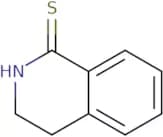
1,2,3,4-Tetrahydroisoquinoline-1-thione
CAS:Versatile small molecule scaffoldFormula:C9H9NSPurezza:Min. 95%Peso molecolare:163.24 g/mol8-Methyl-1-naphthaldehyde
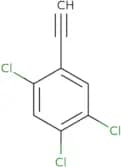
CAS:Versatile small molecule scaffoldFormula:C12H10OPurezza:Min. 95%Peso molecolare:170.21 g/mol1,2,4-Trichloro-5-ethynyl-benzene
CAS:Versatile small molecule scaffoldFormula:C8H3Cl3Purezza:Min. 95%Peso molecolare:205.5 g/mol3-[(4-Sulfamoylphenyl)amino]propanoic acid
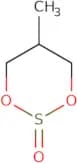
CAS:Versatile small molecule scaffoldFormula:C9H12N2O4SPurezza:Min. 95%Peso molecolare:244.27 g/mol5-Methyl-1,3,2λ⁴-dioxathian-2-one
CAS:Versatile small molecule scaffoldFormula:C4H8O3SPurezza:Min. 95%Peso molecolare:136.17 g/mol5H-chromeno[2,3-b]pyridin-5-one
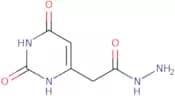
CAS:5H-chromeno[2,3-b]pyridin-5-one is a truncated aromatic ketone that has been synthesized by the cyclodehydration of 5-hydroxybenzaldehyde. This compound can be used in the synthesis of analogues and it can also be used for cross coupling, hydrazine and hydroxylamine synthesis. 5H-chromeno[2,3-b]pyridin-5-one has been shown to react with amines to form substituted pyridines. The substituent on the aryl ring determines the type of substitution that will occur. This product may also be used as a palladium catalyst in cross coupling reactions.Formula:C12H7NO2Purezza:Min. 95%Peso molecolare:197.19 g/mol2-(2,6-Dioxo-1,2,3,6-tetrahydropyrimidin-4-yl)acetohydrazide
CAS:Versatile small molecule scaffoldFormula:C6H8N4O3Purezza:Min. 95%Peso molecolare:184.15 g/mol1-{[4-(2-Hydroxyethyl)piperazin-1-yl]methyl}-2,3-dihydro-1H-indole-2,3-dione
CAS:Versatile small molecule scaffoldFormula:C15H19N3O3Purezza:Min. 95%Peso molecolare:289.33 g/mol7-Methoxy-2H-benzo[b][1,4]oxazin-3(4H)-one
CAS:7-Methoxy-2H-benzo[b][1,4]oxazin-3(4H)-one (7MB) is a hydroxamic acid that has been shown to be an effective inhibitor of β-glucosidase. 7MB leaves the glucosides intact and only affects the substrate by attacking the carbonyl group. The enzyme β-glucosidase is responsible for hydrolyzing these glycosides into glucose, which can then be absorbed by the body. 7MB has been shown to inhibit glucosidase activity in insect and bacterial cells. It also inhibits esculin, which is a drug used as a skin test for allergies, and has been shown to have antiinflammatory properties.
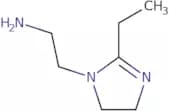
Formula:C9H9NO3Purezza:Min. 95%Peso molecolare:179.17 g/mol2-(2-Ethyl-4,5-dihydro-1H-imidazol-1-yl)ethan-1-amine
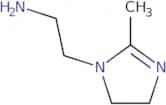
CAS:Versatile small molecule scaffoldFormula:C7H15N3Purezza:Min. 95%Peso molecolare:141.21 g/mol2-(2-Methyl-4,5-dihydro-1H-imidazol-1-yl)ethan-1-amine
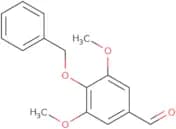
CAS:2-(2-Methyl-4,5-dihydro-1H-imidazol-1-yl)ethan-1-amine is an organic compound that has been used as a catalyst. It crystallizes in the triclinic system and exhibits high catalytic activity. The hydrothermal synthesis of 2-(2,4,5-trimethylphenyl)-N,N′,N″,N″′-[2(2,4,5-trimethylphenyl)ethenyl]-tetrahedrane (Cp*TiMe3) was achieved by using diethylenetriamine (DETA) as a starting material. This product catalyzes the cyclization of acetaldehyde to form benzaldehyde with high catalytic activity. The probe 2-(2,4,5-trimethylphenyl)-N,N′-[2(2,4,5-trimethylphenylFormula:C6H13N3Purezza:Min. 95%Peso molecolare:127.19 g/mol4-(Benzyloxy)-3,5-dimethoxybenzaldehyde
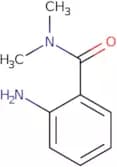
CAS:4-(Benzyloxy)-3,5-dimethoxybenzaldehyde is a phosphonium salt that can be used in vitro assays for the determination of the activity of glyceric, hydrochloric acid, colchicine, catechol-o-methyltransferase and asymmetric synthesis. This compound has also been shown to be a ligand for the receptor protein of several viruses. 4-(Benzyloxy)-3,5-dimethoxybenzaldehyde has been shown to inhibit the growth of virus in vivo through its interaction with the receptor protein.Formula:C16H16O4Purezza:Min. 95%Peso molecolare:272.3 g/mol2-Amino-N,N-dimethylbenzamide
CAS:2-Amino-N,N-dimethylbenzamide is an organic compound with the chemical formula CH3CONH2. It is a white solid with a pungent odor. 2-Amino-N,N-dimethylbenzamide is used as an industrial chemical in the synthesis of selenium oxide and carbon monoxide. It also acts as a catalyst for various reactions such as the synthesis of acetaldehyde from ethanol and oxygen gas or the conversion of ammonia to nitric acid.
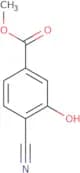
Formula:C9H12N2OPurezza:Min. 95%Peso molecolare:164.2 g/molMethyl 4-cyano-3-hydroxybenzoate
CAS:Versatile small molecule scaffold
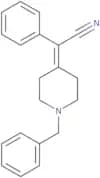
Formula:C9H7NO3Purezza:Min. 95%Peso molecolare:177.16 g/mol2-(1-Benzylpiperidin-4-ylidene)-2-phenylacetonitrile
CAS:Versatile small molecule scaffold
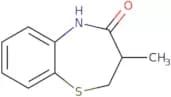
Formula:C20H20N2Purezza:Min. 95%Peso molecolare:288.4 g/mol3-Methyl-2,3,4,5-tetrahydro-1,5-benzothiazepin-4-one
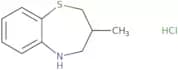
CAS:Versatile small molecule scaffoldFormula:C10H11NOSPurezza:Min. 95%Peso molecolare:193.27 g/mol3-Methyl-2,3,4,5-tetrahydro-1,5-benzothiazepine hydrochloride
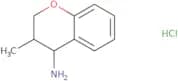
CAS:Versatile small molecule scaffoldFormula:C10H14ClNSPurezza:Min. 95%Peso molecolare:215.74 g/mol3-Methyl-3,4-dihydro-2H-1-benzopyran-4-amine hydrochloride
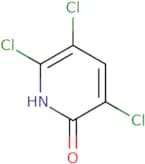
CAS:Versatile small molecule scaffoldFormula:C10H14ClNOPurezza:Min. 95%Peso molecolare:199.68 g/mol3,5,6-Trichloro-2-pyridinol
CAS:3,5,6-Trichloro-2-pyridinol (3,5,6-TCP) is an intermediate in the production of chlorpyrifos. It is also a metabolite of chlorpyrifos and has been detected in urine samples. 3,5,6-TCP can be determined by titrimetric analysis using sodium carbonate as a reagent. 3,5,6-TCP is toxic to both humans and animals at high doses. The process optimization for the synthesis of 3,5,6-TCP was investigated in order to reduce the amount of wastewater produced during production. In this study it was found that reaction solution pH was significantly lower when anhydrous sodium carbonate was used instead of water saturated sodium carbonate. This discovery would allow for more efficient wastewater treatment because less wastewater would need to be treated per unit product.
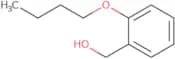
Formula:C5H2Cl3NOPurezza:Min. 95%Colore e forma:PowderPeso molecolare:198.43 g/mol(2-Butoxyphenyl)methanol
CAS:Versatile small molecule scaffold
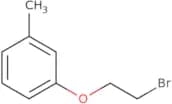
Formula:C11H16O2Purezza:Min. 95%Peso molecolare:180.24 g/mol1-(2-Bromo-ethoxy)-3-methyl-benzene
CAS:Versatile small molecule scaffold
Formula:C9H11BrOPurezza:Min. 95%Peso molecolare:215.09 g/molL-152,804
CAS:L-152,804 is a potent inhibitor of the dopamine receptor. It has been shown to have an inhibitory effect on wild-type mice and functional assays in vitro. L-152,804 inhibits locomotor activity in wild type mice and increases energy metabolism in adipose tissue. L-152,804 binds to the dopamine receptor by competitive inhibition and inhibits the binding of glutamate and dopamine to the receptor. This drug has also been shown to have anti-inflammatory effects in a rat model of arthritis.
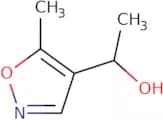
Formula:C23H26O4Purezza:Min. 95%Peso molecolare:366.46 g/mol1-(5-Methyl-1,2-oxazol-4-yl)ethan-1-ol
CAS:Versatile small molecule scaffold
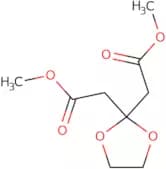
Formula:C6H9NO2Purezza:Min. 95%Peso molecolare:127.14 g/molDimethyl 1,3-dioxolane-2,2-diacetate
CAS:Versatile small molecule scaffold
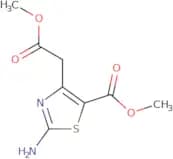
Formula:C9H14O6Purezza:Min. 95%Peso molecolare:218.2 g/molMethyl 2-amino-4-(2-methoxy-2-oxoethyl)-1,3-thiazole-5-carboxylate
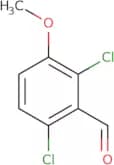
CAS:Versatile small molecule scaffoldFormula:C8H10N2O4SPurezza:Min. 95%Peso molecolare:230.24 g/mol2,6-Dichloro-3-methoxybenzaldehyde
CAS:Versatile small molecule scaffoldFormula:C8H6Cl2O2Purezza:Min. 95%Peso molecolare:205.03 g/mol4-(1H-Benzo[D]imidazol-2-yl)phenol hydrochloride
CAS:Versatile small molecule scaffold
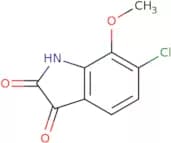
Formula:C13H10N2OPurezza:Min. 95%Peso molecolare:210.23 g/mol6-Chloro-7-methoxy-2,3-dihydro-1H-indole-2,3-dione
CAS:Versatile small molecule scaffoldFormula:C9H6ClNO3Purezza:Min. 95%Peso molecolare:211.6 g/mol2-(3-Phenyl-4,5-dihydroisoxazol-5-yl)acetic Acid
CAS:2-(3-Phenyl-4,5-dihydroisoxazol-5-yl)acetic Acid is a reactive compound that has been shown to be cytotoxic and induce apoptosis in mouse melanoma cells. The setup for this study was a section of the colon from mice with inflammatory bowel disease. 2-(3-Phenyl-4,5-dihydroisoxazol-5-yl)acetic Acid induces apoptosis by inhibiting protein synthesis, which leads to cell death. 2-(3-Phenyl-4,5-dihydroisoxazol-5-yl)acetic Acid is also an antiinflammatory drug that inhibits prostaglandin synthesis by blocking cyclooxygenase and lipoxygenase pathways. It has been shown to be effective in vivo treatment for bowel disease in mice.Formula:C11H11NO3Purezza:Min. 95%Peso molecolare:205.21 g/mol(4-Propionylphenoxy)acetic acid
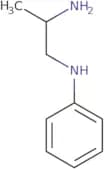
CAS:Versatile small molecule scaffoldFormula:C11H12O4Purezza:Min. 95%Peso molecolare:208.21 g/molN-(2-Aminopropyl)aniline
CAS:N-(2-Aminopropyl)aniline is a voltage-gated sodium channel blocker that inhibits the voltage-gated sodium channels. It has been shown to be effective in treating chronic pain, especially in animal models. N-(2-Aminopropyl)aniline is not used for the treatment of cough because it does not have any effect on the vagal nerve. The drug also shows some inhibitory activity against voltage-gated sodium channels, which are found in neurons and play an important role in pain signaling.
Formula:C9H14N2Purezza:Min. 95%Peso molecolare:150.22 g/molN-Aminomorpholine-4-carbothioamide
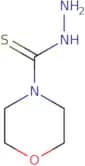
CAS:N-Aminomorpholine-4-carbothioamide is a ligand that binds to the carboxylates of chloroform. It is produced by the enzyme subtilisin from the amino acid L-alanine and the compound 2-acetylpyridine. This ligand has been found in microorganisms such as Escherichia coli, Staphylococcus aureus, and Saccharomyces cerevisiae. N-Aminomorpholine-4-carbothioamide has been shown to be an effective inhibitor of yeast growth but not bacterial growth. The molecular weight of this ligand is 226.2 g mol−1 and it is a dimer at room temperature with two molecules linked together by hydrogen bonds.
Formula:C5H11N3OSPurezza:Min. 95%Peso molecolare:161.23 g/mol2-(Benzylsulfanyl)-1,4,5,6-tetrahydropyrimidine
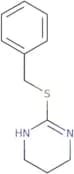
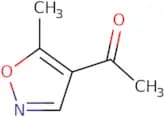
CAS:Versatile small molecule scaffoldFormula:C11H14N2SPurezza:Min. 95%Peso molecolare:206.31 g/mol1-(5-Methyl-4-isoxazolyl)-1-ethanone
CAS:1-(5-Methyl-4-isoxazolyl)-1-ethanone is a natural product that has been shown to inhibit the growth of prostate cancer cells. It is a conformationally selective inhibitor of cyclooxygenase 2 (COX-2) that has shown activity in tumor models. The molecular modeling studies suggest that the compound binds to the COX-2 enzyme in a stereoselective manner, and it may be possible to alter its conformation to make it more potent. This research also suggests that 1-(5-methyl-4-isoxazolyl)-1-ethanone could serve as a lead compound for future drug development.Formula:C6H7NO2Purezza:Min. 95%Peso molecolare:125.13 g/mol1-Ethyl-1,2,3,4-tetrahydropyrimidine-2,4-dione
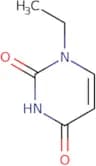
CAS:1-Ethyl-1,2,3,4-tetrahydropyrimidine-2,4-dione (ETP) is a potent inhibitor of pyrimidine biosynthesis. It has been shown to inhibit the growth of cancer cells in vitro and in vivo. ETP binds to the enzyme dihydroorotate dehydrogenase and prevents the formation of orotic acid from l-tartaric acid. This inhibition leads to an accumulation of orotic acid and l-tartaric acid in the cell which inhibits cellular respiration. ETP also inhibits other enzymes involved in DNA replication, such as ribonucleotide reductase and thymidylate synthase. This inhibition leads to decreased synthesis of DNA and RNA molecules that are necessary for cell division. ETP has also been shown to be effective against hepatitis B virus by inhibiting viral DNA synthesis and causing viral DNA degradation.
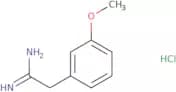
Formula:C6H8N2O2Purezza:Min. 95%Peso molecolare:140.14 g/mol2-(3-Methoxy-phenyl)-acetamidine hydrochloride
CAS:Versatile small molecule scaffoldFormula:C9H13ClN2OPurezza:Min. 95%Peso molecolare:200.67 g/mol2-(4-Bromo-phenyl)-acetamidine hydrochloride
CAS:Versatile small molecule scaffold
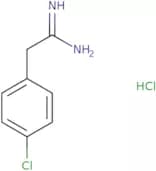
Formula:C8H10BrClN2Purezza:Min. 95%Peso molecolare:249.53 g/mol4-Chlorobenzeneethanimidamide hydrochloride
CAS:Versatile small molecule scaffold
Formula:C8H10Cl2N2Purezza:Min. 95%Peso molecolare:205.08 g/mol2-(4-Methoxyphenyl)-acetamidine hydrochloride
CAS:Versatile small molecule scaffold
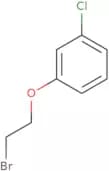
Formula:C9H13ClN2OPurezza:Min. 95%Peso molecolare:200.67 g/mol1-(2-Bromoethoxy)-3-chlorobenzene
CAS:Versatile small molecule scaffold
Formula:C8H8BrClOPurezza:Min. 95%Peso molecolare:235.51 g/mol2-Methylquinazoline-4-thiol
CAS:2-Methylquinazoline-4-thiol is a heterocyclic compound with a thione group. Its amide groups are similar to those found in peptides, which play an important role in the coordination chemistry of the molecule. The 2-methylquinazoline-4-thiol skeleton is tetracyclic and can be used for synthetic purposes. This compound has been shown to have hepatoprotective properties, but also has cytotoxic effects on cells.
Formula:C9H8N2SPurezza:Min. 95%Peso molecolare:176.24 g/mol4-Chloro-2-(pyridin-4-yl)quinazoline
CAS:Versatile small molecule scaffoldFormula:C13H8ClN3Purezza:Min. 95%Peso molecolare:241.67 g/mol2-(Pyridin-4-yl)quinazolin-4-ol
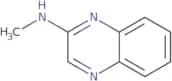
CAS:2-(Pyridin-4-yl)quinazolin-4-ol is a compound with diverse applications. It acts as a medium-chain fatty acid and VEGF inhibitor, making it useful in the development of new medicines. This compound also exhibits catalyst properties and can be used in the synthesis of various organic compounds, including fatty acids and heterocyclic compounds. Additionally, it has been found to have growth-inhibitory effects on certain cell lines, making it a potential candidate for anti-cancer research. 2-(Pyridin-4-yl)quinazolin-4-ol is soluble in dichlorobenzene and acetonitrile, facilitating its use in different solvents. Its structure and properties can be analyzed using techniques such as mass spectrometry. Overall, this versatile compound holds promise for both academic research and industrial applications in the field of organic chemistry.Formula:C13H9N3OPurezza:Min. 95%Peso molecolare:223.23 g/molN-Methylquinoxalin-2-amine
CAS:N-Methylquinoxalin-2-amine is a tertiary amine that belongs to the class of quinoxaline derivatives. It has been shown to be an effective inhibitor of bacterial growth. This drug can be used as a potential antibiotic against bacteria such as Staphylococcus aureus, Escherichia coli, and Klebsiella pneumoniae. N-Methylquinoxalin-2-amine appears to inhibit the synthesis of DNA by preventing transcription and replication. The equilibrium between the two tautomers is dependent on pH, which may result in different solubility properties in various solutions. The UV spectrum of this compound shows absorption peaks at 220 nm (mu), 244 nm (nu), and 302 nm (xi). The UV spectrum also shows absorption peaks at 254 nm (sigma) and 295 nm (phi). N-Methylquinoxalin-2-amine also tautomerizes from the keto form to the enFormula:C9H9N3Purezza:Min. 95%Peso molecolare:159.19 g/mol5-(3-Chloropropyl)-4-methyl-1,3-thiazole
CAS:5-(3-Chloropropyl)-4-methyl-1,3-thiazole is a hydrophobic antibiotic that is used as a diluent in iontophoresis. It has been shown to have targetable properties and high concentrations when it is used in phase chromatography. 5-(3-Chloropropyl)-4-methyl-1,3-thiazole also serves as a fixative agent and can be used as a diagnostic tool for the detection of salicylic acid. This compound has been found to be insoluble at high concentrations, so it cannot be reconstituted with water.Formula:C7H10ClNSPurezza:Min. 95%Peso molecolare:175.68 g/mol3-(4-Methyl-1,3-thiazol-5-yl)propan-1-ol
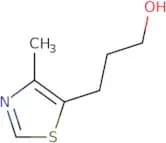
CAS:Versatile small molecule scaffold
Formula:C7H11NOSPurezza:Min. 95%Peso molecolare:157.24 g/mol3-(4-Methyl-1,3-thiazol-5-yl)propanoic acid
CAS:Versatile small molecule scaffold
Formula:C7H9NO2SPurezza:Min. 95%Peso molecolare:171.22 g/mol3-Phenylumbelliferone
CAS:3-Phenylumbelliferone is a coumarin derivative that is used as an antidiabetic drug. It is a competitive inhibitor of the enzyme phosphatase, which inactivates tyrosine kinase, and inhibits the formation of DOPA from L-tyrosine, resulting in inhibition of glucose uptake by cells. 3-Phenylumbelliferone also fluoresces at wavelengths of 340 nm when excited with ultraviolet light. This property has been shown to be helpful in the detection of phenylurea herbicides, polycyclic aromatic hydrocarbons, and other compounds.
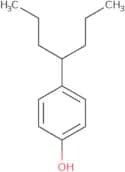
Formula:C15H10O3Purezza:Min. 95%Peso molecolare:238.24 g/mol4-(heptan-4-yl)phenol
CAS:Versatile small molecule scaffoldFormula:C13H20OPurezza:Min. 95%Peso molecolare:192.29 g/molPhenyl N-(4-aminophenyl)carbamate
CAS:Versatile small molecule scaffoldFormula:C13H12N2O2Purezza:Min. 95%Peso molecolare:228.25 g/mol

![3-[(4-Sulfamoylphenyl)amino]propanoic acid](/_next/image/?url=https%3A%2Fstatic.cymitquimica.com%2Fproducts%2F3D%2Fthumb-webp%2FGAA54198.webp&w=3840&q=75)
![5H-chromeno[2,3-b]pyridin-5-one](/_next/image/?url=https%3A%2Fstatic.cymitquimica.com%2Fproducts%2F3D%2Fthumb-webp%2FGAA53746.webp&w=3840&q=75)
![1-{[4-(2-Hydroxyethyl)piperazin-1-yl]methyl}-2,3-dihydro-1H-indole-2,3-dione](/_next/image/?url=https%3A%2Fstatic.cymitquimica.com%2Fproducts%2F3D%2Fthumb-webp%2FGAA53217.webp&w=3840&q=75)
![7-Methoxy-2H-benzo[b][1,4]oxazin-3(4H)-one](/_next/image/?url=https%3A%2Fstatic.cymitquimica.com%2Fproducts%2F3D%2Fthumb-webp%2FGAA52994.webp&w=3840&q=75)

![4-(1H-Benzo[D]imidazol-2-yl)phenol hydrochloride](/_next/image/?url=https%3A%2Fstatic.cymitquimica.com%2Fproducts%2F3D%2Fthumb-webp%2FGAA50413.webp&w=3840&q=75)