Building Blocks
Questa sezione contiene prodotti fondamentali per la sintesi di composti organici e biologici. Building blocks sono i materiali di partenza essenziali utilizzati per costruire molecole complesse attraverso varie reazioni chimiche. Svolgono un ruolo critico nella scoperta di farmaci, nella scienza dei materiali e nella ricerca chimica. Presso CymitQuimica, offriamo una gamma diversificata di building blocks di alta qualità per supportare le tue ricerche innovative e progetti industriali, assicurandoti di avere i componenti essenziali per una sintesi di successo.
Sottocategorie di "Building Blocks"
- Acidi boronici e derivati dell'acido boronico(5.778 prodotti)
- Building Blocks Chirali(1.243 prodotti)
- Building Blocks Idrocarburici(6.097 prodotti)
- Building Blocks organici(61.045 prodotti)
Trovati 203842 prodotti di "Building Blocks"
Ordinare per
Purezza (%)
0
100
|
0
|
50
|
90
|
95
|
100
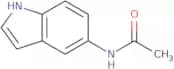
N-(1H-Indol-5-yl)acetamide
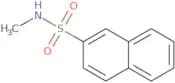
CAS:<p>Versatile small molecule scaffold</p>Formula:C10H10N2OPurezza:Min. 95%Peso molecolare:174.2 g/molN-Methylnaphthalene-2-sulfonamide
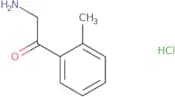
CAS:<p>N-Methylnaphthalene-2-sulfonamide is an inhibitor of transcription-polymerase chain reaction (PCR) that binds to the enzyme DNA polymerase. It also inhibits transport and flavonoid biosynthesis. N-Methylnaphthalene-2-sulfonamide has been shown to upregulate the expression of genes that are involved in regulatory, saturating, and tissue modifications. This drug has no effect on hormones or linear model of biosynthesis, and has a phenotype of apical.</p>Formula:C11H11NO2SPurezza:Min. 95%Peso molecolare:221.28 g/mol2-Amino-1-(2-methylphenyl)ethan-1-one hydrochloride
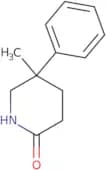
CAS:Prodotto controllatoVersatile small molecule scaffoldFormula:C9H12ClNOPurezza:Min. 95%Peso molecolare:185.65 g/mol5-Methyl-5-phenylpiperidin-2-one
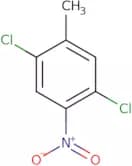
CAS:Versatile small molecule scaffoldFormula:C12H15NOPurezza:Min. 95%Peso molecolare:189.25 g/mol1,4-Dichloro-2-methyl-5-nitrobenzene
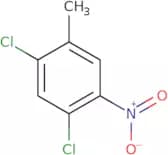
CAS:1,4-Dichloro-2-methyl-5-nitrobenzene is an antipsychotic drug that belongs to the class of phenylpiperazine derivatives. It is a potent serotonin receptor antagonist with actions at dopamine D2 and D3 receptors. This drug has shown to have high affinity for the 5HT2A receptor and moderate affinity for the 5HT1A receptor. 1,4-Dichloro-2-methyl-5-nitrobenzene also has moderate affinity for the alpha1 adrenergic receptor and low affinity for the histamine H1 receptor. Ziprasidone prevents activation of these receptors by binding to them and blocking their ability to activate downstream effects on other cells. 1,4-Dichloro-2-methyl-5-nitrobenzene has been shown to be effective in treating schizophrenia, bipolar disorder, major depressive disorder and other psychotic disorders.Formula:C7H5Cl2NO2Purezza:Min. 95%Peso molecolare:206.02 g/mol1,5-Dichloro-2-methyl-4-nitrobenzene
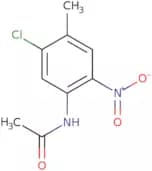
CAS:1,5-Dichloro-2-methyl-4-nitrobenzene is a chemical compound with the molecular formula C6H4Cl2NO. It has a molecular weight of 140.97 g/mol and a density of 1.25 g/cm3 at 20 °C. This compound is an organic solvent that is used as an intermediate in the production of other chemicals such as antifreeze, polyurethane, and nylon. The evaporation rate for this compound is low, making it ideal for use as a coating agent on plastics. 1,5-Dichloro-2-methyl-4-nitrobenzene can also be used to produce polyurethane foam insulation or in the manufacture of rubber products such as tires or hoses. 1,5-Dichloro-2-methyl-4-nitrobenzene can be synthesized by heating calcium carbonate with phosphorus oxychlorFormula:C7H5Cl2NO2Purezza:Min. 95%Peso molecolare:206.03 g/mol4-Acetamido-2-chloro-5-nitrotoluene
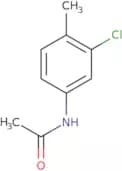
CAS:Versatile small molecule scaffoldFormula:C9H9ClN2O3Purezza:Min. 95%Peso molecolare:228.63 g/molN-(3-Chloro-4-methylphenyl)acetamide
CAS:N-(3-Chloro-4-methylphenyl)acetamide is a pesticide that has been used to control populations of insects, such as cockroaches and ants. It is a member of the amide class of insecticides. N-(3-Chloro-4-methylphenyl)acetamide was first introduced in 1948 and was used until the early 1970s when it was found to be carcinogenic. The chemical is released into the environment through industrial processes, such as coal mining, oil refining, and natural gas production. It can also contaminate drinking water sources through leaching from landfills or through spraying. The chemical has been found in untreated foods and beverages, such as coffee beans and beer. Ingestion can lead to damage to the liver and kidneys, anemia, bone marrow suppression, and damage to red blood cells. Damage can also occur if it comes into contact with unprotected skin or is inhaled.Formula:C9H10ClNOPurezza:Min. 95%Peso molecolare:183.64 g/molEthyl 2-{[(2-ethoxy-2-oxoethyl)carbamoyl]amino}acetate
CAS:Versatile small molecule scaffoldFormula:C9H16N2O5Purezza:Min. 95%Peso molecolare:232.23 g/mol[(4-Hydroxy-6-methylpyrimidin-2-yl)amino]formonitrile
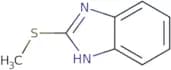
CAS:[(4-Hydroxy-6-methylpyrimidin-2-yl)amino]formonitrile is a pyrimidine antagonist. It inhibits the activity of guanidines, which are compounds that play a role in the metabolism of nucleotides. This drug also has metabolic stability and in vitro metabolic activity. It is an important tool for studying the structure activity relationship of guanidines.Formula:C6H6N4OPurezza:Min. 95%Peso molecolare:150.14 g/mol2-(Methylthio)benzimidazole
CAS:2-(Methylthio)benzimidazole (MTBZ) is a diazonium salt that is used as a reagent for the introduction of the methylthio group into organic compounds. This reagent can be prepared by reacting sodium carbonate with trifluoroacetic acid in the presence of metal carbonyls to yield a reactive intermediate, which then reacts with diazonium salts. MTBZ is also known to inhibit cytochrome P450 enzymes and to inhibit bacterial growth in vitro. One application for MTBZ is in the synthesis of sulfoxides, benzimidazole compounds, and other heterocyclic compounds.Formula:C8H8N2SPurezza:Min. 95%Peso molecolare:164.23 g/mol{[4-(Dimethylamino)phenyl]sulfanyl}formonitrile
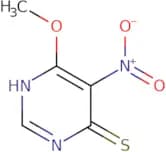
CAS:Versatile small molecule scaffoldFormula:C9H10N2SPurezza:Min. 95%Peso molecolare:178.26 g/mol6-Methoxy-5-nitropyrimidine-4-thiol
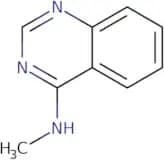
CAS:Versatile small molecule scaffoldFormula:C5H5N3O3SPurezza:Min. 95%Peso molecolare:187.18 g/molN-Methylquinazolin-4-amine
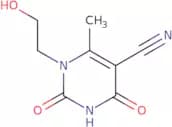
CAS:<p>Versatile small molecule scaffold</p>Formula:C9H9N3Purezza:Min. 95%Peso molecolare:159.19 g/mol1-(2-Hydroxyethyl)-6-methyl-2,4-dioxo-1,2,3,4-tetrahydropyrimidine-5-carbonitrile
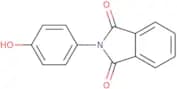
CAS:Versatile small molecule scaffoldFormula:C8H9N3O3Purezza:Min. 95%Peso molecolare:195.2 g/molN-(4-Hydroxyphenyl)phthalimide
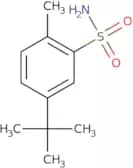
CAS:N-(4-Hydroxyphenyl)phthalimide is a white powder that has a melting point of 140.5°C, and is soluble in chloroform, acetone, and ethanol. It has the chemical formula C6H4N(OH)C6H3(OCH2CH2)2 and is used as a reagent for the synthesis of phthalic anhydride. It reacts with ammonia to form phthalamide. This compound belongs to the family of compounds called phthalimides. The molecule consists of two benzene rings connected by a single bond, which contains two hydroxyl groups on opposite sides of the ring system. Hydrogen bonds are formed between these hydroxyl groups and other atoms in the molecule. These hydrogen bonds contribute to the dihedral angle of this molecule (104°).Formula:C14H9NO3Purezza:Min. 95%Peso molecolare:239.23 g/mol5-tert-Butyl-2-methylbenzene-1-sulfonamide
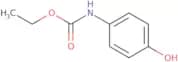
CAS:Versatile small molecule scaffoldFormula:C11H17NO2SPurezza:Min. 95%Peso molecolare:227.33 g/molEthyl N-(4-hydroxyphenyl)carbamate
CAS:<p>Ethyl N-(4-hydroxyphenyl)carbamate is a synthetic compound that is used as an antioxidant to treat erythema, skin redness and inflammation. It also has the ability to decolorize hair. This product is a precursor for the synthesis of aminophenols, which are biologically active compounds that have been found in plants, animals and humans. Ethyl N-(4-hydroxyphenyl)carbamate is metabolized by human enzymes into arbutin, ellagic acid and 4-hydroxyphenylacetic acid. The human body converts ellagic acid into ellagic acid glucuronide, which may be excreted in urine or bile.</p>Formula:C9H11NO3Purezza:Min. 95%Peso molecolare:181.19 g/molEthyl (3-Hydroxyphenyl)carbamate
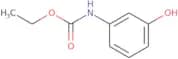
CAS:<p>Ethyl (3-Hydroxyphenyl)carbamate is a carbonyl group that is produced by the hydrolysis of triticum aestivum. This product has been shown to have a synergistic interaction with retroflexus and bioassay, an imaging technique used to measure the photosynthetic activity of plants. Ethyl (3-Hydroxyphenyl)carbamate has low light fluorescence properties, which are useful for the detection of sugarbeet in low light conditions. The symptoms of ethyl (3-hydroxyphenyl)carbamate exposure include a constant and acceptor, which is a molecule or atom that accepts electrons from an electron donor in chemical reactions. Ethyl (3-hydroxyphenyl)carbamate can react with proton to form arvensis, a sugar found in sugarbeets.</p>Formula:C9H11NO3Purezza:Min. 95%Peso molecolare:181.19 g/mol(4-Methylphenyl)(oxo)acetic acid
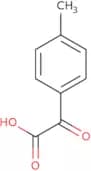
CAS:<p>(4-Methylphenyl)(oxo)acetic acid is a chlorinated compound that has a reactive functional group. This chemical is used as a reagent in organic synthesis and has been shown to be a useful additive in organic reactions involving chloride compounds. The reaction mechanism of this compound is that it reacts with the oxidant, dehydrogenative or surrogates such as acetonitrile and hydrogen peroxide, to produce the desired product. In addition, (4-methylphenyl)(oxo)acetic acid can also be used as an acylation agent in the synthesis of disulfides.</p>Formula:C9H8O3Purezza:Min. 95%Peso molecolare:164.16 g/mol2-{[(2-Chlorophenyl)amino]methyl}phenol
CAS:<p>Versatile small molecule scaffold</p>Formula:C13H12ClNOPurezza:Min. 95%Peso molecolare:233.69 g/mol(3-Methoxyphenyl)methanethiol
CAS:Versatile small molecule scaffoldFormula:C8H10OSPurezza:Min. 95%Peso molecolare:154.23 g/molBicyclo[2.2.1]hept-5-ene-2-sulfonamide
CAS:Versatile small molecule scaffoldFormula:C7H11NO2SPurezza:Min. 95%Peso molecolare:173.24 g/molBicyclo[2.2.2]octane-2-sulfonamide
CAS:Versatile small molecule scaffoldFormula:C8H15NO2SPurezza:Min. 95%Peso molecolare:189.28 g/mol6-Methoxy-1,3-dioxaindane-5-carboxylic acid
CAS:Versatile small molecule scaffoldFormula:C9H8O5Purezza:Min. 95%Peso molecolare:196.16 g/mol6,7-Dimethoxy-2,3-dihydro-1-benzofuran-3-one
CAS:Versatile small molecule scaffoldFormula:C10H10O4Purezza:Min. 95%Peso molecolare:194.18 g/mol3-(2-Chlorophenoxy)propionic acid
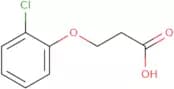
CAS:<p>Versatile small molecule scaffold</p>Formula:C9H9ClO3Purezza:Min. 95%Peso molecolare:200.62 g/mol4-(2,3-Dichlorophenoxy)butanoic acid
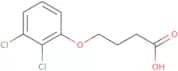
CAS:Prodotto controllatoVersatile small molecule scaffoldFormula:C10H10Cl2O3Purezza:Min. 95%Peso molecolare:249.09 g/mol(3-Aminopropyl)(octyl)amine
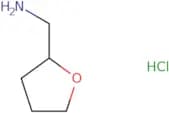
CAS:<p>Versatile small molecule scaffold</p>Formula:C11H26N2Purezza:Min. 95%Peso molecolare:186.34 g/mol(2R)-Tetrahydro-2-furanmethanamine hydrochloride
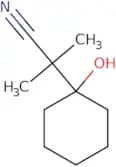
CAS:<p>Versatile small molecule scaffold</p>Formula:C5H12ClNOPurezza:Min. 95%Peso molecolare:137.61 g/mol2-(1-Hydroxycyclohexyl)-2-methylpropanenitrile
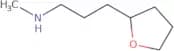
CAS:Versatile small molecule scaffoldFormula:C10H17NOPurezza:Min. 95%Peso molecolare:167.25 g/molN-Methyl-3-(tetrahydrofuran-2-yl)propan-1-amine
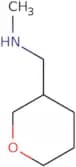
CAS:Versatile small molecule scaffoldFormula:C8H17NOPurezza:Min. 95%Peso molecolare:143.23 g/mol3-(Methylaminomethyl)tetrahydropyran
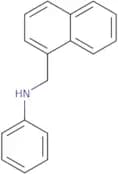
CAS:Versatile small molecule scaffoldFormula:C7H15NOPurezza:Min. 95%Peso molecolare:129.2 g/molN-(Naphthalen-1-ylmethyl)aniline
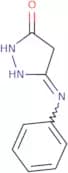
CAS:Versatile small molecule scaffoldFormula:C17H15NPurezza:Min. 95%Peso molecolare:233.31 g/mol3-(Phenylamino)-4,5-dihydro-1H-pyrazol-5-one
CAS:Versatile small molecule scaffoldFormula:C9H9N3OPurezza:Min. 95%Peso molecolare:175.19 g/mol{1-[(4-Chlorophenyl)methyl]-1H-1,3-benzodiazol-2-yl}methanol
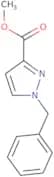
CAS:Prodotto controllatoVersatile small molecule scaffoldFormula:C15H13ClN2OPurezza:Min. 95%Peso molecolare:272.73 g/molMethyl 1-benzyl-1H-pyrazole-3-carboxylate
CAS:Versatile small molecule scaffoldFormula:C12H12N2O2Purezza:Min. 95%Peso molecolare:216.24 g/mol6-Chloro-3-phenyl[1,2,4]triazolo[4,3-b]pyridazine
CAS:Versatile small molecule scaffoldFormula:C11H7ClN4Purezza:Min. 95%Peso molecolare:230.66 g/mol1-N-[(2-Methylphenyl)methyl]benzene-1,2-diamine
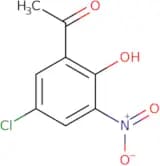
CAS:Versatile small molecule scaffoldFormula:C14H16N2Purezza:Min. 95%Peso molecolare:212.29 g/mol5-chloro-2-hydroxy-3-nitrobenzoic acid
CAS:<p>5-Chloro-2-hydroxy-3-nitrobenzoic acid (5CHNBA) is a potent inhibitor of the HIV integrase. 5CHNBA inhibits the activity of integrase by binding to the enzyme and preventing it from adding new DNA sequences to the viral genome. It has been shown to be effective against HIV integrase in vitro and in vivo, with inhibitory activities against both wild type and drug resistant HIV integrases. 5CHNBA is not an amide or saponified compound, but it does contain a nitrobenzoic group that reacts with chlorine atoms to form chlorination products, such as dichloro 5-chloro-2-hydroxy-3-nitrobenzoic acid.</p>Formula:C7H4ClNO5Purezza:Min. 95%Peso molecolare:217.6 g/mol2,3-Cycloheptenopyridine
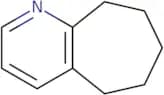
CAS:2,3-Cycloheptenopyridine is a molybdenum metal complex with chloroform. It belongs to the class of nucleophilic complexes. The reaction product of cycloheptenopyridine n-oxide and formaldehyde, it has a spectrum that shows peaks at 521 nm and 609 nm. This complex can be prepared by reacting 2,3-cycloheptenopyridine with hydrogen peroxide in dimethylformamide as a reagent. 2,3-Cycloheptenopyridine is an example of an n-oxide because it contains both oxygen atoms in the same molecule. The two isomers are cis and trans, but only the cis form is known to exist naturally on Earth. The trans isomer can be synthesized through the use of peroxides or trioxides; however, this synthetic form is only stable at temperatures above 300°C.Formula:C10H13NPurezza:Min. 95%Peso molecolare:147.22 g/mol1,2-Dihydrospiro[indole-3,3'-pyrrolidine]
CAS:Versatile small molecule scaffoldFormula:C11H14N2Purezza:Min. 95%Peso molecolare:174.24 g/mol1-tert-Butyl-2-thiourea
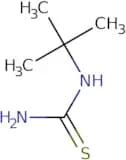
CAS:1-tert-Butyl-2-thiourea is an organosulfur compound that belongs to the group of organic solvents. It can be used in reactions with hydrochloric acid and heat energy, and has a reaction yield of 98%. 1-tert-Butyl-2-thiourea is also used as a mitochondrial inhibitor. It inhibits proton transport through the mitochondrial membrane by reacting with amino groups on the enzyme complex. This prevents the transport of protons across the membrane, which inhibits ATP production, leading to cell death.Formula:C5H12N2SPurezza:Min. 95%Peso molecolare:132.23 g/mol1-Chloro-4-(propane-2-sulfonyl)benzene
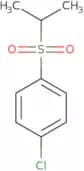
CAS:Versatile small molecule scaffoldFormula:C9H11ClO2SPurezza:Min. 95%Peso molecolare:218.7 g/mol1-[(Chloromethyl)sulfanyl]-4-methoxybenzene
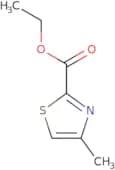
CAS:<p>Versatile small molecule scaffold</p>Formula:C8H9ClOSPurezza:Min. 95%Peso molecolare:188.67 g/molEthyl 4-Methyl-1,3-thiazole-2-carboxylate
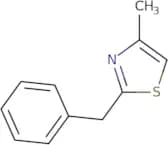
CAS:Versatile small molecule scaffoldFormula:C7H9NO2SPurezza:Min. 95%Peso molecolare:171.21 g/mol2-Benzyl-4-methyl-1,3-thiazole
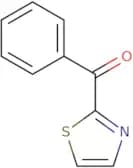
CAS:2-Benzyl-4-methyl-1,3-thiazole is a hydroxamic acid that has been shown to have antibacterial and antimicrobial properties. It is a selective inhibitor of the enzyme leishmanase, which is an enzyme that catalyzes the conversion of L-2,4-diaminobutanoate to L-2,4-diaminobutanoic acid. 2MBTT has been shown to have antiproliferative activity in cancer cells and also has antiviral activity against human immunodeficiency virus type 1 (HIV) and herpes simplex virus type 1 (HSV). This compound has shown antifungal activity against Candida albicans and Aspergillus fumigatus in vitro. Molecular modeling studies suggest that this compound binds to a site on the enzyme leishmanase that is not accessible by other inhibitors such as pyridoxal phosphate or EDTA. The maximal responseFormula:C11H11NSPurezza:Min. 95%Peso molecolare:189.28 g/mol2-Benzoyl-1,3-thiazole
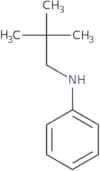
CAS:Versatile small molecule scaffoldFormula:C10H7NOSPurezza:Min. 95%Peso molecolare:189.24 g/molN-(2,2-Dimethylpropyl)aniline
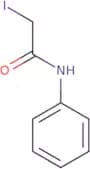
CAS:<p>N-(2,2-Dimethylpropyl)aniline is a heterocyclic compound that belongs to the class of amines. It is used in the synthesis of polymers and copolymers, such as polycarbonate plastics, polyurethane elastomers, and polyester fibers. N-(2,2-Dimethylpropyl)aniline can be used as a catalyst for cross-coupling reactions and also has been shown to catalyze x-ray crystallography studies. This product has also been shown to have carbamate and amide properties.<br>N-(2,2-Dimethylpropyl)aniline is an intermediate in the production of anilines from benzene derivatives with dimethylformamide or carbonyldiimidazole. It has also been shown to react with alcohols or phosphites to form esters or phosphoramides, respectively.</p>Formula:C11H17NPurezza:Min. 95%Peso molecolare:163.26 g/mol2-Iodo-N-phenylacetamide
CAS:2-Iodo-N-phenylacetamide (2IA) is a chemical that binds to the substrate binding site of the enzyme. It has been shown to have pro-inflammatory cytokine activity in vitro and in vivo. 2IA is a member of a class of compounds that are able to inhibit chronic viral infections by inhibiting the production of pro-inflammatory cytokines. The chemical diversity of 2IA is due to its functional groups, which include an electrospray ionization quadrupole, a phosphate group, and a disulfide bond. 2IA also has been shown to inhibit phosphorylation reactions in biochemical pathways.Formula:C8H8INOPurezza:Min. 95%Peso molecolare:261.06 g/mol

![Ethyl 2-{[(2-ethoxy-2-oxoethyl)carbamoyl]amino}acetate](/_next/image/?url=https%3A%2Fstatic.cymitquimica.com%2Fproducts%2F3D%2Fthumb-webp%2FHAA15063.webp&w=3840&q=75)
![[(4-Hydroxy-6-methylpyrimidin-2-yl)amino]formonitrile](/_next/image/?url=https%3A%2Fstatic.cymitquimica.com%2Fproducts%2F3D%2Fthumb-webp%2FHAA15219.webp&w=3840&q=75)
![{[4-(Dimethylamino)phenyl]sulfanyl}formonitrile](/_next/image/?url=https%3A%2Fstatic.cymitquimica.com%2Fproducts%2F3D%2Fthumb-webp%2FHAA15280.webp&w=3840&q=75)
![2-{[(2-Chlorophenyl)amino]methyl}phenol](/_next/image/?url=https%3A%2Fstatic.cymitquimica.com%2Fproducts%2F3D%2Fthumb-webp%2FHAA16637.webp&w=3840&q=75)

![Bicyclo[2.2.1]hept-5-ene-2-sulfonamide](/_next/image/?url=https%3A%2Fstatic.cymitquimica.com%2Fproducts%2F3D%2Fthumb-webp%2FHAA16708.webp&w=3840&q=75)
![Bicyclo[2.2.2]octane-2-sulfonamide](/_next/image/?url=https%3A%2Fstatic.cymitquimica.com%2Fproducts%2F3D%2Fthumb-webp%2FHAA16714.webp&w=3840&q=75)



![{1-[(4-Chlorophenyl)methyl]-1H-1,3-benzodiazol-2-yl}methanol](/_next/image/?url=https%3A%2Fstatic.cymitquimica.com%2Fproducts%2F3D%2Fthumb-webp%2FHAA18731.webp&w=3840&q=75)
![6-Chloro-3-phenyl[1,2,4]triazolo[4,3-b]pyridazine](/_next/image/?url=https%3A%2Fstatic.cymitquimica.com%2Fproducts%2F3D%2Fthumb-webp%2FHAA19080.webp&w=3840&q=75)
![1-N-[(2-Methylphenyl)methyl]benzene-1,2-diamine](/_next/image/?url=https%3A%2Fstatic.cymitquimica.com%2Fproducts%2F3D%2Fthumb-webp%2FHAA19192.webp&w=3840&q=75)
![1,2-Dihydrospiro[indole-3,3'-pyrrolidine]](/_next/image/?url=https%3A%2Fstatic.cymitquimica.com%2Fproducts%2F3D%2Fthumb-webp%2FHAA19872.webp&w=3840&q=75)
![1-[(Chloromethyl)sulfanyl]-4-methoxybenzene](/_next/image/?url=https%3A%2Fstatic.cymitquimica.com%2Fproducts%2F3D%2Fthumb-webp%2FHAA20589.webp&w=3840&q=75)