


Building Blocks
Questa sezione contiene prodotti fondamentali per la sintesi di composti organici e biologici. Building blocks sono i materiali di partenza essenziali utilizzati per costruire molecole complesse attraverso varie reazioni chimiche. Svolgono un ruolo critico nella scoperta di farmaci, nella scienza dei materiali e nella ricerca chimica. Presso CymitQuimica, offriamo una gamma diversificata di building blocks di alta qualità per supportare le tue ricerche innovative e progetti industriali, assicurandoti di avere i componenti essenziali per una sintesi di successo.
Sottocategorie di "Building Blocks"
- Acidi boronici e derivati dell'acido boronico(5.778 prodotti)
- Building Blocks Chirali(1.243 prodotti)
- Building Blocks Idrocarburici(6.097 prodotti)
- Building Blocks organici(61.048 prodotti)
Trovati 203115 prodotti di "Building Blocks"
Ordinare per
Purezza (%)
0
100
|
0
|
50
|
90
|
95
|
100
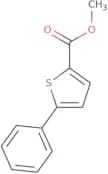
Methyl 5-phenylthiophene-2-carboxylate
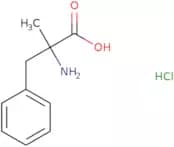
CAS:Versatile small molecule scaffoldFormula:C12H10O2SPurezza:Min. 95%Peso molecolare:218.27 g/mol(2R)-2-Amino-2-methyl-3-phenylpropanoic acid hydrochloride
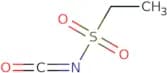
CAS:Versatile small molecule scaffoldFormula:C10H14ClNO2Purezza:Min. 95%Peso molecolare:215.67 g/molEthanesulfonyl isocyanate
CAS:Ethanesulfonyl isocyanate is a salt form of an alkoxycarbonyl group that has been used in agricultural applications. It is also used as a reagent to prepare thioethers and as a source of sulfur in organic synthesis. In the environment, it can be found in gram-negative organisms and metal halides. Ethanesulfonyl isocyanate has been shown to have anti-HIV activity and can be used in the production of cycloaliphatic compounds.Formula:C3H5NO3SPurezza:Min. 95%Peso molecolare:135.14 g/mol3-Methylpyrido[3,4-E][1,2,4]triazine
CAS:<p>Versatile small molecule scaffold</p>Formula:C7H6N4Purezza:Min. 95%Peso molecolare:146.15 g/mol2,3-Dihydro-benzo[b]thiophen-3-amine 1,1-dioxide hydrochloride
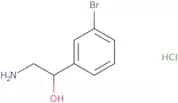
CAS:Versatile small molecule scaffoldFormula:C8H10ClNO2SPurezza:Min. 95%Peso molecolare:219.69 g/mol2-Amino-1-(3-bromophenyl)ethanol hydrochloride
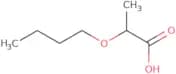
CAS:Versatile small molecule scaffoldFormula:C8H10BrNO•HClPurezza:Min. 95%Peso molecolare:252.54 g/mol2-Butoxypropanoic acid
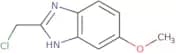
CAS:<p>Versatile small molecule scaffold</p>Formula:C7H14O3Purezza:Min. 95%Peso molecolare:146.18 g/mol2-(Chloromethyl)-6-methoxy-1H-1,3-benzodiazole
CAS:<p>Versatile small molecule scaffold</p>Formula:C9H9ClN2OPurezza:Min. 95%Peso molecolare:196.63 g/molThieno[3,4-b]thiophene-2-carboxylic acid
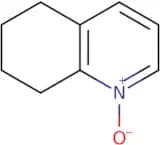
CAS:<p>Thieno[3,4-b]thiophene-2-carboxylic acid is a carboxylic acid. It has the ability to form stable thieno[3,4-b]thiophene-2-carboxylate ions in an aqueous solution. These ions can be detected by spectroscopic studies of the adsorption on electrodes and electrochemical polymerization. Thieno[3,4-b]thiophene-2-carboxylic acid is not easily oxidized or reduced due to its stability and low energy state.</p>Formula:C8H6O2S2Purezza:Min. 95%Peso molecolare:198.26 g/mol5,6,7,8-Tetrahydroquinolin-1-ium-1-olate
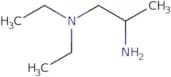
CAS:5,6,7,8-Tetrahydroquinolin-1-ium-1-olate is a white crystalline solid. It has a molecular weight of 178.07 and a melting point of 190°C. 5,6,7,8-Tetrahydroquinolin-1-ium-1-olate is stabilized by hydrogen bonds between the two monomers in the dimer form. It also has an asymmetric conformation with six carbons in its backbone. The hemihydrate form of 5,6,7,8 tetrahydroquinolinium 1 -olate is formed when the water molecule is bound to one oxygen atom on each monomer in the dimer.Formula:C9H11NOPurezza:Min. 95%Peso molecolare:149.19 g/mol(2-Aminopropyl)diethylamine
CAS:Versatile small molecule scaffoldFormula:C7H18N2Purezza:Min. 95%Peso molecolare:130.23 g/mol3-Amino-4(3H)-quinazolinone
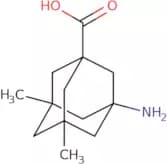
CAS:<p>3-Amino-4(3H)-quinazolinone is a nucleophilic compound that can react with methyl anthranilate, an anthranilic acid derivative. When reacted with aziridine, 3-amino-4(3H) quinazolinone forms a hydroxyl group. This compound is cytotoxic to human liver cells in vitro and exhibits significant cytotoxicity against cancer cells. It has been shown to inhibit the growth of epidermal growth factor (EGF) in vitro and can be used as a tumor promoter. 3-Amino-4(3H)-quinazolinone also reacts with amines such as amino acids, amides, and ammonia to form aziridinium ions. Aziridinium ions are nitrogen nucleophiles that can react with other molecules to form new compounds or break down existing ones.</p>Formula:C8H7N3OPurezza:Min. 95%Peso molecolare:161.16 g/mol3-Amino-5,7-dimethyladamantane-1-carboxylic acid
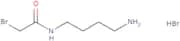
CAS:Versatile small molecule scaffoldFormula:C13H21NO2Purezza:Min. 95%Peso molecolare:223.3 g/molN-(4-Aminobutyl)-2-bromoacetamide hydrobromide
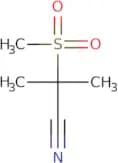
CAS:<p>Versatile small molecule scaffold</p>Formula:C6H14Br2N2OPurezza:Min. 95%Peso molecolare:290 g/mol2-Methanesulfonyl-2-Methylpropanenitrile
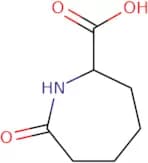
CAS:Versatile small molecule scaffoldFormula:C5H9NO2SPurezza:Min. 95%Peso molecolare:147.2 g/mol7-Oxoazepane-2-carboxylic acid
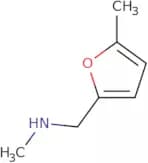
CAS:<p>Versatile small molecule scaffold</p>Formula:C7H11NO3Purezza:Min. 95%Peso molecolare:157.17 g/molMethyl-(5-methyl-furan-2-ylmethyl)-amine
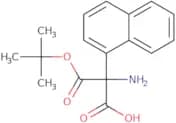
CAS:<p>Versatile small molecule scaffold</p>Formula:C7H11NOPurezza:Min. 95%Peso molecolare:125.17 g/mol(N-BOC-Amino)(naphthalen-1-yl)acetic acid
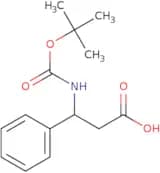
CAS:Versatile small molecule scaffoldFormula:C17H19NO4Purezza:Min. 95%Peso molecolare:301.34 g/mol3-tert-Butoxycarbonylamino-3-phenyl-propionic acid
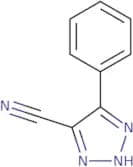
CAS:Versatile small molecule scaffoldFormula:C14H19NO4Purezza:Min. 95%Peso molecolare:265.31 g/mol4-Phenyl-1H-1,2,3-triazole-5-carbonitrile
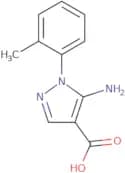
CAS:<p>Versatile small molecule scaffold</p>Formula:C9H6N4Purezza:Min. 95%Peso molecolare:170.17 g/mol5-Amino-1-(2-methylphenyl)-1H-pyrazole-4-carboxylic acid
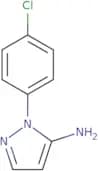
CAS:<p>Versatile small molecule scaffold</p>Formula:C11H11N3O2Purezza:Min. 95%Peso molecolare:217.22 g/mol1-(4-Chlorophenyl)-1H-pyrazol-5-amine
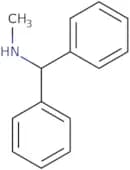
CAS:Versatile small molecule scaffoldFormula:C9H8ClN3Purezza:Min. 95%Peso molecolare:193.63 g/molN-(Diphenylmethyl)methylamine
CAS:N-(Diphenylmethyl)methylamine is an immunomodulatory drug. It is a prodrug of 3-mercaptopropionic acid, which can inhibit the growth of tumor cells and influenza virus. N-(Diphenylmethyl)methylamine has been shown to have anti-inflammatory effects in diabetic patients. This drug also has the ability to regulate β-amino acid and β-catenin levels in the body. N-(Diphenylmethyl)methylamine inhibits phosphorylation of β-catenin by inhibiting protein kinase C activity, leading to increased expression of this protein in cancer cells.Formula:C14H15NPurezza:Min. 95%Peso molecolare:197.28 g/molN-[(2-Methylphenyl)methylidene]hydroxylamine
CAS:N-[(2-Methylphenyl)methylidene]hydroxylamine is a pest control agent that is used as an insecticide and a fungicide. It is classified as an aryloxyphenoxy hydroxamic acid. N-[(2-Methylphenyl)methylidene]hydroxylamine binds to the enzyme cytochrome oxidase, which is essential for aerobic respiration, and inhibits oxidative phosphorylation. This leads to the accumulation of toxic reactive oxygen species (ROS) and cell death. N-[(2-Methylphenyl)methylidene]hydroxylamine has been shown to be bactericidal against Gram-positive bacteria such as Bacillus spp., Staphylococcus spp., and Streptococcus pyogenes, as well as Gram-negative bacteria such as Escherichia coli, Salmonella enterica, Pseudomonas aeruginosa, and KlebsFormula:C8H9NOPurezza:Min. 95%Peso molecolare:135.16 g/mol3-Methyl-3-phenyloxolane-2,5-dione
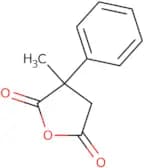
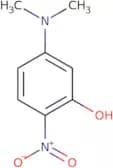
CAS:<p>Versatile small molecule scaffold</p>Formula:C11H10O3Purezza:Min. 95%Peso molecolare:190.19 g/mol5-(Dimethylamino)-2-nitrophenol
CAS:Versatile small molecule scaffoldFormula:C8H10N2O3Purezza:Min. 95%Peso molecolare:182.18 g/mol2-[(4-bromophenyl)sulfanyl]ethan-1-ol
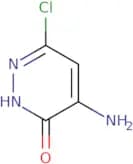
CAS:<p>Versatile small molecule scaffold</p>Formula:C8H9OSBrPurezza:Min. 95%Peso molecolare:233.12 g/mol4-Amino-6-chloro-2,3-dihydropyridazin-3-one
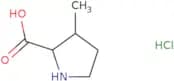
CAS:Versatile small molecule scaffoldFormula:C4H4ClN3OPurezza:Min. 95%Peso molecolare:145.55 g/mol3-Methylpyrrolidine-2-carboxylic acid hydrochloride
CAS:Versatile small molecule scaffoldFormula:C6H12ClNO2Purezza:Min. 95%Peso molecolare:165.62 g/mol2,2,5-Trimethylhexan-3-one
CAS:<p>Trimethylhexan-3-one is a chemical compound with the molecular formula C8H16O. It has three methyl groups, one of which is in the 2 position and two of which are in the 3 position. Trimethylhexan-3-one is an organic compound that can be found in some foods and beverages. The most common form of trimethylhexan-3-one is 2,2,5-trimethylhexane, also known as octane. Octane is used as a gasoline additive to increase octane rating and provide better engine performance. Trimethylhexan-3-one may also have antineoplastic effects, but this has not been well studied. Additionally, trimethylhexan-3-one may be associated with neutropenia or infant mortality in animal studies.</p>Formula:C9H18OPurezza:Min. 95%Peso molecolare:142.24 g/mol6-Methoxy-2-methylimidazo[1,2-b]pyridazine-3-carboxylic acid
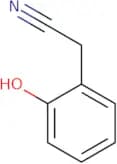
CAS:Versatile small molecule scaffoldFormula:C9H9N3O3Purezza:Min. 95%Peso molecolare:207.19 g/mol(2-Hydroxyphenyl)acetonitrile
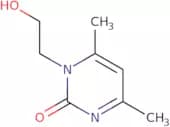
CAS:<p>(2-Hydroxyphenyl)acetonitrile is a benzofuran derivative that has been shown to be an effective inhibitor of amide synthetase. It is soluble in polar solvents and immiscible in apolar solvents, which makes it a useful reagent for the synthesis of amides from primary amines. The compound was isolated from a strain of Streptomyces sp. with the gene sequence identified and sequenced. The compound exhibits high specificity against the enzyme and can be used as a tool in biomolecular studies.</p>Formula:C8H7NOPurezza:Min. 95%Peso molecolare:133.15 g/mol1-(2-Hydroxyethyl)-4,6-dimethyl-1,2-dihydropyrimidin-2-one
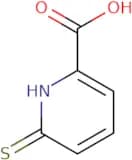
CAS:Nitrite ion is a gas that is found in the environment and has been shown to have various beneficial effects. Nitrite ion has been shown to have hepatoprotective properties, as it protects rat liver cells from death by benzalkonium chloride. This substance also prevents neuronal death in an experimental model of cerebral ischemia.Formula:C8H12N2O2Purezza:Min. 95%Peso molecolare:168.19 g/mol6-Sulfanylpyridine-2-carboxylic acid
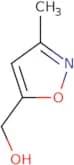
CAS:<p>Versatile small molecule scaffold</p>Formula:C6H5NO2SPurezza:Min. 95%Peso molecolare:155.18 g/mol5-(Hydroxymethyl)-3-methylisoxazole
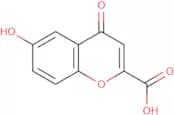
CAS:5-(Hydroxymethyl)-3-methylisoxazole is a chloride heterocycle that has been shown to be an agonist of the adenosine A3 receptor. It has been synthesised by reacting 2-chlorobenzaldehyde with methyl hydroxymethyl ketone and nitroethane. 5-(Hydroxymethyl)-3-methylisoxazole has been used in screening tests for the identification of novel biomolecules with desirable functionalisation. The yields of synthesized isoxazoles have been found to be improved by irradiation. This heterocycle has also been used in the synthesis of isoxazolines, which are a class of compounds that are structurally related to benzoxazinones and benzothiazinones.Formula:C5H7NO2Purezza:Min. 95%Peso molecolare:113.11 g/mol6-Hydroxy-4-oxo-4H-chromene-2-carboxylic acid
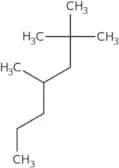
CAS:<p>Versatile small molecule scaffold</p>Formula:C10H6O5Purezza:Min. 95%Peso molecolare:206.15 g/mol2,2,4-Trimethylheptane
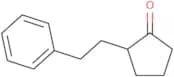
CAS:2,2,4-Trimethylheptane is a volatile organic compound with a strong odor. It is used as a modeling or calibration standard for the analysis of other volatile compounds. The headspace technique can be used to extract 2,2,4-trimethylheptane from samples. Solid phase extraction can also be used to remove 2,2,4-trimethylheptane from samples. This compound has been found in the environment due to its presence in gasoline and cigarette smoke.Formula:C10H22Purezza:Min. 95%Peso molecolare:142.28 g/mol2-(2-Phenylethyl)cyclopentan-1-one
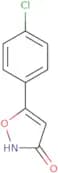
CAS:<p>Versatile small molecule scaffold</p>Formula:C13H16OPurezza:Min. 95%Peso molecolare:188.26 g/mol5-(4-Chlorophenyl)-1,2-oxazol-3-ol
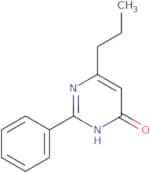
CAS:Versatile small molecule scaffoldFormula:C9H6ClNO2Purezza:Min. 95%Peso molecolare:195.6 g/mol2-Phenyl-6-propyl-3,4-dihydropyrimidin-4-one
CAS:Versatile small molecule scaffoldFormula:C13H14N2OPurezza:Min. 95%Peso molecolare:214.26 g/molSpiro[4.4]nonan-1-one
CAS:<p>Versatile small molecule scaffold</p>Formula:C9H14OPurezza:Min. 95%Peso molecolare:138.21 g/mol3-(Chloromethyl)-5-phenylisoxazole
CAS:<p>3-(Chloromethyl)-5-phenylisoxazole is a water soluble moiety that is used in the synthesis of conjugates with antitumor activity. 3-(Chloromethyl)-5-phenylisoxazole has been shown to inhibit the growth of brain tumors by binding to DNA, inhibiting transcription and replication. The drug also inhibits protein synthesis and cell division. This compound can be esterified and isothiazole substituted to form an antitumor drug that has a strong antiproliferative effect on human leukemia cells. The biological activity of 3-(chloromethyl)-5-phenylisoxazole can be enhanced by catalytic hydrogenation with methanol in acidic conditions.</p>Formula:C10H8ClNOPurezza:Min. 95%Peso molecolare:193.63 g/mol5-(Bromoacetyl)-3-phenylisoxazole
CAS:Versatile small molecule scaffoldFormula:C11H8BrNO2Purezza:Min. 95%Peso molecolare:266.09 g/mol5-[(4-Methylphenyl)amino]-1,3,4-thiadiazole-2-thiol
CAS:Versatile small molecule scaffoldFormula:C9H9N3S2Purezza:Min. 95%Peso molecolare:223.3 g/mol5-(Benzylamino)-1,3,4-thiadiazole-2-thiol
CAS:Versatile small molecule scaffoldFormula:C9H9N3S2Purezza:Min. 95%Peso molecolare:223.32 g/mol4-(But-3-yn-1-yl)morpholine
CAS:<p>Versatile small molecule scaffold</p>Formula:C8H13NOPurezza:Min. 95%Peso molecolare:139.19 g/mol1-(But-3-yn-1-yl)pyrrolidine
CAS:Versatile small molecule scaffoldFormula:C8H14ClNPurezza:Min. 95%Peso molecolare:159.65 g/mol2-[2-(Methoxycarbonyl)phenyl]acetic acid
CAS:<p>Versatile small molecule scaffold</p>Formula:C10H10O4Purezza:Min. 95%Peso molecolare:194.19 g/mol2-(2-methoxy-2-oxoethyl)benzoic acid
CAS:<p>2-(2-Methoxy-2-oxoethyl)benzoic acid is an organic compound that can be synthesized by the reaction of 2-methoxyacetophenone with lithium borohydride. It is also obtained as a byproduct in the synthesis of other organic compounds, such as esters and anhydrides. The chloride group of 2-(2-methoxy-2-oxoethyl)benzoic acid can be replaced with other groups to produce homophthalic, acetyl, or anhydride derivatives. 2-(2-Methoxy-2-oxoethyl)benzoic acid is often used as a starting material for the synthesis of cyclic esters and alcohols. It has been used in the synthesis of drugs such as dipyridamole and dapsone.</p>Formula:C10H10O4Purezza:Min. 95%Peso molecolare:194.2 g/mol2-Amino-5-phenyl-3-furonitrile
CAS:2-Amino-5-phenyl-3-furonitrile is a heterocyclic compound that belongs to the group of pyrimidine derivatives. It can be prepared by the reaction of 2,4,6-trichloropyrimidine with phenylacetonitrile and sodium hydroxide in water. This synthesis gives high yields of 2-amino-5-phenyl-3-furonitrile. The compound reacts with isothiocyanates to form heterocyclic compounds. The process of catalyzed heterocyclization has been shown to be effective for the synthesis of pyrimidine derivatives.Formula:C11H8N2OPurezza:Min. 95%Peso molecolare:184.19 g/mol

![3-Methylpyrido[3,4-E][1,2,4]triazine](/_next/image/?url=https%3A%2Fstatic.cymitquimica.com%2Fproducts%2F3D%2Fthumb-webp%2FPAA61229.webp&w=3840&q=75)
![2,3-Dihydro-benzo[b]thiophen-3-amine 1,1-dioxide hydrochloride](/_next/image/?url=https%3A%2Fstatic.cymitquimica.com%2Fproducts%2F3D%2Fthumb-webp%2FPAA61343.webp&w=3840&q=75)
![Thieno[3,4-b]thiophene-2-carboxylic acid](/_next/image/?url=https%3A%2Fstatic.cymitquimica.com%2Fproducts%2F3D%2Fthumb-webp%2FPAA63008.webp&w=3840&q=75)

![N-[(2-Methylphenyl)methylidene]hydroxylamine](/_next/image/?url=https%3A%2Fstatic.cymitquimica.com%2Fproducts%2F3D%2Fthumb-webp%2FPAA68379.webp&w=3840&q=75)
![2-[(4-bromophenyl)sulfanyl]ethan-1-ol](/_next/image/?url=https%3A%2Fstatic.cymitquimica.com%2Fproducts%2F3D%2Fthumb-webp%2FPAA70392.webp&w=3840&q=75)

![6-Methoxy-2-methylimidazo[1,2-b]pyridazine-3-carboxylic acid](/_next/image/?url=https%3A%2Fstatic.cymitquimica.com%2Fproducts%2F3D%2Fthumb-webp%2FPAA71423.webp&w=3840&q=75)
![Spiro[4.4]nonan-1-one](/_next/image/?url=https%3A%2Fstatic.cymitquimica.com%2Fproducts%2F3D%2Fthumb-webp%2FPAA72758.webp&w=3840&q=75)


![5-[(4-Methylphenyl)amino]-1,3,4-thiadiazole-2-thiol](/_next/image/?url=https%3A%2Fstatic.cymitquimica.com%2Fproducts%2F3D%2Fthumb-webp%2FPAA73125.webp&w=3840&q=75)


![2-[2-(Methoxycarbonyl)phenyl]acetic acid](/_next/image/?url=https%3A%2Fstatic.cymitquimica.com%2Fproducts%2F3D%2Fthumb-webp%2FPAA73649.webp&w=3840&q=75)

