Building Blocks
Sottocategorie di "Building Blocks"
- Acidi boronici e derivati dell'acido boronico(5.778 prodotti)
- Building Blocks Chirali(1.243 prodotti)
- Building Blocks Idrocarburici(6.099 prodotti)
- Building Blocks organici(61.038 prodotti)
Trovati 205376 prodotti di "Building Blocks"
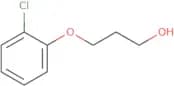
3-(2-Chlorophenoxy)propan-1-ol
CAS:Versatile small molecule scaffold
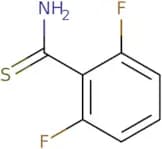
Formula:C9H11ClO2Purezza:Min. 95%Peso molecolare:186.63 g/mol2,6-Difluorobenzothioamide
CAS:Versatile small molecule scaffold
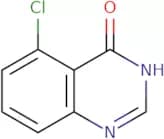
Formula:C7H5F2NSPurezza:Min. 95%Peso molecolare:173.18 g/mol5-Chloro-4-quinazolone
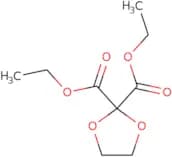
CAS:5-Chloro-4-quinazolone is an alkali metal salt of quinazolinone. It is a potentiating agent that enhances the effects of other drugs, such as aminopyridine, which acts as a tranquilizer and muscle relaxant. 5-Chloro-4-quinazolone can be used to treat spasms of the urinary bladder and uterus. This drug also has an anti-inflammatory effect on the nervous system, which may be due to its ability to block nerve transmission by inhibiting the release of acetylcholine from nerve endings.Formula:C8H5ClN2OPurezza:Min. 95%Peso molecolare:180.59 g/mol2,2-Diethyl 1,3-dioxolane-2,2-dicarboxylate
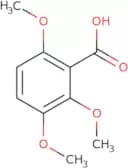
CAS:Versatile small molecule scaffoldFormula:C9H14O6Purezza:Min. 95%Peso molecolare:218.2 g/mol2,3,6-Trimethoxybenzoic Acid
CAS:2,3,6-Trimethoxybenzoic Acid is an organic compound that is the product of the reaction of 3-hydroxyanthranilic acid with benzoic acid. It has been shown to be an antibacterial agent in vitro and has antitumour properties. 2,3,6-Trimethoxybenzoic Acid is a precursor for the synthesis of chorismate, which is an important biosynthetic intermediate for many antibiotics. The elucidation of its structure and mechanism of action may help scientists to better understand the microflora responsible for human diseases.
Formula:C10H12O5Purezza:Min. 95%Peso molecolare:212.2 g/mol3-Chloro-1-(morpholin-4-yl)propan-1-one
CAS:Versatile small molecule scaffoldFormula:C7H12ClNO2Purezza:Min. 95%Peso molecolare:177.63 g/mol7-Oxo-6H,7H-thieno[2,3-c]pyridine-5-carboxylic acid
CAS:Versatile small molecule scaffoldFormula:C8H5NO3SPurezza:Min. 95%Peso molecolare:195.2 g/molThieno[3,2-c]pyridine-6-carboxylic acid
CAS:Versatile small molecule scaffoldFormula:C8H5NO2SPurezza:Min. 95%Peso molecolare:179.2 g/mol2-(Adamantan-1-yl)-2-aminoacetic acid
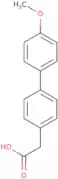
CAS:Versatile small molecule scaffoldFormula:C12H19NO2Purezza:Min. 95%Peso molecolare:209.28 g/mol(4'-Methoxy-biphenyl-4-yl)-acetic acid
CAS:Versatile small molecule scaffoldFormula:C15H14O3Purezza:Min. 95%Peso molecolare:242.27 g/mol4-[4-(Aminomethyl)phenyl]phenol
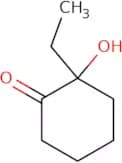
CAS:Versatile small molecule scaffoldFormula:C13H13NOPurezza:Min. 95%Peso molecolare:199.25 g/mol2-Ethyl-2-hydroxycyclohexan-1-one
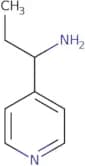
CAS:Versatile small molecule scaffoldFormula:C8H14O2Purezza:Min. 95%Peso molecolare:142.2 g/mol1-(Pyridin-4-yl)propan-1-amine
CAS:Versatile small molecule scaffoldFormula:C8H12N2Purezza:Min. 95%Peso molecolare:136.2 g/mol1-Benzyl-7-chloro-1H-pyrrolo[2,3-c]pyridine
CAS:Versatile small molecule scaffoldFormula:C14H11ClN2Purezza:Min. 95%Peso molecolare:242.7 g/mol1-Benzyl-1H,6H,7H-pyrrolo[2,3-c]pyridin-7-one
CAS:Versatile small molecule scaffold
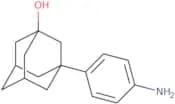
Formula:C14H12N2OPurezza:Min. 95%Peso molecolare:224.26 g/mol3-(4-Aminophenyl)adamantan-1-ol
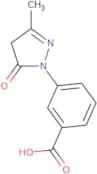
CAS:Versatile small molecule scaffoldFormula:C16H21NOPurezza:Min. 95%Peso molecolare:243.34 g/mol3-(3-Methyl-5-oxo-4,5-dihydro-1H-pyrazol-1-yl)benzoic acid
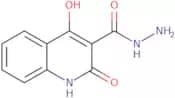
CAS:Versatile small molecule scaffoldFormula:C11H10N2O3Purezza:Min. 95%Peso molecolare:218.21 g/mol4-Hydroxy-2-oxo-1,2-dihydroquinoline-3-carbohydrazide
CAS:4-Hydroxy-2-oxo-1,2-dihydroquinoline-3-carbohydrazide is a cholinesterase inhibitor. It reduces the activity of acetylcholinesterase, which breaks down the neurotransmitter acetylcholine. This leads to an increase in the amount of acetylcholine in the synaptic cleft, which stimulates muscle contraction and may also have an effect on other cells in the body. 4-Hydroxy-2-oxo-1,2-dihydroquinoline-3-carbohydrazide has been shown to selectively bind to and inhibit cholinesterases from bovine chromaffin cells and laboratory preparations. The molecular modeling studies show that this drug binds to the active site of cholinesterases with high affinity and selectivity.
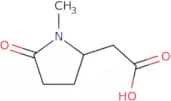
Formula:C10H9N3O3Purezza:Min. 95%Peso molecolare:219.2 g/mol2-(1-Methyl-5-oxopyrrolidin-2-yl)acetic acid
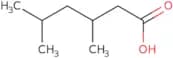
CAS:2-(1-Methyl-5-oxopyrrolidin-2-yl)acetic acid is a naturally occurring, uncharged, neutral, and hydroxy acid. It is a hydrophilic compound that can be used in cosmetics as a film forming agent or polymer. 2-(1-Methyl-5-oxopyrrolidin-2-yl)acetic acid has been shown to form multilayered films on the surface of water. This chemical also exhibits hydrogen bonding and hydroxy bonding with other compounds.Formula:C7H11NO3Purezza:Min. 95%Peso molecolare:157.17 g/mol3,5-Dimethylhexanoic acid
CAS:3,5-Dimethylhexanoic acid is a polycarboxylic acid that is formed by the oxidation of fatty acids in an alkaline environment. It has a viscosity of about 1.6 mPa·s at 20 °C and a pH of about 11. 3,5-Dimethylhexanoic acid is chemically stable in neutral solution and can be used as a model system for fatty acids. For example, it can be used to study the reactions between carboxylic acids and hydroxyl groups (e.g., hydrolysis). This compound has been shown to react with sodium carbonate and sodium hydroxide solution to form caproic acid, which is then hydrolyzed into acetic acid.
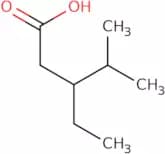
Formula:C8H16O2Purezza:Min. 95%Peso molecolare:144.21 g/mol3-Ethyl-4-methylpentanoic acid
CAS:Versatile small molecule scaffold
Formula:C8H16O2Purezza:Min. 95%Peso molecolare:144.21 g/mol3-Phenyl-1-benzofuran-2-carboxylic acid
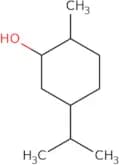
CAS:3-Phenyl-1-benzofuran-2-carboxylic acid is an organic molecule that blocks the angiotensin II receptor, which is a type of protein found in the kidney. This receptor regulates the production of various hormones and proteins that are involved in blood pressure regulation. 3-Phenyl-1-benzofuran-2-carboxylic acid has shown to be an experimental drug for the treatment of hypertension, but its affinity for other receptors may affect its therapeutic potential. 3Phenylbenzofuran derivatives have been shown to have an effect on water absorption and blood pressure in rats, although this has not yet been studied in humans.Formula:C15H10O3Purezza:Min. 95%Peso molecolare:238.24 g/mol2-Methyl-5-(propan-2-yl)cyclohexan-1-ol
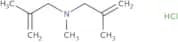
CAS:2-Methyl-5-(propan-2-yl)cyclohexan-1-ol is a reaction product of 2,5-dimethylcyclohexanol and cyclohexene. It is an ultraviolet light absorber with good chemical stability. It can be used as a synthetic antioxidant in pharmaceutical preparations and other products. The commercial product is a mixture of cis and trans geometric isomers.Formula:C10H20OPurezza:Min. 95%Colore e forma:Clear LiquidPeso molecolare:156.26 g/molMethylbis(2-methylprop-2-en-1-yl)amine hydrochloride
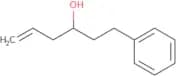
CAS:Versatile small molecule scaffoldFormula:C9H18ClNPurezza:Min. 95%Peso molecolare:175.7 g/mol1-Phenylhex-5-en-3-ol
CAS:1-Phenylhex-5-en-3-ol is a synthetic compound that has been used in the allylation of halides and as a chiral, enantiomerically pure building block for organic synthesis. The addition of 1-phenylhex-5-en-3 to an aldehyde followed by hydrolysis produces the corresponding ester. This reagent can also be used catalytically as an asymmetric hydrogenation catalyst, with selectivity depending on the solvent. It is an organic chemical that can be converted into other useful products such as solvents and pharmaceuticals.
Formula:C12H16OPurezza:Min. 95%Peso molecolare:176.25 g/mol2-[(1-Phenylpropan-2-yl)amino]acetic acid hydrochloride
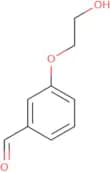
CAS:Versatile small molecule scaffoldFormula:C11H16ClNO2Purezza:Min. 95%Peso molecolare:229.7 g/mol3-(2-Hydroxyethoxy)benzaldehyde
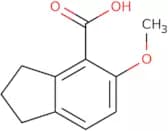
CAS:3-(2-Hydroxyethoxy)benzaldehyde (3-HBA) is a reactive liquid phase, hydrogenated, and solid phase synthesis product. It is used for the synthesis of peptidomimetics by reacting with hydrosilylation. 3-HBA has been shown to react chemoselectively with alkene groups on the surface of silica gel and can be immobilized onto it through covalent bonding. 3-HBA has a melting point of 118°C and a density of 1.07 g/mL at 25°C. The reaction products are not soluble in water or organic solvents.Formula:C9H10O3Purezza:Min. 95%Peso molecolare:166.17 g/mol5-Methoxy-2,3-dihydro-1H-indene-4-carboxylic acid
CAS:Versatile small molecule scaffold
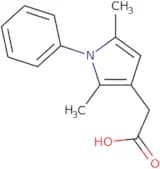
Formula:C11H12O3Purezza:Min. 95%Peso molecolare:192.2 g/mol2-(2,5-Dimethyl-1-phenyl-1H-pyrrol-3-yl)acetic acid
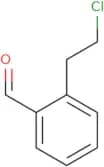
CAS:Versatile small molecule scaffoldFormula:C14H15NO2Purezza:Min. 95%Peso molecolare:229.27 g/mol2-(2-Chloroethyl)benzaldehyde
CAS:Versatile small molecule scaffoldFormula:C9H9ClOPurezza:95%NmrPeso molecolare:168.62 g/mol3-Azabicyclo[3.3.1]nonane hydrochloride
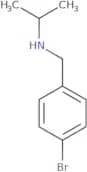
CAS:Versatile small molecule scaffoldFormula:C8H16ClNPurezza:Min. 95%Peso molecolare:161.68 g/molN-(4-Bromophenylmethyl)isopropylamine
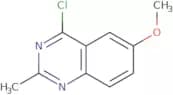
CAS:Isopropylamine is an organic compound that is used as a solvent, a chemical intermediate and a base. It can be used to synthesize other compounds such as N-(4-bromophenylmethyl)isopropylamine. This compound has been shown to undergo transformation when in contact with chloroform or amines.Formula:C10H14BrNPurezza:Min. 95%Peso molecolare:228.13 g/mol4-chloro-6-methoxy-2-methylquinazoline
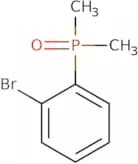
CAS:Versatile small molecule scaffoldFormula:C10H9ClN2OPurezza:Min. 95%Peso molecolare:208.65 g/mol1-Bromo-2-(dimethylphosphoryl)benzene
CAS:Versatile small molecule scaffold
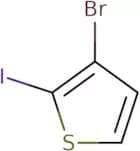
Formula:C8H10BrOPPurezza:Min. 95%Peso molecolare:233.04 g/mol3-bromo-2-iodothiophene
CAS:3-bromo-2-iodothiophene is a brominated heterocycle that can be used as an introducing group in organic synthesis. It has been shown to interact with fluorine and exhibit high affinity for this element. 3-bromo-2-iodothiophene also has the ability to cross-couple with other functional groups, such as cyclic or unsymmetrical ones. The compound is also capable of forming isoelectronic species, which are compounds with the same electron configuration. 3-bromo-2-iodothiophene can be used in semiconductors and other devices.
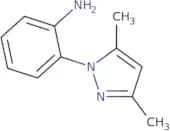
Formula:C4H2BrISPurezza:Min. 95%Peso molecolare:288.9 g/mol2-(3,5-Dimethyl-pyrazol-1-yl)-phenylamine
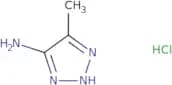
CAS:The catalyst is an organic compound that is used in the ring-opening polymerization of toluene. It is also used in kinetic studies as a ligand or catalyst. The catalyst was found to be an enolate ion, which reacts with toluene to form a six-membered cyclic ring. The reaction proceeds through a concerted mechanism. Crystal x-ray diffraction analyses showed that the product had a single crystalline phase and yielded 97% of the theoretical yield.Formula:C11H13N3Purezza:Min. 95%Peso molecolare:187.24 g/mol4-Methyl-1H-1,2,3-triazol-5-amine hydrochloride
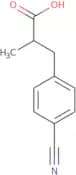
CAS:Versatile small molecule scaffoldFormula:C3H7ClN4Purezza:Min. 95%Peso molecolare:134.57 g/mol3-(4-Cyanophenyl)-2-methylpropanoic acid
CAS:Versatile small molecule scaffold
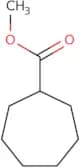
Formula:C11H11NO2Purezza:Min. 95%Peso molecolare:189.21 g/molCycloheptanecarboxylic acid methyl ester
CAS:Cycloheptanecarboxylic acid methyl ester is a nitro-containing organic compound that binds to the CCR5 receptor, which is involved in inflammatory bowel disease. It has been shown to have anti-inflammatory activities in mice with experimental colitis, which may be due to its ability to inhibit the production of pro-inflammatory cytokines such as TNF-α and IL-6. Cycloheptanecarboxylic acid methyl ester contains an ethyl group at position 5, which is hydroxylated in vivo and metabolized by CYP450 enzymes. This compound also contains an acrylates group at position 2, a carbonyl group at position 1, and an alkynyl group at position 3. Cycloheptanecarboxylic acid methyl ester signifies the presence of two nitrogen atoms (N) in the molecule.br>br>
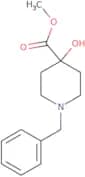
The amine groups are located on either sideFormula:C9H16O2Purezza:Min. 95%Peso molecolare:156.23 g/molMethyl 1-benzyl-4-hydroxypiperidine-4-carboxylate
CAS:Versatile small molecule scaffold
Formula:C14H19NO3Purezza:Min. 95%Peso molecolare:249.31 g/mol1H,3H,4H,9H-Pyrano[3,4-b]indole-1,3-dione
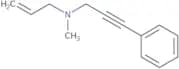
CAS:Versatile small molecule scaffoldFormula:C11H7NO3Purezza:Min. 95%Peso molecolare:201.18 g/molMethyl(3-phenylprop-2-yn-1-yl)(prop-2-en-1-yl)amine
CAS:Versatile small molecule scaffold
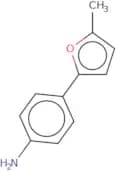
Formula:C13H15NPurezza:Min. 95%Peso molecolare:185.26 g/mol4-(5-Methyl-furan-2-yl)-phenylamine
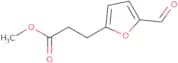
CAS:Versatile small molecule scaffoldFormula:C11H11NOPurezza:Min. 95%Peso molecolare:173.2 g/molMethyl 3-(5-formylfuran-2-yl)propanoate
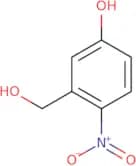
CAS:Versatile small molecule scaffoldFormula:C9H10O4Purezza:Min. 95%Peso molecolare:182.17 g/mol5-Hydroxy-2-nitrobenzyl alcohol
CAS:5-Hydroxy-2-nitrobenzyl alcohol is a hydrogen bond donor that has been used to coat materials. This compound has been shown to induce a phase transition in the cervical cancer cells, leading to apoptosis. The binding experiments show that it binds to lectin, but not nucleophilic groups. 5-Hydroxy-2-nitrobenzyl alcohol also inhibits the uptake of glucose by cells and reduces the growth of tumor cells in vitro.
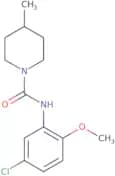
Formula:C7H7NO4Purezza:Min. 95%Peso molecolare:169.13 g/molN-(5-Chloro-2-methoxyphenyl)-4-methylpiperidine-1-carboxamide
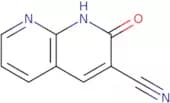
CAS:Versatile small molecule scaffoldFormula:C14H19ClN2O2Purezza:Min. 95%Peso molecolare:282.76 g/mol2-Oxo-1,2-dihydro-1,8-naphthyridine-3-carbonitrile
CAS:2-Oxo-1,2-dihydro-1,8-naphthyridine-3-carbonitrile is an experimental drug that acts as a 5HT3 receptor antagonist. It has been shown to inhibit the effects of serotonin in the ileum and also inhibits the binding of serotonin to 5HT3 receptors. 2-Oxo-1,2-dihydro-1,8-naphthyridine-3-carbonitrile has been shown to be effective in animal models for conditions such as irritable bowel syndrome and nausea. This drug is a piperidine derivative that can be synthesized using microwave irradiation in a reaction with ethyl cyanoacetate or cyanoacetate. The 5HT3 receptor antagonists are used to treat nausea and vomiting caused by various conditions such as chemotherapy, general anaesthesia, and postoperative nausea and vomiting.
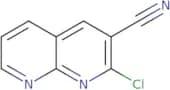
Formula:C9H5N3OPurezza:Min. 95%Peso molecolare:171.16 g/mol2-Chloro-1,8-naphthyridine-3-carbonitrile
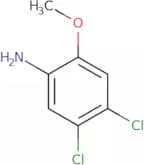
CAS:Versatile small molecule scaffoldFormula:C9H4ClN3Purezza:Min. 95%Peso molecolare:189.6 g/mol4,5-Dichloro-2-methoxyaniline
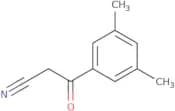
CAS:Versatile small molecule scaffoldFormula:C7H7Cl2NOPurezza:Min. 95%Peso molecolare:192.04 g/mol3-(3,5-Dimethylphenyl)-3-oxopropanenitrile
CAS:Versatile small molecule scaffoldFormula:C11H11NOPurezza:Min. 95%Peso molecolare:173.21 g/mol

![7-Oxo-6H,7H-thieno[2,3-c]pyridine-5-carboxylic acid](/_next/image/?url=https%3A%2Fstatic.cymitquimica.com%2Fproducts%2F3D%2Fthumb-webp%2FKCA24901.webp&w=3840&q=75)
![Thieno[3,2-c]pyridine-6-carboxylic acid](/_next/image/?url=https%3A%2Fstatic.cymitquimica.com%2Fproducts%2F3D%2Fthumb-webp%2FKCA24909.webp&w=3840&q=75)

![4-[4-(Aminomethyl)phenyl]phenol](/_next/image/?url=https%3A%2Fstatic.cymitquimica.com%2Fproducts%2F3D%2Fthumb-webp%2FKCA27740.webp&w=3840&q=75)
![1-Benzyl-7-chloro-1H-pyrrolo[2,3-c]pyridine](/_next/image/?url=https%3A%2Fstatic.cymitquimica.com%2Fproducts%2F3D%2Fthumb-webp%2FKCA29006.webp&w=3840&q=75)
![1-Benzyl-1H,6H,7H-pyrrolo[2,3-c]pyridin-7-one](/_next/image/?url=https%3A%2Fstatic.cymitquimica.com%2Fproducts%2F3D%2Fthumb-webp%2FKCA29020.webp&w=3840&q=75)

![2-[(1-Phenylpropan-2-yl)amino]acetic acid hydrochloride](/_next/image/?url=https%3A%2Fstatic.cymitquimica.com%2Fproducts%2F3D%2Fthumb-webp%2FKCA34293.webp&w=3840&q=75)
![3-Azabicyclo[3.3.1]nonane hydrochloride](/_next/image/?url=https%3A%2Fstatic.cymitquimica.com%2Fproducts%2F3D%2Fthumb-webp%2FKCA36411.webp&w=3840&q=75)
![1H,3H,4H,9H-Pyrano[3,4-b]indole-1,3-dione](/_next/image/?url=https%3A%2Fstatic.cymitquimica.com%2Fproducts%2F3D%2Fthumb-webp%2FKCA44229.webp&w=3840&q=75)