


Building Blocks
Sottocategorie di "Building Blocks"
- Acidi boronici e derivati dell'acido boronico(5.783 prodotti)
- Building Blocks Chirali(1.242 prodotti)
- Building Blocks Idrocarburici(6.105 prodotti)
- Building Blocks organici(61.055 prodotti)
Trovati 205383 prodotti di "Building Blocks"
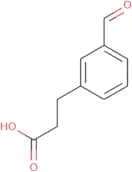
3-(3-Formylphenyl)propanoic acid
CAS:Versatile small molecule scaffold
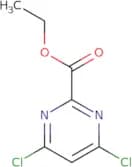
Formula:C10H10O3Purezza:Min. 95%Peso molecolare:178.18 g/molEthyl 4,6-dichloro-2-pyrimidinecarboxylate
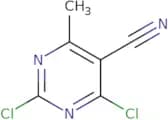
CAS:Versatile small molecule scaffoldFormula:C7H6Cl2N2O2Purezza:Min. 95%Peso molecolare:221.04 g/mol2,4-Dichloro-6-methylpyrimidine-5-carbonitrile
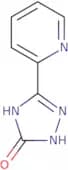
CAS:2,4-Dichloro-6-methylpyrimidine-5-carbonitrile is an efficient and inexpensive reagent for the synthesis of 2,6-dichloro-4-(trifluoromethyl)pyrimidine. It is a chlorinating agent that can be used in place of chlorine gas, which is expensive. The methylation reaction proceeds efficiently with n-butyl alcohol as the methylating agent, giving a high yield of product. The synthesis method has been shown to be effective for the preparation of this chemical.Formula:C6H3Cl2N3Purezza:Min. 95%Peso molecolare:188.01 g/mol5-(Pyridin-2-yl)-1H-1,2,4-triazol-3(2H)-one
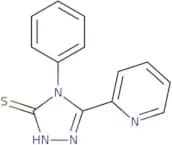
CAS:Versatile small molecule scaffoldFormula:C7H6N4OPurezza:Min. 95%Peso molecolare:162.15 g/mol4-Phenyl-5-(pyridin-2-yl)-4H-1,2,4-triazole-3-thiol
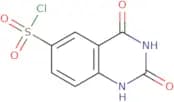
CAS:4-Phenyl-5-(pyridin-2-yl)-4H-1,2,4-triazole-3-thiol is a ligand that can be used to form supramolecular architectures. The compound has a coordination geometry of square pyramidal and exhibits anion recognition properties.Formula:C13H10N4SPurezza:Min. 95%Peso molecolare:254.31 g/mol2,4-Dioxo-1,2,3,4-tetrahydro-quinazoline-6-sulfonyl chloride
CAS:Versatile small molecule scaffoldFormula:C8H5ClN2O4SPurezza:Min. 95%Peso molecolare:260.66 g/mol4-chloro-3-cyanobenzenesulfonyl chloride
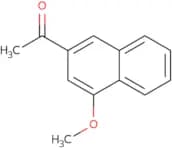
CAS:Versatile small molecule scaffoldFormula:C7H3Cl2NO2SPurezza:Min. 95%Peso molecolare:236.07 g/mol1-(4-Methoxynaphthalen-2-yl)ethan-1-one
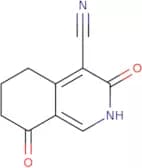
CAS:Versatile small molecule scaffoldFormula:C13H12O2Purezza:Min. 95%Peso molecolare:200.23 g/mol3,8-Dioxo-2,3,5,6,7,8-hexahydroisoquinoline-4-carbonitrile
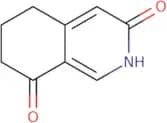
CAS:Versatile small molecule scaffoldFormula:C10H8N2O2Purezza:Min. 95%Peso molecolare:188.18 g/mol2,3,5,6,7,8-Hexahydroisoquinoline-3,8-dione
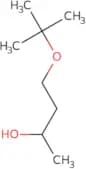
CAS:Versatile small molecule scaffoldFormula:C9H9NO2Purezza:Min. 95%Peso molecolare:163.17 g/mol4-(tert-Butoxy)butan-2-ol
CAS:Versatile small molecule scaffold
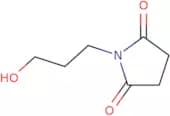
Formula:C8H18O2Purezza:Min. 95%Peso molecolare:146.2 g/mol1-(3-Hydroxypropyl)pyrrolidine-2,5-dione
CAS:Versatile small molecule scaffoldFormula:C7H11NO3Purezza:Min. 95%Peso molecolare:157.17 g/molOctahydro- 1,3,5-methenocyclopenta[cd]pentalen-2(1H)-one
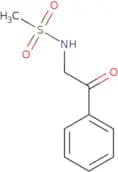
CAS:Versatile small molecule scaffoldFormula:C11H12OPurezza:Min. 95%Peso molecolare:160.21 g/molN-(2-Oxo-2-phenylethyl)methanesulfonamide
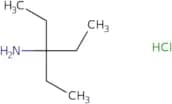
CAS:Versatile small molecule scaffoldFormula:C9H11NO3SPurezza:Min. 95%Peso molecolare:213.26 g/mol3-Ethylpentan-3-amine hydrochloride
CAS:Versatile small molecule scaffoldFormula:C7H18ClNPurezza:Min. 95%Peso molecolare:151.68 g/mol2-[2-(Cyanomethyl)phenyl]acetic acid
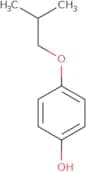
CAS:Versatile small molecule scaffoldFormula:C10H9NO2Purezza:Min. 95%Peso molecolare:175.18 g/mol4-(2-Methylpropoxy)phenol
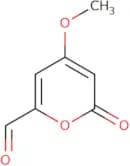
CAS:Versatile small molecule scaffoldFormula:C10H14O2Purezza:Min. 95%Peso molecolare:166.22 g/mol4-Methoxy-2-oxo-2H-pyran-6-carbaldehyde
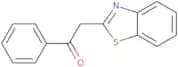
CAS:Versatile small molecule scaffoldFormula:C7H6O4Purezza:Min. 95%Peso molecolare:154.12 g/mol2-(1,3-Benzothiazol-2-yl)-1-phenylethan-1-one
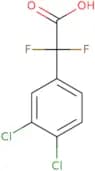
CAS:2-(1,3-Benzothiazol-2-yl)-1-phenylethan-1-one is a selective cyclocondensation agent that can be used in the recycling of organic substances. It has been shown to efficiently catalyze intramolecular and intermolecular cyclocondensation reactions, as well as cleavage and disulfide formation. 2-(1,3-Benzothiazol-2-yl)-1-phenylethan-1-one has an intramolecular cyclocondensation activity with a variety of substrates, including benzene and ethylbenzene. This compound also has an intermolecular cyclocondensation activity with phenols, amines, and carboxylic acids. 2-(1,3-Benzothiazol-2-yl)-1-phenylethan-1-one is selectively active against secondary alcohols.Formula:C15H11NOSPurezza:Min. 95%Peso molecolare:253.32 g/mol2-(3,4-Dichlorophenyl)-2,2-difluoroacetic acid
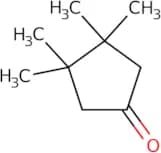
CAS:Versatile small molecule scaffoldFormula:C8H4Cl2F2O2Purezza:Min. 95%Peso molecolare:241 g/mol3,3,4,4-Tetramethylcyclopentan-1-one
CAS:Versatile small molecule scaffold
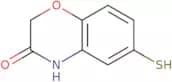
Formula:C9H16OPurezza:Min. 95%Peso molecolare:140.22 g/mol6-Sulfanyl-3,4-dihydro-2H-1,4-benzoxazin-3-one
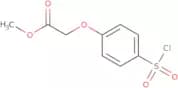
CAS:Versatile small molecule scaffoldFormula:C8H7NO2SPurezza:Min. 95%Peso molecolare:181.21 g/molMethyl 2-(4-(chlorosulfonyl)phenoxy)acetate
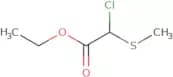
CAS:Versatile small molecule scaffoldFormula:C9H9ClO5SPurezza:Min. 95%Peso molecolare:264.68 g/molEthyl 2-chloro-2-(methylsulfanyl)acetate
CAS:Ethyl 2-chloro-2-(methylsulfanyl)acetate is a synthetic antiinflammatory agent that has been shown to be effective in the treatment of inflammation. Ethyl 2-chloro-2-(methylsulfanyl)acetate is chemically related to butyric acid and ibuprofen, which are both natural antiinflammatory agents. It inhibits the production of prostaglandins, which may be responsible for the antiinflammatory effects. The synthesis of ethyl 2-chloro-2-(methylsulfanyl)acetate begins with an acid chloride and a benzene ring. The condensation reaction forms an ester, which is then subjected to Friedel-Crafts reactions. This process produces phthalic anhydride and nitrated products.Formula:C5H9ClO2SPurezza:Min. 95%Peso molecolare:168.64 g/mol2-[(4-Chlorophenyl)sulfanyl]-5-fluorobenzoic acid
CAS:Versatile small molecule scaffoldFormula:C13H8ClFO2SPurezza:Min. 95%Peso molecolare:282.72 g/mol2-[(Methylcarbamoyl)amino]acetic acid
CAS:2-[(Methylcarbamoyl)amino]acetic acid is a chemical compound that belongs to the group of amides. It is an intermediate in the synthesis of carbamic acid. The equilibrium constant for this reaction can be determined by the following scheme: In this scheme, the carboxylic acid protonates to form a carbamic acid anion, which reacts with ammonia to produce ammonium carbamate. This ammonium carbamate then undergoes hydrolysis to form 2-[(methylcarbamoyl)amino]acetic acid. 2-[(Methylcarbamoyl)amino]acetic acid has also been shown to have kinetic isotope effects, as it was found that hydrogen atoms from deuterium substituted at C3 and C4 positions have different reactivity than those from protium.Formula:C4H8N2O3Purezza:Min. 95%Peso molecolare:132.12 g/mol(2S)-2-[(Methylcarbamoyl)amino]propanoic acid
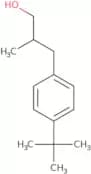
CAS:Versatile small molecule scaffoldFormula:C5H10N2O3Purezza:Min. 95%Peso molecolare:146.1 g/mol3-(4-tert-Butyl-phenyl)-2-methyl-propan-1-ol
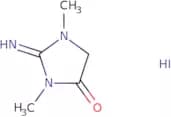
CAS:Versatile small molecule scaffoldFormula:C14H22OPurezza:Min. 95%Peso molecolare:206.33 g/mol2-Imino-1,3-dimethylimidazolidin-4-one hydroiodide
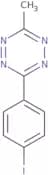
CAS:Versatile small molecule scaffoldFormula:C5H10IN3OPurezza:Min. 95%Peso molecolare:255.06 g/mol3-(4-Iodophenyl)-6-methyl-1,2,4,5-tetrazine
CAS:Versatile small molecule scaffoldFormula:C9H7IN4Purezza:Min. 95%Peso molecolare:298.08 g/mol2-[(4-Chlorophenyl)formamido]-3-(1H-indol-3-yl)propanoic acid
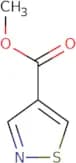
CAS:Versatile small molecule scaffoldFormula:C18H15ClN2O3Purezza:Min. 95%Peso molecolare:342.8 g/molMethyl 1,2-thiazole-4-carboxylate
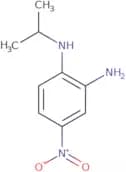
CAS:Methyl 1,2-thiazole-4-carboxylate is a benzyl derivative that has been shown to have the ability to repair DNA. This compound is a pharmacological agent that has been shown to have anti-inflammatory and anti-tumour properties. Methyl 1,2-thiazole-4-carboxylate is also an inhibitor of alkyltransferase and inactivates purines and guanines. It is metabolized by the enzyme methyltransferase which modifies it to methyl 2,3-thiazole carboxylate. The stereochemistry of this molecule can be determined by focusing on the methyl group on carbon number 2 or 3.Formula:C5H5NO2SPurezza:Min. 95%Peso molecolare:143.17 g/mol4-Nitro-N1-(propan-2-yl)benzene-1,2-diamine
CAS:Versatile small molecule scaffold
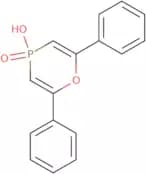
Formula:C9H13N3O2Purezza:Min. 95%Peso molecolare:195.22 g/mol4-Hydroxy-2,6-diphenyl-4H-1,4-oxaphosphorin 4-oxide
CAS:Versatile small molecule scaffold
Formula:C16H13O3PPurezza:Min. 95%Peso molecolare:284.25 g/mol1-Benzyl-1H-pyrazolo[3,4-d]pyrimidine-4-thiol
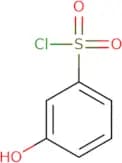
CAS:Versatile small molecule scaffoldFormula:C12H10N4SPurezza:Min. 95%Peso molecolare:242.3 g/mol3-Hydroxy-benzenesulfonyl chloride
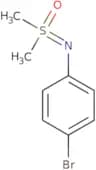
CAS:Versatile small molecule scaffoldFormula:C6H5ClO3SPurezza:Min. 95%Peso molecolare:192.62 g/mol4-Bromo-N-(dimethyloxido-λ4-sulfanylidene)-benzenamine
CAS:4-Bromo-N-(dimethyloxido-λ4-sulfanylidene)benzenamine is a pandemic influenza drug that has been shown to have antiviral activity against the H1N1 virus. Covid-19, the active ingredient in 4-Bromo-N-(dimethyloxido-λ4-sulfanylidene)benzenamine, is a nucleoside analog that inhibits viral replication by blocking the interaction between viral RNA polymerase and host cell ribosomes. Covid-19 has been shown to be effective against laboratory strains of H1N1 and H3N2 influenza A viruses and is currently undergoing clinical trials. Covid-19 also has antiviral activity against other respiratory viruses such as SARS coronavirus and human metapneumovirus.
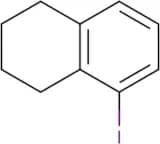
Formula:C8H10BrNOSPurezza:Min. 95%Peso molecolare:248.14 g/mol5-Iodo-1,2,3,4-tetrahydro-naphthalene
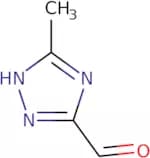
CAS:Versatile small molecule scaffoldFormula:C10H11IPurezza:Min. 95%Peso molecolare:258.09 g/mol5-Methyl-4H-1,2,4-triazole-3-carbaldehyde
CAS:5-Methyl-4H-1,2,4-triazole-3-carbaldehyde is a benzophenone analogue that has been shown to cause nervous system side effects in animals. It has been used as a pharmacological tool to study the effects of benzophenones on the central nervous system. 5-Methyl-4H-1,2,4-triazole-3-carbaldehyde is an amide derivative of triazolam. It is also an alprazolam and quinazoline class compound with a condensation reaction between methylamino and monoclinic acid.
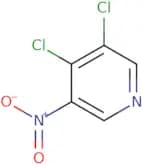
Formula:C4H5N3OPurezza:Min. 95%Peso molecolare:111.1 g/mol3,4-Dichloro-5-nitropyridine
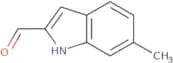
CAS:Versatile small molecule scaffoldFormula:C5H2Cl2N2O2Purezza:Min. 95%Peso molecolare:192.99 g/mol6-Methyl-1H-indole-2-carbaldehyde
CAS:Versatile small molecule scaffoldFormula:C10H9NOPurezza:Min. 95%Peso molecolare:159.18 g/mol7-chloroimidazo[1,2-c]pyrimidin-5(6h)-one
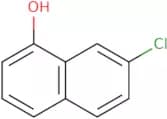
CAS:Versatile small molecule scaffoldFormula:C6H4ClN3OPurezza:Min. 95%Peso molecolare:169.57 g/mol7-Chloro-1-hydroxynaphthalene
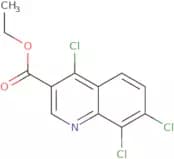
CAS:7-Chloro-1-hydroxynaphthalene is a polycyclic aromatic hydrocarbon. It has been used to synthesize triazenes and solid phase polymers. 7-Chloro-1-hydroxynaphthalene is insoluble in the solvents used for most chemical reactions, but can be dissolved with tosyl chloride or arynes. It has been shown that substituents on the benzene ring have an effect on reactivity and lifetime. The substitution pattern of 7-chloro-1-hydroxynaphthalene affects its reactivity as well as other properties such as solubility, melting point, boiling point, density, and viscosity.Formula:C10H7ClOPurezza:Min. 95%Peso molecolare:178.62 g/molEthyl 4,7,8-trichloroquinoline-3-carboxylate
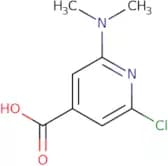
CAS:Versatile small molecule scaffoldFormula:C12H8Cl3NO2Purezza:Min. 95%Peso molecolare:304.6 g/mol2-Chloro-6-(dimethylamino)pyridine-4-carboxylic acid
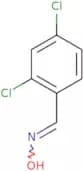
CAS:Versatile small molecule scaffoldFormula:C8H9ClN2O2Purezza:Min. 95%Peso molecolare:200.62 g/mol2,4-Dichlorobenzaldoxime
CAS:2,4-Dichlorobenzaldoxime is a molecule that contains two oxime groups, one of which has been stabilized by the formation of a hydrogen bond. The 2,4-dichlorobenzaldoxime isomer is centrosymmetric and can be stabilized in the solid state by dimerization.
Formula:C7H5Cl2NOPurezza:Min. 95%Peso molecolare:190.02 g/mol4-Chloro-2-ethylthieno[2,3-d]pyrimidine
CAS:Versatile small molecule scaffoldFormula:C8H7ClN2SPurezza:Min. 95%Peso molecolare:198.67 g/mol4-Chloro-6-nitrothieno[2,3-d]pyrimidine
CAS:Versatile small molecule scaffoldFormula:C6H2ClN3O2SPurezza:Min. 95%Peso molecolare:215.62 g/mol2-Ethyl-3H,4H-thieno[2,3-d]pyrimidin-4-one
CAS:Versatile small molecule scaffoldFormula:C8H8N2OSPurezza:Min. 95%Peso molecolare:180.23 g/mol6-Bromothieno[2,3-d]pyrimidin-4(3h)-one
CAS:Versatile small molecule scaffold
Formula:C6H3BrN2OSPurezza:Min. 95%Peso molecolare:231.07 g/mol


![Octahydro- 1,3,5-methenocyclopenta[cd]pentalen-2(1H)-one](/_next/image/?url=https%3A%2Fstatic.cymitquimica.com%2Fproducts%2F3D%2Fthumb-webp%2FGCA06132.webp&w=3840&q=75)
![2-[2-(Cyanomethyl)phenyl]acetic acid](/_next/image/?url=https%3A%2Fstatic.cymitquimica.com%2Fproducts%2F3D%2Fthumb-webp%2FGCA06694.webp&w=3840&q=75)
![2-[(4-Chlorophenyl)sulfanyl]-5-fluorobenzoic acid](/_next/image/?url=https%3A%2Fstatic.cymitquimica.com%2Fproducts%2F3D%2Fthumb-webp%2FGCA09690.webp&w=3840&q=75)
![2-[(Methylcarbamoyl)amino]acetic acid](/_next/image/?url=https%3A%2Fstatic.cymitquimica.com%2Fproducts%2F3D%2Fthumb-webp%2FGCA09963.webp&w=3840&q=75)
![(2S)-2-[(Methylcarbamoyl)amino]propanoic acid](/_next/image/?url=https%3A%2Fstatic.cymitquimica.com%2Fproducts%2F3D%2Fthumb-webp%2FGCA09964.webp&w=3840&q=75)
![2-[(4-Chlorophenyl)formamido]-3-(1H-indol-3-yl)propanoic acid](/_next/image/?url=https%3A%2Fstatic.cymitquimica.com%2Fproducts%2F3D%2Fthumb-webp%2FGCA11667.webp&w=3840&q=75)
![1-Benzyl-1H-pyrazolo[3,4-d]pyrimidine-4-thiol](/_next/image/?url=https%3A%2Fstatic.cymitquimica.com%2Fproducts%2F3D%2Fthumb-webp%2FGCA15623.webp&w=3840&q=75)
![7-chloroimidazo[1,2-c]pyrimidin-5(6h)-one](/_next/image/?url=https%3A%2Fstatic.cymitquimica.com%2Fproducts%2F3D%2Fthumb-webp%2FGCA81709.webp&w=3840&q=75)
![4-Chloro-2-ethylthieno[2,3-d]pyrimidine](/_next/image/?url=https%3A%2Fstatic.cymitquimica.com%2Fproducts%2F3D%2Fthumb-webp%2FGCA84411.webp&w=3840&q=75)
![4-Chloro-6-nitrothieno[2,3-d]pyrimidine](/_next/image/?url=https%3A%2Fstatic.cymitquimica.com%2Fproducts%2F3D%2Fthumb-webp%2FGCA84413.webp&w=3840&q=75)
![2-Ethyl-3H,4H-thieno[2,3-d]pyrimidin-4-one](/_next/image/?url=https%3A%2Fstatic.cymitquimica.com%2Fproducts%2F3D%2Fthumb-webp%2FGCA84439.webp&w=3840&q=75)
![6-Bromothieno[2,3-d]pyrimidin-4(3h)-one](/_next/image/?url=https%3A%2Fstatic.cymitquimica.com%2Fproducts%2F3D%2Fthumb-webp%2FGCA84440.webp&w=3840&q=75)