Building Blocks
Questa sezione contiene prodotti fondamentali per la sintesi di composti organici e biologici. Building blocks sono i materiali di partenza essenziali utilizzati per costruire molecole complesse attraverso varie reazioni chimiche. Svolgono un ruolo critico nella scoperta di farmaci, nella scienza dei materiali e nella ricerca chimica. Presso CymitQuimica, offriamo una gamma diversificata di building blocks di alta qualità per supportare le tue ricerche innovative e progetti industriali, assicurandoti di avere i componenti essenziali per una sintesi di successo.
Sottocategorie di "Building Blocks"
- Acidi boronici e derivati dell'acido boronico(5.784 prodotti)
- Building Blocks Chirali(1.242 prodotti)
- Building Blocks Idrocarburici(6.105 prodotti)
- Building Blocks organici(61.061 prodotti)
Trovati 205399 prodotti di "Building Blocks"
Ordinare per
Purezza (%)
0
100
|
0
|
50
|
90
|
95
|
100
6-Phenylimidazo[2,1-b][1,3,4]thiadiazol-2-amine
CAS:Versatile small molecule scaffoldFormula:C10H8N4SPurezza:Min. 95%Peso molecolare:216.26 g/molEthyl 4-oxobutanoate
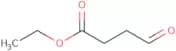
CAS:Ethyl 4-oxobutanoate is a volatile compound that belongs to the group of organic compounds. It has an unpleasant odor and taste, which may be due to its deamination. It is also classified as a glutamic acid derivative because it is synthesised from L-glutamic acid. Ethyl 4-oxobutanoate has been shown to have antibacterial properties against Gram-positive bacteria such as staphylococcus aureus and listeria monocytogenes. The antimicrobial activity of ethyl 4-oxobutanoate is related to its ability to inhibit bacterial protein synthesis by deaminating L-glutamic acid and forming an adduct with the ribosome.Formula:C6H10O3Purezza:Min. 95%Peso molecolare:130.14 g/mol3-(4-Aminophenyl)propanenitrile
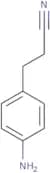
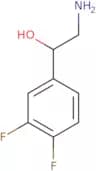
CAS:Versatile small molecule scaffoldFormula:C9H10N2Purezza:Min. 95%Peso molecolare:146.19 g/mol2-Amino-1-(3,4-difluorophenyl)ethan-1-ol
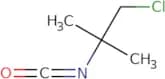
CAS:Versatile small molecule scaffoldFormula:C8H9F2NOPurezza:Min. 95%Peso molecolare:173.16 g/mol1-Chloro-2-isocyanato-2-methylpropane
CAS:Versatile small molecule scaffoldFormula:C5H8ClNOPurezza:Min. 95%Peso molecolare:133.57 g/mol2-(1-Carboxy-1-methylethoxy)-2-methylpropanoic acid
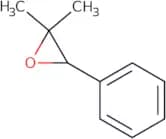
CAS:Versatile small molecule scaffoldFormula:C8H14O5Purezza:Min. 95%Peso molecolare:190.19 g/mol2,2-Dimethyl-3-phenyloxirane
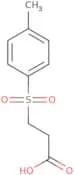
CAS:2,2-Dimethyl-3-phenyloxirane is a hydroxy substituted cyclohexene. It can be synthesized by the elimination of hydroxy groups in cyclohexane. Hydroxy groups are eliminated through reaction with ethylene oxide and phosphonic acid. The compound can be used as an intermediate for the production of some pharmaceuticals, such as adrenoreceptor agonists and alicyclic drugs. 2,2-Dimethyl-3-phenyloxirane has a chemical formula of C8H14O2. It contains 8 carbon atoms, 14 hydrogen atoms, and 2 oxygen atoms. It also has a molecular weight of 136.22 g/mol and a density of 0.86 g/cm3 at 20°C and 1 atmosphere pressure.Formula:C10H12OPurezza:Min. 95%Peso molecolare:148.2 g/mol3-(4-Methylbenzenesulfonyl)propanoic acid
CAS:3-(4-Methylbenzenesulfonyl)propanoic acid (MBPSA) is a tosylated analog of the electrophile propanoic acid. It reacts with nucleophiles and heteroatoms to form an ionic product with a negative charge on the carbon atom adjacent to the sulfonate group. The carbonyl group in MBPSA is susceptible to nucleophilic attack by lithium, forming lithium enolate. This enolate can react with other electrophiles, such as anion or carbonyls, to form a new molecule containing the original electrophile and a sulfonate group.Formula:C10H12O4SPurezza:Min. 95%Peso molecolare:228.27 g/mol3-(4-Methylbenzenesulfonyl)propanenitrile
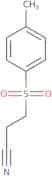
CAS:Versatile small molecule scaffoldFormula:C10H11NO2SPurezza:Min. 95%Peso molecolare:209.27 g/mol(2-Methylphenyl)acetaldehyde
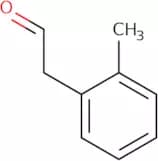
CAS:(2-Methylphenyl)acetaldehyde is an enamine with a dimer. It can be used to synthesize amines and n-substituted amines. This compound has been shown to catalyze the dimerization of pinacolborane in the presence of protonation and deuterium activation. The regioselectivity of this reaction is dependent on the substituents on the 2-methylphenyl group. The reactivity of this compound is due to its ability to act as a nucleophile, which allows for reactions with electrophiles.Formula:C9H10OPurezza:Min. 95%Peso molecolare:134.18 g/mol3-Benzyl-2,3,4,5-tetrahydro-1H-1,4-benzodiazepine-2,5-dione
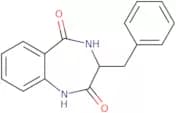
CAS:Versatile small molecule scaffoldFormula:C16H14N2O2Purezza:Min. 95%Peso molecolare:266.29 g/mol2-(5-Chloro-1H-1,3-benzodiazol-2-yl)aniline
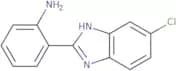
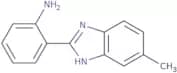
CAS:Versatile small molecule scaffoldFormula:C13H10ClN3Purezza:Min. 95%Peso molecolare:243.69 g/mol2-(5-Methyl-1H-1,3-benzodiazol-2-yl)aniline
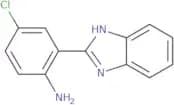
CAS:Versatile small molecule scaffoldFormula:C14H13N3Purezza:Min. 95%Peso molecolare:223.27 g/mol2-(1H-1,3-Benzodiazol-2-yl)-4-chloroaniline
CAS:Versatile small molecule scaffoldFormula:C13H10ClN3Purezza:Min. 95%Peso molecolare:243.69 g/mol[(2-Chlorophenyl)methyl]dimethylamine
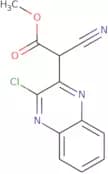
CAS:Versatile small molecule scaffoldFormula:C9H12ClNPurezza:Min. 95%Peso molecolare:169.65 g/molMethyl 2-(3-chloroquinoxalin-2-yl)-2-cyanoacetate
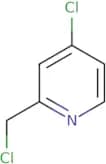
CAS:Versatile small molecule scaffoldFormula:C12H8ClN3O2Purezza:Min. 95%Peso molecolare:261.66 g/mol4-Chloro-2-(chloromethyl)pyridine
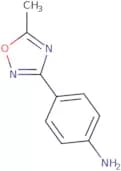
CAS:4-Chloro-2-(chloromethyl)pyridine is a heterocyclic compound with the chemical formula CHClN. It is a colorless liquid that is soluble in organic solvents and insoluble in water. 4-Chloro-2-(chloromethyl)pyridine is used as a precursor to picolinic acid, an intermediate for the synthesis of pharmaceuticals and other products. 4-Chloro-2-(chloromethyl)pyridine also serves as a catalyst for the synthesis of thionyl chloride and amide from pyridine nitrogen chloride. The use of this compound for various purposes has been detected by x-ray crystal structures, which are obtained through coordination chemistry techniques.Formula:C6H5Cl2NPurezza:Min. 95%Peso molecolare:162.02 g/mol4-(5-Methyl-1,2,4-oxadiazol-3-yl)aniline
CAS:Versatile small molecule scaffold
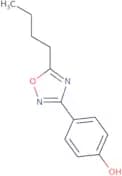
Formula:C9H9N3OPurezza:Min. 95%Peso molecolare:175.19 g/mol4-(5-Butyl-1,2,4-oxadiazol-3-yl)phenol
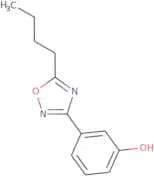
CAS:Versatile small molecule scaffoldFormula:C12H14N2O2Purezza:Min. 95%Peso molecolare:218.25 g/mol3-(5-Butyl-1,2,4-oxadiazol-3-yl)phenol
CAS:Versatile small molecule scaffoldFormula:C12H14N2O2Purezza:Min. 95%Peso molecolare:218.25 g/mol2-{[(tert-Butoxy)carbonyl]amino}-2-(3-iodophenyl)acetic acid
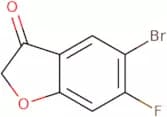
CAS:Versatile small molecule scaffoldFormula:C13H16INO4Purezza:Min. 95%Peso molecolare:377.2 g/mol5-Bromo-6-fluoro-2,3-dihydro-1-benzofuran-3-one
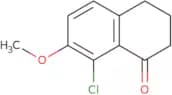
CAS:Versatile small molecule scaffoldFormula:C8H4BrFO2Purezza:Min. 95%Peso molecolare:231.02 g/mol8-Chloro-7-methoxy-1,2,3,4-tetrahydronaphthalen-1-one
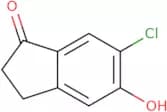
CAS:Versatile small molecule scaffoldFormula:C11H11ClO2Purezza:Min. 95%Peso molecolare:210.65 g/mol6-Chloro-5-hydroxy-2,3-dihydro-1H-inden-1-one
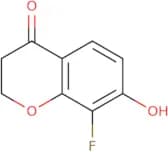
CAS:Versatile small molecule scaffoldFormula:C9H7ClO2Purezza:Min. 95%Peso molecolare:182.6 g/mol8-Fluoro-7-hydroxy-3,4-dihydro-2H-1-benzopyran-4-one
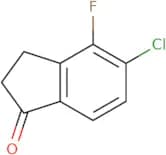
CAS:Versatile small molecule scaffoldFormula:C9H7FO3Purezza:Min. 95%Peso molecolare:182.15 g/mol5-Chloro-4-fluoro-2,3-dihydro-1H-inden-1-one
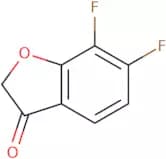
CAS:Versatile small molecule scaffoldFormula:C9H6ClFOPurezza:Min. 95%Peso molecolare:184.59 g/mol6,7-Difluoro-2,3-dihydro-1-benzofuran-3-one
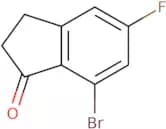
CAS:Versatile small molecule scaffoldFormula:C8H4F2O2Purezza:Min. 95%Peso molecolare:170.11 g/mol7-Bromo-5-fluoro-1-indanone
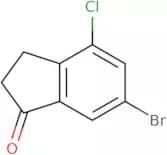
CAS:Versatile small molecule scaffoldFormula:C9H6BrFOPurezza:Min. 95%Peso molecolare:229.05 g/mol6-Bromo-4-chloro-2,3-dihydro-1H-inden-1-one
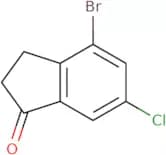
CAS:Versatile small molecule scaffoldFormula:C9H6BrClOPurezza:Min. 95%Peso molecolare:245.5 g/mol4-Bromo-6-chloro-2,3-dihydro-1H-inden-1-one
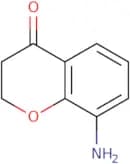
CAS:Versatile small molecule scaffoldFormula:C9H6BrClOPurezza:Min. 95%Peso molecolare:245.5 g/mol8-Amino-3,4-dihydro-2H-1-benzopyran-4-one
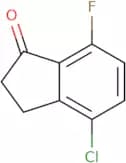
CAS:Versatile small molecule scaffoldFormula:C9H9NO2Purezza:Min. 95%Peso molecolare:163.17 g/mol4-Chloro-7-fluoro-2,3-dihydro-1H-inden-1-one
CAS:Versatile small molecule scaffoldFormula:C9H6ClFOPurezza:Min. 95%Peso molecolare:184.59 g/mol2,4-Dichloro-7,7-dimethyl-5,7-dihydrofuro[3,4-d]pyrimidine
CAS:Versatile small molecule scaffold
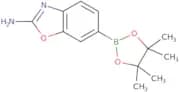
Formula:C8H8Cl2N2OPurezza:Min. 95%Peso molecolare:219.1 g/mol2-Aminobenzoxazole-6-boronic Acid Pinacol Ester
CAS:Versatile small molecule scaffoldFormula:C13H17BN2O3Purezza:Min. 95%Peso molecolare:260.1 g/mol3-(2-{[(tert-butoxy)carbonyl]amino}ethoxy)propanoic acid
CAS:Versatile small molecule scaffoldFormula:C10H19NO5Purezza:Min. 95%Peso molecolare:233.3 g/mol2-({1-[(tert-Butoxy)carbonyl]piperidin-4-yl}methoxy)acetic acid
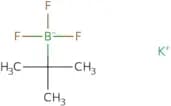
CAS:Versatile small molecule scaffoldFormula:C13H23NO5Purezza:Min. 95%Peso molecolare:273.33 g/molPotassium tert-butyltrifluoroboranuide
CAS:Potassium tert-butyltrifluoroboranuide (KTBF) is an organosulfur compound that is used in organic synthesis. KTBF can be used as a cross-coupling agent for the synthesis of sulfones, sulfonamides, and thiophenes. It is also used to initiate oxidative coupling reactions with alkenes and alkynes to yield sulfonyl derivatives. KTBF can be synthesized by the reaction between arylsulfonyl chlorides and potassium t-butoxide in the presence of irradiation or heat. The mechanism of this reaction involves formation of a sulfonyl radical intermediate that reacts with alkylsulfonyl borane to produce KTBF.Formula:C4H9BF3KPurezza:Min. 95%Peso molecolare:164.02 g/mol2,2,2-Trifluoro-N-(2-methylpyridin-3-yl)acetamide
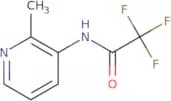
CAS:Versatile small molecule scaffold
Formula:C8H7F3N2OPurezza:Min. 95%Peso molecolare:204.15 g/mol2-Methyl-3-(propan-2-yl)-1,4-dihydroquinolin-4-one
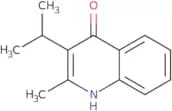
CAS:Versatile small molecule scaffoldFormula:C13H15NOPurezza:Min. 95%Peso molecolare:201.26 g/molMethyl 1-(2,2,2-trifluoroethyl)-1H-pyrazole-5-carboxylate
CAS:Versatile small molecule scaffoldFormula:C7H7F3N2O2Purezza:Min. 95%Peso molecolare:208.14 g/mol[1-(2,2,2-Trifluoroethyl)-1H-pyrazol-3-yl]methanol
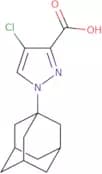
CAS:Versatile small molecule scaffoldFormula:C6H7F3N2OPurezza:Min. 95%Peso molecolare:180.13 g/mol1-(Adamantan-1-yl)-4-chloro-1H-pyrazole-3-carboxylic acid
CAS:Versatile small molecule scaffold
Formula:C14H17ClN2O2Purezza:Min. 95%Peso molecolare:280.75 g/mol2-Bromoquinolin-6-ol
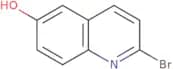
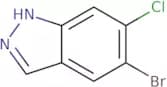
CAS:Versatile small molecule scaffoldFormula:C9H6BrNOPurezza:Min. 95%Peso molecolare:224.05 g/mol5-Bromo-6-chloro-1H-indazole
CAS:Versatile small molecule scaffold
Formula:C7H4BrClN2Purezza:Min. 95%Peso molecolare:231.48 g/mol1H-Pyrrolo[2,3-c]pyridine-7-carbaldehyde
CAS:Versatile small molecule scaffoldFormula:C8H6N2OPurezza:Min. 95%Colore e forma:PowderPeso molecolare:146.15 g/mol3H-[1,2,3]Triazolo[4,5-b]pyridine-6-carboxylic acid
CAS:Versatile small molecule scaffoldFormula:C6H4N4O2Purezza:Min. 95%Peso molecolare:164.12 g/mol4-methoxypiperidine-4-carboxylic acid hydrochloride
CAS:Versatile small molecule scaffold
Formula:C7H14ClNO3Purezza:Min. 95%Peso molecolare:195.64 g/mol2-(Cyclopropylmethyl)-3H-imidazo[4,5-b]pyridine-7-carboxylic acid
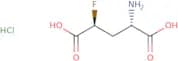
CAS:Versatile small molecule scaffoldFormula:C11H11N3O2Purezza:Min. 95%Peso molecolare:217.22 g/mol(2S,4S)-2-Amino-4-fluoropentanedioic acid hydrochloride
CAS:Versatile small molecule scaffold
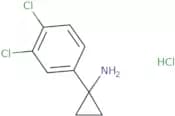
Formula:C5H9ClFNO4Purezza:Min. 95%Peso molecolare:201.6 g/mol1-(3,4-Dichlorophenyl)cyclopropan-1-amine hydrochloride
CAS:Versatile small molecule scaffoldFormula:C9H10Cl3NPurezza:Min. 95%Peso molecolare:238.5 g/mol
![6-Phenylimidazo[2,1-b][1,3,4]thiadiazol-2-amine](/_next/image/?url=https%3A%2Fstatic.cymitquimica.com%2Fproducts%2F3D%2Fthumb-webp%2FKAA13664.webp&w=3840&q=75)


![[(2-Chlorophenyl)methyl]dimethylamine](/_next/image/?url=https%3A%2Fstatic.cymitquimica.com%2Fproducts%2F3D%2Fthumb-webp%2FKAA17531.webp&w=3840&q=75)
![2-{[(tert-Butoxy)carbonyl]amino}-2-(3-iodophenyl)acetic acid](/_next/image/?url=https%3A%2Fstatic.cymitquimica.com%2Fproducts%2F3D%2Fthumb-webp%2FKAC00329.webp&w=3840&q=75)
![2,4-Dichloro-7,7-dimethyl-5,7-dihydrofuro[3,4-d]pyrimidine](/_next/image/?url=https%3A%2Fstatic.cymitquimica.com%2Fproducts%2F3D%2Fthumb-webp%2FKAC08872.webp&w=3840&q=75)
![3-(2-{[(tert-butoxy)carbonyl]amino}ethoxy)propanoic acid](/_next/image/?url=https%3A%2Fstatic.cymitquimica.com%2Fproducts%2F3D%2Fthumb-webp%2FKAC09244.webp&w=3840&q=75)
![2-({1-[(tert-Butoxy)carbonyl]piperidin-4-yl}methoxy)acetic acid](/_next/image/?url=https%3A%2Fstatic.cymitquimica.com%2Fproducts%2F3D%2Fthumb-webp%2FKAC09973.webp&w=3840&q=75)

![[1-(2,2,2-Trifluoroethyl)-1H-pyrazol-3-yl]methanol](/_next/image/?url=https%3A%2Fstatic.cymitquimica.com%2Fproducts%2F3D%2Fthumb-webp%2FKAC37938.webp&w=3840&q=75)
![1H-Pyrrolo[2,3-c]pyridine-7-carbaldehyde](/_next/image/?url=https%3A%2Fstatic.cymitquimica.com%2Fproducts%2F3D%2Fthumb-webp%2FKAC38531.webp&w=3840&q=75)
![3H-[1,2,3]Triazolo[4,5-b]pyridine-6-carboxylic acid](/_next/image/?url=https%3A%2Fstatic.cymitquimica.com%2Fproducts%2F3D%2Fthumb-webp%2FKAC38582.webp&w=3840&q=75)

![2-(Cyclopropylmethyl)-3H-imidazo[4,5-b]pyridine-7-carboxylic acid](/_next/image/?url=https%3A%2Fstatic.cymitquimica.com%2Fproducts%2F3D%2Fthumb-webp%2FKAC39074.webp&w=3840&q=75)