


Building Blocks
Questa sezione contiene prodotti fondamentali per la sintesi di composti organici e biologici. Building blocks sono i materiali di partenza essenziali utilizzati per costruire molecole complesse attraverso varie reazioni chimiche. Svolgono un ruolo critico nella scoperta di farmaci, nella scienza dei materiali e nella ricerca chimica. Presso CymitQuimica, offriamo una gamma diversificata di building blocks di alta qualità per supportare le tue ricerche innovative e progetti industriali, assicurandoti di avere i componenti essenziali per una sintesi di successo.
Sottocategorie di "Building Blocks"
- Acidi boronici e derivati dell'acido boronico(5.786 prodotti)
- Building Blocks Chirali(1.246 prodotti)
- Building Blocks Idrocarburici(6.107 prodotti)
- Building Blocks organici(61.079 prodotti)
Trovati 205461 prodotti di "Building Blocks"
Ordinare per
Purezza (%)
0
100
|
0
|
50
|
90
|
95
|
100
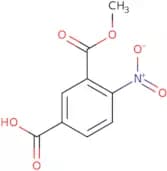
3-(Methoxycarbonyl)-4-nitrobenzoic acid
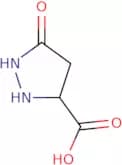
CAS:Versatile small molecule scaffoldFormula:C9H7NO6Purezza:Min. 95%Peso molecolare:225.16 g/mol5-Oxopyrazolidine-3-carboxylic acid
CAS:Versatile small molecule scaffold
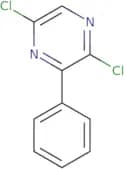
Formula:C4H6N2O3Purezza:Min. 95%Peso molecolare:130.1 g/mol2,5-Dichloro-3-phenylpyrazine
CAS:Versatile small molecule scaffoldFormula:C10H6Cl2N2Purezza:Min. 95%Peso molecolare:225.07 g/molDiethyl[(piperidin-2-yl)methyl]amine
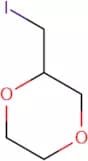
CAS:Versatile small molecule scaffoldFormula:C10H22N2Purezza:Min. 95%Peso molecolare:170.3 g/mol2-(iodomethyl)-1,4-dioxane
CAS:2-(iodomethyl)-1,4-dioxane is a cytotoxic moiety that binds to the capsid protein of a virus. It has been shown to be an antiviral agent against HIV-1 and other retroviruses. 2-(iodomethyl)-1,4-dioxane is hydrophobic, connecting and binds to hydrophobic regions in proteins. The compound was also observed to have antiviral activity against HIV-2 and SIV. 2-(iodomethyl)-1,4-dioxane was found to form hydrogen bonds with the capsid proteins of both HIV-1 and HIV-2, which are important for viral infectivity. This compound has been used as a linker for attaching cytotoxic molecules such as doxorubicin or camptothecin to liposomes or nanoparticles.Formula:C5H9IO2Purezza:Min. 95%Peso molecolare:228.03 g/molSpiro[benzo[d][1,3]dioxole-2,1'-cyclohexan]-5-amine
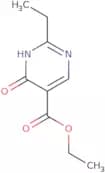
CAS:Versatile small molecule scaffoldFormula:C12H15NO2Purezza:Min. 95%Peso molecolare:205.26 g/molEthyl 2-ethyl-6-oxo-1,6-dihydropyrimidine-5-carboxylate
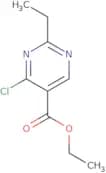
CAS:Versatile small molecule scaffoldFormula:C9H12N2O3Purezza:Min. 95%Peso molecolare:196.2 g/molEthyl 4-chloro-2-ethylpyrimidine-5-carboxylate
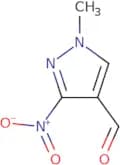
CAS:Versatile small molecule scaffoldFormula:C9H11ClN2O2Purezza:Min. 95%Peso molecolare:214.65 g/mol1-Methyl-3-nitro-1H-pyrazole-4-carbaldehyde
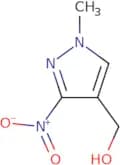
CAS:Versatile small molecule scaffoldFormula:C5H5N3O3Purezza:Min. 95%Peso molecolare:155.11 g/mol(1-Methyl-3-nitro-1H-pyrazol-4-yl)methanol
CAS:Versatile small molecule scaffold
Formula:C5H7N3O3Purezza:Min. 95%Peso molecolare:157.13 g/mol2-Methylpiperidine-1-carbonyl chloride
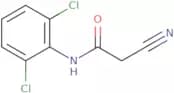
CAS:Versatile small molecule scaffoldFormula:C7H12ClNOPurezza:Min. 95%Peso molecolare:161.63 g/mol2-Cyano-N-(2,6-dichlorophenyl)acetamide
CAS:Versatile small molecule scaffoldFormula:C9H6Cl2N2OPurezza:Min. 95%Peso molecolare:229.06 g/mol2-[(3-Fluorophenyl)amino]acetonitrile
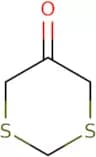
CAS:Versatile small molecule scaffoldFormula:C8H7FN2Purezza:Min. 95%Peso molecolare:150.15 g/mol1,3-Dithian-5-one
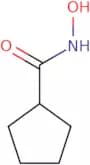
CAS:1,3-Dithian-5-one is a carbonyl compound that contains an aromatic ring. It has been used as a herbicide and bactericide. Spectroscopic data has shown that the carbonyl group in 1,3-dithian-5-one is responsible for its spectra. These spectral data also show that it is an antisymmetric molecule with a carbonyl group at the center of the molecule. The carbonyl group absorbs light in the visible range, which can be seen in its spectrum. This compound also has gas phase equilibrium interactions with sulfur.Formula:C4H6OS2Purezza:Min. 95%Peso molecolare:134.2 g/molN-Hydroxycyclopentanecarboxamide
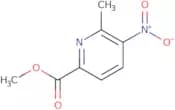
CAS:Versatile small molecule scaffoldFormula:C6H11NO2Purezza:Min. 95%Peso molecolare:129.16 g/molMethyl 6-methyl-5-nitropyridine-2-carboxylate
CAS:Versatile small molecule scaffold
Formula:C8H8N2O4Purezza:Min. 95%Peso molecolare:196.16 g/mol4,7-Dimethylquinoline-2-thiol
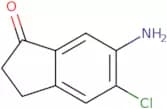
CAS:Versatile small molecule scaffoldFormula:C11H11NSPurezza:Min. 95%Peso molecolare:189.28 g/mol6-Amino-5-chloro-2,3-dihydro-1H-inden-1-one
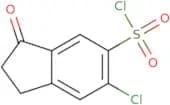
CAS:Versatile small molecule scaffoldFormula:C9H8ClNOPurezza:Min. 95%Peso molecolare:181.62 g/mol6-Chloro-3-oxo-2,3-dihydro-1H-indene-5-sulfonyl chloride
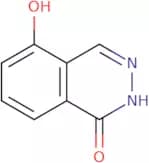
CAS:Versatile small molecule scaffoldFormula:C9H6Cl2O3SPurezza:Min. 95%Peso molecolare:265.11 g/mol5-Hydroxy-1,2-dihydrophthalazin-1-one
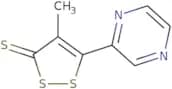
CAS:Versatile small molecule scaffoldFormula:C8H6N2O2Purezza:Min. 95%Peso molecolare:162.15 g/molOltipraz-d3
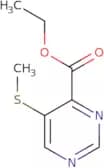
CAS:Oltipraz-d3 is a chemopreventive agent that has been shown to inhibit the production of reactive oxygen species and inflammatory cytokines. Oltipraz-d3 inhibits the activation of the nuclear factor kappa B (NF-κB) pathway by preventing phosphorylation and degradation of IkappaBα, which is an inhibitor of NF-κB. It also reduces oxidative stress in the cell by increasing glutathione levels. Oltipraz-d3 has been shown to reduce DNA damage in human cells exposed to aflatoxin and may be useful for treating chronic liver diseases, such as cancer or injury.Formula:C8H3D3N2S3Purezza:Min. 95%Peso molecolare:229.36 g/molEthyl 5-(methylsulfanyl)pyrimidine-4-carboxylate
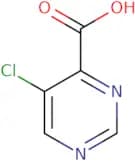
CAS:Versatile small molecule scaffoldFormula:C8H10N2O2SPurezza:Min. 95%Peso molecolare:198.24 g/mol5-Chloropyrimidine-4-carboxylic acid
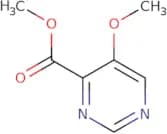
CAS:5-Chloropyrimidine-4-carboxylic acid is a herbicide that is used in weed control. It has a broad spectrum of activity, which includes grasses and broadleaf weeds. This herbicide is also used in the treatment of soil contaminated with phenyl. 5-Chloropyrimidine-4-carboxylic acid inhibits the growth of weeds by inhibiting the synthesis of amino acids from their corresponding amino acid precursors.Formula:C5H3ClN2O2Purezza:Min. 95%Peso molecolare:158.54 g/mol5-Methoxy-pyrimidine-4-carboxylic acid methyl ester
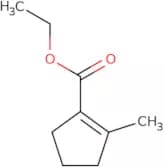
CAS:Versatile small molecule scaffoldFormula:C7H8N2O3Purezza:Min. 95%Peso molecolare:168.15 g/molEthyl 2-methylcyclopent-1-ene-1-carboxylate
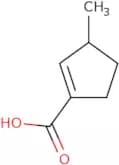
CAS:Versatile small molecule scaffoldFormula:C9H14O2Purezza:Min. 95%Peso molecolare:154.21 g/mol3-Methylcyclopent-1-ene-1-carboxylic acid
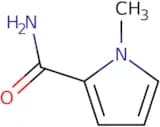
CAS:Versatile small molecule scaffoldFormula:C7H10O2Purezza:Min. 95%Peso molecolare:126.15 g/mol1-methyl-1H-pyrrole-2-carboxamide
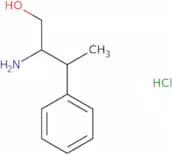
CAS:1-methyl-1H-pyrrole-2-carboxamide is a heterocycle that has been shown to interact with specific DNA sequences. It is a conformational analog of the natural nucleoside guanosine, which has been shown to be a key component in the development of oligonucleotide drugs. 1-methyl-1H-pyrrole-2-carboxamide can be synthesized by the condensation of 1,2-diaminopropane and pyrrole. This compound also has magnetic properties, which allow it to be used in magnetic resonance imaging (MRI).Formula:C6H8N2OPurezza:Min. 95%Peso molecolare:124.14 g/mol2-Amino-3-phenylbutan-1-ol hydrochloride
CAS:Versatile small molecule scaffoldFormula:C10H16ClNOPurezza:Min. 95%Peso molecolare:201.69 g/mol1,2,4-Benzotriazine-3-carboxylic acid
CAS:1,2,4-Benzotriazine-3-carboxylic acid is a reagent that is used in organic chemistry to produce diazonium salts. It reacts with borohydride to form tetrachloropalladate, which can be reacted with thiazoles to form the corresponding benzothiazoles. 1,2,4-Benzotriazine-3-carboxylic acid also reacts with sodium borohydride in the presence of carbonyl compounds to form the corresponding triazoles. The compound can also be alkylated using alkyl halides or tricyclic compounds.Formula:C8H5N3O2Purezza:Min. 95%Peso molecolare:175.14 g/mol3-Fluoro-2,2-dimethylpropanoic acid
CAS:Versatile small molecule scaffold
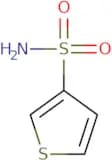
Formula:C5H9FO2Purezza:Min. 95%Peso molecolare:120.12 g/molThiophene-3-sulfonamide
CAS:The thiophene-3-sulfonamide is a potent inhibitor of the enzyme carbonic anhydrase. It has been shown to inhibit the calcium ion's entry into cells, leading to a decrease in intracellular calcium ion concentration. The thiophene-3-sulfonamide has also been shown to bind to the endothelin receptor and block its function. The binding of this compound to the endothelin receptor blocks the effects of endothelin on vascular smooth muscle cells, which leads to vasodilation and increased blood flow.Formula:C4H5NO2S2Purezza:Min. 95%Peso molecolare:163.2 g/mol3-{[5-(4-Nitrophenyl)furan-2-yl]methylidene}-2,3-dihydro-1H-indol-2-one
CAS:Versatile small molecule scaffoldFormula:C19H12N2O4Purezza:Min. 95%Peso molecolare:332.3 g/mol5-Bromo-2,3-dihydro-benzo[b]thiophene 1,1-dioxide
CAS:Versatile small molecule scaffold
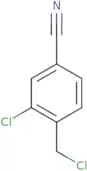
Formula:C8H7BrO2SPurezza:Min. 95%Peso molecolare:247.11 g/mol3-Chloro-4-(chloromethyl)benzonitrile
CAS:Versatile small molecule scaffoldFormula:C8H5Cl2NPurezza:Min. 95%Peso molecolare:186.03 g/mol2-[Methyl-[(2-methylpropan-2-yl)oxycarbonyl]amino]-3-phenyl-propanoic acid
CAS:Cyclodepsipeptide is a natural product that belongs to the family of linear peptides. It is a hydrophobic amino acid with a configuration. The cyclodepsipeptide inhibits bacterial growth by binding to the active site of hydrolases, enzymes that catalyze hydrolysis reactions. Cyclodepsipeptide binds to the ester bonds present in lipids and inhibits their hydrolysis. This prevents bacterial growth and leads to cell death by depriving cells of essential building blocks for cellular functions such as protein synthesis and membrane formation.Formula:C15H21NO4Purezza:Min. 95%Peso molecolare:279.33 g/mol(R)-(+)-1-(4-Bromophenyl)ethylamine hydrochloride
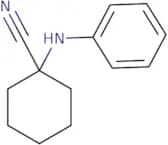
CAS:Versatile small molecule scaffoldFormula:C8H10BrN·HClPurezza:Min. 95%Peso molecolare:236.54 g/mol1-Cyano-1-(phenylamino)cyclohexane
CAS:1-Cyano-1-(phenylamino)cyclohexane is a ketone that can be used as a nucleophile in organic synthesis. It is catalyzed by acid and has been shown to be effective in the reduction of various carbonyl groups. The reaction mechanism is based on the formation of an imine, followed by nucleophilic attack of the ketone on the imine. 1-Cyano-1-(phenylamino)cyclohexane also has magnetic properties and can be used in techniques such as magnetic resonance imaging (MRI). It is also useful for synthesizing nanostructured materials with aliphatic amines and amines. The yield for this reaction is about 30%.Formula:C13H16N2Purezza:Min. 95%Peso molecolare:200.28 g/mol1-(5-Methylfuran-2-yl)ethylamine
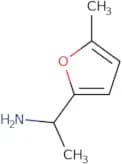
CAS:Versatile small molecule scaffoldFormula:C7H11NOPurezza:Min. 95%Peso molecolare:125.17 g/mol4-Chloro-2,2-dimethylbutanenitrile
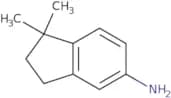
CAS:Versatile small molecule scaffoldFormula:C6H10ClNPurezza:Min. 95%Peso molecolare:131.6 g/mol1,1-Dimethyl-2,3-dihydro-1H-inden-5-amine
CAS:Versatile small molecule scaffoldFormula:C11H15NPurezza:Min. 95%Peso molecolare:161.24 g/mol4-(2-Aminoethylamino)-pyridine hydrochloride
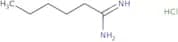
CAS:Versatile small molecule scaffoldFormula:C7H12ClN3Purezza:Min. 95%Peso molecolare:173.64 g/molHexanamidine hydrochloride
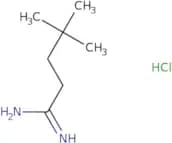
CAS:Hexanamidine hydrochloride is a piperazine derivative that is used as an anti-helminthic agent. It is effective against tapeworms and other helminths, such as Ascaris, Trichuris, and Enterobius. Hexanamidine hydrochloride has been shown to have anthelmintic activity in both animals and humans, but it has not been tested in veterinary medicine. The drug inhibits the growth of parasites by interfering with their metabolism or by blocking the release of histamine. Hexanamidine hydrochloride also prevents the development of eggs in female worms and prevents fertilization in male worms. This drug binds to the surface of the worm’s body and kills it through a combination of chemical reactions that disrupts its metabolic processes or blocks its ability to absorb oxygen.Formula:C6H15ClN2Purezza:Min. 95%Peso molecolare:150.65 g/mol4,4-Dimethylpentanimidamide hydrochloride
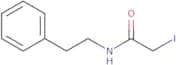
CAS:Versatile small molecule scaffoldFormula:C7H17ClN2Purezza:Min. 95%Peso molecolare:164.7 g/mol2-Iodo-N-(2-phenylethyl)acetamide
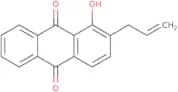
CAS:Versatile small molecule scaffoldFormula:C10H12INOPurezza:Min. 95%Peso molecolare:289.11 g/molR162
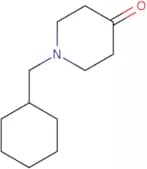
CAS:R162 is a protein that has been identified as an inhibitor of glutamate dehydrogenase, an enzyme that catalyzes the conversion of glutamate to alpha-ketoglutarate. R162 also binds to basic proteins and peptides and has been shown to inhibit the activity of glutamate in vitro. R162 is currently being studied for its potential use in the treatment of cancer and autoimmune diseases.Formula:C17H12O3Purezza:Min. 95%Peso molecolare:264.28 g/mol1-(Cyclohexylmethyl)piperidin-4-one
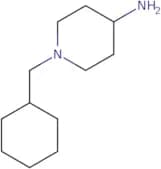
CAS:Versatile small molecule scaffoldFormula:C12H21NOPurezza:Min. 95%Peso molecolare:195.3 g/mol1-Cyclohexylmethyl-piperidin-4-ylamine
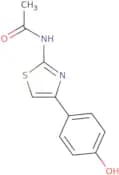
CAS:Versatile small molecule scaffoldFormula:C12H24N2Purezza:Min. 95%Peso molecolare:196.33 g/molN-(4-(4-Hydroxyphenyl)thiazol-2-yl)acetamide
CAS:Versatile small molecule scaffoldFormula:C11H10N2O2SPurezza:Min. 95%Peso molecolare:234.28 g/mol5-(4-Methylphenyl)-4H-1,2,4-triazole-3-thiol
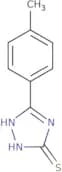
CAS:5-(4-Methylphenyl)-4H-1,2,4-triazole-3-thiol is a crystalline compound that has been shown to form cyclocondensation products with certain amino acids. It also acts as an x-ray diffraction reagent and can be used in the study of the interaction between x-rays and matter. 5-(4-Methylphenyl)-4H-1,2,4-triazole-3-thiol has been shown to react with amino acids such as L -alanine, L -serine, and L -leucine to form new compounds. This reaction is regioselective as it only occurs at the C5 position on the thiazole ring.Formula:C9H9N3SPurezza:Min. 95%Peso molecolare:191.26 g/mol2-[4-(2-{[(tert-Butoxy)carbonyl]amino}ethyl)phenoxy]acetic acid
CAS:Versatile small molecule scaffoldFormula:C15H21NO5Purezza:Min. 95%Peso molecolare:295.33 g/mol

![Diethyl[(piperidin-2-yl)methyl]amine](/_next/image/?url=https%3A%2Fstatic.cymitquimica.com%2Fproducts%2F3D%2Fthumb-webp%2FPCA16809.webp&w=3840&q=75)
![Spiro[benzo[d][1,3]dioxole-2,1'-cyclohexan]-5-amine](/_next/image/?url=https%3A%2Fstatic.cymitquimica.com%2Fproducts%2F3D%2Fthumb-webp%2FPCA17941.webp&w=3840&q=75)

![2-[(3-Fluorophenyl)amino]acetonitrile](/_next/image/?url=https%3A%2Fstatic.cymitquimica.com%2Fproducts%2F3D%2Fthumb-webp%2FPCA20453.webp&w=3840&q=75)



![3-{[5-(4-Nitrophenyl)furan-2-yl]methylidene}-2,3-dihydro-1H-indol-2-one](/_next/image/?url=https%3A%2Fstatic.cymitquimica.com%2Fproducts%2F3D%2Fthumb-webp%2FPCA25883.webp&w=3840&q=75)
![5-Bromo-2,3-dihydro-benzo[b]thiophene 1,1-dioxide](/_next/image/?url=https%3A%2Fstatic.cymitquimica.com%2Fproducts%2F3D%2Fthumb-webp%2FPCA26076.webp&w=3840&q=75)
![2-[Methyl-[(2-methylpropan-2-yl)oxycarbonyl]amino]-3-phenyl-propanoic acid](/_next/image/?url=https%3A%2Fstatic.cymitquimica.com%2Fproducts%2F3D%2Fthumb-webp%2FPCA26383.webp&w=3840&q=75)



![2-[4-(2-{[(tert-Butoxy)carbonyl]amino}ethyl)phenoxy]acetic acid](/_next/image/?url=https%3A%2Fstatic.cymitquimica.com%2Fproducts%2F3D%2Fthumb-webp%2FPCA31833.webp&w=3840&q=75)