Building Blocks
Questa sezione contiene prodotti fondamentali per la sintesi di composti organici e biologici. Building blocks sono i materiali di partenza essenziali utilizzati per costruire molecole complesse attraverso varie reazioni chimiche. Svolgono un ruolo critico nella scoperta di farmaci, nella scienza dei materiali e nella ricerca chimica. Presso CymitQuimica, offriamo una gamma diversificata di building blocks di alta qualità per supportare le tue ricerche innovative e progetti industriali, assicurandoti di avere i componenti essenziali per una sintesi di successo.
Sottocategorie di "Building Blocks"
- Acidi boronici e derivati dell'acido boronico(5.756 prodotti)
- Building Blocks Chirali(1.242 prodotti)
- Building Blocks Idrocarburici(6.095 prodotti)
- Building Blocks organici(61.055 prodotti)
Trovati 199650 prodotti di "Building Blocks"
Ordinare per
Purezza (%)
0
100
|
0
|
50
|
90
|
95
|
100
Methyl 2,4-dioxo-4-(4-phenylphenyl)butanoate
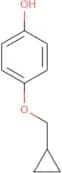
CAS:<p>Versatile small molecule scaffold</p>Formula:C17H14O4Purezza:Min. 95%Peso molecolare:282.29 g/mol4-(Cyclopropylmethoxy)phenol
CAS:<p>Versatile small molecule scaffold</p>Formula:C10H12O2Purezza:Min. 95%Peso molecolare:164.2 g/mol2-(Cyclobutylmethoxy)ethan-1-ol
CAS:<p>Versatile small molecule scaffold</p>Formula:C7H14O2Purezza:Min. 95%Peso molecolare:130.18 g/mol2-(Cyclopropylmethoxy)ethyl methanesulfonate
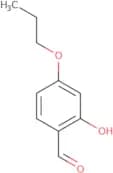
CAS:<p>Versatile small molecule scaffold</p>Formula:C7H14O4SPurezza:Min. 95%Peso molecolare:194.25 g/mol2-Hydroxy-4-propoxybenzaldehyde
CAS:<p>Versatile small molecule scaffold</p>Formula:C10H12O3Purezza:Min. 95%Peso molecolare:180.2 g/mol6-methylpyridine-2-carboxamide
CAS:<p>6-Methylpyridine-2-carboxamide is a nitrogenous compound that contains a metal ion. It has an amide group and a carboxylate group, which are both protonated at physiological pH. The compound is soluble in water and alcohols. 6-Methylpyridine-2-carboxamide can be used as an amplifier in the measurement of magnetic resonance imaging (MRI) spectra and nuclear magnetic resonance (NMR) spectra. It has been shown to have transistor properties, which may be due to its ability to transfer an electron from one side of the molecule to the other. 6-Methylpyridine-2-carboxamide also has a high melting point, which makes it suitable for use in high temperature environments such as in the production of semiconductors.</p>Formula:C7H8N2OPurezza:Min. 95%Peso molecolare:136.15 g/mol2-{[(Pyridin-2-ylmethyl)amino]methyl}phenol
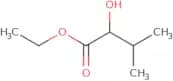
CAS:<p>2-{[(Pyridin-2-ylmethyl)amino]methyl}phenol is a ligand that crystallizes in the monoclinic space group P21/c. The compound crystallizes with two molecules per asymmetric unit, and contains one water molecule per molecule. It has been shown to have cyclic voltammetry, which includes cyclic voltammetry and linear sweep voltammetry. 2-{[(Pyridin-2-ylmethyl)amino]methyl}phenol binds to the perchlorate ion and oxygen atoms coordinate to the nitrogen atoms of the ligand.</p>Formula:C13H14N2OPurezza:Min. 95%Peso molecolare:214.26 g/molEthyl (2S)-2-hydroxy-3-methylbutanoate
CAS:<p>Versatile small molecule scaffold</p>Formula:C7H14O3Purezza:Min. 95%Peso molecolare:146.18 g/mol(3S)-3-Hydroxy-4-methylpentanoic acid
CAS:<p>Versatile small molecule scaffold</p>Formula:C6H12O3Purezza:Min. 95%Peso molecolare:132.16 g/mol1-[3-(Methylthio)phenyl]-5-oxopyrrolidine-3-carboxylic acid
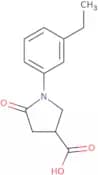
CAS:Versatile small molecule scaffoldFormula:C12H13NO3SPurezza:Min. 95%Peso molecolare:251.3 g/mol1-(3-Ethylphenyl)-5-oxopyrrolidine-3-carboxylic acid
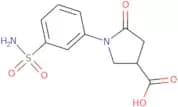
CAS:<p>Versatile small molecule scaffold</p>Formula:C13H15NO3Purezza:Min. 95%Peso molecolare:233.26 g/mol5-Oxo-1-(3-sulfamoylphenyl)pyrrolidine-3-carboxylic acid
CAS:<p>Versatile small molecule scaffold</p>Formula:C11H12N2O5SPurezza:Min. 95%Peso molecolare:284.29 g/mol1-(4-Fluoro-3-methylphenyl)-5-oxopyrrolidine-3-carboxylic acid
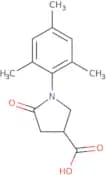
CAS:<p>Versatile small molecule scaffold</p>Formula:C12H12FNO3Purezza:Min. 95%Peso molecolare:237.23 g/mol5-Oxo-1-(2,4,6-trimethyl-phenyl)-pyrrolidine-3-carboxylic acid
CAS:<p>Versatile small molecule scaffold</p>Formula:C14H17NO3Purezza:Min. 95%Peso molecolare:247.3 g/mol2,2,6-Trimethyl-2,3-dihydro-4H-chromen-4-one
CAS:<p>Versatile small molecule scaffold</p>Formula:C12H14O2Purezza:Min. 95%Peso molecolare:190.24 g/molN,N'-Diethyl(dodecylsulfanyl)methanimidamide hydrobromide
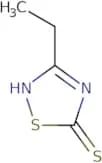
CAS:<p>Versatile small molecule scaffold</p>Formula:C17H37BrN2SPurezza:Min. 95%Peso molecolare:381.5 g/mol3-Ethyl-1,2,4-thiadiazole-5-thiol
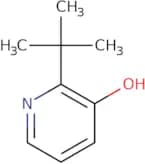
CAS:<p>Versatile small molecule scaffold</p>Formula:C4H6N2S2Purezza:Min. 95%Peso molecolare:146.2 g/mol2-tert-butylpyridin-3-ol
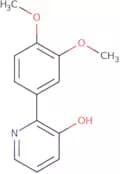
CAS:<p>Versatile small molecule scaffold</p>Formula:C9H13NOPurezza:Min. 95%Peso molecolare:151.2 g/mol2-(3,4-Dimethoxyphenyl)pyridin-3-ol
CAS:<p>Versatile small molecule scaffold</p>Formula:C13H13NO3Purezza:Min. 95%Peso molecolare:231.25 g/mol3-(2-Hydroxyethyl)imidazolidine-2,4-dione
CAS:<p>Versatile small molecule scaffold</p>Formula:C5H8N2O3Purezza:Min. 95%Peso molecolare:144.13 g/molMethyl 2-(2-hydroxyphenyl)-2-methoxyacetate
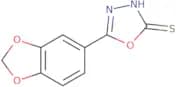
CAS:<p>Versatile small molecule scaffold</p>Formula:C10H12O4Purezza:Min. 95%Peso molecolare:196.2 g/mol5-(1,3-Dioxaindan-5-yl)-1,3,4-oxadiazole-2-thiol
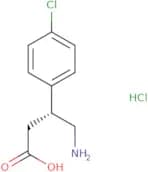
CAS:<p>Versatile small molecule scaffold</p>Formula:C9H6N2O3SPurezza:Min. 95%Peso molecolare:222.22 g/molR(+)-Baclofen.Hydrochloride
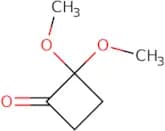
CAS:Prodotto controllato<p>R(+)-Baclofen.Hydrochloride is a GABA analogue that stimulates the GABA-benzodiazepine receptor complex and produces antinociception. It has been shown to be effective against diabetic neuropathy in rats, with no observed side effects. R(+)-Baclofen.Hydrochloride is used for the treatment of trigeminal neuralgia, butyric acid induced hyperalgesia and chronic constriction injury in rats. The main mechanism of action of R(+)-Baclofen.Hydrochloride is its ability to activate the benzodiazepine receptor by binding to it, which leads to mitochondrial membrane potential depolarization and an increase in the release of gamma-aminobutyric acid (GABA) from neurons.</p>Formula:C10H13Cl2NO2Purezza:Min. 95%Peso molecolare:250.12 g/mol2,2-Dimethoxycyclobutan-1-one
CAS:<p>Versatile small molecule scaffold</p>Formula:C6H10O3Purezza:Min. 95%Peso molecolare:130.14 g/mol4-amino-5H,6H,7H-cyclopenta[b]pyridin-2-ol
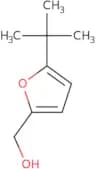
CAS:<p>Versatile small molecule scaffold</p>Formula:C8H10N2OPurezza:Min. 95%Peso molecolare:150.17 g/mol(5-(tert-Butyl)furan-2-yl)methanol
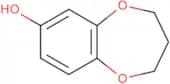
CAS:<p>Versatile small molecule scaffold</p>Formula:C9H14O2Purezza:Min. 95%Peso molecolare:154.21 g/mol3,4-Dihydro-2H-1,5-benzodioxepin-7-ol
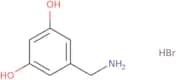
CAS:<p>Versatile small molecule scaffold</p>Formula:C9H10O3Purezza:Min. 95%Peso molecolare:166.17 g/mol5-(Aminomethyl)benzene-1,3-diol hydrobromide
CAS:<p>Versatile small molecule scaffold</p>Formula:C7H10BrNO2Purezza:Min. 95%Peso molecolare:220.06 g/mol6-Amino-1H-pyrazolo[3,4-b]pyridine
CAS:<p>6-Amino-1H-pyrazolo[3,4-b]pyridine is a cholesterol inhibitor that belongs to the pyridine derivative class. It has been shown to decrease the level of total cholesterol and low density lipoprotein (LDL) cholesterol in rats with atherosclerosis. This drug inhibits protein synthesis by binding to the active site of HMG-CoA reductase and preventing it from forming an enzyme-substrate complex with cholesteryl ester. 6-Amino-1H-pyrazolo[3,4-b]pyridine is an enantiomeric mixture of two stereoisomers, R and S. The R isomer has been shown to be more potent than the S isomer in inhibiting HMG CoA reductase activity.</p>Formula:C6H6N4Purezza:Min. 95%Peso molecolare:134.14 g/mol6-chloro-1-methyl-1h-pyrazolo[3,4-b]pyridine
CAS:<p>Versatile small molecule scaffold</p>Formula:C7H6ClN3Purezza:Min. 95%Peso molecolare:167.6 g/mol6-Chloro-2,4-dimethyl-2H-pyrazolo[3,4-b]pyridine
CAS:<p>Versatile small molecule scaffold</p>Formula:C8H8ClN3Purezza:Min. 95%Peso molecolare:181.62 g/mol3,5-Dibromoimidazo[1,2-a]pyrazine
CAS:<p>Versatile small molecule scaffold</p>Formula:C6H3Br2N3Purezza:Min. 95%Peso molecolare:276.92 g/mol5-bromo-[1,2,4]triazolo[4,3-a]pyrazine
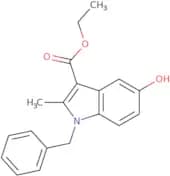
CAS:<p>Versatile small molecule scaffold</p>Formula:C5H3BrN4Purezza:Min. 95%Peso molecolare:199.01 g/molEthyl 1-benzyl-5-hydroxy-2-methyl-1H-indole-3-carboxylate
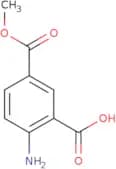
CAS:Prodotto controllato<p>Versatile small molecule scaffold</p>Formula:C19H19NO3Purezza:Min. 95%Peso molecolare:309.4 g/mol2-Amino-5-methoxycarbonylbenzoic acid
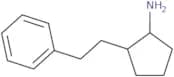
CAS:<p>Versatile small molecule scaffold</p>Formula:C9H9NO4Purezza:Min. 95%Peso molecolare:195.17 g/mol2-(2-Phenylethyl)cyclopentan-1-amine
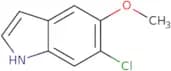
CAS:<p>Versatile small molecule scaffold</p>Formula:C13H19NPurezza:Min. 95%Peso molecolare:189.3 g/mol6-chloro-5-methoxy-1H-indole
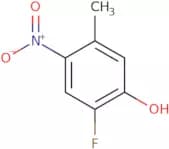
CAS:<p>6-chloro-5-methoxy-1H-indole is an aromatic compound that can be synthesized by the amination of acetyl chloride. This reaction is followed by a borohydride reduction of the imine, and then an acetylation of the resulting alcohol. The synthesis method involves two steps: first, a borohydride reduction of the imine using sodium borohydride; and second, an acetylation with chloral. The final product is purified by distillation and elemental analysis to determine yields.</p>Formula:C9H8NOClPurezza:Min. 95%Peso molecolare:181.61 g/mol2-Fluoro-5-methyl-4-nitrophenol
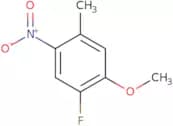
CAS:<p>Versatile small molecule scaffold</p>Formula:C7H6FNO3Purezza:Min. 95%Peso molecolare:171.13 g/mol1-Fluoro-2-methoxy-4-methyl-5-nitrobenzene
CAS:<p>Versatile small molecule scaffold</p>Formula:C8H8FNO3Purezza:Min. 95%Peso molecolare:185.15 g/mol2-(bromomethyl)-6-chloropyridine
CAS:<p>2-(bromomethyl)-6-chloropyridine is a ligand that binds to metal atoms. It forms a complex with the metal atom by coordinating with two or more bromine atoms and one or two hydrogens. 2-(Bromomethyl)-6-chloropyridine has been shown to interact with pyridine, x-ray diffraction studies, crystal x-ray diffraction, and ligands in crystal x-ray diffraction studies. The conformation of this compound can be deformed by substituting the methyl group on the chloro group for other moieties. These interactions have been shown using X-Ray diffraction studies and crystal x-ray diffraction studies.</p>Formula:C6H5BrClNPurezza:Min. 95%Peso molecolare:206.47 g/mol[(6-Chloropyridin-2-yl)methyl]dimethylamine
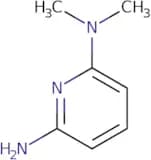
CAS:<p>Versatile small molecule scaffold</p>Formula:C8H11ClN2Purezza:Min. 95%Peso molecolare:170.64 g/molN2,N2-Dimethylpyridine-2,6-diamine
CAS:<p>Versatile small molecule scaffold</p>Formula:C7H11N3Purezza:Min. 95%Peso molecolare:137.18 g/mol1-Oxa-7-azaspiro[4.5]decane
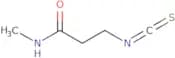
CAS:<p>Oxa-7-azaspiro[4.5]decane is a compound that is structurally related to the neurotransmitter substance P and has been shown to be a potent, selective antagonist of neurokinin (NK) receptors. Oxa-7-azaspiro[4.5]decane inhibits the release of dopamine from rat brain synaptosomes and depresses synapses in the rat hippocampus, an effect that can be reversed by administration of an NK receptor antagonist. This drug also has anti-cancer activity against chemotherapy-induced depression in rats and has been shown to inhibit proliferation in rat hepatocytes. The oxygen atom on the molecule is responsible for its oxidative properties, which are due to its ability to form reactive oxygen species such as superoxide and hydroxyl radicals when it reacts with water or hydrogen peroxide. These reactive oxygen species are able to damage DNA, RNA, enzymes, or other molecules by oxidation.</p>Formula:C8H15NOPurezza:Min. 95%Peso molecolare:141.21 g/mol3-Isothiocyanato-N-methylpropanamide
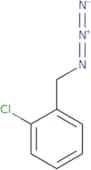
CAS:<p>Versatile small molecule scaffold</p>Formula:C5H8N2OSPurezza:Min. 95%Peso molecolare:144.2 g/mol1-(Azidomethyl)-2-chlorobenzene
CAS:<p>Versatile small molecule scaffold</p>Formula:C7H6ClN3Purezza:Min. 95%Peso molecolare:167.59 g/mol[2-Bromo-1-(propan-2-yloxy)ethyl]benzene
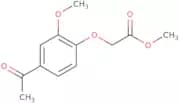
CAS:<p>Versatile small molecule scaffold</p>Formula:C11H15BrOPurezza:Min. 95%Peso molecolare:243.14 g/molMethyl 2-(4-acetyl-2-methoxyphenoxy)acetate
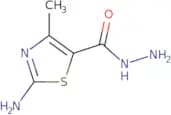
CAS:<p>Versatile small molecule scaffold</p>Formula:C12H14O5Purezza:Min. 95%Peso molecolare:238.24 g/mol2-Imino-4-methyl-2,3-dihydro-1,3-thiazole-5-carbohydrazide
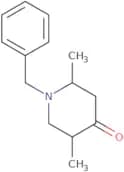
CAS:<p>Versatile small molecule scaffold</p>Formula:C5H8N4OSPurezza:Min. 95%Peso molecolare:172.21 g/mol1-Benzyl-2,5-dimethylpiperidin-4-one
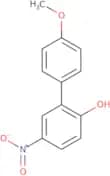
CAS:<p>Versatile small molecule scaffold</p>Formula:C14H19NOPurezza:Min. 95%Peso molecolare:217.31 g/mol2-(4-Methoxyphenyl)-4-nitrophenol
CAS:<p>Versatile small molecule scaffold</p>Formula:C13H11NO4Purezza:Min. 95%Peso molecolare:245.23 g/mol





![2-{[(Pyridin-2-ylmethyl)amino]methyl}phenol](/_next/image/?url=https%3A%2Fstatic.cymitquimica.com%2Fproducts%2F3D%2Fthumb-webp%2FNCA67168.webp&w=3840&q=75)

![1-[3-(Methylthio)phenyl]-5-oxopyrrolidine-3-carboxylic acid](/_next/image/?url=https%3A%2Fstatic.cymitquimica.com%2Fproducts%2F3D%2Fthumb-webp%2FNCA67452.webp&w=3840&q=75)





![4-amino-5H,6H,7H-cyclopenta[b]pyridin-2-ol](/_next/image/?url=https%3A%2Fstatic.cymitquimica.com%2Fproducts%2F3D%2Fthumb-webp%2FNCA70454.webp&w=3840&q=75)
![6-Amino-1H-pyrazolo[3,4-b]pyridine](/_next/image/?url=https%3A%2Fstatic.cymitquimica.com%2Fproducts%2F3D%2Fthumb-webp%2FNCA72549.webp&w=3840&q=75)
![6-chloro-1-methyl-1h-pyrazolo[3,4-b]pyridine](/_next/image/?url=https%3A%2Fstatic.cymitquimica.com%2Fproducts%2F3D%2Fthumb-webp%2FNCA72552.webp&w=3840&q=75)
![6-Chloro-2,4-dimethyl-2H-pyrazolo[3,4-b]pyridine](/_next/image/?url=https%3A%2Fstatic.cymitquimica.com%2Fproducts%2F3D%2Fthumb-webp%2FNCA72554.webp&w=3840&q=75)
![3,5-Dibromoimidazo[1,2-a]pyrazine](/_next/image/?url=https%3A%2Fstatic.cymitquimica.com%2Fproducts%2F3D%2Fthumb-webp%2FNCA74421.webp&w=3840&q=75)
![5-bromo-[1,2,4]triazolo[4,3-a]pyrazine](/_next/image/?url=https%3A%2Fstatic.cymitquimica.com%2Fproducts%2F3D%2Fthumb-webp%2FNCA74429.webp&w=3840&q=75)
![[(6-Chloropyridin-2-yl)methyl]dimethylamine](/_next/image/?url=https%3A%2Fstatic.cymitquimica.com%2Fproducts%2F3D%2Fthumb-webp%2FNCA76380.webp&w=3840&q=75)
![1-Oxa-7-azaspiro[4.5]decane](/_next/image/?url=https%3A%2Fstatic.cymitquimica.com%2Fproducts%2F3D%2Fthumb-webp%2FNCA76656.webp&w=3840&q=75)
![[2-Bromo-1-(propan-2-yloxy)ethyl]benzene](/_next/image/?url=https%3A%2Fstatic.cymitquimica.com%2Fproducts%2F3D%2Fthumb-webp%2FNCA78556.webp&w=3840&q=75)