Building Blocks
Questa sezione contiene prodotti fondamentali per la sintesi di composti organici e biologici. Building blocks sono i materiali di partenza essenziali utilizzati per costruire molecole complesse attraverso varie reazioni chimiche. Svolgono un ruolo critico nella scoperta di farmaci, nella scienza dei materiali e nella ricerca chimica. Presso CymitQuimica, offriamo una gamma diversificata di building blocks di alta qualità per supportare le tue ricerche innovative e progetti industriali, assicurandoti di avere i componenti essenziali per una sintesi di successo.
Sottocategorie di "Building Blocks"
- Acidi boronici e derivati dell'acido boronico(5.778 prodotti)
- Building Blocks Chirali(1.242 prodotti)
- Building Blocks Idrocarburici(6.098 prodotti)
- Building Blocks organici(61.098 prodotti)
Trovati 199594 prodotti di "Building Blocks"
Ordinare per
Purezza (%)
0
100
|
0
|
50
|
90
|
95
|
100
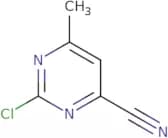
2-Chloro-6-methyl-pyrimidine-4-carbonitrile
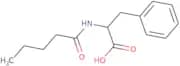
CAS:<p>Versatile small molecule scaffold</p>Formula:C6H4ClN3Purezza:Min. 95%Peso molecolare:153.57 g/mol2-Pentanamido-3-phenylpropanoic acid
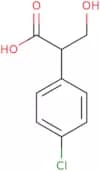
CAS:<p>Versatile small molecule scaffold</p>Formula:C14H19NO3Purezza:Min. 95%Peso molecolare:249.3 g/mol2-(4-Chlorophenyl)-3-hydroxypropanoic acid
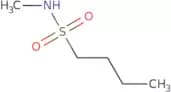
CAS:<p>Versatile small molecule scaffold</p>Formula:C9H9ClO3Purezza:Min. 95%Peso molecolare:200.62 g/molN-Methylbutane-1-sulfonamide
CAS:<p>Versatile small molecule scaffold</p>Formula:C5H13NO2SPurezza:Min. 95%Peso molecolare:151.23 g/molEthyl 7-chloro-4-oxo-4H-pyrido[1,2-a]pyrimidine-3-carboxylate
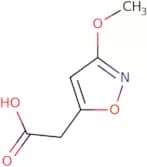
CAS:<p>Versatile small molecule scaffold</p>Formula:C11H9ClN2O3Purezza:Min. 95%Peso molecolare:252.65 g/mol2-(3-Methoxy-1,2-oxazol-5-yl)acetic acid
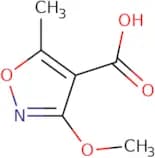
CAS:<p>Versatile small molecule scaffold</p>Formula:C6H7NO4Purezza:Min. 95%Peso molecolare:157.12 g/mol3-Methoxy-5-methyl-1,2-oxazole-4-carboxylic acid
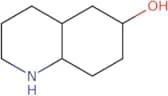
CAS:<p>3-Methoxy-5-methyl-1,2-oxazole-4-carboxylic acid hydrobromide is an excitatory drug that belongs to the group of carboxylic acids. It has been shown to increase the firing rate of neurons in the cerebral cortex. 3-Methoxy-5-methyl-1,2-oxazole-4-carboxylic acid hydrobromide is used as a research tool for studying nervous system function and as a diagnostic agent for epilepsy.</p>Formula:C6H7NO4Purezza:Min. 95%Peso molecolare:157.12 g/molDecahydroquinolin-6-ol
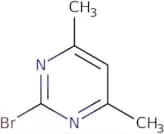
CAS:<p>Versatile small molecule scaffold</p>Formula:C9H17NOPurezza:Min. 95%Peso molecolare:155.24 g/mol2-Bromo-4,6-dimethylpyrimidine
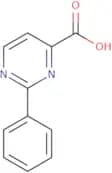
CAS:<p>2-Bromo-4,6-dimethylpyrimidine (2-BDMP) is a chemical compound that is synthesised by reacting acetonitrile with methylene bromide in the presence of copper. The 2-BDMP has a molecular weight of 136.22, melting point of 117°C and boiling point of 165°F. It has an ambident nature with respect to anions, which means it is soluble in water and organic solvents such as acetonitrile and tetrahydrofuran. 2-BDMP can be used as a building block for synthesising other compounds such as amidines or dioxanes. This chemical can also be used to produce yields of bromoalkyls in the presence of alkylating agents such as chloromethyl methyl ether or methanol.</p>Formula:C6H7BrN2Purezza:Min. 95%Peso molecolare:187.04 g/mol2-phenylpyrimidine-4-carboxylic acid
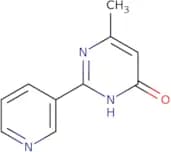
CAS:<p>2-Phenylpyrimidine-4-carboxylic acid is a luminescent copper complex that has been synthesized as a ligand in coordination complexes. It is soluble in dilute solutions and can be used to prepare the complexes of other metals. 2-Phenylpyrimidine-4-carboxylic acid has been shown to have an affinity for lanthanide metal ions and can be used as a sensitizer for lanthanides. The magnetic properties of this compound were determined using x-ray diffraction on single crystals. It was found that the compound is paramagnetic and has a weak antiferromagnetic interaction with dysprosium, which was confirmed by elemental analysis and diffraction measurements.</p>Formula:C11H8N2O2Purezza:Min. 95%Peso molecolare:200.19 g/mol6-Methyl-2-(pyridin-3-yl)pyrimidin-4-ol
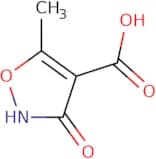
CAS:<p>Versatile small molecule scaffold</p>Formula:C10H9N3OPurezza:Min. 95%Peso molecolare:187.2 g/mol3-Hydroxy-5-methyl-1,2-oxazole-4-carboxylic acid
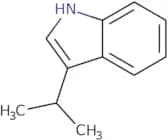
CAS:<p>Versatile small molecule scaffold</p>Formula:C5H5NO4Purezza:Min. 95%Peso molecolare:143.1 g/mol3-(Propan-2-yl)-1H-indole
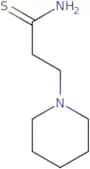
CAS:<p>3-(Propan-2-yl)-1H-indole is a zeolite that has been shown to catalyze the conversion of 2-propanol to butyl acetate. It is used in catalytic alkylation reactions, which are used to produce chemicals such as octane and styrene. 3-(Propan-2-yl)-1H-indole is able to increase the velocity of this reaction by lowering the reaction parameters. The zeolite can be used in industrial settings or in laboratory experiments.</p>Formula:C11H13NPurezza:Min. 95%Peso molecolare:159.23 g/mol3-(Piperidin-1-yl)propanethioamide
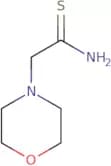
CAS:<p>Versatile small molecule scaffold</p>Formula:C8H16N2SPurezza:Min. 95%Peso molecolare:172.29 g/mol2-(Morpholin-4-yl)ethanethioamide
CAS:<p>Azapropazone is a non-steroidal anti-inflammatory drug that has been used for the treatment of chronic inflammatory conditions such as rheumatoid arthritis and osteoarthritis. Azapropazone has also been shown to be effective in the treatment of gastric ulcers. Azapropazone binds to the H2 receptor, which is the histamine receptor found on parietal cells in the stomach lining. This binding inhibits gastric acid secretion and reduces the release of histamine from these cells, thereby reducing inflammation and ulceration. Azapropazone is metabolized by cytochrome P450 enzymes, which are found in many tissues including liver, kidney, and lung tissue. The drug's major metabolite is N-desmethyl azapropazone (NDAZ), which has similar anti-inflammatory effects to azapropazone but with less risk of gastric upset and ulceration.</p>Formula:C6H12N2OSPurezza:Min. 95%Peso molecolare:160.24 g/mol8-Thiabicyclo[3.2.1]octan-3-one
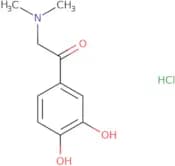
CAS:<p>8-Thiabicyclo[3.2.1]octan-3-one is a chiral tropane alkaloid that is used as an analog for pseudotropine and hyoscyamine. It is metabolized by oxidation, hydroxylation, or amide hydrolysis to form compounds with similar structures to tropane and hyoscyamine. 8-Thiabicyclo[3.2.1]octan-3-one has been shown to inhibit the biosynthesis of dopamine, norepinephrine, and serotonin in rat brain cells; therefore it may have therapeutic potential as a treatment for Parkinson's disease as well as other neurological disorders such as depression and anxiety.</p>Formula:C7H10OSPurezza:Min. 95%Peso molecolare:142.22 g/mol1-(3,4-Dihydroxyphenyl)-2-(dimethylamino)ethan-1-one hydrochloride
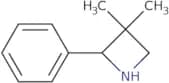
CAS:Prodotto controllato<p>Versatile small molecule scaffold</p>Formula:C10H14ClNO3Purezza:Min. 95%Peso molecolare:231.67 g/mol3,3-Dimethyl-2-phenylazetidine
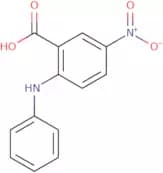
CAS:<p>Versatile small molecule scaffold</p>Formula:C11H15NPurezza:Min. 95%Peso molecolare:161.24 g/mol5-Nitro-2-(phenylamino)benzoic acid
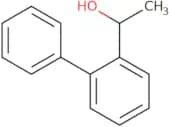
CAS:<p>Versatile small molecule scaffold</p>Formula:C13H10N2O4Purezza:Min. 95%Peso molecolare:258.23 g/mol1-(2-Phenylphenyl)ethan-1-ol
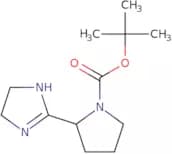
CAS:<p>Versatile small molecule scaffold</p>Formula:C14H14OPurezza:Min. 95%Peso molecolare:198.26 g/moltert-Butyl 2-(4,5-dihydro-1H-imidazol-2-yl)pyrrolidine-1-carboxylate
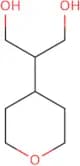
CAS:<p>Versatile small molecule scaffold</p>Formula:C12H21N3O2Purezza:Min. 95%Peso molecolare:239.31 g/mol2-(Oxan-4-yl)propane-1,3-diol
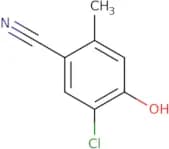
CAS:<p>Versatile small molecule scaffold</p>Formula:C8H16O3Purezza:Min. 95%Peso molecolare:160.21 g/mol5-Chloro-4-hydroxy-2-methylbenzonitrile
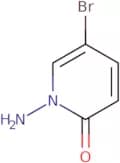
CAS:<p>Versatile small molecule scaffold</p>Formula:C8H6ClNOPurezza:Min. 95%Peso molecolare:167.59 g/mol1-Amino-5-bromo-1,2-dihydropyridin-2-one
CAS:<p>Versatile small molecule scaffold</p>Formula:C5H5BrN2OPurezza:Min. 95%Peso molecolare:189.01 g/mol8-Oxo-7H,8H-imidazo[1,2-a]pyrazine-2-carboxylic acid
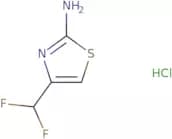
CAS:<p>Versatile small molecule scaffold</p>Formula:C7H5N3O3Purezza:Min. 95%Peso molecolare:179.13 g/mol4-(Difluoromethyl)-1,3-thiazol-2-amine hydrochloride
CAS:<p>Versatile small molecule scaffold</p>Formula:C4H5ClF2N2SPurezza:Min. 95%Peso molecolare:186.61 g/mol[(5,5-Dimethylpyrrolidin-3-yl)methyl]dimethylamine
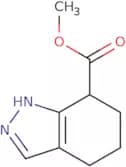
CAS:<p>Versatile small molecule scaffold</p>Formula:C9H20N2Purezza:Min. 95%Peso molecolare:156.3 g/molMethyl 4,5,6,7-tetrahydro-1H-indazole-7-carboxylate
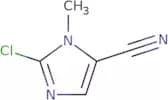
CAS:<p>Versatile small molecule scaffold</p>Formula:C9H12N2O2Purezza:Min. 95%Peso molecolare:180.2 g/mol2-Chloro-1-methyl-1H-imidazole-5-carbonitrile
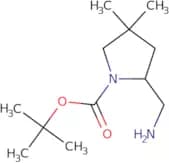
CAS:<p>Versatile small molecule scaffold</p>Formula:C5H4ClN3Purezza:Min. 95%Peso molecolare:141.56 g/moltert-Butyl 2-(aminomethyl)-4,4-dimethylpyrrolidine-1-carboxylate
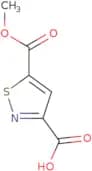
CAS:<p>Versatile small molecule scaffold</p>Formula:C12H24N2O2Purezza:Min. 95%Peso molecolare:228.33 g/mol5-(Methoxycarbonyl)-1,2-thiazole-3-carboxylic acid
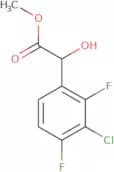
CAS:<p>Versatile small molecule scaffold</p>Formula:C6H5NO4SPurezza:Min. 95%Peso molecolare:187.2 g/molMethyl 2-(3-chloro-2,4-difluorophenyl)-2-hydroxyacetate
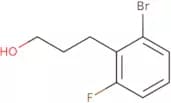
CAS:<p>Versatile small molecule scaffold</p>Formula:C9H7ClF2O3Purezza:Min. 95%Peso molecolare:236.6 g/mol3-(2-Bromo-6-fluorophenyl)propan-1-ol
CAS:<p>Versatile small molecule scaffold</p>Formula:C9H10BrFOPurezza:Min. 95%Peso molecolare:233.08 g/mol1-(3-Methanesulfonylphenyl)cyclopentane-1-carboxylic acid
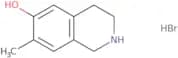
CAS:<p>Versatile small molecule scaffold</p>Formula:C13H16O4SPurezza:Min. 95%Peso molecolare:268.33 g/mol7-Methyl-1,2,3,4-tetrahydroisoquinolin-6-ol hydrobromide
CAS:<p>Versatile small molecule scaffold</p>Formula:C10H14BrNOPurezza:Min. 95%Peso molecolare:244.13 g/mol3-[3-(3-Hydroxypropyl)phenyl]propan-1-ol
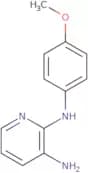
CAS:<p>Versatile small molecule scaffold</p>Formula:C12H18O2Purezza:Min. 95%Peso molecolare:194.27 g/mol2-N-(4-Methoxyphenyl)pyridine-2,3-diamine
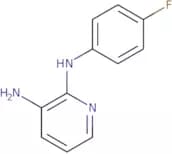
CAS:Versatile small molecule scaffoldFormula:C12H13N3OPurezza:Min. 95%Peso molecolare:215.25 g/mol2-N-(4-Fluorophenyl)pyridine-2,3-diamine
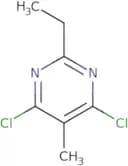
CAS:<p>Versatile small molecule scaffold</p>Formula:C11H10FN3Purezza:Min. 95%Peso molecolare:203.22 g/mol4,6-Dichloro-2-ethyl-5-methylpyrimidine
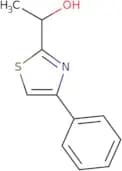
CAS:<p>Versatile small molecule scaffold</p>Formula:C7H8Cl2N2Purezza:Min. 95%Peso molecolare:191.05 g/mol1-(4-Phenyl-1,3-thiazol-2-yl)ethan-1-ol
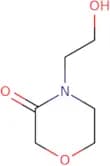
CAS:<p>Versatile small molecule scaffold</p>Formula:C11H11NOSPurezza:Min. 95%Peso molecolare:205.28 g/mol4-(2-hydroxyethyl)morpholin-3-one
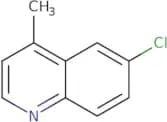
CAS:<p>Versatile small molecule scaffold</p>Formula:C6H11NO3Purezza:Min. 95%Peso molecolare:145.15 g/mol6-Chloro-4-methylquinoline
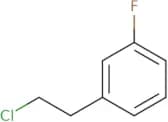
CAS:<p>6-Chloro-4-methylquinoline is a quinoline compound that is used as a catalyst in organic synthesis. It is soluble in butanediol, carbon tetrachloride, and anilines. 6-Chloro-4-methylquinoline catalyzes the conversion of 1,2-dichlorobutane to 2,3-dichloropropane with carbon tetrachloride and butanediol as the reaction solvent. The process can be accelerated by using molecular sieves or aluminum oxide as a catalyst. 6-Chloro-4-methylquinoline has been shown to be effective for the production of 2,3 dichloropropane from 1,2 dichlorobutane via the following reaction:</p>Formula:C10H8ClNPurezza:Min. 95%Peso molecolare:177.63 g/molBenzene, 1-(2-chloroethyl)-3-fluoro-
CAS:<p>Benzene, 1-(2-chloroethyl)-3-fluoro-, is a fluorinated benzene that is used as an organic sorbent. It has been shown to be nonpolar and polar in nature, with the fluorine atoms contributing to its polarity. The molecule has structural analogs with other fluorinated compounds. In addition, it can be used in chromatographic applications as a stationary phase or as an eluent.</p>Formula:C8H8ClFPurezza:Min. 95%Peso molecolare:158.6 g/mol6,7,8,9-Tetrahydro-5H-pyrido[2,3-b]azepine
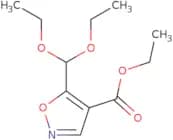
CAS:<p>Versatile small molecule scaffold</p>Formula:C9H12N2Purezza:Min. 95%Peso molecolare:148.2 g/molEthyl 5-(diethoxymethyl)-1,2-oxazole-4-carboxylate
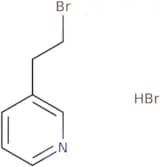
CAS:<p>Versatile small molecule scaffold</p>Formula:C11H17NO5Purezza:Min. 95%Peso molecolare:243.26 g/mol3-(2-Bromoethyl)pyridine hydrobromide
CAS:<p>Versatile small molecule scaffold</p>Formula:C7H9Br2NPurezza:Min. 95%Peso molecolare:266.96 g/mol1-(1,3-Thiazol-4-yl)ethan-1-ol
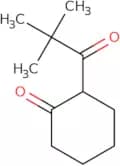
CAS:<p>Versatile small molecule scaffold</p>Formula:C5H7NOSPurezza:Min. 95%Peso molecolare:129.18 g/mol2-(2,2-Dimethylpropanoyl)cyclohexan-1-one
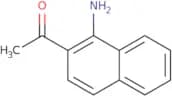
CAS:Versatile small molecule scaffoldFormula:C11H18O2Purezza:Min. 95%Peso molecolare:182.26 g/mol1-(1-Aminonaphthalen-2-yl)ethan-1-one
CAS:<p>Versatile small molecule scaffold</p>Formula:C12H11NOPurezza:Min. 95%Peso molecolare:185.22 g/mol

![Ethyl 7-chloro-4-oxo-4H-pyrido[1,2-a]pyrimidine-3-carboxylate](/_next/image/?url=https%3A%2Fstatic.cymitquimica.com%2Fproducts%2F3D%2Fthumb-webp%2FRAA86755.webp&w=3840&q=75)
![8-Thiabicyclo[3.2.1]octan-3-one](/_next/image/?url=https%3A%2Fstatic.cymitquimica.com%2Fproducts%2F3D%2Fthumb-webp%2FRAA89250.webp&w=3840&q=75)
![8-Oxo-7H,8H-imidazo[1,2-a]pyrazine-2-carboxylic acid](/_next/image/?url=https%3A%2Fstatic.cymitquimica.com%2Fproducts%2F3D%2Fthumb-webp%2FRAD20798.webp&w=3840&q=75)
![[(5,5-Dimethylpyrrolidin-3-yl)methyl]dimethylamine](/_next/image/?url=https%3A%2Fstatic.cymitquimica.com%2Fproducts%2F3D%2Fthumb-webp%2FRAD22550.webp&w=3840&q=75)

![3-[3-(3-Hydroxypropyl)phenyl]propan-1-ol](/_next/image/?url=https%3A%2Fstatic.cymitquimica.com%2Fproducts%2F3D%2Fthumb-webp%2FRBA00985.webp&w=3840&q=75)
![6,7,8,9-Tetrahydro-5H-pyrido[2,3-b]azepine](/_next/image/?url=https%3A%2Fstatic.cymitquimica.com%2Fproducts%2F3D%2Fthumb-webp%2FRBA03870.webp&w=3840&q=75)