Building Blocks
Sottocategorie di "Building Blocks"
- Acidi boronici e derivati dell'acido boronico(5.778 prodotti)
- Building Blocks Chirali(1.243 prodotti)
- Building Blocks Idrocarburici(6.099 prodotti)
- Building Blocks organici(61.038 prodotti)
Trovati 205376 prodotti di "Building Blocks"
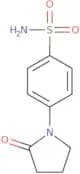
4-(2-Oxopyrrolidin-1-yl)benzene-1-sulfonamide
CAS:Versatile small molecule scaffold
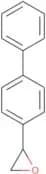
Formula:C10H12N2O3SPurezza:Min. 95%Peso molecolare:240.28 g/mol2-(4-Phenylphenyl)oxirane
CAS:Versatile small molecule scaffoldFormula:C14H12OPurezza:Min. 95%Peso molecolare:196.24 g/mol2-[2-Methoxy-4-(prop-1-en-1-yl)phenoxymethyl]oxirane
CAS:Versatile small molecule scaffoldFormula:C13H16O3Purezza:Min. 95%Peso molecolare:220.3 g/mol3-[(2-Chlorophenyl)methyl]-2-sulfanyl-3,4-dihydroquinazolin-4-one
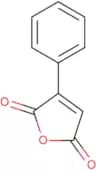
CAS:Versatile small molecule scaffoldFormula:C15H11ClN2OSPurezza:Min. 95%Peso molecolare:302.8 g/molPhenylmaleic Anhydride
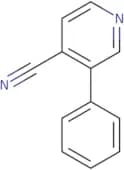
CAS:Phenylmaleic anhydride is a polycarboxylic acid that contains a reactive carbonyl group. It can be used as an intermediate in the synthesis of prostacyclin receptor agonists and has been shown to have anti-inflammatory effects in various animal models. Phenylmaleic anhydride is also used as an ingredient in creams or gels that are applied to the skin for treatments of inflammatory diseases such as psoriasis, eczema, or dermatitis. Some of the properties of phenylmaleic anhydride include viscosity and hydrogen bonding ability, which make it useful for these types of applications.Formula:C10H6O3Purezza:Min. 95%Peso molecolare:174.16 g/mol3-Phenylpyridine-4-carbonitrile
CAS:Versatile small molecule scaffold
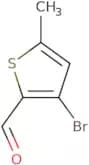
Formula:C12H8N2Purezza:Min. 95%Peso molecolare:180.2 g/mol3-bromo-5-methylthiophene-2-carbaldehyde
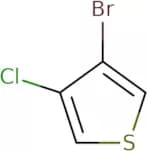
CAS:Versatile small molecule scaffoldFormula:C6H5BrOSPurezza:Min. 95%Peso molecolare:205.1 g/mol3-Bromo-4-chlorothiophene
CAS:Versatile small molecule scaffold
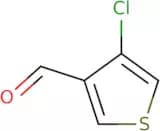
Formula:C4H2SClBrPurezza:Min. 95%Peso molecolare:197.48 g/mol4-Chlorothiophene-3-carbaldehyde
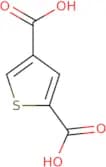
CAS:Versatile small molecule scaffoldFormula:C5H3ClOSPurezza:Min. 95%Peso molecolare:146.6 g/molThiophene-2,4-dicarboxylic acid
CAS:Versatile small molecule scaffold
Formula:C6H4O4SPurezza:Min. 95%Peso molecolare:172.16 g/molN-[4-(4-Bromophenoxy)phenyl]-2-chloroacetamide
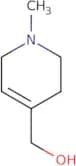
CAS:Versatile small molecule scaffoldFormula:C14H11BrClNO2Purezza:Min. 95%Peso molecolare:340.6 g/mol1-Methyl-4-(hydroxymethyl)-1,2,3,6-tetrahydropyridine
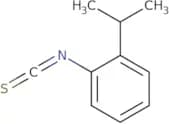
CAS:Versatile small molecule scaffoldFormula:C7H13NOPurezza:Min. 95%Peso molecolare:127.18 g/molBenzene, 1-isothiocyanato-2-(1-methylethyl)-
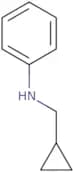
CAS:Versatile small molecule scaffoldFormula:C10H11NSPurezza:Min. 95%Peso molecolare:177.27 g/molN-(Cyclopropylmethyl)aniline
CAS:Versatile small molecule scaffold
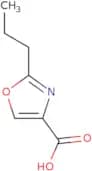
Formula:C10H13NPurezza:Min. 95%Peso molecolare:147.22 g/mol2-Propyl-1,3-oxazole-4-carboxylic acid
CAS:2-Propyl-1,3-oxazole-4-carboxylic acid is an organic compound with a nitrile group, carboxylic acid group, and two amide groups. It can be synthesized by reacting acrylonitrile with acrylic acid in the presence of nitrile hydrates. The reaction produces amidoxime as a byproduct. This compound has been used to produce thioamides and hydrazides. 2-Propyl-1,3-oxazole-4-carboxylic acid is also used for the synthesis of other derivatives such as acid chlorides and esters.
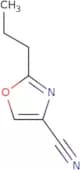
Formula:C7H9NO3Purezza:Min. 95%Peso molecolare:155.15 g/mol2-Propyl-1,3-oxazole-4-carbonitrile
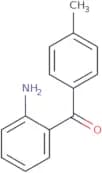
CAS:Versatile small molecule scaffoldFormula:C7H8N2OPurezza:Min. 95%Peso molecolare:136.15 g/mol(2-Aminophenyl)(p-tolyl)methanone+
CAS:The isomeric 2-aminophenyl (p-tolyl)methanone+ is a hydrogen bond acceptor. It has been synthesised by the diazotisation reaction of 3-acetylacetonate and aluminium. The synthesis of this compound has been achieved by the removal of water from 3-acetylacetonate, followed by the addition of aluminium to form an acetylacetonate complex. The reaction was completed by adding a solution of phenothiazine in acridone to produce the desired product. The nature and solvents used for this synthesis were not listed.br>br>
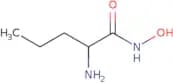
Formula:C14H13NOPurezza:Min. 95%Peso molecolare:211.27 g/molN-Hydroxy2-aminopentanimidic acid
CAS:N-Hydroxy2-aminopentanimidic acid is a metal complexing agent that forms a ligand with the metal ion. It has been shown to form complexes with zinc, copper, and nickel ions. The protonation of N-hydroxy2-aminopentanimidic acid leads to its formation constants. These are determined by potentiometric titrations and can be used to estimate the concentration of hydrogen ions in solution. This chemical has been shown to have potentiometric properties, which make it useful for determining the concentrations of hydroxo and metal ions in solution. The formation constants of N-hydroxy2-aminopentanimidic acid are also determined by complex formation techniques and can be used to estimate the concentration of ligands in solution.
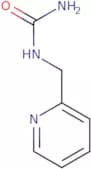
Formula:C5H12N2O2Purezza:Min. 95%Peso molecolare:132.16 g/mol(Pyridin-2-ylmethyl)urea
CAS:Versatile small molecule scaffoldFormula:C7H9N3OPurezza:Min. 95%Peso molecolare:151.17 g/molN-(3-Pyridinylmethyl)urea
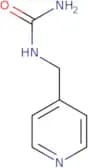
CAS:Prodotto controllatoN-(3-Pyridinylmethyl)urea is an analog of isonicotinamide. It binds to the receptor tyrosine and inhibits the growth of cells that are exposed to radiation. N-(3-Pyridinylmethyl)urea has been shown to inhibit cell proliferation in vitro by preventing DNA synthesis. This compound can also be used as a fluorescent probe for tyrosine kinase activity.Formula:C7H9N3OPurezza:Min. 95%Peso molecolare:151.17 g/mol(Pyridin-4-ylmethyl)urea
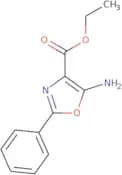
CAS:Versatile small molecule scaffoldFormula:C7H9N3OPurezza:Min. 95%Peso molecolare:151.17 g/molethyl 5-amino-2-phenyl-1,3-oxazole-4-carboxylate
CAS:Versatile small molecule scaffold
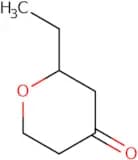
Formula:C12H12N2O3Purezza:Min. 95%Peso molecolare:232.2 g/mol2-Ethyltetrahydro-4H-pyran-4-one
CAS:Versatile small molecule scaffoldFormula:C7H12O2Purezza:Min. 95%Peso molecolare:128.16 g/mol2-Amino-6,7-dihydrobenzo[d]thiazol-4(5H)-one
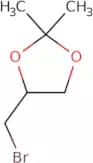
CAS:Versatile small molecule scaffoldFormula:C7H8N2OSPurezza:Min. 95%Peso molecolare:168.21 g/mol4-(Bromomethyl)-2,2-dimethyl-1,3-dioxolane
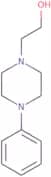
CAS:Versatile small molecule scaffoldFormula:C6H11BrO2Purezza:Min. 95%Peso molecolare:195.05 g/mol2-(4-Phenylpiperazin-1-yl)ethan-1-ol
CAS:Versatile small molecule scaffold
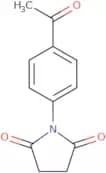
Formula:C12H18N2OPurezza:Min. 95%Peso molecolare:206.28 g/mol1-(4-Acetylphenyl)pyrrolidine-2,5-dione
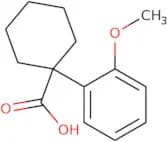
CAS:Versatile small molecule scaffoldFormula:C12H11NO3Purezza:Min. 95%Peso molecolare:217.22 g/mol1-(2-Methoxyphenyl)cyclohexane-1-carboxylic acid
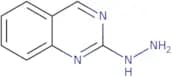
CAS:Versatile small molecule scaffoldFormula:C14H18O3Purezza:Min. 95%Peso molecolare:234.29 g/mol2-Hydrazinylquinazoline
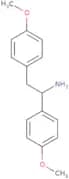
CAS:2-Hydrazinylquinazoline is a heterocyclic compound that inhibits the binding of active substances to their receptors. It has been shown to be a potent antagonist in assays measuring the inhibition of benzodiazepine receptor and quinazolinones. 2-Hydrazinylquinazoline has also been used as an antidepressant drug, due to its ability to inhibit the uptake of serotonin into cells. This compound is also reactive and can form sulfa drugs with amines, amino acids, or peptides. The detection sensitivity for this compound is high and it can be found in human serum at concentrations of 0.2-0.4 mg/L.Formula:C8H8N4Purezza:Min. 95%Peso molecolare:160.18 g/mol1,2-Bis(4-methoxyphenyl)ethan-1-amine
CAS:1,2-Bis(4-methoxyphenyl)ethan-1-amine is an organic compound with the formula CH3C6H4(OCH2CH2)2NH. It is a colorless liquid that is soluble in water and polar organic solvents. The molecule consists of an ethanamine moiety substituted with two methoxyphenyl groups at the 1 and 2 positions. The molecule has been shown to react via a hydride transfer reaction with diborane to form a boronate ester, which can be hydrogenated back to the starting material. This process is catalyzed by acid or acid esters such as pyridine or triethylamine.
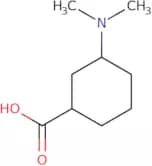
Formula:C16H19NO2Purezza:Min. 95%Peso molecolare:257.33 g/mol3-(Dimethylamino)cyclohexane-1-carboxylic acid
CAS:Versatile small molecule scaffold
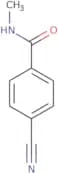
Formula:C9H17NO2Purezza:Min. 95%Peso molecolare:171.24 g/mol4-Cyano-N-methylbenzamide
CAS:Versatile small molecule scaffold
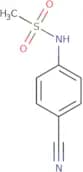
Formula:C9H8N2OPurezza:Min. 95%Peso molecolare:160.17 g/mol4-(Methanesulfonylamino)benzonitrile
CAS:4-(Methanesulfonylamino)benzonitrile is a potent and selective vanilloid receptor antagonist. It has been shown to inhibit the uptake of nitro compounds by rat brain synaptosomes in vitro and to block the binding of [3H]nitro-N-methyl-4-phenylpyridinium ion (NMPA) to rat brain membranes. 4-(Methanesulfonylamino)benzonitrile has been shown to bind to albumin, which may be an important factor in its pharmacokinetics. This drug also binds with serum albumin, which may reduce its absorption after oral administration.Formula:C8H8N2O2SPurezza:Min. 95%Peso molecolare:196.23 g/mol2-Amino-4λ⁵-[1,2,4]thiadiazolo[2,3-a]pyridin-4-ylium chloride
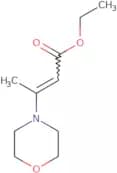
CAS:Versatile small molecule scaffoldFormula:C6H6ClN3SPurezza:Min. 95%Peso molecolare:187.65 g/molEthyl 3-(morpholin-4-yl)but-2-enoate
CAS:Versatile small molecule scaffold
Formula:C10H17NO3Purezza:Min. 95%Colore e forma:PowderPeso molecolare:199.25 g/mol(1S,6R)-8,8-Dimethylbicyclo[4.2.0]octan-7-one
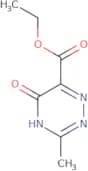
CAS:Versatile small molecule scaffoldFormula:C10H16OPurezza:Min. 95%Peso molecolare:152.23 g/molEthyl 5-hydroxy-3-methyl-1,2,4-triazine-6-carboxylate
CAS:Versatile small molecule scaffoldFormula:C7H9N3O3Purezza:Min. 95%Peso molecolare:183.16 g/mol4-Bromoquinolin-3-amine
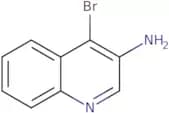
CAS:Versatile small molecule scaffold
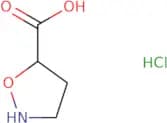
Formula:C9H7BrN2Purezza:Min. 95%Peso molecolare:223.07 g/mol1,2-Oxazolidine-5-carboxylic acid hydrochloride
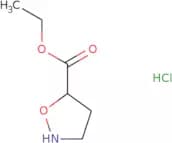
CAS:Versatile small molecule scaffoldFormula:C4H8ClNO3Purezza:Min. 95%Peso molecolare:153.56 g/molEthyl 1,2-oxazolidine-5-carboxylate hydrochloride
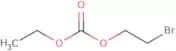
CAS:Versatile small molecule scaffoldFormula:C6H12ClNO3Purezza:Min. 95%Peso molecolare:181.62 g/mol2-Bromoethyl ethyl carbonate
CAS:Versatile small molecule scaffoldFormula:C5H9BrO3Purezza:Min. 95%Peso molecolare:197.03 g/mol2-(Iodomethyl)-5-phenyloxolane
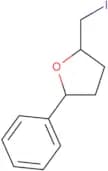
CAS:Versatile small molecule scaffold
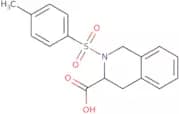
Formula:C11H13IOPurezza:Min. 95%Peso molecolare:288.12 g/mol2-(4-Methylbenzenesulfonyl)-1,2,3,4-tetrahydroisoquinoline-3-carboxylic acid
CAS:Versatile small molecule scaffoldFormula:C17H17NO4SPurezza:Min. 95%Peso molecolare:331.4 g/mol3-[(2-Bromophenyl)carbamoyl]prop-2-enoic acid
CAS:Versatile small molecule scaffoldFormula:C10H8BrNO3Purezza:Min. 95%Peso molecolare:270.08 g/mol3-Amino-2-(3,4-dimethoxyphenyl)propan-1-ol hydrochloride
CAS:Versatile small molecule scaffoldFormula:C11H18ClNO3Purezza:Min. 95%Peso molecolare:247.72 g/molN-(2-Aminoethyl)-2-phenylacetamide hydrochloride
CAS:Versatile small molecule scaffoldFormula:C10H15ClN2OPurezza:Min. 95%Peso molecolare:214.7 g/mol2-[5-(Thiophen-2-yl)-2H-1,2,3,4-tetrazol-2-yl]acetic acid
CAS:Versatile small molecule scaffold
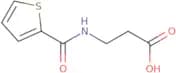
Formula:C7H6N4O2SPurezza:Min. 95%Peso molecolare:210.22 g/mol3-(Thiophen-2-ylformamido)propanoic acid
CAS:Versatile small molecule scaffoldFormula:C8H9NO3SPurezza:Min. 95%Peso molecolare:199.23 g/mol3-(2-Methoxyacetamido)propanoic acid
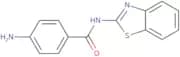
CAS:Versatile small molecule scaffoldFormula:C6H11NO4Purezza:Min. 95%Peso molecolare:161.16 g/mol4-Amino-N-benzothiazol-2-yl-benzamide
CAS:Versatile small molecule scaffoldFormula:C14H11N3OSPurezza:Min. 95%Peso molecolare:269.32 g/mol

![2-[2-Methoxy-4-(prop-1-en-1-yl)phenoxymethyl]oxirane](/_next/image/?url=https%3A%2Fstatic.cymitquimica.com%2Fproducts%2F3D%2Fthumb-webp%2FLBA11541.webp&w=3840&q=75)
![3-[(2-Chlorophenyl)methyl]-2-sulfanyl-3,4-dihydroquinazolin-4-one](/_next/image/?url=https%3A%2Fstatic.cymitquimica.com%2Fproducts%2F3D%2Fthumb-webp%2FLBA12041.webp&w=3840&q=75)
![N-[4-(4-Bromophenoxy)phenyl]-2-chloroacetamide](/_next/image/?url=https%3A%2Fstatic.cymitquimica.com%2Fproducts%2F3D%2Fthumb-webp%2FLBA16096.webp&w=3840&q=75)
![2-Amino-6,7-dihydrobenzo[d]thiazol-4(5H)-one](/_next/image/?url=https%3A%2Fstatic.cymitquimica.com%2Fproducts%2F3D%2Fthumb-webp%2FLBA23466.webp&w=3840&q=75)
![2-Amino-4λ⁵-[1,2,4]thiadiazolo[2,3-a]pyridin-4-ylium chloride](/_next/image/?url=https%3A%2Fstatic.cymitquimica.com%2Fproducts%2F3D%2Fthumb-webp%2FLBA27397.webp&w=3840&q=75)
![(1S,6R)-8,8-Dimethylbicyclo[4.2.0]octan-7-one](/_next/image/?url=https%3A%2Fstatic.cymitquimica.com%2Fproducts%2F3D%2Fthumb-webp%2FLBA27738.webp&w=3840&q=75)
![3-[(2-Bromophenyl)carbamoyl]prop-2-enoic acid](/_next/image/?url=https%3A%2Fstatic.cymitquimica.com%2Fproducts%2F3D%2Fthumb-webp%2FLBA84785.webp&w=3840&q=75)

![2-[5-(Thiophen-2-yl)-2H-1,2,3,4-tetrazol-2-yl]acetic acid](/_next/image/?url=https%3A%2Fstatic.cymitquimica.com%2Fproducts%2F3D%2Fthumb-webp%2FLBA85510.webp&w=3840&q=75)