Building Blocks
Sottocategorie di "Building Blocks"
- Acidi boronici e derivati dell'acido boronico(5.774 prodotti)
- Building Blocks Chirali(1.237 prodotti)
- Building Blocks Idrocarburici(6.098 prodotti)
- Building Blocks organici(60.970 prodotti)
Trovati 205135 prodotti di "Building Blocks"
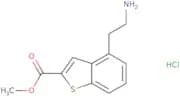
Methyl 4-(2-aminoethyl)-1-benzothiophene-2-carboxylate hydrochloride
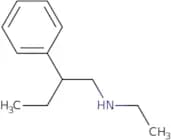
CAS:Versatile small molecule scaffoldFormula:C12H14ClNO2SPurezza:Min. 95%Peso molecolare:271.8 g/molEthyl(2-phenylbutyl)amine
CAS:Prodotto controllatoVersatile small molecule scaffold
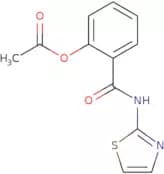
Formula:C12H19NPurezza:Min. 95%Peso molecolare:177.29 g/mol2-Acetoxy-N-(2-thiazolyl)benzamide
CAS:2-Acetoxy-N-(2-thiazolyl)benzamide is an antimicrobial agent that inhibits a number of bacterial and protozoal organisms. It is active against Trichomonas vaginalis, Giardia intestinalis, and Trichomonas vaginalis resistant to metronidazole or nitazoxanide. 2-Acetoxy-N-(2-thiazolyl)benzamide has been shown to have activity in vitro against a number of other bacteria and protozoa, including species of Enterobacteriaceae, Pseudomonadaceae, Proteeaeceaeceae, Mycoplasma pneumoniae, Chlamydia trachomatis, Treponema pallidum, Campylobacter jejuni, Helicobacter pylori and Entamoeba histolytica.
Formula:C12H10N2O3SPurezza:Min. 95%Peso molecolare:262.29 g/molMethyl 5-[(4-ethylphenoxy)methyl]-2-furoate
CAS:Versatile small molecule scaffold
Formula:C15H16O4Purezza:Min. 95%Peso molecolare:260.28 g/mol5-[(4-Chloro-5-methyl-3-nitro-1H-pyrazol-1-yl)methyl]furan-2-carboxylic acid
CAS:Versatile small molecule scaffold
Formula:C10H8ClN3O5Purezza:Min. 95%Peso molecolare:285.64 g/mol2-Cyano-N-{4-[(difluoromethyl)sulfanyl]phenyl}acetamide
CAS:Versatile small molecule scaffold
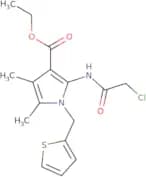
Formula:C10H8F2N2OSPurezza:Min. 95%Peso molecolare:242.25 g/molEthyl 2-(2-chloroacetamido)-4,5-dimethyl-1-(thiophen-2-ylmethyl)-1H-pyrrole-3-carboxylate
CAS:Versatile small molecule scaffoldFormula:C16H19ClN2O3SPurezza:Min. 95%Peso molecolare:354.9 g/mol4-[(Butan-2-yl)amino]-3-nitrobenzamide
CAS:Versatile small molecule scaffold
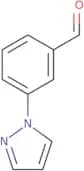
Formula:C11H15N3O3Purezza:Min. 95%Peso molecolare:237.25 g/mol3-(1H-Pyrazol-1-yl)benzaldehyde
CAS:3-(1H-Pyrazol-1-yl)benzaldehyde is an oxime that is used as a ligand in coordination chemistry. It has been shown to catalyze the coupling of piperidine and aryl halides, yielding carboxylic acid derivatives. 3-(1H-Pyrazol-1-yl)benzaldehyde also efficiently catalyzes the synthesis of pharmaceuticals containing pyrrolidines, such as amino acids or nucleophiles. 3-(1H-Pyrazol-1-yl)benzaldehyde is a good ligand for metal ions due to its ability to form strong bonds with them. In addition, it can be used as an additive in the synthesis of amines and imines due to its ability to chelate metals.
Formula:C10H8N2OPurezza:Min. 95%Peso molecolare:172.19 g/mol5-[(Thiophen-2-yl)methyl]-1,3-thiazol-2-amine
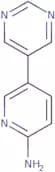
CAS:Versatile small molecule scaffoldFormula:C8H8N2S2Purezza:Min. 95%Peso molecolare:196.3 g/mol5-(Pyrimidin-5-yl)pyridin-2-amine
CAS:Versatile small molecule scaffold
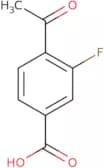
Formula:C9H8N4Purezza:Min. 95%Peso molecolare:172.19 g/mol4-Acetyl-3-fluorobenzoic acid
CAS:Versatile small molecule scaffold
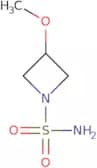
Formula:C9H7FO3Purezza:Min. 95%Peso molecolare:182.15 g/mol3-Methoxyazetidine-1-sulfonamide
CAS:Versatile small molecule scaffold
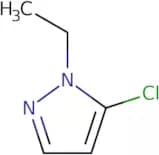
Formula:C4H10N2O3SPurezza:Min. 95%Peso molecolare:166.2 g/mol5-Chloro-1-ethyl-1H-pyrazole
CAS:5-Chloro-1-ethyl-1H-pyrazole is an alkylhydrazine. It can be prepared by reacting 5-chloro-1,2-dihydro-3H-[1,2,4]triazole with ethyl chloride and sodium hydroxide in water. The yield of 5-chloro-1,2-dihydro-[3H]-pyrazole can be increased by using a dimethylhydrazine as the starting material. The reaction of 5-chloro-[3H]-pyrazole with benzoyl chloride in acetic acid yields the corresponding alkylhydrazone. The reaction of 5-(chloromethyl)-1,2-(dihydro)pyrazole with potassium bromide yields the corresponding dimethylhydrazine. Hydrazines and hydrazones are both nitrogen containing compounds that react with organic compounds in a similar way to form
Formula:C5H7ClN2Purezza:Min. 95%Peso molecolare:130.57 g/molrac-(3R,4R)-1-{[(9H-Fluoren-9-yl)methoxy]carbonyl}pyrrolidine-3,4-dicarboxylic acid
CAS:Versatile small molecule scaffold
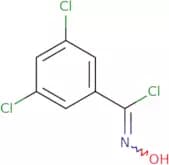
Formula:C21H19NO6Purezza:Min. 95%Peso molecolare:381.4 g/mol3,5-Dichloro-N-hydroxybenzene-1-carbonimidoyl chloride
CAS:Versatile small molecule scaffold
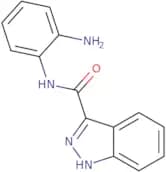
Formula:C7H4Cl3NOPurezza:Min. 95%Peso molecolare:224.5 g/molN-(2-Aminophenyl)-1H-indazole-3-carboxamide
CAS:Versatile small molecule scaffold
Formula:C14H12N4OPurezza:Min. 95%Peso molecolare:252.27 g/mol7-(Bromomethyl)pentadecane
CAS:7-(Bromomethyl)pentadecane is a molecule that has been used as an acceptor in organic photovoltaic devices. This molecule has a phenothiazine ring, which is electron deficient and low energy. 7-(Bromomethyl)pentadecane molecules are able to absorb light and convert it into electricity with high efficiency.
Formula:C16H33BrPurezza:Min. 95%Peso molecolare:305.34 g/mol2-(5-Methyl-1,3-oxazol-2-yl)aniline
CAS:Versatile small molecule scaffold
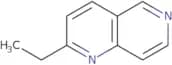
Formula:C10H10N2OPurezza:Min. 95%Peso molecolare:174.2 g/mol2-Ethyl-1,6-naphthyridine
CAS:Versatile small molecule scaffold
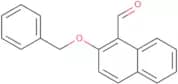
Formula:C10H10N2Purezza:Min. 95%Peso molecolare:158.2 g/mol2-(Benzyloxy)-1-naphthaldehyde
CAS:2-(Benzyloxy)-1-naphthaldehyde is a synthetic compound that has been shown to inhibit the growth of P. aeruginosa. The synthesis of 2-(benzyloxy)-1-naphthaldehyde was achieved through the copper complex reaction with chalcone, which produced this compound in an efficient manner. In addition, 2-(benzyloxy)-1-naphthaldehyde has been shown to be a potent inhibitor of methyltransferase and dihedral molecular geometry studies. This makes it an attractive target for cancer therapy as well as Alzheimer's disease research because it inhibits the production of amyloid beta peptides, which are linked to these diseases.
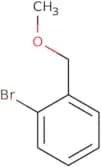
Formula:C18H14O2Purezza:Min. 95%Peso molecolare:262.3 g/mol1-Bromo-2-(methoxymethyl)benzene
CAS:1-Bromo-2-(methoxymethyl)benzene is a boronic acid that is used in the synthesis of palladium complexes. It is synthesized by reacting 1-bromobenzene with methanol and methoxymethyl chloride. The 1-bromo-2-(methoxymethyl)benzene has been used as a ligand for palladium complexes, which are often used to catalyze organic reactions, such as the metathesis reaction. Synthetic methods have been developed to produce the compound and NMR spectra have been obtained to provide kinetic data on these reactions.
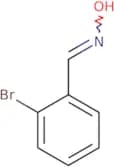
Formula:C8H9BrOPurezza:Min. 95%Peso molecolare:201.06 g/mol2-Bromobenzaldoxime
CAS:2-Bromobenzaldoxime is a biologically active molecule that has been shown to have significant physiological activities. It is an aldehyde, which is metabolized by the liver or kidneys into the corresponding alcohol, 2-bromoethanol. 2-Bromobenzaldoxime has been shown to be synthesized from diethyl ether and potassium phosphate in the presence of amino acids. The reaction proceeds with dehydration of the intermediate bromohydrin to form an aldoxime. This molecule can be used as a pharmaceutical drug for various diseases such as diabetes mellitus, hypertension, and inflammation.
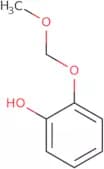
Formula:C7H6BrNOPurezza:Min. 95%Peso molecolare:200.03 g/mol2-(Methoxymethoxy)phenol
CAS:Versatile small molecule scaffold
Formula:C8H10O3Purezza:Min. 95%Peso molecolare:154.16 g/molEthyl N-(2,6-Dimethylphenyl)oxamate
CAS:Versatile small molecule scaffold
Formula:C12H15NO3Purezza:Min. 95%Peso molecolare:221.25 g/mol2,2-Diphenylhexanoic acid
CAS:Versatile small molecule scaffold
Formula:C18H20O2Purezza:Min. 95%Peso molecolare:268.3 g/mol2-[Ethyl(propan-2-yl)amino]ethan-1-ol
CAS:Prodotto controllatoVersatile small molecule scaffold
Formula:C7H17NOPurezza:Min. 95%Peso molecolare:131.22 g/mol5'-Chloro-2'-hydroxypropiophenone
CAS:Versatile small molecule scaffold
Formula:C9H9ClO2Purezza:Min. 95%Peso molecolare:184.62 g/molThiazolo[5,4-d]pyrimidin-7-amine
CAS:Versatile small molecule scaffold
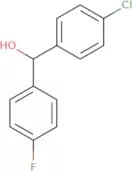
Formula:C5H4N4SPurezza:Min. 95%Peso molecolare:152.18 g/mol(4-Chlorophenyl)(4-fluorophenyl)methanol
CAS:Versatile small molecule scaffold
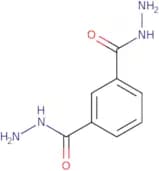
Formula:C13H10ClFOPurezza:Min. 95%Peso molecolare:236.67 g/molIsophthalic Dihydrazide
CAS:Isophthalic Dihydrazide is an ethylene diamine that reacts with oxadiazole and trifluoroacetic acid to form a polymeric coating on the surface of nickel particle. It is used in the production of epoxy resins for automotive coatings and as a hardener for paints and varnishes. Isophthalic Dihydrazide reacts with hydroxyl groups on the surface of polymer particles to produce cross-linking, which increases the resistance of the polymer against water vapor and other substances. The optimum concentration for this product is between 0.1% - 0.5%.
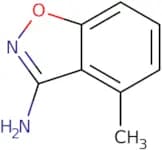
Formula:C8H10N4O2Purezza:Min. 95%Peso molecolare:194.19 g/mol4-Methyl-1,2-benzoxazol-3-amine
CAS:Versatile small molecule scaffold
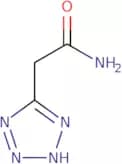
Formula:C8H8N2OPurezza:Min. 95%Peso molecolare:148.16 g/mol2-(1H-1,2,3,4-Tetrazol-5-yl)acetamide
CAS:2-(1H-1,2,3,4-Tetrazol-5-yl)acetamide is an organic compound with a molecular weight of 168.13 and a chemical formula of C6H8N6O3S. It is used in the synthesis of antibiotics such as 7-aminocephalosporanic acid. 2-(1H-1,2,3,4-Tetrazol-5-yl)acetamide has been shown to have antibacterial activity against organisms such as chlorobium tepidum and pseudomonas putida. This compound also reacts with chlorine at room temperature to form hydrogen chloride gas.
Formula:C3H5N5OPurezza:Min. 95%Peso molecolare:127.11 g/mol1-(2,4-Difluorobenzoyl)-1,4-diazepane
CAS:Versatile small molecule scaffold
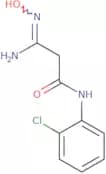
Formula:C12H14F2N2OPurezza:Min. 95%Peso molecolare:240.25 g/mol3-Amino-N-(2-chlorophenyl)-3-(hydroxyimino)propanamide
CAS:Prodotto controllato3-Amino-N-(2-chlorophenyl)-3-(hydroxyimino)propanamide is a potent inhibitor of voltage-gated potassium channels. It was developed as an antibody and has been used as a research tool to study protein interactions, ion channel function, cell biology, pharmacology, and receptor function. 3-Amino-N-(2-chlorophenyl)-3-(hydroxyimino)propanamide binds to the extracellular domain of the potassium channel Kv1.5 and inhibits its activity with an IC50 of 1 nM. The crystal structure of 3-amino-N-(2-chlorophenyl)-3-(hydroxyimino)propanamide bound to the extracellular domain of the potassium channel Kv1.5 has been determined at 2.4 Å resolution by X-ray crystallography.Formula:C9H10ClN3O2Purezza:Min. 95%Peso molecolare:227.65 g/mol3,3-Dimethylpiperidine-2,4-dione
CAS:Versatile small molecule scaffold
Formula:C7H11NO2Purezza:Min. 95%Peso molecolare:141.17 g/mol1-Benzyl-3-ethynylazetidine
CAS:Versatile small molecule scaffold
Formula:C12H13NPurezza:Min. 95%Peso molecolare:171.24 g/mol1-(1-Methylpiperidin-4-yl)-1H-pyrazol-4-amine hydrochloride
CAS:Versatile small molecule scaffold
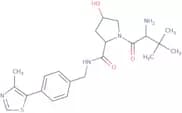
Formula:C9H17ClN4Purezza:Min. 95%Peso molecolare:216.71 g/mol(S,R,S)-AHPC (MDK7526)
CAS:(S,R,S)-AHPC is a peptide analog that has been shown to inhibit the interaction of protein with ligands. It has also been shown to activate the receptor and increase the affinity of the ligand for its receptor. This peptide is a research tool used in cell biology and pharmacology experiments. It is typically used in high purity form and can be used as an antibody-binding site or a substrate for enzyme activity.
Formula:C22H30N4O3SPurezza:Min. 95%Peso molecolare:430.56 g/moltert-Butyl 3-(2-oxopropyl)pyrrolidine-1-carboxylate
CAS:Versatile small molecule scaffold
Formula:C12H21NO3Purezza:Min. 95%Peso molecolare:227.3 g/molN-Acetyl-3-methyl-L-valyl-(4R)-4-hydroxy-N-[4-(4-methyl-1,3-thiazol-5-yl)benzyl]-L-prolinamide
CAS:N-Acetyl-3-methyl-L-valyl-(4R)-4-hydroxy-N-[4-(4-methyl-1,3-thiazol-5-yl)benzyl]-L-prolinamide is a peptide that is an activator of the bradykinin type 2 receptor. It also has inhibitory effects on ion channels, such as voltage gated potassium channels. This molecule has a high purity and has been shown to be a research tool for studying protein interactions and receptor pharmacology.Formula:C24H32N4O4SPurezza:Min. 95%Peso molecolare:472.6 g/mol1-(3-Methoxyphenyl)-2-methylpropan-2-amine
CAS:Prodotto controllatoVersatile small molecule scaffold
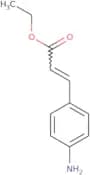
Formula:C11H17NOPurezza:Min. 95%Peso molecolare:179.26 g/molTrans-3-(4-aminophenyl)acrylate ethyl ester
CAS:Trans-3-(4-aminophenyl)acrylate ethyl ester is a supramolecular polymer that has been shown to be effective in the treatment of acute lymphoblastic leukemia. It inhibits spontaneous DNA replication, which may be due to its ability to inhibit the enzymatic activity of the NS5B polymerase and DNA synthesis. Trans-3-(4-aminophenyl)acrylate ethyl ester also has pharmacokinetic properties that make it suitable for oral administration. Trans-3-(4-aminophenyl)acrylate ethyl ester is metabolized by an enzymatic reaction, forming a covalent bond with the damaged DNA strand and thereby preventing further damage to the DNA. This drug can be considered reversible because it can be hydrolyzed by enzymes such as thymidine phosphorylase and thymidine kinase.Formula:C11H13NO2Purezza:Min. 95%Peso molecolare:191.23 g/mol4-Chloro-2-iodo-5-methylaniline
CAS:Versatile small molecule scaffold
Formula:C7H7ClINPurezza:Min. 95%Peso molecolare:267.49 g/mol2-{[(2-Fluorophenyl)carbamoyl]methoxy}benzoic acid
CAS:2-{[(2-Fluorophenyl)carbamoyl]methoxy}benzoic acid is a synthetic monosaccharide that is used in the synthesis of oligosaccharides and polysaccharides. This compound is often used in glycosylation reactions, which are chemical reactions that form glycosidic bonds between a carbohydrate and other organic compounds. The methyl group on the benzoic acid can be modified by using click chemistry to introduce additional functional groups, such as hydroxyl groups.
Formula:C15H12FNO4Purezza:Min. 95%Peso molecolare:289.26 g/mol6-(Cyclopentyloxy)pyridin-3-amine
CAS:Versatile small molecule scaffold
Formula:C10H14N2OPurezza:Min. 95%Peso molecolare:178.23 g/mol2-[Methyl(phenyl)amino]benzoic acid
CAS:Versatile small molecule scaffold
Formula:C14H13NO2Purezza:Min. 95%Peso molecolare:227.26 g/mol4-Butoxybenzamide
CAS:Versatile small molecule scaffold
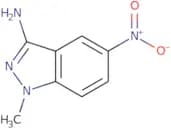
Formula:C11H15NO2Purezza:Min. 95%Peso molecolare:193.24 g/mol1-Methyl-5-nitro-1H-indazol-3-amine
CAS:Versatile small molecule scaffold
Formula:C8H8N4O2Purezza:Min. 95%Peso molecolare:192.18 g/mol5-(4-Bromophenyl)-1,3-thiazol-2-amine
CAS:Versatile small molecule scaffold
Formula:C9H7BrN2SPurezza:Min. 95%Peso molecolare:255.14 g/mol

![Methyl 5-[(4-ethylphenoxy)methyl]-2-furoate](/_next/image/?url=https%3A%2Fstatic.cymitquimica.com%2Fproducts%2F3D%2Fthumb-webp%2FCRA77224.webp&w=3840&q=75)
![5-[(4-Chloro-5-methyl-3-nitro-1H-pyrazol-1-yl)methyl]furan-2-carboxylic acid](/_next/image/?url=https%3A%2Fstatic.cymitquimica.com%2Fproducts%2F3D%2Fthumb-webp%2FCRA61416.webp&w=3840&q=75)
![2-Cyano-N-{4-[(difluoromethyl)sulfanyl]phenyl}acetamide](/_next/image/?url=https%3A%2Fstatic.cymitquimica.com%2Fproducts%2F3D%2Fthumb-webp%2FCRA48052.webp&w=3840&q=75)
![4-[(Butan-2-yl)amino]-3-nitrobenzamide](/_next/image/?url=https%3A%2Fstatic.cymitquimica.com%2Fproducts%2F3D%2Fthumb-webp%2FCJB38566.webp&w=3840&q=75)
![5-[(Thiophen-2-yl)methyl]-1,3-thiazol-2-amine](/_next/image/?url=https%3A%2Fstatic.cymitquimica.com%2Fproducts%2F3D%2Fthumb-webp%2FCJB10807.webp&w=3840&q=75)
![rac-(3R,4R)-1-{[(9H-Fluoren-9-yl)methoxy]carbonyl}pyrrolidine-3,4-dicarboxylic acid](/_next/image/?url=https%3A%2Fstatic.cymitquimica.com%2Fproducts%2F3D%2Fthumb-webp%2FCHB98408.webp&w=3840&q=75)




![2-[Ethyl(propan-2-yl)amino]ethan-1-ol](/_next/image/?url=https%3A%2Fstatic.cymitquimica.com%2Fproducts%2F3D%2Fthumb-webp%2FCAA89361.webp&w=3840&q=75)

![Thiazolo[5,4-d]pyrimidin-7-amine](/_next/image/?url=https%3A%2Fstatic.cymitquimica.com%2Fproducts%2F3D%2Fthumb-webp%2FCAA84690.webp&w=3840&q=75)

![N-Acetyl-3-methyl-L-valyl-(4R)-4-hydroxy-N-[4-(4-methyl-1,3-thiazol-5-yl)benzyl]-L-prolinamide](/_next/image/?url=https%3A%2Fstatic.cymitquimica.com%2Fproducts%2F3D%2Fthumb-webp%2FYHC18862.webp&w=3840&q=75)
![2-{[(2-Fluorophenyl)carbamoyl]methoxy}benzoic acid](/_next/image/?url=https%3A%2Fstatic.cymitquimica.com%2Fproducts%2F3D%2Fthumb-webp%2FYEB77638.webp&w=3840&q=75)
![2-[Methyl(phenyl)amino]benzoic acid](/_next/image/?url=https%3A%2Fstatic.cymitquimica.com%2Fproducts%2F3D%2Fthumb-webp%2FYCA32382.webp&w=3840&q=75)