Building Blocks
Sottocategorie di "Building Blocks"
- Acidi boronici e derivati dell'acido boronico(5.780 prodotti)
- Building Blocks Chirali(1.241 prodotti)
- Building Blocks Idrocarburici(6.100 prodotti)
- Building Blocks organici(61.010 prodotti)
Trovati 205258 prodotti di "Building Blocks"
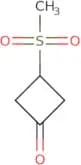
3-Methanesulfonylcyclobutan-1-one
CAS:Versatile small molecule scaffold
Formula:C5H8O3SPurezza:Min. 95%Peso molecolare:148.18 g/mol7-Amino-5-oxa-6-azaspiro[2.4]hept-6-en-4-one
CAS:Versatile small molecule scaffold
Formula:C5H6N2O2Purezza:Min. 95%Peso molecolare:126.11 g/mol1-(3-Fluorophenyl)-6-methoxy-1H,2H,3H,4H,9H-pyrido[3,4-b]indole hydrochloride
CAS:Versatile small molecule scaffold
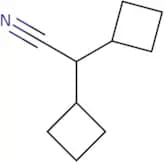
Formula:C18H18ClFN2OPurezza:Min. 95%Peso molecolare:332.8 g/mol2,2-Dicyclobutylacetonitrile
CAS:Versatile small molecule scaffold
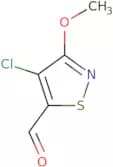
Formula:C10H15NPurezza:Min. 95%Peso molecolare:149.23 g/mol4-Chloro-3-methoxy-1,2-thiazole-5-carbaldehyde
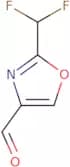
CAS:Versatile small molecule scaffoldFormula:C5H4ClNO2SPurezza:Min. 95%Peso molecolare:177.61 g/mol2-(Difluoromethyl)-1,3-oxazole-4-carbaldehyde
CAS:Versatile small molecule scaffoldFormula:C5H3F2NO2Purezza:Min. 95%Peso molecolare:147.08 g/mol7-Bromo-[1,3]oxazolo[4,5-b]pyridin-2-amine
CAS:Versatile small molecule scaffold
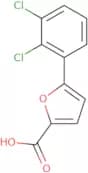
Formula:C6H4BrN3OPurezza:Min. 95%Peso molecolare:214.02 g/mol5-(2,3-Dichlorophenyl)furan-2-carboxylic acid
CAS:Versatile small molecule scaffold
Formula:C11H6Cl2O3Purezza:Min. 95%Peso molecolare:257.07 g/mol2-Methyl-1-(oxolan-3-yl)propan-2-amine
CAS:Versatile small molecule scaffold
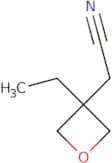
Formula:C8H17NOPurezza:Min. 95%Peso molecolare:143.2 g/mol2-(3-Ethyloxetan-3-yl)acetonitrile
CAS:Versatile small molecule scaffold
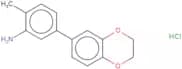
Formula:C7H11NOPurezza:Min. 95%Peso molecolare:125.17 g/mol5-(2,3-Dihydro-1,4-benzodioxin-6-yl)-2-methylaniline hydrochloride
CAS:Versatile small molecule scaffold
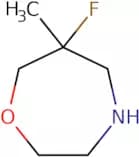
Formula:C15H16ClNO2Purezza:Min. 95%Peso molecolare:277.7 g/mol6-Fluoro-6-methyl-1,4-oxazepane
CAS:Versatile small molecule scaffold
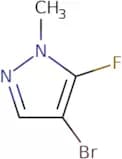
Formula:C6H12FNOPurezza:Min. 95%Peso molecolare:133.16 g/mol4-Bromo-5-fluoro-1-methyl-1H-pyrazole
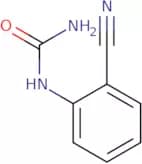
CAS:Versatile small molecule scaffoldFormula:C4H4BrFN2Purezza:Min. 95%Peso molecolare:178.99 g/mol(2-Cyanophenyl)urea
CAS:Versatile small molecule scaffold
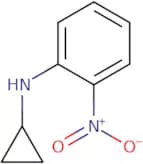
Formula:C8H7N3OPurezza:Min. 95%Peso molecolare:161.16 g/molN-Cyclopropyl-2-nitroaniline
CAS:Versatile small molecule scaffold
Formula:C9H10N2O2Purezza:Min. 95%Peso molecolare:178.19 g/mol6-Bromo-[1,3]oxazolo[4,5-b]pyridin-2-amine
CAS:Versatile small molecule scaffold
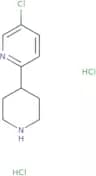
Formula:C6H4BrN3OPurezza:Min. 95%Peso molecolare:214.02 g/mol5-Chloro-2-(piperidin-4-yl)pyridine dihydrochloride
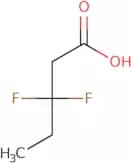
CAS:Versatile small molecule scaffoldFormula:C10H15Cl3N2Purezza:Min. 95%Peso molecolare:269.6 g/mol3,3-Difluoropentanoic acid
CAS:Versatile small molecule scaffold
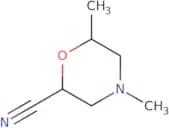
Formula:C5H8F2O2Purezza:Min. 95%Peso molecolare:138.11 g/mol4,6-Dimethylmorpholine-2-carbonitrile
CAS:Versatile small molecule scaffold
Formula:C7H12N2OPurezza:Min. 95%Peso molecolare:140.18 g/mol{Bicyclo[4.1.0]heptan-3-yl}methanamine
CAS:Versatile small molecule scaffold
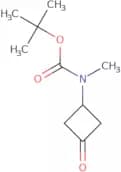
Formula:C8H15NPurezza:Min. 95%Peso molecolare:125.21 g/mol1-(Boc-(methyl)amino)-3-oxocyclobutane
CAS:Versatile small molecule scaffold
Formula:C10H17NO3Purezza:Min. 95%Peso molecolare:199.25 g/mol1-Chloro-6,6,7,7-tetrafluoro-3-azabicyclo[3.2.0]heptane hydrochloride
CAS:Versatile small molecule scaffold
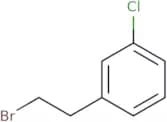
Formula:C6H7Cl2F4NPurezza:Min. 95%Peso molecolare:240 g/mol3-Chlorophenethyl bromide
CAS:3-Chlorophenethyl bromide is a linker that binds to viral proteins in the dimer interface and inhibits viral replication. It has been shown to be an inhibitor of HIV-1 reverse transcriptase and human immunodeficiency virus type 1 protease. 3-Chlorophenethyl bromide has also been found to inhibit the binding of HIV-1 integrase, which leads to inhibition of HIV-1 DNA integration into host cell chromosomes. 3-Chlorophenethyl bromide can be used for the treatment of AIDS and is being investigated for its use as a prophylactic agent for HIV infection.
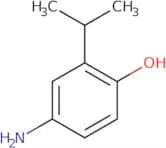
Formula:ClC6H4CH2CH2BrPurezza:Min. 95%Peso molecolare:219.51 g/mol4-Amino-2-isopropylphenol
CAS:4-Amino-2-isopropylphenol is a phenolic compound that is used in the synthesis of esters. It reacts with carboxylic acids to form an acylation product, which is selective for hydroxy groups. 4-Amino-2-isopropylphenol can be used as a solvent for phenolic compounds such as resorcinols and hydroquinones. This reagent also selectively reacts with organic solvents preferentially to hydroxy groups on the same molecule. The regioselective reaction of 4-amino-2-isopropylphenol is due to its steric hindrance by the substituent on the isopropyl group.
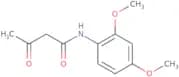
Formula:C9H13NOPurezza:Min. 95%Peso molecolare:151.21 g/mol2',4'-Dimethoxyacetoacetanilide
CAS:2',4'-Dimethoxyacetoacetanilide is a disubstituted dicarbonyl compound that is synthesized by acetoxylation of 2,4-dimethoxybenzaldehyde. The equilibrium between the two forms can be shifted to favor one form through the addition of reagents, such as dimethylformamide or dicarbonyl compounds. The oxidation of 2',4'-dimethoxyacetoacetanilide with hydrogen peroxide yields 2,4-dihydroxydiphenylmethane, which can undergo hydrolysis with hydrochloric acid to yield phenol.
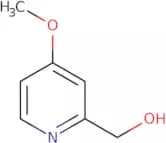
Formula:C12H15NO4Purezza:Min. 95%Peso molecolare:237.26 g/mol(4-Methoxy-pyridin-2-yl)-methanol
CAS:(4-Methoxy-pyridin-2-yl)-methanol is a nucleophile that can be used in the preparation of phosphorothioates and triphosphates. It is also used to synthesize oligonucleotides, which are biomolecules used to probe the structure of DNA. This compound has been shown to have high yields and is exothermic, making it a good candidate for catalysis. The chemical properties of (4-Methoxy-pyridin-2-yl)-methanol make it an excellent nucleophile with a strong affinity for phosphorous, which makes it useful in the synthesis of phosphorothioates and triphosphates.
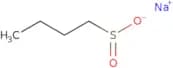
Formula:C7H9NO2Purezza:Min. 95%Peso molecolare:139.16 g/molSodium butane-1-sulfinate
CAS:Sodium butane-1-sulfinate is a reagent that can be used to synthesize sulfoxides, pyrrole derivatives, and other organic compounds. It is also used as a salt form for pharmaceuticals. Sodium butane-1-sulfinate may be used to produce sulfoxides, which are often used in organic synthesis because they are both reactive and unreactive. This compound has been found to be an antagonist of the CRTH2 receptor, which is involved in the production of prostaglandins that regulate inflammation.
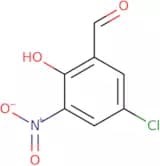
Formula:C4H9NaO2SPurezza:Min. 95%Peso molecolare:144.17 g/mol5-Chloro-3-nitrosalicylaldehyde
CAS:5-Chloro-3-nitrosalicylaldehyde is a cyclohexanol with catalytic properties. It has been shown to have high activity in the transfer and selectivity of cyclohexanone from cyclohexane. 5-Chloro-3-nitrosalicylaldehyde has also been used as a ligand in the preparation of catalysts for electrochemical reactions. 5-Chloro-3-nitrosalicylaldehyde is used in spectroscopic studies and elemental analysis, which includes elemental analysis by gas chromatography, atomic absorption spectroscopy, inductively coupled plasma mass spectrometry, and X ray powder diffraction.
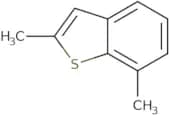
Formula:C7H4ClNO4Purezza:Min. 95%Peso molecolare:201.56 g/mol2,7-Dimethyl-1-benzothiophene
CAS:Versatile small molecule scaffold
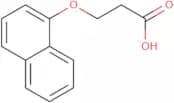
Formula:C10H10SPurezza:Min. 95%Peso molecolare:162.25 g/mol3-(Naphthalen-1-yloxy)propanoic acid
CAS:Versatile small molecule scaffold
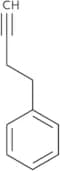
Formula:C13H12O3Purezza:Min. 95%Peso molecolare:216.23 g/mol4-Phenyl-1-butyne
CAS:4-Phenyl-1-butyne is an organic molecule that can be synthesized in a number of ways, including using an asymmetric synthesis. It is one of the two structural isomers of terminal alkynes and has been shown to inhibit the enzyme carboxylesterase. 4-Phenyl-1-butyne has also been shown to have a control experiment, which may help to identify the chemical mechanism of reaction. The optimal reaction time for this molecule is between 1 and 2 hours at a temperature of 100 degrees Celsius. 4-Phenyl-1-butyne reacts with acid molecules such as hydrochloric acid or sulfuric acid to form monocarboxylic acids. This molecular structure also reacts with water to produce hydrogen gas and carbon dioxide.
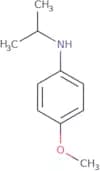
Formula:C10H10Purezza:Min. 95%Peso molecolare:130.19 g/molN-iso-Propyl-4-methoxyaniline
CAS:N-iso-Propyl-4-methoxyaniline is a supramolecular framework that has been demonstrated to be mediated by nitrogen atoms. This framework has been shown to form when the two isomers are mixed together, which leads to the formation of an alkylation reaction. The isomerism of this compound can be quantified and is unique in that it destabilizes the molecule. X-ray crystallography has been used to study the molecular structure and elucidate the non-covalent interactions. N-iso-Propyl-4-methoxyaniline's destabilization may be attributed to its ability to form hydrogen bonds with water molecules, as well as its hydrophobic character.
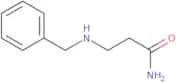
Formula:C10H15NOPurezza:Min. 95%Peso molecolare:165.24 g/mol3-(Benzylamino)propanamide
CAS:Versatile small molecule scaffold
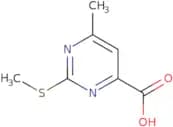
Formula:C10H14N2OPurezza:Min. 95%Peso molecolare:178.23 g/mol6-Methyl-2-(methylsulfanyl)pyrimidine-4-carboxylic acid
CAS:Versatile small molecule scaffold
Formula:C7H8N2O2SPurezza:Min. 95%Peso molecolare:184.22 g/mol4-Oxatricyclo[4.2.1.0,3,7]nonane-2,5-dione
CAS:Versatile small molecule scaffold
Formula:C8H8O3Purezza:Min. 95%Peso molecolare:152.15 g/mol3,4-Diaminopyrazole
CAS:3,4-Diaminopyrazole is a heterocyclic compound that has been used as a colorant in the textile industry. It is also known to be an effective acceptor for hydrogen bonding in human keratin. 3,4-Diaminopyrazole reacts with primary alcohols to form chalcones and the long-term exposure of this compound has been shown to cause fatty alcohols. This heterocyclic compound undergoes a bathochromic shift under UV light and can be used as a spectral marker in vitro.
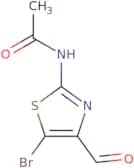
Formula:C3H8N4O4SPurezza:Min. 95%Peso molecolare:196.19 g/molN-(5-Bromo-4-formyl-1,3-thiazol-2-yl)acetamide
CAS:Versatile small molecule scaffold
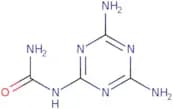
Formula:C6H5BrN2O2SPurezza:Min. 95%Peso molecolare:249.09 g/mol(Diamino-1,3,5-triazin-2-yl)urea
CAS:Versatile small molecule scaffold
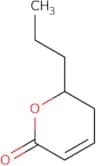
Formula:C4H7N7OPurezza:Min. 95%Peso molecolare:169.14 g/mol6-Propyl-5,6-dihydro-2H-pyran-2-one
CAS:6-Propyl-5,6-dihydro-2H-pyran-2-one belongs to the class of isoquinoline alkaloids. It is found in leguminosae plants and has a strong spectrum of activity against bacteria, viruses and fungi. This compound is also used for the treatment of malaria and as an antihelminthic agent. The index of this substance is unknown, but it has been shown to have a mass spectrum that corresponds with that of prosopis. 6-Propyl-5,6-dihydro-2H-pyran-2-one is semiarid and indehiscent, with volatile fruit.
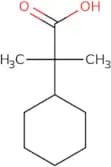
Formula:C8H12O2Purezza:Min. 95%Peso molecolare:140.18 g/mol2-Cyclohexyl-2-methylpropanoic acid
CAS:Versatile small molecule scaffold
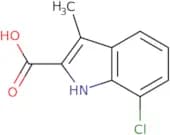
Formula:C10H18O2Purezza:Min. 95%Peso molecolare:170.25 g/mol7-Chloro-3-methyl-1H-indole-2-carboxylic acid
CAS:Versatile small molecule scaffold
Formula:C10H8ClNO2Purezza:Min. 95%Peso molecolare:209.63 g/mol2-Ethoxy-1,3-oxazole-4-carboxamide
CAS:Versatile small molecule scaffold
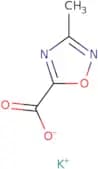
Formula:C6H8N2O3Purezza:Min. 95%Peso molecolare:156.1 g/molPotassium 3-methyl-1,2,4-oxadiazole-5-carboxylate
CAS:Versatile small molecule scaffold
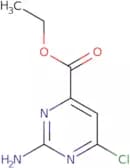
Formula:C4H3KN2O3Purezza:Min. 95%Peso molecolare:166.18 g/molEthyl 2-amino-6-chloropyrimidine-4-carboxylate
CAS:Versatile small molecule scaffoldFormula:C7H8ClN3O2Purezza:Min. 95%Peso molecolare:201.61 g/moltert-Butyl N-[(5-aminopyrimidin-2-yl)methyl]carbamate
CAS:Versatile small molecule scaffold
Formula:C10H16N4O2Purezza:Min. 95%Peso molecolare:224.3 g/mol2,4-Dibromo-1,3-oxazole
CAS:2,4-Dibromo-1,3-oxazole is a nitro compound and an important intermediate in the synthesis of herbicides. It is also used to produce coatings and as a reagent for organic synthesis. The compound can be synthesized by the palladium-catalyzed coupling of phenyl bromides with 2,4-dichloro-1,3-oxazole. 2,4-Dibromo-1,3-oxazole has been shown to have potent horticultural activity against plant diseases caused by anions such as fusarium oxysporum. This compound has a pharmacokinetic profile that is favourable for oral administration in humans. The lysine analogues are converted into picolinic acid and then to 2,4-dibromo-1,3-oxazole in the body. The dialkylamino substituents on the molecule are believed to be responsible
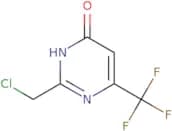
Formula:C3HBr2NOPurezza:Min. 95%Peso molecolare:226.85 g/mol2-(Chloromethyl)-6-(trifluoromethyl)pyrimidin-4-ol
CAS:Versatile small molecule scaffold
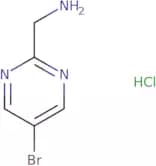
Formula:C6H4ClF3N2OPurezza:Min. 95%Peso molecolare:212.56 g/mol(5-bromopyrimidin-2-yl)methanamine hcl
CAS:Versatile small molecule scaffold
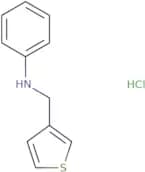
Formula:C5H7BrClN3Purezza:Min. 95%Peso molecolare:224.49 g/molN-(Thiophen-3-ylmethyl)aniline hydrochloride
CAS:Versatile small molecule scaffold
Formula:C11H12ClNSPurezza:Min. 95%Peso molecolare:225.74 g/mol

![7-Amino-5-oxa-6-azaspiro[2.4]hept-6-en-4-one](/_next/image/?url=https%3A%2Fstatic.cymitquimica.com%2Fproducts%2F3D%2Fthumb-webp%2FPID25769.webp&w=3840&q=75)
![1-(3-Fluorophenyl)-6-methoxy-1H,2H,3H,4H,9H-pyrido[3,4-b]indole hydrochloride](/_next/image/?url=https%3A%2Fstatic.cymitquimica.com%2Fproducts%2F3D%2Fthumb-webp%2FIWB79360.webp&w=3840&q=75)
![7-Bromo-[1,3]oxazolo[4,5-b]pyridin-2-amine](/_next/image/?url=https%3A%2Fstatic.cymitquimica.com%2Fproducts%2F3D%2Fthumb-webp%2FPID25755.webp&w=3840&q=75)
![6-Bromo-[1,3]oxazolo[4,5-b]pyridin-2-amine](/_next/image/?url=https%3A%2Fstatic.cymitquimica.com%2Fproducts%2F3D%2Fthumb-webp%2FIWC62107.webp&w=3840&q=75)
![{Bicyclo[4.1.0]heptan-3-yl}methanamine](/_next/image/?url=https%3A%2Fstatic.cymitquimica.com%2Fproducts%2F3D%2Fthumb-webp%2FIWC71872.webp&w=3840&q=75)
![1-Chloro-6,6,7,7-tetrafluoro-3-azabicyclo[3.2.0]heptane hydrochloride](/_next/image/?url=https%3A%2Fstatic.cymitquimica.com%2Fproducts%2F3D%2Fthumb-webp%2FPID25721.webp&w=3840&q=75)
![4-Oxatricyclo[4.2.1.0,3,7]nonane-2,5-dione](/_next/image/?url=https%3A%2Fstatic.cymitquimica.com%2Fproducts%2F3D%2Fthumb-webp%2FRAA47973.webp&w=3840&q=75)

![tert-Butyl N-[(5-aminopyrimidin-2-yl)methyl]carbamate](/_next/image/?url=https%3A%2Fstatic.cymitquimica.com%2Fproducts%2F3D%2Fthumb-webp%2FQZB60083.webp&w=3840&q=75)