Building Blocks
Sottocategorie di "Building Blocks"
- Acidi boronici e derivati dell'acido boronico(5.778 prodotti)
- Building Blocks Chirali(1.243 prodotti)
- Building Blocks Idrocarburici(6.099 prodotti)
- Building Blocks organici(61.038 prodotti)
Trovati 205376 prodotti di "Building Blocks"
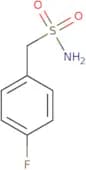
(4-Fluorophenyl)methanesulfonamide
CAS:Versatile small molecule scaffold
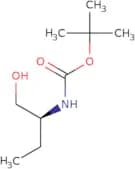
Formula:C7H8FNO2SPurezza:Min. 95%Peso molecolare:189.21 g/molN-Boc-(S)-(ˆ’)-2-amino-1-butanol
CAS:Versatile small molecule scaffold
Formula:C9H19NO3Purezza:Min. 95%Peso molecolare:189.25 g/mol1-[5-(Trifluoromethyl)-1,3,4-thiadiazol-2-yl]piperazine hydrochloride
CAS:Versatile small molecule scaffold
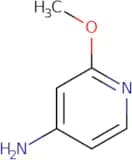
Formula:C7H10ClF3N4SPurezza:Min. 95%Peso molecolare:274.7 g/mol(4-Aminopyridin-2-yl)methanol
CAS:Versatile small molecule scaffold
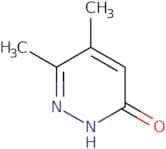
Formula:C6H8N2OPurezza:Min. 95%Peso molecolare:124.14 g/mol5,6-Dimethylpyridazin-3(2H)-one
CAS:Versatile small molecule scaffold
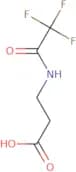
Formula:C6H8N2OPurezza:Min. 95%Peso molecolare:124.14 g/mol3-(Trifluoroacetamido)propanoic acid
CAS:Versatile small molecule scaffold
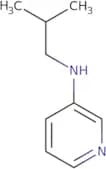
Formula:C5H6F3NO3Purezza:Min. 95%Peso molecolare:185.1 g/molN-(2-Methylpropyl)pyridin-3-amine
CAS:Versatile small molecule scaffold
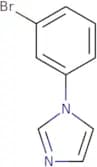
Formula:C9H14N2Purezza:Min. 95%Peso molecolare:150.22 g/mol1-(3-Bromophenyl)-1H-imidazole
CAS:Versatile small molecule scaffold
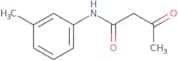
Formula:C9H7BrN2Purezza:Min. 95%Peso molecolare:223.07 g/molN-(3-Methylphenyl)-3-oxobutanamide
CAS:Versatile small molecule scaffold
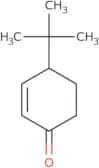
Formula:C11H13NO2Purezza:Min. 95%Peso molecolare:191.23 g/mol4-tert-Butylcyclohex-2-en-1-one
CAS:Versatile small molecule scaffold
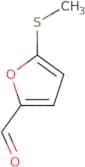
Formula:C10H16OPurezza:Min. 95%Peso molecolare:152.23 g/mol5-(Methylsulfanyl)furan-2-carbaldehyde
CAS:Versatile small molecule scaffold
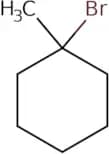
Formula:C6H6O2SPurezza:Min. 95%Peso molecolare:142.18 g/mol1-Bromo-1-methylcyclohexane
CAS:1-Bromo-1-methylcyclohexane is a monomolecular gas that is used as an intermediate in organic synthesis. It reacts with halides to form cyclopentyl derivatives. This reaction has been shown to be faster than the corresponding reaction of 1-bromocyclohexane with chlorides or bromides. The rate of this reaction may be due to the polarizability and conformational changes of the molecule upon substitution by a methyl group. 1-Bromo-1-methylcyclohexane is also an ionizing reagent, which means it can cause electrophilic reactions to occur on other molecules. It has been found that the solvent effect on this product can affect its reactivity, with solvents such as water having more of an effect than solvents such as benzene. 1-Bromo-1-methylcyclohexane has been shown to interact with other compounds in both transfer and complex
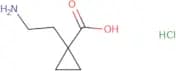
Formula:C7H13BrPurezza:Min. 95%Peso molecolare:177.08 g/mol1-(2-aminoethyl)cyclopropane-1-carboxylic acid hydrochloride
CAS:Versatile small molecule scaffold
Formula:C6H12ClNO2Purezza:Min. 95%Peso molecolare:165.62 g/molN-[Carbamothioyl(phenyl)methyl]benzamide
CAS:Versatile small molecule scaffold
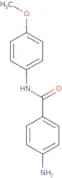
Formula:C15H14N2OSPurezza:Min. 95%Peso molecolare:270.3 g/mol4-Amino-n-(4-methoxyphenyl)benzamide
CAS:4-Amino-N-(4-methoxyphenyl)benzamide is a catalytic sulfamate that has been optimized for use in the synthesis of benzimidazole derivatives. 4-Amino-N-(4-methoxyphenyl)benzamide is used as a reagent for the preparation of aldehydes from sulfamic acid and various types of carboxylic acids. The reaction mechanism involves nucleophilic attack by the hydroxyl group from the sulfamate on the carbonyl carbon atom to form an intermediate, which then reacts with water to release hydrogen sulfate and form a new double bond.
Formula:C14H14N2O2Purezza:Min. 95%Peso molecolare:242.27 g/molAmyl Acetate
CAS:Amyl acetate is a reactive, volatile organic compound that is used in the manufacture of plasticizers, resins, and synthetic rubber. It is also used as a solvent for dyes and pigments, as well as a flavoring agent in food processing. Amyl acetate has been shown to have antimicrobial properties against human pathogens such as methicillin-resistant Staphylococcus aureus (MRSA), Escherichia coli, and Salmonella enterica. The antimicrobial activity of this molecule may be due to its ability to react with cellular components such as proteins and lipids. Amyl acetate also inhibits the growth of microorganisms by inhibiting their synthesis of essential biomolecules like amino acids and nucleic acids.
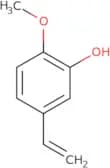
Formula:C7H14O2Purezza:Min. 95%Peso molecolare:130.19 g/mol5-Ethenyl-2-methoxyphenol
CAS:5-Ethenyl-2-methoxyphenol is a volatile compound that has been isolated from the bark of the cinnamon tree. It has shown anticancer activities "in vitro" and "in vivo". 5-Ethenyl-2-methoxyphenol has been shown to be demethylated by cytochrome P450 enzymes, which may result in its antitumor activity. This active compound can also be detected in postharvested fruit and vegetables as well as processed foods such as apple juice, tomato sauce, and dried fruits. 5-Ethenyl-2-methoxyphenol is responsible for the characteristic flavor of cinnamon, so it is often used as a flavoring agent in food processing.
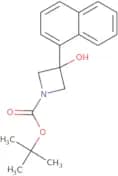
Formula:C9H10O2Purezza:Min. 95%Colore e forma:PowderPeso molecolare:150.17 g/moltert-Butyl 3-hydroxy-3-(naphthalen-1-yl)azetidine-1-carboxylate
CAS:Versatile small molecule scaffold
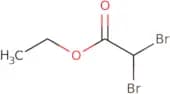
Formula:C18H21NO3Purezza:Min. 95%Peso molecolare:299.4 g/molAcetic acid, dibromo-, ethyl ester
CAS:Acetic acid, dibromo-, ethyl ester is a reactive molecule that can be used as a nucleophilic substituent. It has hydroxyl group and ruthenium complex. It is a particle that can be used in the production of monoclonal antibodies. Acetic acid, dibromo-, ethyl ester also has viscosity and polycarboxylic acid. This chemical reacts with β-unsaturated ketones to form polymerization initiator. Acetic acid, dibromo-, ethyl ester also has carbonyl group and monoclonal antibodies. Acetic acid, dibromo-, ethyl ester can be conjugated with ethyl bromoacetate to produce conjugates.
Formula:C4H6Br2O2Purezza:Min. 95%Peso molecolare:245.9 g/mol2-[(3-Nitrophenyl)formamido]acetic acid
CAS:2-[(3-Nitrophenyl)formamido]acetic acid (2NPA) is a modifying agent that has been used in the modification of carboxyl groups. It can react with nucleophiles to form adducts and with carbodiimides to form ureas. 2NPA reacts with amino acids, peptides, and other nitrogenous compounds at their carboxyl groups to form ester or amide bonds. The nature of the residues after modification varies depending on the nature of the carboxyl group that was modified.
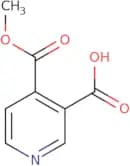
Formula:C9H8N2O5Purezza:Min. 95%Peso molecolare:224.17 g/mol4-(Methoxycarbonyl)nicotinic acid
CAS:Versatile small molecule scaffold
Formula:C8H7NO4Purezza:Min. 95%Peso molecolare:181.15 g/mol2-[(4-Methylpiperazin-1-yl)methyl]-1H-1,3-benzodiazol-6-amine
CAS:Versatile small molecule scaffold
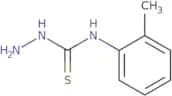
Formula:C13H19N5Purezza:Min. 95%Peso molecolare:245.32 g/mol4-(2-Methylphenyl)-3-thiosemicarbazide
CAS:4-(2-Methylphenyl)-3-thiosemicarbazide is a crystalline solid that belongs to the group of benzoic acid derivatives. It has an orthorhombic crystal structure, with a yellow color. The crystals are measured at room temperature, and it has an atomic weight of 197.11 g/mol. 4-(2-Methylphenyl)-3-thiosemicarbazide is stable in air and in solution, but decomposes at temperatures above 250°C. This compound has been studied by using X-ray diffraction measurements and Bruker parameters. Its isotropic radiation is recorded at the following wavelength: 1.5418 Å (1).
Formula:C8H11N3SPurezza:Min. 95%Peso molecolare:181.26 g/mol2-(5-Phenyl-2H-1,2,3,4-tetrazol-2-yl)propanoic acid
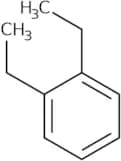
CAS:Versatile small molecule scaffoldFormula:C10H10N4O2Purezza:Min. 95%Peso molecolare:218.21 g/mol1,2-Diethylbenzene
CAS:1,2-Diethylbenzene is a trifluoroacetic acid derivative that is used as an acylation agent and a solid catalyst. 1,2-Diethylbenzene has been shown to increase the energy metabolism in cultured human cells. It also influences fatty acid synthesis and nmr spectra of plant families. 1,2-Diethylbenzene was found to be safe for use in sciatic nerve regeneration in Sprague-Dawley rats with axonopathy. This chemical can also be used as an analytical reagent for the separation of urine samples by liquid chromatography methods.
Formula:C10H14Purezza:Min. 95%Peso molecolare:134.22 g/mol3-(5-Methyl-[1,3,4]oxadiazol-2-yl)-phenylamine
CAS:Versatile small molecule scaffold
Formula:C9H9N3OPurezza:Min. 95%Peso molecolare:175.19 g/mol1,8-Dioxa-4-azaspiro[4.5]decane
CAS:Versatile small molecule scaffold
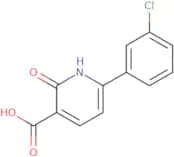
Formula:C7H13NO2Purezza:Min. 95%Peso molecolare:143.18 g/mol6-(3-Chlorophenyl)-2-oxo-1,2-dihydropyridine-3-carboxylic Acid
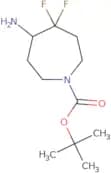
CAS:Versatile small molecule scaffoldFormula:C12H8ClNO3Purezza:Min. 95%Peso molecolare:249.65 g/moltert-Butyl 5-amino-4,4-difluoroazepane-1-carboxylate
CAS:Versatile small molecule scaffold
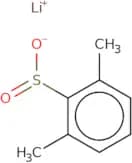
Formula:C11H20F2N2O2Purezza:Min. 95%Peso molecolare:250.29 g/mol2,6-dimethylbenzene-1-sulfinate lithium
CAS:Versatile small molecule scaffoldFormula:C8H9LiO2SPurezza:Min. 95%Peso molecolare:176.2 g/molMethyl 3-tert-butyl-1,2,3,4-tetrahydroquinoline-6-carboxylate hydrochloride
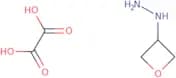
CAS:Versatile small molecule scaffoldFormula:C15H22ClNO2Purezza:Min. 95%Peso molecolare:283.8 g/mol(Oxetan-3-yl)hydrazine, oxalic acid
CAS:Versatile small molecule scaffold
Formula:C5H10N2O5Purezza:Min. 95%Peso molecolare:178.1 g/mol3-([(tert-Butoxy)carbonyl]amino)-2-(cyclopentylmethyl)propanoic acid
CAS:Versatile small molecule scaffold
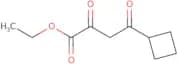
Formula:C14H25NO4Purezza:Min. 95%Peso molecolare:271.35 g/molEthyl 4-cyclobutyl-2,4-dioxobutanoate
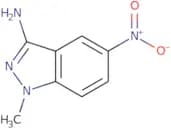
CAS:Versatile small molecule scaffoldFormula:C10H14O4Purezza:Min. 95%Peso molecolare:198.22 g/mol1-Methyl-5-nitro-1H-indazol-3-amine
CAS:Versatile small molecule scaffold
Formula:C8H8N4O2Purezza:Min. 95%Peso molecolare:192.18 g/mol3-(Hydroxymethyl)-1,2,3,4-tetrahydroquinoxalin-2-one
CAS:Versatile small molecule scaffold
Formula:C9H10N2O2Purezza:Min. 95%Peso molecolare:178.19 g/mol1-(3-Methoxyphenyl)-2-methylpropan-2-amine
CAS:Prodotto controllatoVersatile small molecule scaffold
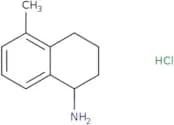
Formula:C11H17NOPurezza:Min. 95%Peso molecolare:179.26 g/mol5-Methyl-1,2,3,4-tetrahydronaphthalen-1-amine hydrochloride
CAS:Versatile small molecule scaffold
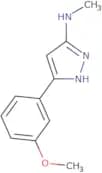
Formula:C11H16ClNPurezza:Min. 95%Peso molecolare:197.7 g/mol5-(3-Methoxyphenyl)-N-methyl-1H-pyrazol-3-amine
CAS:Versatile small molecule scaffoldFormula:C11H13N3OPurezza:Min. 95%Peso molecolare:203.24 g/mol2-Amino-2-(2-fluorophenyl)acetic acid hydrochloride
CAS:Versatile small molecule scaffold
Formula:C8H9ClFNO2Purezza:Min. 95%Peso molecolare:205.61 g/mol1-(4-bromo-2-methylphenyl)propan-1-one
CAS:Versatile small molecule scaffold
Formula:C10H11BrOPurezza:Min. 95%Peso molecolare:227.1 g/mol2-Chloro-4-methoxy-7-methyl-7H-pyrrolo[2,3-d]pyrimidine
CAS:Versatile small molecule scaffold
Formula:C8H8ClN3OPurezza:Min. 95%Peso molecolare:197.62 g/mol8-Fluoro-3-methyl-1,2,3,4-tetrahydroquinoline hydrochloride
CAS:Versatile small molecule scaffold
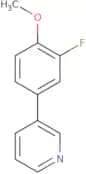
Formula:C10H13ClFNPurezza:Min. 95%Peso molecolare:201.67 g/mol3-(3-Fluoro-4-methoxyphenyl)pyridine
CAS:Versatile small molecule scaffold
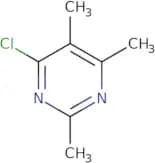
Formula:C12H10FNOPurezza:Min. 95%Peso molecolare:203.21 g/mol4-Chloro-2,5,6-trimethylpyrimidine
CAS:Versatile small molecule scaffold
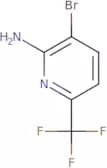
Formula:C7H9ClN2Purezza:Min. 95%Peso molecolare:156.61 g/mol2-Amino-3-Bromo-6-trifluoromethylpyridine
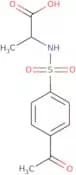
CAS:Versatile small molecule scaffoldFormula:C6H4BrF3N2Purezza:Min. 95%Peso molecolare:241.01 g/mol2-(4-Acetylbenzenesulfonamido)propanoic acid
CAS:Versatile small molecule scaffoldFormula:C11H13NO5SPurezza:Min. 95%Peso molecolare:271.29 g/mol1-[(3-Phenyl-1,2-oxazol-5-yl)methyl]piperazine dihydrochloride
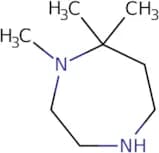
CAS:Versatile small molecule scaffoldFormula:C14H19Cl2N3OPurezza:Min. 95%Peso molecolare:316.2 g/mol1,7,7-Trimethyl-1,4-diazepane
CAS:Versatile small molecule scaffold
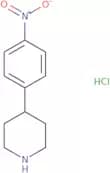
Formula:C8H18N2Purezza:Min. 95%Peso molecolare:142.24 g/mol4-(4-Nitrophenyl)piperidine hydrochloride
CAS:Versatile small molecule scaffold
Formula:C11H15ClN2O2Purezza:Min. 95%Peso molecolare:242.7 g/mol

![1-[5-(Trifluoromethyl)-1,3,4-thiadiazol-2-yl]piperazine hydrochloride](/_next/image/?url=https%3A%2Fstatic.cymitquimica.com%2Fproducts%2F3D%2Fthumb-webp%2FWAC73867.webp&w=3840&q=75)
![N-[Carbamothioyl(phenyl)methyl]benzamide](/_next/image/?url=https%3A%2Fstatic.cymitquimica.com%2Fproducts%2F3D%2Fthumb-webp%2FAAA89278.webp&w=3840&q=75)

![2-[(3-Nitrophenyl)formamido]acetic acid](/_next/image/?url=https%3A%2Fstatic.cymitquimica.com%2Fproducts%2F3D%2Fthumb-webp%2FAAA61710.webp&w=3840&q=75)
![2-[(4-Methylpiperazin-1-yl)methyl]-1H-1,3-benzodiazol-6-amine](/_next/image/?url=https%3A%2Fstatic.cymitquimica.com%2Fproducts%2F3D%2Fthumb-webp%2FWTB32161.webp&w=3840&q=75)

![3-(5-Methyl-[1,3,4]oxadiazol-2-yl)-phenylamine](/_next/image/?url=https%3A%2Fstatic.cymitquimica.com%2Fproducts%2F3D%2Fthumb-webp%2FXEA73340.webp&w=3840&q=75)
![1,8-Dioxa-4-azaspiro[4.5]decane](/_next/image/?url=https%3A%2Fstatic.cymitquimica.com%2Fproducts%2F3D%2Fthumb-webp%2FXEA82412.webp&w=3840&q=75)

![3-([(tert-Butoxy)carbonyl]amino)-2-(cyclopentylmethyl)propanoic acid](/_next/image/?url=https%3A%2Fstatic.cymitquimica.com%2Fproducts%2F3D%2Fthumb-webp%2FXXC61525.webp&w=3840&q=75)

![2-Chloro-4-methoxy-7-methyl-7H-pyrrolo[2,3-d]pyrimidine](/_next/image/?url=https%3A%2Fstatic.cymitquimica.com%2Fproducts%2F3D%2Fthumb-webp%2FJDA95534.webp&w=3840&q=75)

![1-[(3-Phenyl-1,2-oxazol-5-yl)methyl]piperazine dihydrochloride](/_next/image/?url=https%3A%2Fstatic.cymitquimica.com%2Fproducts%2F3D%2Fthumb-webp%2FIQB77463.webp&w=3840&q=75)