


Building Blocks
Sottocategorie di "Building Blocks"
- Acidi boronici e derivati dell'acido boronico(5.778 prodotti)
- Building Blocks Chirali(1.243 prodotti)
- Building Blocks Idrocarburici(6.098 prodotti)
- Building Blocks organici(61.036 prodotti)
Trovati 205240 prodotti di "Building Blocks"
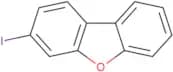
3-Iododibenzofuran
CAS:3-Iododibenzofuran is a fluorescent compound that has been used as a probe for the study of neutral endopeptidase activity. The compound is characterized by a high degree of thermal stability and an inhibitory potency at pH 7.0 that is approximately 3 orders of magnitude greater than that of the active site inhibitor, anthracene. 3-Iododibenzofuran can be synthesized using chemoenzymatic methods, with efficiencies and profiles that are similar to those obtained in the conventional method. This probe can also be used to investigate the functional role of proteins in living cells or tissues.
3-Iodobenzofuran has been shown to have pressor effects in rats and can cause tetrazole (a type of explosive) to detonate when heated, which makes it unsuitable for use in devices such as explosives or pyrotechnics.Formula:C12H7IOPurezza:Min. 95%Peso molecolare:294.09 g/mol5-Benzo[1,3]dioxol-5-yl-2H-pyrazole-3-carboxylic acid methyl ester
CAS:Versatile small molecule scaffoldFormula:C12H10N2O4Purezza:Min. 95%Peso molecolare:246.22 g/molrac-(2R,3S)-1-{[(9H-Fluoren-9-yl)methoxy]carbonyl}-3-phenylpyrrolidine-2-carboxylic acid
CAS:Rac-1-{[(9H-fluoren-9-yl)methoxy]carbonyl}-3-phenylpyrrolidine-2-carboxylic acid is a chiral, stereospecific, cyclic sulfate that is synthetized by the reaction of glycol with lactam. It has been found to be effective against various types of cancer cells. Rac-1-{[(9H-fluoren-9-yl)methoxy]carbonyl}-3-phenylpyrrolidine 2 carboxylic acid is an enantiopure compound that can be used as an intermediate in the synthesis of antiinflammatory drugs such as kainic acid.
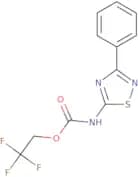
Formula:C26H23NO4Purezza:Min. 95%Peso molecolare:413.5 g/mol2,2,2-Trifluoroethyl N-(3-phenyl-1,2,4-thiadiazol-5-yl)carbamate
CAS:Versatile small molecule scaffold
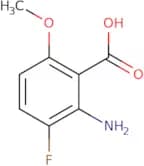
Formula:C11H8F3N3O2SPurezza:Min. 95%Peso molecolare:303.26 g/mol2-Amino-3-fluoro-6-methoxybenzoic acid
CAS:Versatile small molecule scaffoldFormula:C8H8FNO3Purezza:Min. 95%Peso molecolare:185.15 g/mol4-[2-(2-Methylphenyl)ethyl]piperidine
CAS:Versatile small molecule scaffold
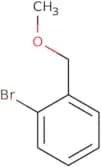
Formula:C14H21NPurezza:Min. 95%Peso molecolare:203.32 g/mol1-Bromo-2-(methoxymethyl)benzene
CAS:1-Bromo-2-(methoxymethyl)benzene is a boronic acid that is used in the synthesis of palladium complexes. It is synthesized by reacting 1-bromobenzene with methanol and methoxymethyl chloride. The 1-bromo-2-(methoxymethyl)benzene has been used as a ligand for palladium complexes, which are often used to catalyze organic reactions, such as the metathesis reaction. Synthetic methods have been developed to produce the compound and NMR spectra have been obtained to provide kinetic data on these reactions.
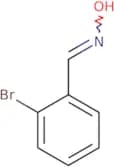
Formula:C8H9BrOPurezza:Min. 95%Peso molecolare:201.06 g/mol2-Bromobenzaldoxime
CAS:2-Bromobenzaldoxime is a biologically active molecule that has been shown to have significant physiological activities. It is an aldehyde, which is metabolized by the liver or kidneys into the corresponding alcohol, 2-bromoethanol. 2-Bromobenzaldoxime has been shown to be synthesized from diethyl ether and potassium phosphate in the presence of amino acids. The reaction proceeds with dehydration of the intermediate bromohydrin to form an aldoxime. This molecule can be used as a pharmaceutical drug for various diseases such as diabetes mellitus, hypertension, and inflammation.
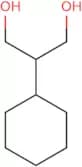
Formula:C7H6BrNOPurezza:Min. 95%Peso molecolare:200.03 g/mol2-Cyclohexylpropane-1,3-diol
CAS:2-Cyclohexylpropane-1,3-diol is a substrate for porcine pancreatic lipase. It is hydrolyzed by this enzyme, which is stereoselective and enantioselective. 2-Cyclohexylpropane-1,3-diol also has properties that are similar to angiotensin, a peptide that is secreted by the human body. This substance can be used as a solvent for other organic compounds in chemical reactions.
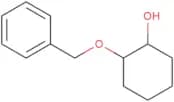
Formula:C9H18O2Purezza:Min. 95%Peso molecolare:158.24 g/molrac-(1R,2R)-2-(Benzyloxy)cyclohexan-1-ol
CAS:Versatile small molecule scaffold
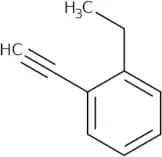
Formula:C13H18O2Purezza:Min. 95%Peso molecolare:206.28 g/mol1-Ethyl-2-ethynylbenzene
CAS:1-Ethyl-2-ethynylbenzene is an indene that can be synthesized by the reaction of 1-ethylbenzene with ethynylmagnesium bromide and trifluoroacetyl chloride. 1-Ethyl-2-ethynylbenzene reacts as a nucleophile with electrophiles, such as phenylsulfonyl and acetylene compounds, to form sulfones and acetylenes. It can also react with tetrafluoroborates to form indenes.
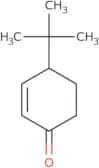
Formula:C10H10Purezza:Min. 95%Peso molecolare:130.19 g/mol4-tert-Butylcyclohex-2-en-1-one
CAS:Versatile small molecule scaffold
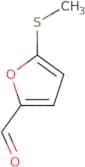
Formula:C10H16OPurezza:Min. 95%Peso molecolare:152.23 g/mol5-(Methylsulfanyl)furan-2-carbaldehyde
CAS:Versatile small molecule scaffold
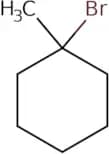
Formula:C6H6O2SPurezza:Min. 95%Peso molecolare:142.18 g/mol1-Bromo-1-methylcyclohexane
CAS:1-Bromo-1-methylcyclohexane is a monomolecular gas that is used as an intermediate in organic synthesis. It reacts with halides to form cyclopentyl derivatives. This reaction has been shown to be faster than the corresponding reaction of 1-bromocyclohexane with chlorides or bromides. The rate of this reaction may be due to the polarizability and conformational changes of the molecule upon substitution by a methyl group. 1-Bromo-1-methylcyclohexane is also an ionizing reagent, which means it can cause electrophilic reactions to occur on other molecules. It has been found that the solvent effect on this product can affect its reactivity, with solvents such as water having more of an effect than solvents such as benzene. 1-Bromo-1-methylcyclohexane has been shown to interact with other compounds in both transfer and complex
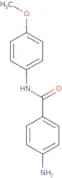
Formula:C7H13BrPurezza:Min. 95%Peso molecolare:177.08 g/mol4-Amino-n-(4-methoxyphenyl)benzamide
CAS:4-Amino-N-(4-methoxyphenyl)benzamide is a catalytic sulfamate that has been optimized for use in the synthesis of benzimidazole derivatives. 4-Amino-N-(4-methoxyphenyl)benzamide is used as a reagent for the preparation of aldehydes from sulfamic acid and various types of carboxylic acids. The reaction mechanism involves nucleophilic attack by the hydroxyl group from the sulfamate on the carbonyl carbon atom to form an intermediate, which then reacts with water to release hydrogen sulfate and form a new double bond.
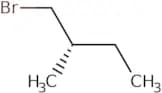
Formula:C14H14N2O2Purezza:Min. 95%Peso molecolare:242.27 g/mol(S)-(+)-1-Bromo-2-methylbutane
CAS:(S)-(+)-1-Bromo-2-methylbutane is a chiral molecule with two stereoisomers, the cis and trans forms. The cis form has been observed to be the more stable of the two. It is a functional theory that these two forms are not mirror images of each other because they have different conformations. (S)-(+)-1-Bromo-2-methylbutane has been used in the synthesis of a number of important molecules. The stereoisomers can be distinguished by conformational analysis and optical microscopy. (S)-(+)-1-Bromo-2-methylbutane also has an application in biotechnology for use as a precursor for hydrazones, which are important in organic chemistry and molecular biology, such as DNA sequencing.
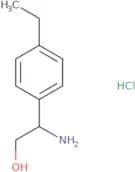
Formula:C5H11BrPurezza:Min. 95%Peso molecolare:151.04 g/mol2-Amino-2-(4-ethylphenyl)ethan-1-ol hydrochloride
CAS:Versatile small molecule scaffold
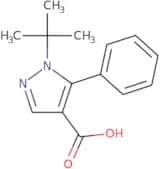
Formula:C10H16ClNOPurezza:Min. 95%Peso molecolare:201.69 g/mol1-tert-Butyl-5-phenyl-1H-pyrazole-4-carboxylic acid
CAS:Versatile small molecule scaffold
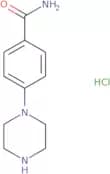
Formula:C14H16N2O2Purezza:Min. 95%Peso molecolare:244.29 g/mol4-(Piperazin-1-yl)benzamide hydrochloride
CAS:Versatile small molecule scaffoldFormula:C11H16ClN3OPurezza:Min. 95%Peso molecolare:241.72 g/mol4-Chloro-5H,6H,7H-pyrimido[4,5-b][1,4]oxazin-6-one
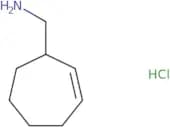
CAS:Versatile small molecule scaffoldFormula:C6H4ClN3O2Purezza:Min. 95%Peso molecolare:185.57 g/mol(Cyclohept-2-en-1-yl)methanamine hydrochloride
CAS:Versatile small molecule scaffold
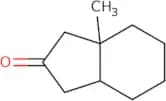
Formula:C8H16ClNPurezza:Min. 95%Peso molecolare:161.7 g/molrac-(3aR,7aS)-3a-Methyl-octahydro-1H-inden-2-one
CAS:Versatile small molecule scaffold
Formula:C10H16OPurezza:Min. 95%Peso molecolare:152.23 g/mol2,4-dichloro-7H-pyrrolo[2,3-d]pyrimidine-5-carbaldehyde
CAS:Versatile small molecule scaffold
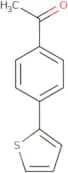
Formula:C7H3Cl2N3OPurezza:Min. 95%Peso molecolare:216.02 g/mol1-(4-Thiophen-2-yl-phenyl)-ethanone
CAS:Versatile small molecule scaffold
Formula:C12H10OSPurezza:Min. 95%Peso molecolare:202.27 g/molEthyl 2-(3-nitrophenyl)acetate
CAS:Ethyl 2-(3-nitrophenyl)acetate is an organic compound. It is a chloride channel blocker that has been shown to inhibit the activity of multidrug-resistant proteins (e.g., p-glycoprotein and multidrug resistance protein). The uptake of this drug in cells is limited by its low oral bioavailability and its interaction with aluminium ions. This drug interacts with multidrug-resistance proteins, which are involved in the transport of drugs or toxins out of the cell, by competing for binding sites. Ethyl 2-(3-nitrophenyl)acetate inhibits the catalytic activity of these proteins, leading to a regression in multidrug resistance. It can also inhibit the activity of isoxazoles and alcohols.br>br>/p>
Formula:C10H11NO4Purezza:Min. 95%Peso molecolare:209.2 g/mol2-Bromo-5-fluoro-4-methoxybenzoic acid
CAS:Versatile small molecule scaffold
Formula:C8H6BrFO3Purezza:Min. 95%Peso molecolare:249.03 g/mol3-[(Furan-2-ylmethyl)sulfanyl]prop-2-enoic acid
CAS:Versatile small molecule scaffold
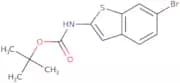
Formula:C8H8O3SPurezza:Min. 95%Peso molecolare:184.21 g/moltert-Butyl N-(6-bromo-1-benzothiophen-2-yl)carbamate
CAS:Versatile small molecule scaffold
Formula:C13H14BrNO2SPurezza:Min. 95%Peso molecolare:328.23 g/molN-{[2-(Trifluoromethyl)phenyl]methyl}oxetan-3-amine
CAS:Versatile small molecule scaffoldFormula:C11H12F3NOPurezza:Min. 95%Peso molecolare:231.21 g/moltert-Butyl N-{4-[1-(4-bromophenoxy)ethyl]phenyl}carbamate
CAS:Versatile small molecule scaffold
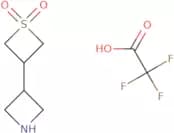
Formula:C19H22BrNO3Purezza:Min. 95%Peso molecolare:392.3 g/mol3-(1,1-dioxido-3-thietanyl)-azetidine 2,2,2-trifluoroacetate
CAS:Versatile small molecule scaffold
Formula:C8H12F3NO4SPurezza:Min. 95%Peso molecolare:275.25 g/mol1-[(2-bromophenyl)methyl]-2,5-dihydro-1H-pyrrole-2,5-dione
CAS:Versatile small molecule scaffold
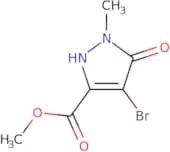
Formula:C11H8BrNO2Purezza:Min. 95%Peso molecolare:266.09 g/molMethyl 4-bromo-5-hydroxy-1-methyl-1H-pyrazole-3-carboxylate
CAS:Versatile small molecule scaffold
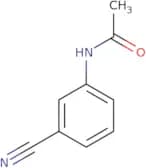
Formula:C6H7BrN2O3Purezza:Min. 95%Peso molecolare:235.04 g/molN-(3-Cyanophenyl)acetamide
CAS:N-(3-Cyanophenyl)acetamide is a hydrogen-bonding molecule that has been detected in the gas phase. It has also been observed to interact with water, forming hydrogen bonding interactions and solvatochromism. The equilibrium of N-(3-cyanophenyl)acetamide can be shifted by changing the solvent conditions and pH. This molecule has three conformations when it is in the gaseous phase, including a planar conformation. In addition, N-(3-cyanophenyl)acetamide can be used as a probe for determining hydrogen bonding interactions and conformations due to its ability to form hydrogen bonds with other molecules.
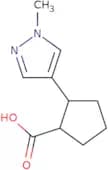
Formula:C9H8N2OPurezza:Min. 95%Peso molecolare:160.18 g/mol2-(1-Methyl-1H-pyrazol-4-yl)cyclopentane-1-carboxylic acid
CAS:Versatile small molecule scaffold
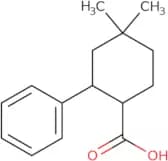
Formula:C10H14N2O2Purezza:Min. 95%Peso molecolare:194.23 g/mol4,4-Dimethyl-2-phenylcyclohexane-1-carboxylic acid
CAS:Versatile small molecule scaffold
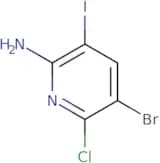
Formula:C15H20O2Purezza:Min. 95%Peso molecolare:232.32 g/mol5-Bromo-6-chloro-3-iodopyridin-2-amine
CAS:Versatile small molecule scaffold
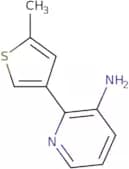
Formula:C5H3BrClIN2Purezza:Min. 95%Peso molecolare:333.35 g/mol2-(5-Methylthiophen-3-yl)pyridin-3-amine
CAS:Versatile small molecule scaffold
Formula:C10H10N2SPurezza:Min. 95%Peso molecolare:190.27 g/mol1,3-Dioxo-2,3-dihydro-1H-isoindol-2-yl 2-[4-(2-methylpropyl)phenyl]propanoate
CAS:Versatile small molecule scaffold
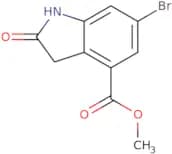
Formula:C21H21NO4Purezza:Min. 95%Peso molecolare:351.4 g/molMethyl 6-Bromo-2-oxo-2,3-dihydro-1H-indole-4-carboxylate
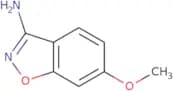
CAS:Versatile small molecule scaffoldFormula:C10H8NO3BrPurezza:Min. 95%Peso molecolare:270.07 g/mol6-Methoxy-1,2-benzoxazol-3-amine
CAS:Versatile small molecule scaffold
Formula:C8H8N2O2Purezza:Min. 95%Peso molecolare:164.16 g/mol2-(2-{[(9H-Fluoren-9-yl)methoxy]carbonyl}-1,2,3,4-tetrahydroisoquinolin-1-yl)acetic acid
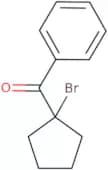
CAS:Versatile small molecule scaffoldFormula:C26H23NO4Purezza:Min. 95%Peso molecolare:413.5 g/mol(1-Bromocyclopentyl)(phenyl)methanone
CAS:Versatile small molecule scaffold
Formula:C12H13BrOPurezza:Min. 95%Peso molecolare:253.13 g/mol3-Amino-7-oxa-1λ⁶-thiaspiro[3.5]nonane-1,1-dione hydrochloride
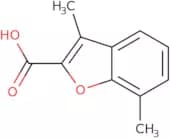
CAS:Versatile small molecule scaffoldFormula:C7H14ClNO3SPurezza:Min. 95%Peso molecolare:227.7 g/mol3,7-Dimethyl-1-benzofuran-2-carboxylic acid
CAS:Versatile small molecule scaffold
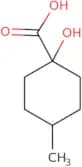
Formula:C11H10O3Purezza:Min. 95%Peso molecolare:190.19 g/mol1-Hydroxy-4-methylcyclohexane-1-carboxylic acid
CAS:Versatile small molecule scaffold
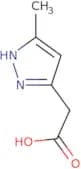
Formula:C8H14O3Purezza:Min. 95%Peso molecolare:158.19 g/mol2-(5-Methyl-1H-pyrazol-3-yl)acetic acid
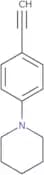
CAS:Versatile small molecule scaffoldFormula:C6H8N2O2Purezza:Min. 95%Peso molecolare:140.14 g/mol4'-N-Piperidinophenyl acetylene
CAS:Versatile small molecule scaffold
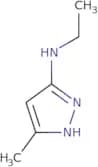
Formula:C13H15NPurezza:Min. 95%Peso molecolare:185.27 g/molN-Ethyl-5-methyl-1H-pyrazol-3-amine
CAS:Versatile small molecule scaffold
Formula:C6H11N3Purezza:Min. 95%Peso molecolare:125.17 g/mol2-[(tert-Butyldimethylsilyl)oxy]benzaldehyde
CAS:2-[(tert-Butyldimethylsilyl)oxy]benzaldehyde (BBSA) is a traceless synthetic reagent that is used for the termination of peptide synthesis. It can also be used in the synthesis of benzofurans, carbonyl compounds, and thioacetals. The high yield and chemoselectivity makes BBSA a competitive reagent for these types of reactions. BBSA can be prepared from hydrogen peroxide, esters, enol ethers, or peroxides. These latter reactants are more selective than hydrogen peroxide and do not lead to oxidation of substrates or side products. This product is also useful for the synthesis of thioketals.
Formula:C13H20O2SiPurezza:Min. 95%Peso molecolare:236.38 g/mol

![5-Benzo[1,3]dioxol-5-yl-2H-pyrazole-3-carboxylic acid methyl ester](/_next/image/?url=https%3A%2Fstatic.cymitquimica.com%2Fproducts%2F3D%2Fthumb-webp%2FERB10454.webp&w=3840&q=75)
![rac-(2R,3S)-1-{[(9H-Fluoren-9-yl)methoxy]carbonyl}-3-phenylpyrrolidine-2-carboxylic acid](/_next/image/?url=https%3A%2Fstatic.cymitquimica.com%2Fproducts%2F3D%2Fthumb-webp%2FENC98387.webp&w=3840&q=75)
![4-[2-(2-Methylphenyl)ethyl]piperidine](/_next/image/?url=https%3A%2Fstatic.cymitquimica.com%2Fproducts%2F3D%2Fthumb-webp%2FEBB66297.webp&w=3840&q=75)
![4-Chloro-5H,6H,7H-pyrimido[4,5-b][1,4]oxazin-6-one](/_next/image/?url=https%3A%2Fstatic.cymitquimica.com%2Fproducts%2F3D%2Fthumb-webp%2FLYB52467.webp&w=3840&q=75)
![2,4-dichloro-7H-pyrrolo[2,3-d]pyrimidine-5-carbaldehyde](/_next/image/?url=https%3A%2Fstatic.cymitquimica.com%2Fproducts%2F3D%2Fthumb-webp%2FNQC76757.webp&w=3840&q=75)


![3-[(Furan-2-ylmethyl)sulfanyl]prop-2-enoic acid](/_next/image/?url=https%3A%2Fstatic.cymitquimica.com%2Fproducts%2F3D%2Fthumb-webp%2FJFC43383.webp&w=3840&q=75)
![N-{[2-(Trifluoromethyl)phenyl]methyl}oxetan-3-amine](/_next/image/?url=https%3A%2Fstatic.cymitquimica.com%2Fproducts%2F3D%2Fthumb-webp%2FPDC89412.webp&w=3840&q=75)
![tert-Butyl N-{4-[1-(4-bromophenoxy)ethyl]phenyl}carbamate](/_next/image/?url=https%3A%2Fstatic.cymitquimica.com%2Fproducts%2F3D%2Fthumb-webp%2FPZC05838.webp&w=3840&q=75)
![1-[(2-bromophenyl)methyl]-2,5-dihydro-1H-pyrrole-2,5-dione](/_next/image/?url=https%3A%2Fstatic.cymitquimica.com%2Fproducts%2F3D%2Fthumb-webp%2FQFA48093.webp&w=3840&q=75)
![1,3-Dioxo-2,3-dihydro-1H-isoindol-2-yl 2-[4-(2-methylpropyl)phenyl]propanoate](/_next/image/?url=https%3A%2Fstatic.cymitquimica.com%2Fproducts%2F3D%2Fthumb-webp%2FQKD88961.webp&w=3840&q=75)
![2-(2-{[(9H-Fluoren-9-yl)methoxy]carbonyl}-1,2,3,4-tetrahydroisoquinolin-1-yl)acetic acid](/_next/image/?url=https%3A%2Fstatic.cymitquimica.com%2Fproducts%2F3D%2Fthumb-webp%2FQWA48355.webp&w=3840&q=75)
![3-Amino-7-oxa-1λ⁶-thiaspiro[3.5]nonane-1,1-dione hydrochloride](/_next/image/?url=https%3A%2Fstatic.cymitquimica.com%2Fproducts%2F3D%2Fthumb-webp%2FFPD79892.webp&w=3840&q=75)
![2-[(tert-Butyldimethylsilyl)oxy]benzaldehyde](/_next/image/?url=https%3A%2Fstatic.cymitquimica.com%2Fproducts%2F3D%2Fthumb-webp%2FREA58512.webp&w=3840&q=75)