Building Blocks
Sottocategorie di "Building Blocks"
- Acidi boronici e derivati dell'acido boronico(5.780 prodotti)
- Building Blocks Chirali(1.241 prodotti)
- Building Blocks Idrocarburici(6.100 prodotti)
- Building Blocks organici(61.023 prodotti)
Trovati 205289 prodotti di "Building Blocks"
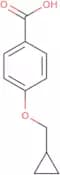
4-(Cyclopropylmethoxy)-benzoic acid
CAS:4-(Cyclopropylmethoxy)-benzoic acid is an experimental drug that has been shown to have anti-inflammatory effects in animal experiments. It is a racemic mixture of two isomers, the (1S,2R) and (1R,2S). The chemical structure of the (1S,2R) isomer is shown below.
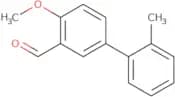
Formula:C11H12O3Purezza:Min. 95%Peso molecolare:192.21 g/mol2-Methoxy-5-(2-methylphenyl)benzaldehyde
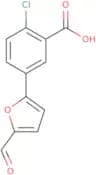
CAS:Versatile small molecule scaffoldFormula:C15H14O2Purezza:Min. 95%Peso molecolare:226.27 g/mol2-Chloro-5-(5-formyl-furan-2-yl)-benzoic acid
CAS:Versatile small molecule scaffold
Formula:C12H7ClO4Purezza:Min. 95%Peso molecolare:250.63 g/mol7-Bromo-2-hydroxy-4H-pyrido[1,2-a]pyrimidin-4-one
CAS:Versatile small molecule scaffoldFormula:C8H5BrN2O2Purezza:Min. 95%Peso molecolare:241.04 g/molPyridine-sulfur trioxide complex
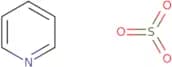
CAS:Prodotto controllatoPyridine-sulfur trioxide complex is a sodium salt of sulfuric acid and pyridine. It is an intramolecular hydrogen acceptor, which means that it can act as a hydrogen donor to other molecules. Pyridine-sulfur trioxide complex has been shown to be effective against HIV infection in vitro. The biological properties of this drug are due to its ability to inhibit the proliferation of cells. Pyridine-sulfur trioxide complex also has antiproliferation activity against a variety of cancers, including prostate, breast, lung, ovarian, and pancreatic cancers. Pyridine-sulfur trioxide complex inhibits fatty acid synthase enzymes and is used as an analytical method for measuring cholesterol levels in the blood.
Formula:C5H5N·SO3Purezza:Min. 95%Colore e forma:Beige PowderPeso molecolare:159.16 g/mol2-Naphthol
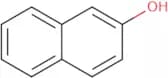
CAS:2-Naphthol is an organic compound with the chemical formula C10H7O. It is a derivative of naphthalene, and is produced by the condensation of two molecules of malonic acid in the presence of a reducing agent such as sodium borohydride. 2-Naphthol is used as a pesticide and as a chemical intermediate in the production of other chemicals. 2-Naphthol has been shown to be toxic to humans and animals; it may cause liver damage, kidney damage, and skin irritation. The acute oral LD50 for rats is 690 mg/kg body weight. 2-Naphthol binds to cell receptors that are involved in a variety of physiological processes including heme transport, phagocytosis, oxidative burst, chemotaxis, and respiratory burst. This binding inhibits these functions leading to cell death.
Formula:C10H8OPurezza:Min. 95%Colore e forma:White To Yellow To Pink To Light Brown SolidPeso molecolare:144.17 g/molRef: 3D-FN01578
Prodotto fuori produzioneMethyl 4-chloro-4-oxobutanoate
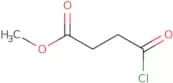
CAS:Methyl 4-chloro-4-oxobutanoate is a chemical compound that is used as a medicine. It has been shown to have an affinity for the human immunodeficiency virus (HIV) and can be used to treat HIV infection. Methyl 4-chloro-4-oxobutanoate is also used in other types of medicines, such as those for treating high blood pressure and heart disease. This chemical binds to the receptors on cells that are responsible for regulating blood pressure and heart rate, which leads to inhibition of cyclic guanosine monophosphate (cGMP) production. Methyl 4-chloro-4-oxobutanoate inhibits the activity of lipolytic enzymes, which break down fats into smaller units, by binding at the active site of these enzymes. It also binds to chloride ions and prevents them from being released from cells, which causes a rise in intracellular chloride levels. This increase in chloride
Formula:C5H7ClO3Purezza:Min. 95%Colore e forma:Clear LiquidPeso molecolare:150.56 g/mol2-Amino-2-propylpentanenitrile
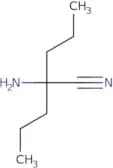
CAS:Versatile small molecule scaffold
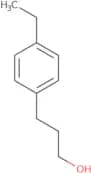
Formula:C8H16N2Purezza:Min. 95%Peso molecolare:140.23 g/mol3-(4-Ethylphenyl)propan-1-ol
CAS:Versatile small molecule scaffold
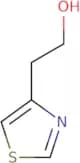
Formula:C11H16OPurezza:Min. 95%Peso molecolare:164.24 g/mol2-(1,3-Thiazol-4-yl)ethan-1-ol
CAS:Versatile small molecule scaffold
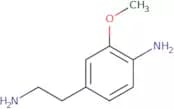
Formula:C5H7NOSPurezza:Min. 95%Peso molecolare:129.18 g/mol4-(2-Aminoethyl)-2-methoxyaniline
CAS:Prodotto controllatoVersatile small molecule scaffold
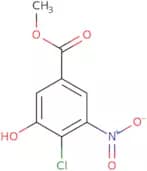
Formula:C9H14N2OPurezza:Min. 95%Peso molecolare:166.22 g/molMethyl 4-chloro-3-hydroxy-5-nitrobenzoate
CAS:Versatile small molecule scaffold
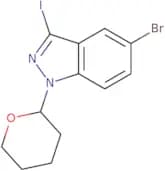
Formula:C8H6ClNO5Purezza:95%NmrPeso molecolare:231.59 g/mol5-Bromo-3-iodo-1-(tetrahydro-2H-pyran-2-yl)-1H-indazole
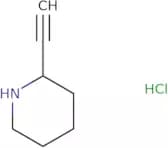
CAS:Versatile small molecule scaffoldFormula:C12H12BrIN2OPurezza:Min. 95%Peso molecolare:407.04 g/mol2-Ethynylpiperidine hydrochloride
CAS:Versatile small molecule scaffold
Formula:C7H12ClNPurezza:Min. 95%Peso molecolare:145.63 g/molJMS-17-2
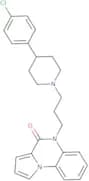
CAS:JMS-17-2 is a small molecule that was shown to have a potent and selective inhibitory effect on the production of chemokines in cancer cells. It blocks the interaction between CXCL12 and its receptor, CXCR4. This interaction is important for normal bone tissue development and function, as well as for chemotaxis and metastasis of cancer cells. JMS-17-2 has been shown to prevent tumor growth in animal models by inhibiting angiogenesis, or the formation of new blood vessels to supply nutrients to tumors. The drug also inhibits tumor growth by decreasing the number of primary tumors, reducing bone lesions, and inhibiting the progression of pancreatic cancer. Clinical trials are currently being conducted to assess the efficacy of JMS-17-2 in humans with advanced solid tumors.
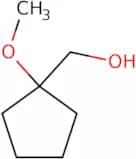
Formula:C25H26ClN3OPurezza:Min. 95%Peso molecolare:419.95 g/mol(1-Methoxycyclopentyl)methanol
CAS:Versatile small molecule scaffold
Formula:C7H14O2Purezza:Min. 95%Peso molecolare:130.18 g/mol3-Methyl-2-propoxyaniline
CAS:Versatile small molecule scaffold
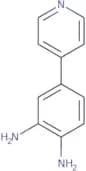
Formula:C10H15NOPurezza:Min. 95%Peso molecolare:165.23 g/mol4-(Pyridin-4-yl)benzene-1,2-diamine
CAS:Versatile small molecule scaffold
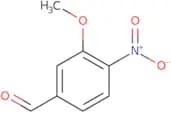
Formula:C11H11N3Purezza:Min. 95%Peso molecolare:185.22 g/mol3-methoxy-4-nitrobenzaldehyde
CAS:3-Methoxy-4-nitrobenzaldehyde (3MNB) is a biomolecular that is used to study nucleophilic substitutions. It has been shown to inhibit the growth of cells in culture, specifically those with fatty acid amides. 3MNB inhibits the synthesis of β-amyloid, a protein associated with Alzheimer's disease. 3MNB also has potent inhibitory activity on chloride channels and phenylhydrazone binding sites, which are targets for antipsychotic drugs. 3MNB inhibits the production of sh-sy5y cells and piperazine binding sites in the brain. The inhibition of these sites leads to an improvement in memory and learning ability.
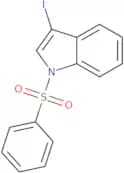
Formula:C8H7NO4Purezza:Min. 95%Peso molecolare:181.1 g/mol3-Iodo-1-(phenylsulfonyl)indole
CAS:3-Iodo-1-(phenylsulfonyl)indole (3-ISI) is a ligand that is used to crystallize metal ions. 3-ISI binds to metal ions through interactions with the halide ion. The 3-ISI molecule has two phenylsulfonyl groups and one iodine atom, which are the sites of coordination to metal ions. Friedel-Crafts acylation reactions use 3-ISI as a ligand because it does not react with the catalyst or acid, but can be easily replaced by other ligands during the reaction. Parameters for determining its structure include X-ray crystallography, NMR spectroscopy, IR spectroscopy, and elemental analysis. The chloride anion in 3-ISI is able to form hydrogen bonds with other chloride anions in order to stabilize its structure.
3-ISI can be synthesized by reacting iodides with benzyl bromide and phosphorous pentFormula:C14H10INO2SPurezza:Min. 95%Peso molecolare:383.21 g/mol

![7-Bromo-2-hydroxy-4H-pyrido[1,2-a]pyrimidin-4-one](/_next/image/?url=https%3A%2Fstatic.cymitquimica.com%2Fproducts%2F3D%2Fthumb-webp%2FFPA13540.webp&w=3840&q=75)