Building Blocks
Questa sezione contiene prodotti fondamentali per la sintesi di composti organici e biologici. Building blocks sono i materiali di partenza essenziali utilizzati per costruire molecole complesse attraverso varie reazioni chimiche. Svolgono un ruolo critico nella scoperta di farmaci, nella scienza dei materiali e nella ricerca chimica. Presso CymitQuimica, offriamo una gamma diversificata di building blocks di alta qualità per supportare le tue ricerche innovative e progetti industriali, assicurandoti di avere i componenti essenziali per una sintesi di successo.
Sottocategorie di "Building Blocks"
- Acidi boronici e derivati dell'acido boronico(5.778 prodotti)
- Building Blocks Chirali(1.243 prodotti)
- Building Blocks Idrocarburici(6.098 prodotti)
- Building Blocks organici(61.057 prodotti)
Trovati 200716 prodotti di "Building Blocks"
Ordinare per
Purezza (%)
0
100
|
0
|
50
|
90
|
95
|
100
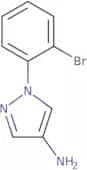
1-(2-Bromophenyl)-1H-pyrazol-4-amine
CAS:<p>Versatile small molecule scaffold</p>Formula:C9H8BrN3Purezza:Min. 95%Peso molecolare:238.08 g/mol6-Bromo-2-ethyl-1,4-dihydroquinolin-4-one
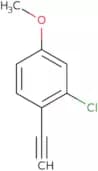
CAS:<p>Versatile small molecule scaffold</p>Formula:C11H10BrNOPurezza:Min. 95%Peso molecolare:252.11 g/mol2-Chloro-1-ethynyl-4-methoxybenzene
CAS:<p>Versatile small molecule scaffold</p>Formula:C9H7ClOPurezza:Min. 95%Peso molecolare:166.6 g/mol4,5-Dihydroxy-2,3-dihydro-1H-isoindole-1,3-dione
CAS:4,5-Dihydroxy-2,3-dihydro-1H-isoindole-1,3-dione is a molybdenum compound with a hydroxyl group. It has been shown to inhibit the growth of bacteria that are resistant to penicillin by binding to the penicillin-binding proteins in their cell wall. 4,5-Dihydroxy-2,3-dihydro-1H-isoindole-1,3-dione has been found to be an effective inhibitor of polymer film formation when used in conjunction with 3 chloroperoxybenzoic acid. This compound also has been shown to have anti bacterial properties against Escherichia coli and Pseudomonas aeruginosa. 4,5-Dihydroxy -2,3 -dihydro -1H -isoindole -1,3 -dione may also have environmental applications due itsFormula:C8H5NO4Purezza:Min. 95%Peso molecolare:179.13 g/moltert-Butyl N-[(1S,4R)-4-(hydroxymethyl)cyclopent-2-en-1-yl]carbamate
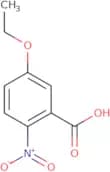
CAS:<p>Versatile small molecule scaffold</p>Formula:C11H19NO3Purezza:Min. 95%Peso molecolare:213.27 g/mol5-Ethoxy-2-nitrobenzoic acid
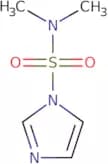
CAS:<p>Versatile small molecule scaffold</p>Formula:C9H9NO5Purezza:Min. 95%Peso molecolare:211.17 g/mol1-(Dimethylsulfamoyl)imidazole
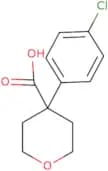
CAS:<p>1-(Dimethylsulfamoyl)imidazole is a chemical compound that belongs to the class of heterocycles. It has been shown to inhibit the activity of two enzymes, which are xanthine oxidase and nitric oxide synthase. 1-(Dimethylsulfamoyl)imidazole is synthesized by reacting 2-aminothiophene with methyl sulfonyl chloride in tetrahydrofuran. The yield of this reaction is low, which may be due to the imidazole ring being a poor nucleophile in this reaction. This chemical has been shown to have an inhibitory potency against xanthine oxidase and nitric oxide synthase, which may be due to its functional groups or dimethylformamide solvate state. The mechanism for 1-(dimethylsulfamoyl)imidazole's inhibition of these enzymes is not yet known.</p>Formula:C5H9N3O2SPurezza:Min. 95%Peso molecolare:175.21 g/mol4-(4-Chloro-phenyl)-tetrahydro-pyran-4-carboxylic acid
CAS:<p>Versatile small molecule scaffold</p>Formula:C12H13ClO3Purezza:Min. 95%Peso molecolare:240.68 g/mol2-Methoxy-1-(1H-1,2,3,4-tetrazol-5-yl)ethan-1-amine
CAS:<p>Versatile small molecule scaffold</p>Formula:C4H9N5OPurezza:Min. 95%Peso molecolare:143.1 g/mol3-Cyclobutyl-[1,2,4]triazolo[4,3-a]pyridin-6-amine
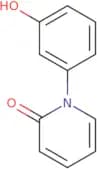
CAS:<p>Versatile small molecule scaffold</p>Formula:C10H12N4Purezza:Min. 95%Peso molecolare:188.23 g/mol1-(3-Hydroxyphenyl)-1,2-dihydropyridin-2-one
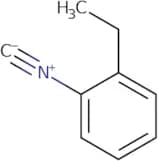
CAS:<p>Versatile small molecule scaffold</p>Formula:C11H9NO2Purezza:Min. 95%Peso molecolare:187.19 g/mol1-Ethyl-2-isocyano-benzene
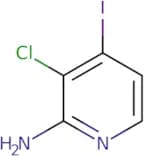
CAS:<p>Versatile small molecule scaffold</p>Formula:C9H9NPurezza:Min. 95%Peso molecolare:131.17 g/mol3-Chloro-4-iodopyridin-2-amine
CAS:<p>3-Chloro-4-iodopyridin-2-amine is a chemical compound with the formula CHI. It is a white solid that can be used in evaluating cross-coupling reactions, such as the coupling of an alkyne with a chlorine atom. This chemical has been shown to react well with chlorination reagents and to form substituted cyanides. The nature of the substituent on the chlorine atom determines its regioselectivity and reactivity, making this compound useful for regiocontrolled synthesis.</p>Formula:C5H4ClIN2Purezza:Min. 95%Peso molecolare:254.46 g/mol3-Ethyl-3-(4-methylphenyl)pyrrolidine-2,5-dione
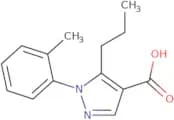
CAS:<p>Versatile small molecule scaffold</p>Formula:C13H15NO2Purezza:Min. 95%Peso molecolare:217.26 g/mol1-(2-Methylphenyl)-5-propyl-1H-pyrazole-4-carboxylic acid
CAS:<p>Versatile small molecule scaffold</p>Formula:C14H16N2O2Purezza:Min. 95%Peso molecolare:244.29 g/mol3-[(4-Butylphenyl)sulfamoyl]benzoic acid
CAS:<p>3-[(4-Butylphenyl)sulfamoyl]benzoic acid is a sulfonamide that inhibits the activity of antibodies by binding to the antibody molecule. 3-[(4-Butylphenyl)sulfamoyl]benzoic acid is used as a research tool in cell biology, pharmacology, and immunology. It has been shown to inhibit the activity of ion channels by binding to the channel protein. The drug also binds to ligands and activates them, which may be due to its ability to bind with high affinity and specificity. 3-[(4-Butylphenyl)sulfamoyl]benzoic acid also binds with high affinity and specificity to receptors that are involved in cellular signaling.</p>Formula:C17H19NO4SPurezza:Min. 95%Peso molecolare:333.4 g/molrac-[(1R,5R)-2-Benzyl-2-azabicyclo[3.2.0]heptan-1-yl]methanol
CAS:Versatile small molecule scaffoldFormula:C14H19NOPurezza:Min. 95%Peso molecolare:217.3 g/molEthyl 3-(methoxymethyl)-1H-pyrrole-2-carboxylate
CAS:<p>Versatile small molecule scaffold</p>Formula:C9H13NO3Purezza:Min. 95%Peso molecolare:183.2 g/molEthyl 2-(4-hydroxyphenyl)-2-methylpropanoate
CAS:<p>Versatile small molecule scaffold</p>Formula:C12H16O3Purezza:Min. 95%Peso molecolare:208.25 g/molMethyl 2-(aminooxy)-3-phenylpropanoate hydrochloride
CAS:Versatile small molecule scaffoldFormula:C10H14ClNO3Purezza:Min. 95%Peso molecolare:231.67 g/mol

![tert-Butyl N-[(1S,4R)-4-(hydroxymethyl)cyclopent-2-en-1-yl]carbamate](/_next/image/?url=https%3A%2Fstatic.cymitquimica.com%2Fproducts%2F3D%2Fthumb-webp%2FDGA01143.webp&w=3840&q=75)
![3-Cyclobutyl-[1,2,4]triazolo[4,3-a]pyridin-6-amine](/_next/image/?url=https%3A%2Fstatic.cymitquimica.com%2Fproducts%2F3D%2Fthumb-webp%2FZZB00172.webp&w=3840&q=75)

![3-[(4-Butylphenyl)sulfamoyl]benzoic acid](/_next/image/?url=https%3A%2Fstatic.cymitquimica.com%2Fproducts%2F3D%2Fthumb-webp%2FCQA76955.webp&w=3840&q=75)
![rac-[(1R,5R)-2-Benzyl-2-azabicyclo[3.2.0]heptan-1-yl]methanol](/_next/image/?url=https%3A%2Fstatic.cymitquimica.com%2Fproducts%2F3D%2Fthumb-webp%2FCPD88350.webp&w=3840&q=75)