


Building Blocks
Questa sezione contiene prodotti fondamentali per la sintesi di composti organici e biologici. Building blocks sono i materiali di partenza essenziali utilizzati per costruire molecole complesse attraverso varie reazioni chimiche. Svolgono un ruolo critico nella scoperta di farmaci, nella scienza dei materiali e nella ricerca chimica. Presso CymitQuimica, offriamo una gamma diversificata di building blocks di alta qualità per supportare le tue ricerche innovative e progetti industriali, assicurandoti di avere i componenti essenziali per una sintesi di successo.
Sottocategorie di "Building Blocks"
- Acidi boronici e derivati dell'acido boronico(5.778 prodotti)
- Building Blocks Chirali(1.243 prodotti)
- Building Blocks Idrocarburici(6.097 prodotti)
- Building Blocks organici(61.052 prodotti)
Trovati 201390 prodotti di "Building Blocks"
Ordinare per
Purezza (%)
0
100
|
0
|
50
|
90
|
95
|
100
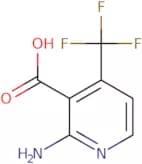
2-Amino-4-(trifluoromethyl)nicotinic acid
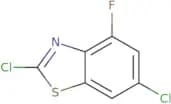
CAS:<p>Versatile small molecule scaffold</p>Formula:C7H5F3N2O2Purezza:Min. 95%Peso molecolare:206.12 g/mol2,6-Dichloro-4-fluoro-1,3-benzothiazole
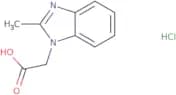
CAS:<p>Versatile small molecule scaffold</p>Formula:C7H2Cl2FNSPurezza:Min. 95%Peso molecolare:222.07 g/mol2-(2-Methyl-1H-1,3-benzodiazol-1-yl)acetic acid hydrochloride
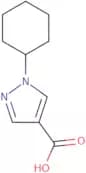
CAS:<p>Versatile small molecule scaffold</p>Formula:C10H11ClN2O2Purezza:Min. 95%Peso molecolare:226.66 g/mol1-Cyclohexyl-1H-pyrazole-4-carboxylic acid
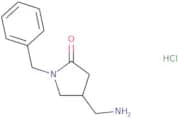
CAS:<p>Versatile small molecule scaffold</p>Formula:C10H14N2O2Purezza:Min. 95%Peso molecolare:194.23 g/mol4-(Aminomethyl)-1-benzylpyrrolidin-2-one hydrochloride
CAS:<p>Versatile small molecule scaffold</p>Formula:C12H17ClN2OPurezza:Min. 95%Peso molecolare:240.73 g/mol5-(Propan-2-yl)-1-(pyridin-4-yl)-1H-pyrazole-3-carboxylic acid
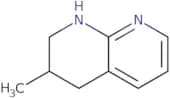
CAS:<p>Versatile small molecule scaffold</p>Formula:C12H13N3O2Purezza:Min. 95%Peso molecolare:231.25 g/mol3-Methyl-1,2,3,4-tetrahydro-1,8-naphthyridine
CAS:<p>Versatile small molecule scaffold</p>Formula:C9H12N2Purezza:Min. 95%Peso molecolare:148.2 g/molMethyl 2-amino-2-(1-hydroxycyclohexyl)acetate hydrochloride
CAS:<p>Versatile small molecule scaffold</p>Formula:C9H18ClNO3Purezza:Min. 95%Peso molecolare:223.7 g/mol4-(1-Phenyl-1H-pyrazol-4-yl)-1H-pyrrole-3-carboxylic acid
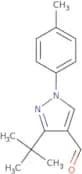
CAS:<p>Versatile small molecule scaffold</p>Formula:C14H11N3O2Purezza:Min. 95%Peso molecolare:253.26 g/mol3-tert-Butyl-1-(4-methylphenyl)-1H-pyrazole-4-carbaldehyde
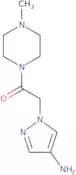
CAS:<p>Versatile small molecule scaffold</p>Formula:C15H18N2OPurezza:Min. 95%Peso molecolare:242.32 g/mol2-(4-Amino-1H-pyrazol-1-yl)-1-(4-methylpiperazin-1-yl)ethan-1-one
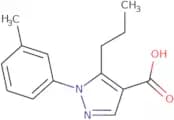
CAS:<p>Versatile small molecule scaffold</p>Formula:C10H17N5OPurezza:Min. 95%Peso molecolare:223.28 g/mol1-(3-Methylphenyl)-5-propyl-1H-pyrazole-4-carboxylic acid
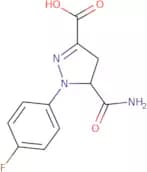
CAS:Versatile small molecule scaffoldFormula:C14H16N2O2Purezza:Min. 95%Peso molecolare:244.29 g/mol5-Carbamoyl-1-(4-fluorophenyl)-4,5-dihydro-1H-pyrazole-3-carboxylic acid
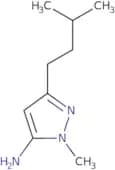
CAS:<p>Versatile small molecule scaffold</p>Formula:C11H10FN3O3Purezza:Min. 95%Peso molecolare:251.21 g/mol1-Methyl-3-(3-methylbutyl)-1H-pyrazol-5-amine
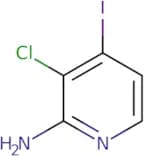
CAS:<p>Versatile small molecule scaffold</p>Formula:C9H17N3Purezza:Min. 95%Peso molecolare:167.25 g/mol3-Chloro-4-iodopyridin-2-amine
CAS:<p>3-Chloro-4-iodopyridin-2-amine is a chemical compound with the formula CHI. It is a white solid that can be used in evaluating cross-coupling reactions, such as the coupling of an alkyne with a chlorine atom. This chemical has been shown to react well with chlorination reagents and to form substituted cyanides. The nature of the substituent on the chlorine atom determines its regioselectivity and reactivity, making this compound useful for regiocontrolled synthesis.</p>Formula:C5H4ClIN2Purezza:Min. 95%Peso molecolare:254.46 g/mol3-Ethyl-3-(4-methylphenyl)pyrrolidine-2,5-dione
CAS:<p>Versatile small molecule scaffold</p>Formula:C13H15NO2Purezza:Min. 95%Peso molecolare:217.26 g/mol4-[(2-Aminopyridin-3-yl)oxy]butanenitrile
CAS:<p>Versatile small molecule scaffold</p>Formula:C9H11N3OPurezza:Min. 95%Peso molecolare:177.2 g/mol2-Bromo-3,3,3-trifluoro-1-propene
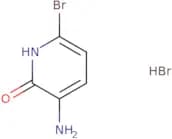
CAS:Prodotto controllato<p>2-Bromo-3,3,3-trifluoro-1-propene is a chemical compound that has been synthesized in an asymmetric reaction. The reactant is bromopropane and the product is 2,2,2-trifluoropropene. The methylene group on the propene molecule is activated by the nucleophilic attack of a fluoride ion from hydrogen fluoride to form a cavity with a highly strained bond. The kinetic study of this reaction revealed that the activation energy for the reaction is 42 kJ/mol. Palladium-catalyzed coupling reactions are catalyzed by palladium and require nonpolar solvents such as toluene or dichloromethane. This type of reaction has been shown to be exothermic with an isolated yield of 1%.</p>Formula:C3H2BrF3Purezza:Min. 95%Colore e forma:Colorless PowderPeso molecolare:174.95 g/mol3-amino-6-bromopyridin-2-ol hydrobromide
CAS:<p>Versatile small molecule scaffold</p>Formula:C5H6Br2N2OPurezza:Min. 95%Peso molecolare:269.9 g/mol1-[3-(Dimethylamino)propyl]-1-(4-fluorophenyl)-1,3-dihydro-3-oxo-5-isobenzofurancarbonitrile
CAS:<p>Please enquire for more information about 1-[3-(Dimethylamino)propyl]-1-(4-fluorophenyl)-1,3-dihydro-3-oxo-5-isobenzofurancarbonitrile including the price, delivery time and more detailed product information at the technical inquiry form on this page</p>Formula:C20H19FN2O2Purezza:Min. 95%Peso molecolare:338.38 g/mol





![4-[(2-Aminopyridin-3-yl)oxy]butanenitrile](/_next/image/?url=https%3A%2Fstatic.cymitquimica.com%2Fproducts%2F3D%2Fthumb-webp%2FCWB56149.webp&w=3840&q=75)

![1-[3-(Dimethylamino)propyl]-1-(4-fluorophenyl)-1,3-dihydro-3-oxo-5-isobenzofurancarbonitrile](/_next/image/?url=https%3A%2Fstatic.cymitquimica.com%2Fproducts%2F3D%2Fthumb-webp%2FFD184085.webp&w=3840&q=75)