Building Blocks
Sottocategorie di "Building Blocks"
- Acidi boronici e derivati dell'acido boronico(5.780 prodotti)
- Building Blocks Chirali(1.239 prodotti)
- Building Blocks Idrocarburici(6.100 prodotti)
- Building Blocks organici(61.005 prodotti)
Trovati 205234 prodotti di "Building Blocks"
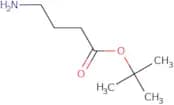
tert-Butyl 4-aminobutanoate
CAS:tert-Butyl 4-aminobutanoate is an amine that has been shown to stabilize the natural formyl group of the molecule. It is a nucleophilic reactant, which means it will react with electrophiles. The nucleophilic attack occurs when a nucleophile reacts with an electrophile, leading to the formation of a new bond between the two molecules. Tert-butyl 4-aminobutanoate also has a hydroxymethyl group on its side chain. This hydroxymethyl group can be reduced by pyridoxal phosphate in order to form gamma-aminobutyric acid.
Formula:C8H17NO2Purezza:Min. 95%Peso molecolare:159.23 g/mol7-Methyl-2-phenylimidazo[1,2-a]pyridine
CAS:7-Methyl-2-phenylimidazo[1,2-a]pyridine is a fluorescent compound that has been used as a shift reagent. It is colorless and stable in air and light. The fluorescence of 7-methyl-2-phenylimidazo[1,2-a]pyridine is excited at wavelengths of 315 nm and 380 nm with an emission maximum at 460 nm. This compound can be used to study the conformational changes of proteins and nucleic acids by monitoring the change in fluorescence properties.
Formula:C14H12N2Purezza:Min. 95%Peso molecolare:208.26 g/mol2-Bromo-1-(4-methoxyphenyl)butan-1-one
CAS:Versatile small molecule scaffold
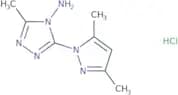
Formula:C11H13BrO2Purezza:Min. 95%Peso molecolare:257.12 g/mol3-(3,5-Dimethyl-1H-pyrazol-1-yl)-5-methyl-4H-1,2,4-triazol-4-amine hydrochloride
CAS:Versatile small molecule scaffold
Formula:C8H13ClN6Purezza:Min. 95%Peso molecolare:228.68 g/mol2,4,6-Trimethoxy-1,3,5-triazine
CAS:2,4,6-Trimethoxy-1,3,5-triazine is a trimethyl triazine that is used as a polymerization initiator in the production of polyester. It has been shown to be reactive with monocarboxylic acids and ester compounds. The molecular weight of 2,4,6-trimethoxy-1,3,5-triazine increases with increasing temperature. This chemical has also been shown to be an efficient crosslinking agent for both hydrated and linear filaments.
Formula:C6H9N3O3Purezza:Min. 95%Peso molecolare:171.15 g/mol4-(Methoxymethoxy)aniline
CAS:4-(Methoxymethoxy)aniline is an antibacterial agent that belongs to the group of fluoroquinolones. It has been shown to have a broad spectrum of activity against gram-negative bacteria and is also active against some gram-positive bacteria. 4-(Methoxymethoxy)aniline inhibits the synthesis of bacterial proteins by binding to ribosomes and inhibiting the activity of phosphatases, which are enzymes that catalyze reactions in the cell. This drug can be synthesized from 4-chloroaniline, which is converted into 4-methoxyaniline through a sequence of reactions involving benzyl esters and azide. The final product is then converted into 4-(methoxymethoxy)aniline using a phosphatase enzyme.
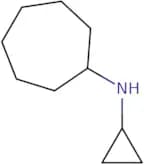
Formula:C8H11NO2Purezza:Min. 95%Peso molecolare:153.18 g/molN-Cyclopropylcycloheptanamine
CAS:Versatile small molecule scaffold
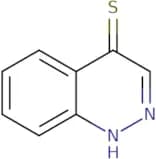
Formula:C10H19NPurezza:Min. 95%Peso molecolare:153.26 g/molCinnoline-4-thiol
CAS:Cinnoline-4-thiol is an inhibitor of the protein PD-L1, which is a targetable tumor antigen. It blocks the interaction between PD-L1 and its receptor CTLA-4, thereby inhibiting the activation of T cells and reducing their proliferation. This molecule has been shown to have anti-tumor activity in vitro and in vivo. Cinnoline-4-thiol has been shown to inhibit tumor growth by suppressing cancer cell proliferation. It also induces apoptosis, which leads to cancer cell death by activating caspases. Cinnoline-4-thiol has been shown to be active against many different types of cancers, including breast cancer, colorectal cancer, non-small cell lung cancer, ovarian carcinoma, pancreatic cancer and prostate cancer.
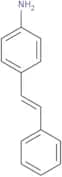
Formula:C8H6N2SPurezza:Min. 95%Peso molecolare:162.21 g/mol4-Aminostilbene
CAS:4-Aminostilbene is a fluorescent stilbene derivative that is used as a synthetic estrogen. It has been shown to possess anti-inflammatory properties and inhibit the production of reactive oxygen species in target tissues. 4-Aminostilbene also possesses anti-cancer properties and has been shown to be effective against Pseudomonas aeruginosa. The mechanism of action for this compound is thought to be via its ability to react with amines, forming diazonium salts in an organic solution.
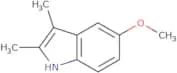
Formula:C14H13NPurezza:Min. 95%Peso molecolare:195.27 g/mol5-Methoxy-2,3-dimethyl-1H-indole
CAS:5-Methoxy-2,3-dimethyl-1H-indole is an indole that is used as a drug. It has anti-inflammatory activity and belongs to the class of intermolecular drugs. It works by inhibiting cyclooxygenase (COX) enzymes, which are involved in the synthesis of prostaglandins. 5-Methoxy-2,3-dimethyl-1H-indole can be found as crystals and has a crystal structure that contains a five membered ring with one double bond and one methyl group on each side of the ring.
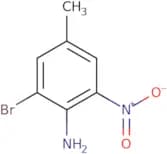
Formula:C11H13NOPurezza:Min. 95%Peso molecolare:175.23 g/mol2-Bromo-4-methyl-6-nitroaniline
CAS:Versatile small molecule scaffold
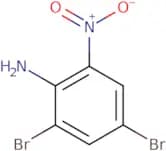
Formula:C7H7BrN2O2Purezza:Min. 95%Peso molecolare:231.05 g/mol2,4-Dibromo-6-nitroaniline
CAS:2,4-Dibromo-6-nitroaniline is a nitro compound that has been used in the production of dyes. It is also used as a component in the synthesis of other organic compounds. 2,4-Dibromo-6-nitroaniline can be produced by electrolysis of an acid solution containing radical cations and benzene. The radical cations are formed by proton transfer from the acid to the benzene, followed by electron transfer from benzene to the electrode. This process results in the formation of nitro groups on the benzene ring, which undergoes oxidation to form 2,4-dibromo-6-nitroaniline. The cyclic voltammetry shows that this process occurs via two pathways: one with a fast rate and one with a slow rate. The mechanism for this reaction is not yet known.
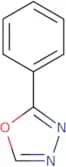
Formula:C6H4Br2N2O2Purezza:Min. 95%Peso molecolare:295.92 g/mol2-Phenyl-1,3,4-oxadiazole
CAS:2-Phenyl-1,3,4-oxadiazole is a 2-phenyloxazole with an oxygen atom at the 1 position. It is a white crystalline solid that is soluble in water and has antibacterial properties. This chemical can be used as a catalyst for the synthesis of organic compounds. 2-Phenyl-1,3,4-oxadiazole reacts with nitro groups to form oxime derivatives and has been shown to inhibit the growth of fungi such as Candida albicans and Aspergillus niger. 2-Phenyl-1,3,4-oxadiazole can also be used as an antifungal agent against Trichophyton rubrum.
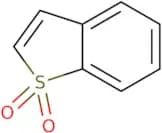
2-Phenyl-1,3,4-oxadiazole may be synthesized by reacting phenol with acetone in the presence of nitric acid or sulfuric acid. The structural formula for this compound isFormula:C8H6N2OPurezza:Min. 95%Peso molecolare:146.15 g/mol1-Benzothiophene 1,1-dioxide
CAS:1-Benzothiophene 1,1-dioxide is a potential drug target for the treatment of cryptococcus neoformans. It inhibits bacterial growth by inhibiting the transport properties of the bacteria, which in turn leads to cell death. This compound has been shown to have potent antitumor activity and may be activated through x-ray diffraction data analysis. The compound also has fluorescence properties and hydrogen bond formation, which may aid in its chemical structure.
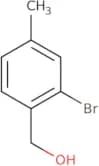
Formula:C8H6O2SPurezza:Min. 95%Peso molecolare:166.2 g/mol(2-Bromo-4-methylphenyl)methanol
CAS:Versatile small molecule scaffold
Formula:C8H9BrOPurezza:Min. 95%Peso molecolare:201.06 g/mol4H,5H-Thieno[2,3-d]pyridazin-4-one
CAS:Versatile small molecule scaffold
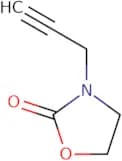
Formula:C6H4N2OSPurezza:Min. 95%Peso molecolare:152.18 g/mol3-(prop-2-yn-1-yl)oxazolidin-2-one
CAS:3-(prop-2-yn-1-yl)oxazolidin-2-one is a synthetic compound that is used as a pharmacological tool. The chemical structure of this compound closely resembles that of nucleobases and it has been shown to be a potent antiproliferative agent in cancer cell lines. 3-(prop-2-yn-1-yl)oxazolidin-2-one induces apoptosis through the activation of caspase 3 and 9, which cleaves poly(ADP ribose) polymerase (PARP). This compound also activates the DNA damage response pathway and induces G1 arrest. 3-(prop-2-yn-1-yl)oxazolidin-2-one has shown promising results in preclinical studies on animal models of breast cancer.
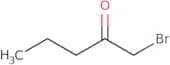
Formula:C6H7NO2Purezza:Min. 95%Peso molecolare:125.13 g/mol1-Bromopentan-2-one
CAS:1-Bromopentan-2-one is a chemical compound that has been shown to have significant activity in the prevention of bone loss. It has also been shown to inhibit the cross-linking of collagen, which may be due to its ability to act as an amine scavenger. 1-Bromopentan-2-one is a fluorescent chemical that can be used for research purposes. It has been demonstrated to inhibit the production of lysine and lysine residues when incubated with lysines and amines, which may be due to its ability to act as an amine scavenger. This compound has been shown in model studies to inhibit biochemical reactions such as dicarbonyl formation and protein cross linking.
Formula:C5H9BrOPurezza:Min. 95%Peso molecolare:165.03 g/molAmisometradine-d3
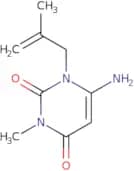
CAS:Amisometradine-d3 is a beta-blocker medication that belongs to the class of non-selective beta blockers. It is used to treat high blood pressure, congestive heart failure, and angina pectoris. Amisometradine-d3 blocks the action of the enzyme phosphodiesterase, which then prevents the breakdown of cyclic AMP (cAMP). This results in an increase in cAMP levels in cardiac muscle cells. The increased cAMP levels result in relaxation of the myocardial muscles, which can reduce the workload on the heart and lower blood pressure. Amisometradine-d3 also has a lipophilic profile that allows it to cross cell membranes and act on cardiac tissue by binding to collagen molecules or other proteins involved in contraction.
Formula:C9H10D3N3O2Purezza:Min. 95%Peso molecolare:198.24 g/molN-Ethyl-glycine hydrochloride
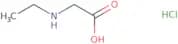
CAS:N-Ethylglycine hydrochloride is a pharmaceutical preparation that inhibits the enzyme cholesterol esterase. It is used to treat congestive heart failure and as a diuretic. N-Ethylglycine hydrochloride prevents the production of unsaturated fatty acids by inhibiting the enzyme cholesterol esterase, which converts cholesterol into fatty acid. This leads to lower levels of cholesterol in the blood, which can be beneficial in treating high cholesterol levels. N-Ethylglycine hydrochloride has been shown to have antiviral effects against influenza virus, with an IC50 of 0.5 μM, as well as anti-inflammatory properties.
Formula:C4H10ClNO2Purezza:Min. 95%Peso molecolare:139.58 g/mol

![7-Methyl-2-phenylimidazo[1,2-a]pyridine](/_next/image/?url=https%3A%2Fstatic.cymitquimica.com%2Fproducts%2F3D%2Fthumb-webp%2FAAA88591.webp&w=3840&q=75)



![4H,5H-Thieno[2,3-d]pyridazin-4-one](/_next/image/?url=https%3A%2Fstatic.cymitquimica.com%2Fproducts%2F3D%2Fthumb-webp%2FAAA82423.webp&w=3840&q=75)