Building Blocks
Sottocategorie di "Building Blocks"
- Acidi boronici e derivati dell'acido boronico(5.778 prodotti)
- Building Blocks Chirali(1.243 prodotti)
- Building Blocks Idrocarburici(6.099 prodotti)
- Building Blocks organici(61.038 prodotti)
Trovati 205376 prodotti di "Building Blocks"
tert-Butyl 2-(hydroxymethyl)azetidine-1-carboxylate
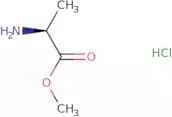
CAS:tert-Butyl 2-(hydroxymethyl)azetidine-1-carboxylate is a versatile compound that has various applications across different industries. It is commonly used as a building block in the synthesis of shikimic acid, which is a key intermediate in the production of inhibitors and herbicides. Additionally, this compound can be utilized in electrode fabrication and is often sought after by researchers for their chemical studies. Another notable application of tert-Butyl 2-(hydroxymethyl)azetidine-1-carboxylate is its use in the pharmaceutical industry. It serves as an important starting material for the synthesis of cetirizine, an antihistamine medication used to alleviate allergy symptoms. Furthermore, it has been studied for its potential therapeutic effects on conditions such as psoriasis and photocatalytic reactions. In addition to its pharmaceutical applications, tert-Butyl 2-(hydroxymethyl)azetidine-1-carboxylateFormula:C9H17NO3Purezza:Min. 95%Peso molecolare:187.24 g/molL-Alanine methyl ester HCl
CAS:L-Alanine methyl ester HCl is a compound that is used in wastewater treatment. It has been shown to inhibit the enzyme DPP-IV, which is associated with metabolic disorders. L-Alanine methyl ester HCl also has been shown to have antimicrobial activity against a number of bacteria, including methicillin resistant Staphylococcus aureus (MRSA). L-Alanine methyl ester HCl has been shown to have anti-inflammatory properties and can be used for the treatment of autoimmune diseases. This compound also has a significant effect on biological properties such as phase transition temperature and thermal expansion.Formula:C4H10NO2ClPurezza:Min. 95%Colore e forma:White PowderPeso molecolare:139.58 g/molMito-TEMPO
CAS:Mito-TEMPO is a mitochondrial-targeted antioxidant that scavenges reactive oxygen species (ROS) and protects against oxidative injury. It has been shown to be effective in reducing oxidative damage in the heart and liver, as well as in models of neuronal death. Mito-TEMPO is also a potent inhibitor of lipid peroxidation and is able to prevent the formation of aldehydes. This drug has minimal toxicity, which may be due to its ability to accumulate in mitochondria without disrupting mitochondrial functions. Mito-TEMPO has been tested on healthy individuals with no observed side effects.Formula:C29H35ClN2O2PPurezza:Min. 95%Peso molecolare:510.03 g/mol5-(2-Aminoethyl)thiophene-2-sulfonamide hydrochloride
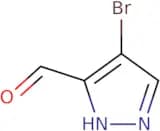
CAS:Versatile small molecule scaffoldFormula:C6H11ClN2O2S2Purezza:Min. 95%Peso molecolare:242.8 g/mol4-bromo-1H-pyrazole-5-carbaldehyde
CAS:Versatile small molecule scaffoldFormula:C4H3BrN2OPurezza:Min. 95%Peso molecolare:175 g/mol6-Amino-3-pyridinethiol dihydrochloride
CAS:Please enquire for more information about 6-Amino-3-pyridinethiol dihydrochloride including the price, delivery time and more detailed product information at the technical inquiry form on this page
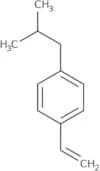
Formula:C5H6N2S•(HCl)2Purezza:Min. 95%Peso molecolare:199.1 g/molp-Isobutylstyrene-d7
CAS:p-Isobutylstyrene-d7 is a solid catalyst that can be used in the synthesis of organic compounds. It has been shown to have good activity for the transfer of acid chloride groups to aromatic ring systems and for the synthesis of thiadiazoles. p-Isobutylstyrene-d7 has been shown to be an excellent catalyst for the conversion of hydrochloric acid into hydrogen chloride, which can then be recycled. The toxicity studies on this compound have shown that it is not toxic to bacterial strains, which may make it a good candidate for use as a catalyst in bioremediation or a growth substrate. This catalyst has also been shown to have photocatalytic activity and may be used in the purification of water contaminated with heavy metals.Formula:C12H9D7Purezza:Min. 95%Peso molecolare:167.3 g/mol(3R,4R)-3-[(6-Amino-4-pyrimidinyl)methylamino]-4-methyl-β-oxo-1-piperidinepropanenitrile
CAS:Please enquire for more information about (3R,4R)-3-[(6-Amino-4-pyrimidinyl)methylamino]-4-methyl-β-oxo-1-piperidinepropanenitrile including the price, delivery time and more detailed product information at the technical inquiry form on this page
Formula:C14H20N6OPurezza:Min. 95%Peso molecolare:288.35 g/molL-Arginine-7-amido-4-methylcoumarin hydrochloride
CAS:Please enquire for more information about L-Arginine-7-amido-4-methylcoumarin hydrochloride including the price, delivery time and more detailed product information at the technical inquiry form on this page
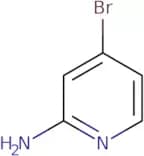
Formula:C16H21N5O3•HClPurezza:Min. 95%Peso molecolare:367.83 g/mol2-Amino-4-bromopyridine
CAS:2-Amino-4-bromopyridine is a potent, selective antagonist of the nicotinic acetylcholine receptor (nAChR) that has been shown to inhibit the proliferation of cancer cells in vitro. 2-Amino-4-bromopyridine binds to the nAChR and stabilizes it by binding to an allosteric site on the receptor. 2-Amino-4-bromopyridine is synthesized from 4,5-dibromobenzene and 2,6-diaminopyridine in two steps with a yield of 47%. The synthesis of 2-amino-4-bromopyridine proceeds via reaction mechanism involving electrophilic substitution at the bromine atom followed by nucleophilic addition at the nitrogen atom.
Formula:C5H5BrN2Purezza:Min. 95%Colore e forma:PowderPeso molecolare:173.01 g/mol1-Adamantane carboxylic acid
CAS:1-Adamantane carboxylic acid is a hydrophobic molecule that can form a complex with metal hydroxides. It is used in the process optimization of the synthesis of sodium salts. 1-Adamantane carboxylic acid binds to metals, such as magnesium and calcium, in a coordination geometry that is similar to that observed for water molecules. The complexation of 1-Adamantane carboxylic acid with metal ions results in an acidic environment, which is important for bowel disease. This acid complex also has anti-inflammatory properties. The hydroxyl group on the 1-adamantane carboxylic acid reacts with oxygen to form an alcohol group and this reaction mechanism may be involved in physiological functions.Formula:C11H16O2Purezza:Min. 95%Colore e forma:White PowderPeso molecolare:180.25 g/mol2-Acetylbenzoic acid
CAS:2-Acetylbenzoic acid is a functional molecule that contains an acetyl group. It can form hydrogen bonds with other molecules and has been shown to induce apoptosis in cells. The reaction products of 2-acetylbenzoic acid are malonic acid, acetylsalicylic acid, and 2-benzoylbenzoic acid. These three compounds are made by the addition of hydrogen or hydroxide to the molecule 2-acetylbenzoic acid. The molecule has two functional groups: a carbonyl group and an acetyl group. The chemical structure of this molecule can be seen in the figure below.
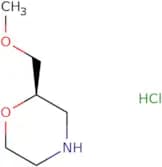
2-Acetylbenzoic AcidFormula:C9H8O3Purezza:Min. 95%Colore e forma:PowderPeso molecolare:164.16 g/mol(R)-2-(Methoxymethyl)-morpholine hydrochloride
CAS:Versatile small molecule scaffoldFormula:C6H14ClNO2Purezza:Min. 95%Peso molecolare:167.63 g/molMethyl amino(2-chlorophenyl)acetate hydrochloride
CAS:Versatile small molecule scaffoldFormula:C9H11Cl2NO2Purezza:Min. 95%Peso molecolare:236.1 g/mol3-(Methoxycarbonyl)pyridine-4-carboxylic acid
CAS:Versatile small molecule scaffold
Formula:C8H7NO4Purezza:Min. 95%Peso molecolare:181.15 g/mol5-amino-2-chloropyridin-4-ol
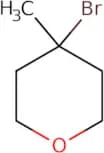
CAS:Versatile small molecule scaffoldFormula:C5H5ClN2OPurezza:Min. 95%Peso molecolare:144.56 g/mol4-Bromo-4-methyltetrahydropyran
CAS:Versatile small molecule scaffold
Formula:C6H11BrOPurezza:Min. 95%Peso molecolare:179.06 g/mol7-Chloroisoquinolin-1-ol
CAS:Versatile small molecule scaffoldFormula:C9H6ClNOPurezza:Min. 95%Peso molecolare:179.6 g/mol4-(Methylamino)benzene-1-sulfonamide
CAS:Versatile small molecule scaffold
Formula:C7H10N2O2SPurezza:Min. 95%Peso molecolare:186.23 g/mol2-chloro-5-(trifluoromethyl)pyrimidin-4-amine
CAS:Versatile small molecule scaffoldFormula:C5H3ClF3N3Purezza:Min. 95%Peso molecolare:197.55 g/mol





![(3R,4R)-3-[(6-Amino-4-pyrimidinyl)methylamino]-4-methyl-β-oxo-1-piperidinepropanenitrile](/_next/image/?url=https%3A%2Fstatic.cymitquimica.com%2Fproducts%2F3D%2Fthumb-webp%2FFA184079.webp&w=3840&q=75)