


Building Blocks
Questa sezione contiene prodotti fondamentali per la sintesi di composti organici e biologici. Building blocks sono i materiali di partenza essenziali utilizzati per costruire molecole complesse attraverso varie reazioni chimiche. Svolgono un ruolo critico nella scoperta di farmaci, nella scienza dei materiali e nella ricerca chimica. Presso CymitQuimica, offriamo una gamma diversificata di building blocks di alta qualità per supportare le tue ricerche innovative e progetti industriali, assicurandoti di avere i componenti essenziali per una sintesi di successo.
Sottocategorie di "Building Blocks"
- Acidi boronici e derivati dell'acido boronico(5.778 prodotti)
- Building Blocks Chirali(1.243 prodotti)
- Building Blocks Idrocarburici(6.097 prodotti)
- Building Blocks organici(61.048 prodotti)
Trovati 203115 prodotti di "Building Blocks"
Ordinare per
Purezza (%)
0
100
|
0
|
50
|
90
|
95
|
100
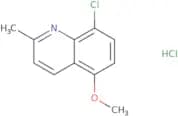
8-Chloro-5-methoxy-2-methylquinoline hydrochloride
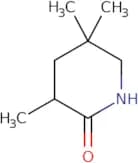
CAS:<p>Versatile small molecule scaffold</p>Formula:C11H11Cl2NOPurezza:Min. 95%Peso molecolare:244.11 g/mol3,5,5-Trimethylpiperidin-2-one
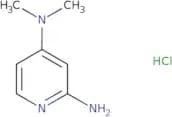
CAS:<p>Versatile small molecule scaffold</p>Formula:C8H15NOPurezza:Min. 95%Peso molecolare:141.21 g/mol4-N,4-N-Dimethylpyridine-2,4-diamine hydrochloride
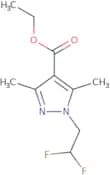
CAS:<p>Versatile small molecule scaffold</p>Formula:C7H12ClN3Purezza:Min. 95%Peso molecolare:173.64 g/molEthyl 1-(2,2-difluoroethyl)-3,5-dimethyl-1H-pyrazole-4-carboxylate
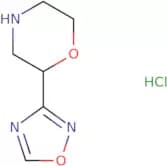
CAS:<p>Versatile small molecule scaffold</p>Formula:C10H14F2N2O2Purezza:Min. 95%Peso molecolare:232.23 g/mol2-(1,2,4-Oxadiazol-3-yl)morpholine hydrochloride
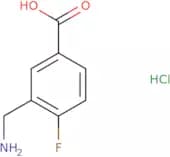
CAS:<p>Versatile small molecule scaffold</p>Formula:C6H10ClN3O2Purezza:Min. 95%Peso molecolare:191.61 g/mol3-(Aminomethyl)-4-fluorobenzoic acid hydrochloride
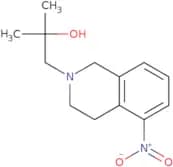
CAS:<p>Versatile small molecule scaffold</p>Formula:C8H9ClFNO2Purezza:Min. 95%Peso molecolare:205.61 g/mol2-Methyl-1-(5-nitro-1,2,3,4-tetrahydroisoquinolin-2-yl)propan-2-ol
CAS:<p>Versatile small molecule scaffold</p>Formula:C13H18N2O3Purezza:Min. 95%Peso molecolare:250.29 g/mol4-[3-(Aminomethyl)benzenesulfonyl]piperazin-2-one hydrochloride
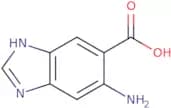
CAS:<p>Versatile small molecule scaffold</p>Formula:C11H16ClN3O3SPurezza:Min. 95%Peso molecolare:305.78 g/mol6-Amino-1H-1,3-benzodiazole-5-carboxylic acid
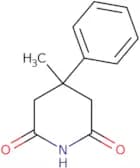
CAS:<p>Versatile small molecule scaffold</p>Formula:C8H7N3O2Purezza:Min. 95%Peso molecolare:177.16 g/mol4-Methyl-4-phenylpiperidine-2,6-dione
CAS:<p>Versatile small molecule scaffold</p>Formula:C12H13NO2Purezza:Min. 95%Peso molecolare:203.24 g/mol5F-203
CAS:<p>5F-203 is a new chemical entity that has been shown to inhibit the function of cytochrome P450 1A1 (CYP1A1), which is involved in the metabolism of many substances, including drugs. It also inhibits the function of mitochondrial membrane potential and promotes reactive oxygen species production. These effects are thought to be responsible for its anticancer activity. 5F-203 has been studied in cancer cells and breast cancer cells with low potency. The biological properties of 5F-203 have not been determined yet.</p>Formula:C14H11FN2SPurezza:Min. 95%Peso molecolare:258.31 g/molMethyl 6-acetylpyridine-2-carboxylate
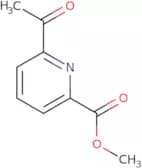
CAS:<p>Versatile small molecule scaffold</p>Formula:C9H9NO3Purezza:Min. 95%Peso molecolare:179.17 g/mol[(3-bromophenyl)methyl](propan-2-yl)amine
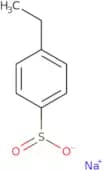
CAS:<p>Versatile small molecule scaffold</p>Formula:C10H14BrNPurezza:Min. 95%Peso molecolare:228.1 g/molSodium 4-ethylbenzene-1-sulfinate
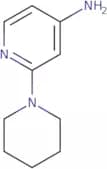
CAS:<p>Versatile small molecule scaffold</p>Formula:C8H9NaO2SPurezza:Min. 95%Peso molecolare:192.21 g/mol2-(Piperidin-1-yl)pyridin-4-amine
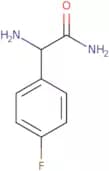
CAS:<p>Versatile small molecule scaffold</p>Formula:C10H15N3Purezza:Min. 95%Peso molecolare:177.25 g/mol2-Amino-2-(4-fluorophenyl)acetamide
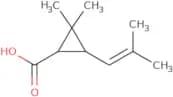
CAS:<p>Versatile small molecule scaffold</p>Formula:C8H9FN2OPurezza:Min. 95%Peso molecolare:168.17 g/molChrysanthemic acid
CAS:<p>Chrysanthemic acid is a chiral molecule that has been shown to have anti-inflammatory properties. The hydroxyl group in the molecule reacts with malonic acid, forming a chrysanthemic ester. Chrysanthemic acid is also known as an analytical method for determining the degree of unsaturation of fatty acids. Chrysanthemic acid is used in the synthesis of monoclonal antibodies, which can be applied for the treatment and prevention of diseases such as cancer, rheumatoid arthritis, Crohn's disease, and other autoimmune disorders. It can also be used to treat infections caused by bacteria that are resistant to antibiotics. The basic structure of chrysanthemic acid is an inorganic acid that contains a hydroxyl group and an asymmetric carbon atom.</p>Formula:C10H16O2Purezza:Min. 95%Peso molecolare:168.23 g/mol3-(3,4-Dimethoxyphenyl)cyclobutan-1-ols
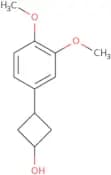
CAS:<p>Versatile small molecule scaffold</p>Formula:C12H16O3Purezza:Min. 95%Peso molecolare:208.3 g/mol1-(3-Amino-4-methylphenyl)-3,3-dimethylurea
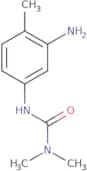
CAS:<p>Versatile small molecule scaffold</p>Formula:C10H15N3OPurezza:Min. 95%Peso molecolare:193.25 g/mol2-[(1S,2R)-2-Hydroxycyclohexyl]acetic acid
CAS:<p>Versatile small molecule scaffold</p>Formula:C8H14O3Purezza:Min. 95%Peso molecolare:158.19 g/mol

![4-[3-(Aminomethyl)benzenesulfonyl]piperazin-2-one hydrochloride](/_next/image/?url=https%3A%2Fstatic.cymitquimica.com%2Fproducts%2F3D%2Fthumb-webp%2FKZB44029.webp&w=3840&q=75)

amine](/_next/image/?url=https%3A%2Fstatic.cymitquimica.com%2Fproducts%2F3D%2Fthumb-webp%2FKEA07941.webp&w=3840&q=75)
![2-[(1S,2R)-2-Hydroxycyclohexyl]acetic acid](/_next/image/?url=https%3A%2Fstatic.cymitquimica.com%2Fproducts%2F3D%2Fthumb-webp%2FJKB04854.webp&w=3840&q=75)