Building Blocks
Sottocategorie di "Building Blocks"
- Acidi boronici e derivati dell'acido boronico(5.780 prodotti)
- Building Blocks Chirali(1.240 prodotti)
- Building Blocks Idrocarburici(6.100 prodotti)
- Building Blocks organici(61.009 prodotti)
Trovati 205248 prodotti di "Building Blocks"
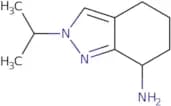
2-(Propan-2-yl)-4,5,6,7-tetrahydro-2H-indazol-7-amine
CAS:Versatile small molecule scaffold
Formula:C10H17N3Purezza:Min. 95%Peso molecolare:179.26 g/mol1-(1-Phenylcyclopentyl)ethan-1-amine hydrochloride
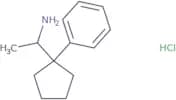
CAS:Versatile small molecule scaffoldFormula:C13H20ClNPurezza:Min. 95%Peso molecolare:225.76 g/mol2-(2-Methylpropyl)butanedioic acid
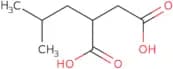
CAS:2-(2-Methylpropyl)butanedioic acid is an uncatalyzed chemical reaction that is used for the treatment of wastewater. It is a chiral compound, which means it has a non-superimposable mirror image. 2-(2-Methylpropyl)butanedioic acid can be synthesized by homochiral reactions, which are reactions that uses only one type of chiral molecule to produce a chiral product. The rate of this reaction is controlled by the concentration of reactants and the temperature at which it occurs. This reaction mechanism involves the formation of an enolate ion from 2-(2-methylpropyl) butanedioic acid, followed by deprotonation to form the conjugated enolate. Leukocyte elastase is an enzyme that breaks down elastin in cells, and this enzyme may be inhibited by gabapentin.
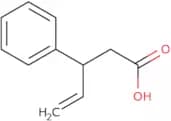
Formula:C8H14O4Purezza:Min. 95%Peso molecolare:174.19 g/mol3-Phenylpent-4-enoic acid
CAS:3-Phenylpent-4-enoic acid is a natural product that is obtained from the lipophilic fraction of various plant species. It can be synthesized using chemoenzymatic reactions. 3-Phenylpent-4-enoic acid can be used as a chiral chemical intermediate in the synthesis of other compounds, such as olefinic compounds and alkene derivatives. This compound has been shown to have promiscuous reactivity, which is characterized by its ability to catalyze metathesis reactions with high enantiomeric excess. The isolated yield for this reaction was high at 96%.
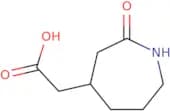
Formula:C11H12O2Purezza:Min. 95%Peso molecolare:176.21 g/mol2-(2-Oxoazepan-4-yl)acetic acid
CAS:Versatile small molecule scaffold
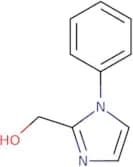
Formula:C8H13NO3Purezza:Min. 95%Peso molecolare:171.19 g/mol(1-Phenyl-1H-imidazol-2-yl)methanol
CAS:Versatile small molecule scaffold
Formula:C10H10N2OPurezza:Min. 95%Peso molecolare:174.2 g/mol2-Nitro-1H-benzo[d]imidazole
CAS:2-Nitro-1H-benzo[d]imidazole is an analog of benzimidazole compounds. It is used in the preparation of antibodies. 2-Nitro-1H-benzo[d]imidazole reacts with hydrochloric acid to form a trifluoroacetic acid, which can be purified by trichloroacetic acid and recrystallized from methanol. The purity of the product can be checked using a UV spectrophotometer, and it has a melting point of 141°C.
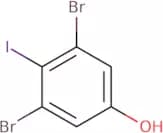
Formula:C7H5N3O2Purezza:Min. 95%Peso molecolare:163.13 g/mol3,5-Dibromo-4-iodophenol
CAS:Versatile small molecule scaffold
Formula:C6H3Br2IOPurezza:Min. 95%Peso molecolare:377.8 g/mol4H,5H,6H,7H-Pyrazolo[1,5-a]pyridin-5-amine dihydrochloride
CAS:Versatile small molecule scaffold
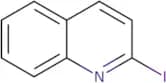
Formula:C7H13Cl2N3Purezza:Min. 95%Peso molecolare:210.1 g/mol2-Iodoquinoline
CAS:2-Iodoquinoline is a quinoline derivative that has been shown to be a potent inhibitor of the uptake of amyloid protein in vitro. 2-Iodoquinoline is also able to inhibit the growth of cancer cells and induce apoptosis. The mechanism by which 2-Iodoquinoline inhibits tumor cell growth may be due to its ability to activate epidermal growth factor receptor (EGFR). This compound has also been shown to stimulate epidermal growth through the activation of EGFR and other signaling pathways, such as phosphatidylinositol 3 kinase (PI3K) and mitogen-activated protein kinase (MAPK).
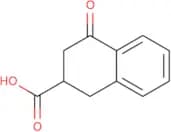
Formula:C9H6INPurezza:Min. 95%Peso molecolare:255.06 g/mol2-Naphthalenecarboxylic acid, 1,2,3,4-tetrahydro-4-oxo-
CAS:2-Naphthalenecarboxylic acid, 1,2,3,4-tetrahydro-4-oxo-, is an organic compound that is a derivative of naphthalene. It can be synthesized by reacting benzene with acetic anhydride in the presence of a base catalyst. This product is used as a solvent and antioxidant in plastics manufacturing.
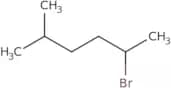
Formula:C11H10O3Purezza:Min. 95%Peso molecolare:190.2 g/mol2-Bromo-5-methylhexane
CAS:2-Bromo-5-methylhexane is a homologous series of compounds with an alkylating agent that can inhibit cholinesterase and cause cancer. This compound has been shown to have anti-inflammatory properties, which may be due to its ability to modulate fatty acid metabolism. 2-Bromo-5-methylhexane also has been found to be effective in the treatment of prostate cancer cells. It is believed that this compound inhibits chloride channels, which are involved in the regulation of cell volume, and sodium channels, which are involved in nerve transmission. 2-Bromo-5-methylhexane also has fluorescence properties and can be used as a stain for sternal glands.
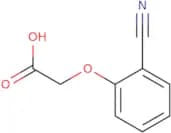
Formula:C7H15BrPurezza:Min. 95%Peso molecolare:179.1 g/mol2-(2-Cyanophenoxy)acetic acid
CAS:Versatile small molecule scaffold
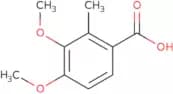
Formula:C9H7NO3Purezza:Min. 95%Peso molecolare:177.16 g/mol3,4-Dimethoxy-2-methylbenzoic acid
CAS:Versatile small molecule scaffold
Formula:C10H12O4Purezza:Min. 95%Peso molecolare:196.2 g/mol2-Oxaspiro[4.4]nonan-3-one
CAS:Versatile small molecule scaffold
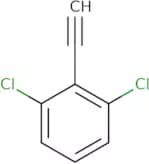
Formula:C8H12O2Purezza:Min. 95%Peso molecolare:140.18 g/mol1,3-Dichloro-2-ethynylbenzene
CAS:Versatile small molecule scaffold
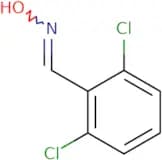
Formula:C8H4Cl2Purezza:Min. 95%Peso molecolare:171.02 g/mol(E)-2,6-Dichlorobenzaldehyde oxime
CAS:(E)-2,6-Dichlorobenzaldehyde oxime is an oxime that has a high affinity for electron-rich molecules. It is a toxicant that targets toxicants with electron-donating groups such as benzene. This compound also has physicochemical properties such as solubility in water and lipids which make it suitable for mucosal administration. (E)-2,6-Dichlorobenzaldehyde oxime is used as a herbicide to control weeds in crops like soybeans and corn.
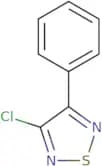
Formula:C7H5Cl2NOPurezza:Min. 95%Peso molecolare:190.02 g/mol3-Chloro-4-phenyl-1,2,5-thiadiazole
CAS:3-Chloro-4-phenyl-1,2,5-thiadiazole is a chemical compound with an alkoxy group (C6H4O), an organotin group (CH3Sn), and a 1-6c alkyl group. It has been used in the manufacture of medicines and agrochemicals as a reactant or catalyst. 3-Chloro-4-phenyl-1,2,5-thiadiazole is also used industrially as a trifluoromethylation reagent for phenols and thiols.
Formula:C8H5ClN2SPurezza:Min. 95%Peso molecolare:196.66 g/mol2-(4-Methylphenyl)pyrazolo[1,5-a]pyrimidine
CAS:Versatile small molecule scaffoldFormula:C13H11N3Purezza:Min. 95%Peso molecolare:209.25 g/mol3-(4-Aminophenyl)-1-phenylurea
CAS:Versatile small molecule scaffold
Formula:C13H13N3OPurezza:Min. 95%Peso molecolare:227.26 g/mol

![2-Nitro-1H-benzo[d]imidazole](/_next/image/?url=https%3A%2Fstatic.cymitquimica.com%2Fproducts%2F3D%2Fthumb-webp%2FFAA70967.webp&w=3840&q=75)
![4H,5H,6H,7H-Pyrazolo[1,5-a]pyridin-5-amine dihydrochloride](/_next/image/?url=https%3A%2Fstatic.cymitquimica.com%2Fproducts%2F3D%2Fthumb-webp%2FJGD15732.webp&w=3840&q=75)
![2-Oxaspiro[4.4]nonan-3-one](/_next/image/?url=https%3A%2Fstatic.cymitquimica.com%2Fproducts%2F3D%2Fthumb-webp%2FFAA72462.webp&w=3840&q=75)
![2-(4-Methylphenyl)pyrazolo[1,5-a]pyrimidine](/_next/image/?url=https%3A%2Fstatic.cymitquimica.com%2Fproducts%2F3D%2Fthumb-webp%2FJGD15738.webp&w=3840&q=75)