Building Blocks
Sottocategorie di "Building Blocks"
- Acidi boronici e derivati dell'acido boronico(5.781 prodotti)
- Building Blocks Chirali(1.242 prodotti)
- Building Blocks Idrocarburici(6.101 prodotti)
- Building Blocks organici(61.033 prodotti)
Trovati 205320 prodotti di "Building Blocks"
Methyl[2-(piperidin-4-yl)ethyl]amine dihydrochloride
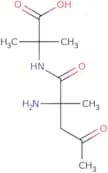
CAS:Versatile small molecule scaffoldFormula:C8H20Cl2N2Purezza:Min. 95%Peso molecolare:215.16 g/mol2-(2-acetamido-2-methylpropanamido)-2-methylpropanoic acid
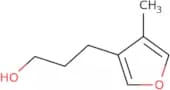
CAS:Versatile small molecule scaffoldFormula:C10H18N2O4Purezza:Min. 95%Peso molecolare:230.26 g/mol3-(4-Methylfuran-3-yl)propan-1-ol
CAS:3-(4-Methylfuran-3-yl)propan-1-ol is a chemical compound that belongs to the group of organic compounds. It is a colorless liquid with a pleasant odor. 3-(4-Methylfuran-3-yl)propan-1-ol has been found in the filtrate of certain plants, such as the endophyte fungi Fusarium verticillioides. It has been shown to have antifeedant properties and can be used in combination with other fungicides, such as tebuconazole or triazole, to control phytopathogens. 3-(4-Methylfuran-3-yl)propan-1-ol may also be used as an additive for food chemistry or in element analysis.
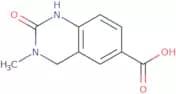
Formula:C8H12O2Purezza:Min. 95%Peso molecolare:140.18 g/mol3-Methyl-2-oxo-1,2,3,4-tetrahydroquinazoline-6-carboxylic acid
CAS:Versatile small molecule scaffold
Formula:C10H10N2O3Purezza:Min. 95%Peso molecolare:206.2 g/mol4-[(1H-1,2,3-Triazol-1-yl)methyl]benzoic acid
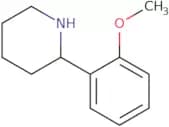
CAS:Versatile small molecule scaffoldFormula:C10H9N3O2Purezza:Min. 95%Peso molecolare:203.2 g/mol2-(2-Methoxyphenyl)piperidine
CAS:Versatile small molecule scaffold
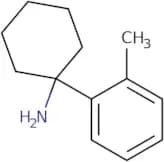
Formula:C12H17NOPurezza:Min. 95%Peso molecolare:191.27 g/mol1-(2-Methylphenyl)cyclohexan-1-amine
CAS:Prodotto controllatoVersatile small molecule scaffold
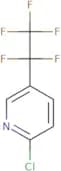
Formula:C13H19NPurezza:Min. 95%Peso molecolare:189.3 g/mol2-Chloro-5-(pentafluoroethyl)pyridine
CAS:Versatile small molecule scaffold
Formula:C7H3ClF5NPurezza:Min. 95%Peso molecolare:231.55 g/mol2-(4-Fluorobenzoyl)pyrazine
CAS:Versatile small molecule scaffold
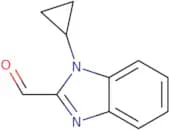
Formula:C11H7FN2OPurezza:Min. 95%Peso molecolare:202.18 g/mol1-Cyclopropyl-1H-1,3-benzodiazole-2-carbaldehyde
CAS:Versatile small molecule scaffold
Formula:C11H10N2OPurezza:Min. 95%Peso molecolare:186.21 g/mol7-Methylthieno[2,3-c]pyridin-5-ol
CAS:Versatile small molecule scaffold
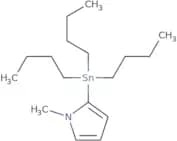
Formula:C8H7NOSPurezza:Min. 95%Peso molecolare:165.21 g/mol1-Methyl-2-(tributylstannyl)pyrrole
CAS:Prodotto controllato1-Methyl-2-(tributylstannyl)pyrrole is a tosylate, which is a type of chemical compound that can be converted into other substances by the addition of water. 1-Methyl-2-(tributylstannyl)pyrrole is synthesized from 2,6-dichloroacetophenone and tributyltin chloride. This compound has shown chemotactic activity in neutrophils and mast cells in vitro. It also inhibits the synthesis of proteins and other cellular components. The pharmacokinetic properties of this drug have been studied in rats and mice, with oral absorption being the most suitable route for delivery. The formyl group on this drug may cause it to be used as an orally active form of chemotherapy for autoimmune diseases or as an anti-inflammatory agent.
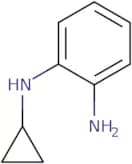
Formula:C17H33NSnPurezza:Min. 95%Peso molecolare:370.16 g/mol1-N-Cyclopropylbenzene-1,2-diamine
CAS:Versatile small molecule scaffold
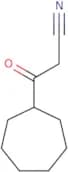
Formula:C9H12N2Purezza:Min. 95%Peso molecolare:148.2 g/mol3-Cycloheptyl-3-oxopropanenitrile
CAS:Versatile small molecule scaffold
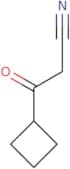
Formula:C10H15NOPurezza:Min. 95%Peso molecolare:165.23 g/molb-Oxo-cyclobutanepropanenitrile
CAS:Versatile small molecule scaffold
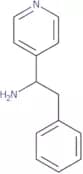
Formula:C7H9NOPurezza:Min. 95%Peso molecolare:123.15 g/mol2-Phenyl-1-(pyridin-4-yl)ethan-1-amine dihydrochloride
CAS:Versatile small molecule scaffold
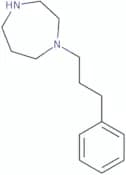
Formula:C13H14N2Purezza:Min. 95%Peso molecolare:198.26 g/mol1-(3-Phenylpropyl)-1,4-diazepane
CAS:Versatile small molecule scaffold
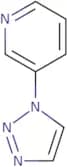
Formula:C14H22N2Purezza:Min. 95%Peso molecolare:218.34 g/mol3-(1H-1,2,3-Triazol-1-yl)pyridine
CAS:3-(1H-1,2,3-Triazol-1-yl)pyridine is a white crystalline solid. It has a melting point of 166°C and a boiling point of 330°C. 3-(1H-1,2,3-Triazol-1-yl)pyridine has been used in powder diffraction analysis to determine the molecular structure of compounds with metallic or semi-metallic properties. The technique was used to study the photophysical properties of triazoles and protonated ligands. Structural studies have also been performed on isomeric triazole derivatives as well as functional theory for these compounds. Diffraction has also been used to identify structural isomers for chloride and other ionic compounds. Quantum theory has also been applied to these types of molecules.
Formula:C7H6N4Purezza:Min. 95%Peso molecolare:146.15 g/molEthyl 4H,5H,6H,7H-pyrazolo[1,5-a]pyridine-3-carboxylate
CAS:Versatile small molecule scaffold
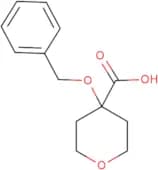
Formula:C10H14N2O2Purezza:Min. 95%Peso molecolare:194.23 g/mol4-(Benzyloxy)oxane-4-carboxylic acid
CAS:Versatile small molecule scaffoldFormula:C13H16O4Purezza:Min. 95%Peso molecolare:236.26 g/mol
![Methyl[2-(piperidin-4-yl)ethyl]amine dihydrochloride](/_next/image/?url=https%3A%2Fstatic.cymitquimica.com%2Fproducts%2F3D%2Fthumb-webp%2FTEA76893.webp&w=3840&q=75)

![4-[(1H-1,2,3-Triazol-1-yl)methyl]benzoic acid](/_next/image/?url=https%3A%2Fstatic.cymitquimica.com%2Fproducts%2F3D%2Fthumb-webp%2FTEA61853.webp&w=3840&q=75)

![7-Methylthieno[2,3-c]pyridin-5-ol](/_next/image/?url=https%3A%2Fstatic.cymitquimica.com%2Fproducts%2F3D%2Fthumb-webp%2FTEA48765.webp&w=3840&q=75)
![Ethyl 4H,5H,6H,7H-pyrazolo[1,5-a]pyridine-3-carboxylate](/_next/image/?url=https%3A%2Fstatic.cymitquimica.com%2Fproducts%2F3D%2Fthumb-webp%2FTEA05506.webp&w=3840&q=75)