Building Blocks
Sottocategorie di "Building Blocks"
- Acidi boronici e derivati dell'acido boronico(5.778 prodotti)
- Building Blocks Chirali(1.243 prodotti)
- Building Blocks Idrocarburici(6.099 prodotti)
- Building Blocks organici(61.038 prodotti)
Trovati 205376 prodotti di "Building Blocks"
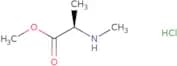
N-Me-D-Ala-OMe·HCl
CAS:Please enquire for more information about N-Me-D-Ala-OMe·HCl including the price, delivery time and more detailed product information at the technical inquiry form on this page
Formula:C5H11NO2·HClPurezza:Min. 95%Peso molecolare:153.61 g/mol4-Chloro-1H-pyrazolo[3,4-b]pyridine-3-carboxylic acid
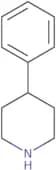
CAS:Versatile small molecule scaffoldFormula:C7H4ClN3O2Purezza:Min. 95%Peso molecolare:197.58 g/mol4-Phenyl-piperidine
CAS:4-Phenyl-piperidine is a nitro compound that has been shown to be toxic for the kidneys and nervous system. 4-Phenyl-piperidine has been shown to inhibit dopamine uptake in the striatum and locomotor activity in rats. It also inhibits the hydrolysis of hydrochloric acid, which produces hydrogen ion (H+) ions, resulting in an acidic environment. The chemical structures of 4-phenyl-piperidine are similar to those of tricyclic antidepressants drugs, such as amitriptyline and imipramine, with a phenyl ring attached to an amine group. This drug is used as a pharmaceutical preparation for treating depression by inhibiting the reuptake of serotonin and norepinephrine, which are neurotransmitters that affect mood.Formula:C11H15NPurezza:Min. 95%Peso molecolare:161.24 g/molPotassium 3-(phenylsulfonyl)benzenesulfonate
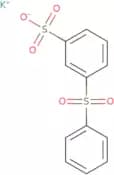
CAS:Potassium 3-(phenylsulfonyl)benzenesulfonate is a chemical compound that is used as an anti-aging agent. It has been shown to reduce the viscosity of acrylonitrile, and is most effective when it is at a concentration of 1%. Potassium 3-(phenylsulfonyl)benzenesulfonate also reduces the strain on polymer fibers, which can be caused by temperatures or deionized water. The optimum temperature for this compound is about 50°C. Potassium 3-(phenylsulfonyl)benzenesulfonate does not have any adverse effects with other chemicals in the production process, and does not react with hexamethylenetetramine or aminopropyl naphthenate. This chemical also has a low cost and high tolerance for additives such as styrene or additives such as resistant
Formula:C12H9KO5S2Purezza:Min. 95%Colore e forma:PowderPeso molecolare:336.43 g/mol3-Pyridylboronic acid pinacol ester
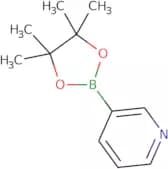
CAS:3-Pyridylboronic acid pinacol ester is a versatile reagent that can be used in the synthesis of polymers with reactive functionalities. This compound is a crosslinker, which means that it reacts with two or more other molecules to form a covalent bond. 3-Pyridylboronic acid pinacol ester has been shown to react with ring-opening methacrylate monomers and expand their polymer backbone, which leads to an increase in the number of reactive groups on the chain. The introduction of 3-pyridylboronic acid pinacol ester can also introduce fluorescent units into polymers for use as probes for biological systems. There are many possible applications for this versatile reagent, including its use in the synthesis of imidazopyridine ligands.
Formula:C11H16BNO2Purezza:Min. 95%Colore e forma:PowderPeso molecolare:205.06 g/mol2-[5-(4,4,5,5-Tetramethyl-1,3,2-dioxaborolan-2-yl)pyrimidin-2-yl]propan-2-ol
CAS:Versatile small molecule scaffoldFormula:C13H21BN2O3Purezza:Min. 95%Peso molecolare:264.13 g/mol3-Bromo-5-cyanobenzaldehyde
CAS:Versatile small molecule scaffoldFormula:C8H4BrNOPurezza:Min. 95%Peso molecolare:210.04 g/molbenzyl 5-(tetramethyl-1,3,2-dioxaborolan-2-yl)-1,2,3,6-tetrahydropyridine-1-carboxylate
CAS:Versatile small molecule scaffoldFormula:C19H26BNO4Purezza:Min. 95%Peso molecolare:343.2 g/molSodium ethanethiolate
CAS:Sodium ethanethiolate is a detergent composition that is used in the manufacturing of other detergents. It has a receptor binding mechanism and binds to the fatty acid component of the lipid bilayer. The hydroxyl group on the ethanethiolate molecule reacts with the hydrophobic region of the lipid bilayer, leading to disruption of membrane function. Sodium-dependent glucose transport is inhibited by sodium ethanethiolate, which also has metabolic disorders as a side effect. It is a bicyclic heterocycle and can be synthesized from p-hydroxybenzoic acid and trifluoroacetic acid. The chemical stability of this compound is high, making it useful for industrial applications.Formula:C2H5NaSPurezza:(¹H-Nmr) Min. 90 Area-%Colore e forma:White PowderPeso molecolare:84.12 g/molSodium 4-hydroxybenzenesulfonate dihydrate
CAS:Sodium 4-hydroxybenzenesulfonate dihydrate is a hydrogenated compound with reactive properties. It is used in the production of optical materials and is used to produce hydrogen peroxide, which is a strong oxidizing agent. Sodium 4-hydroxybenzenesulfonate dihydrate has been shown to react with calcium ions to form calcium sulfinates. The luminescence property of this compound can be enhanced by mixing it with other compounds such as x-ray diffraction study, functional groups, or hydrogen peroxide. The reaction time for the formation of sodium 4-hydroxybenzenesulfonate dihydrate can be shortened by adding anions such as sulfamic acid.Formula:C6H5NaO4S·2H2OPurezza:Min. 95%Colore e forma:White To Off-White SolidPeso molecolare:232.19 g/mol3-(3'-Trifluoromethylphenyl)propanol
CAS:3-(3'-Trifluoromethylphenyl)propanol is a trifluoroacetic acid derivative that is used in acylation reactions to form esters. It can be obtained by the reaction of aluminium chloride, isopropyl alcohol, and phosphine with 3-trifluoromethylaniline. Impurities may include chloride and zirconium. The trifluoromethyl group on this molecule can react with the carbonyl group of an organic acid to form a trifluoroacetate ester.Purezza:Min. 95%Ref: 3D-FT35084
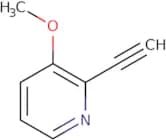
1kgPrezzo su richiesta50g378,00€100gPrezzo su richiesta250gPrezzo su richiesta500gPrezzo su richiesta2-Ethynyl-3-methoxypyridine
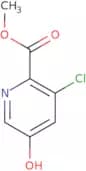
CAS:2-Ethynyl-3-methoxypyridine is a chiral, alkynyl compound that can be synthesized from the reaction of acetone and ethyne. This compound is axially chiral and has two rotational isomers, which are optically active. The synthesis of this compound was first reported in 1952 by cyclizing 2-ethynylpyridine with methoxyacetophenone in the presence of acetic acid. The photochemical reactions of this compound have been studied extensively and it has shown to be a useful substrate for pyridines.Formula:C8H7NOPurezza:Min. 95%Peso molecolare:133.14 g/molMethyl 3-chloro-5-hydroxypyridine-2-carboxylate
CAS:Versatile small molecule scaffoldFormula:C7H6NO3ClPurezza:Min. 95%Peso molecolare:187.58 g/mol6-fluoroquinoline-8-carboxylicacid
CAS:Versatile small molecule scaffold
Formula:C10H6FNO2Purezza:Min. 95%Peso molecolare:191.16 g/molPotassium (cyclopropylmethyl)trifluoroborate
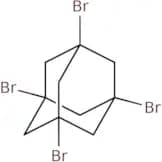
CAS:Versatile small molecule scaffoldFormula:C4H7BF3KPurezza:Min. 95%Peso molecolare:162 g/mol1,3,5,7-Tetrabromoadamantane
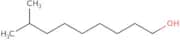
CAS:1,3,5,7-Tetrabromoadamantane is a molecule that has been synthesized and introduced as a mediator to introduce oxidants. The introduction of the oxidant is mediated by 1,3,5,7-tetrabromoadamantane. This molecule has been shown to be synthesized in two steps from hexamethylenetetramine (HMT) and iodomethane. The synthesis of this molecule can also be achieved by reacting synthons such as tetraphenylmethane with hydrochloric acid. 1,3,5,7-Tetrabromoadamantane is an equivalence mediator because it can mediate a redox reaction in which the oxidizing agent is reduced and the reducing agent is oxidized.Formula:C10H12Br4Purezza:Min. 95%Peso molecolare:451.82 g/mol8-Methylnonan-1-ol
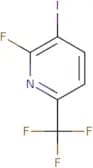
CAS:Please enquire for more information about 8-Methylnonan-1-ol including the price, delivery time and more detailed product information at the technical inquiry form on this pageFormula:C10H22OPurezza:Min. 95%Peso molecolare:158.28 g/mol2-Fluoro-3-iodo-6-(trifluoromethyl)pyridine
CAS:Versatile small molecule scaffoldFormula:C6H2F4INPurezza:Min. 95%Peso molecolare:290.98 g/moltert-Butyl N-(4-methylphenyl)carbamate
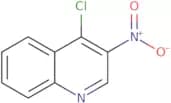
CAS:Tert-butyl N-(4-methylphenyl)carbamate is a reusable, efficient method for the synthesis of tert-butyl carbamates from amines and carbon dioxide. This reaction is an example of a C–H bond activation that proceeds through an anion intermediate. The reaction time can be reduced by irradiation to increase the efficiency. Electrons are unpaired during this process, which is modeled with quantum mechanics software. Chloride is used as a catalyst to activate the electron and generate a reactive intermediate. Amine functionalities are added to the molecule in order to give it desired properties. The chloride group can be replaced with other anions such as bromide or iodide, which will also introduce different reactivity patterns.Formula:C12H17NO2Purezza:Min. 95%Peso molecolare:207.27 g/mol4-Chloro-3-nitroquinoline
CAS:4-Chloro-3-nitroquinoline is a quinoline derivative that can be synthesized by cross-coupling reaction. The amide and n-oxide functional groups are the most reactive sites. It can react with nucleophiles such as haloamines, azides, and pyridazines to form covalent bonds. 4-Chloro-3-nitroquinoline has been shown to have anti-HIV activity in vitro and in vivo in animal models. In addition, this compound has shown potential use for the treatment of leishmania.Formula:C9H5ClN2O2Purezza:Min. 95%Colore e forma:Slightly Yellow PowderPeso molecolare:208.6 g/mol

![4-Chloro-1H-pyrazolo[3,4-b]pyridine-3-carboxylic acid](/_next/image/?url=https%3A%2Fstatic.cymitquimica.com%2Fproducts%2F3D%2Fthumb-webp%2FULD13261.webp&w=3840&q=75)
![2-[5-(4,4,5,5-Tetramethyl-1,3,2-dioxaborolan-2-yl)pyrimidin-2-yl]propan-2-ol](/_next/image/?url=https%3A%2Fstatic.cymitquimica.com%2Fproducts%2F3D%2Fthumb-webp%2FUCC25587.webp&w=3840&q=75)