Building Blocks
Sottocategorie di "Building Blocks"
- Acidi boronici e derivati dell'acido boronico(5.778 prodotti)
- Building Blocks Chirali(1.243 prodotti)
- Building Blocks Idrocarburici(6.099 prodotti)
- Building Blocks organici(61.038 prodotti)
Trovati 205376 prodotti di "Building Blocks"
8-Bromo-6-chloroisoquinoline
CAS:Versatile small molecule scaffoldFormula:C9H5BrClNPurezza:Min. 95%Peso molecolare:242.5 g/molN-(4-Aminophenyl)-N-methyl-2-(4-methylpiperazin-1-yl)acetamide
CAS:N-(4-Aminophenyl)-N-methyl-2-(4-methylpiperazin-1-yl)acetamide is an environmental and industrial chemical that is used as a formate, benzoate, and methyl benzoate intermediate. It reacts with nitric acid to form N-(4-aminophenyl)-N-methyl-2-(4-nitrophenoxy)acetamide (NPA). NPA has been shown to have antiangiogenic properties. NPA inhibits the proliferation of endothelial cells by interfering with the cell cycle and inducing apoptosis.Formula:C14H22N4OPurezza:Min. 95%Peso molecolare:262.35 g/mol(2S)-3-(3,4-dihydroxyphenyl)-2-{[(9H-fluoren-9-ylmethoxy)carbonyl]amino}propanoic acid
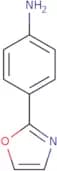
CAS:3,4-Dihydroxyphenylalanine (3,4-DOPA) is a non-protein amino acid that is an intermediate in the synthesis of dopamine and norepinephrine. 3,4-DOPA is metabolized by the enzyme dopa decarboxylase to dopamine and then by catechol-O-methyl transferase to norepinephrine. 3,4-DOPA has antioxidant properties and has been shown to have anticancer effects in animals. It also has been shown to interact with other biomolecules such as proteins and nucleic acids. 3,4-DOPA binds strongly to metal ions through its carboxylic acid group and can chelate metals such as copper or iron. This property may be used for coatings on metal surfaces or for interacting with other molecules.br>br> 3,4-Dopa contains a chiral center due to the presence of two stereogenic carbons on the phenFormula:C24H21NO6Purezza:Min. 95%Peso molecolare:419.4 g/mol4-(Oxazol-2-yl)aniline
CAS:Versatile small molecule scaffold
Formula:C9H8N2OPurezza:Min. 95%Peso molecolare:160.17 g/molSpiro[3.3]heptane-2,6-dicarboxylic acid, 2,6-dimethyl ester
CAS:Versatile small molecule scaffoldFormula:C11H16O4Purezza:Min. 95%Peso molecolare:212.25 g/mol3-Bromo-2-hydroxy-5-iodopyridine
CAS:Versatile small molecule scaffoldFormula:C5H3BrINOPurezza:Min. 95%Peso molecolare:299.89 g/mol2,2-Difluorobenzo[d][1,3]dioxol-5-ol
CAS:Versatile small molecule scaffoldFormula:C7H4F2O3Purezza:Min. 95%Peso molecolare:174.1 g/mol2-Bromo-6-fluoro-3-methylpyridine
CAS:Versatile small molecule scaffoldFormula:C6H5BrFNPurezza:Min. 95%Peso molecolare:190.02 g/mol2,5-Diethoxyterephthalohydrazide
CAS:2,5-Diethoxyterephthalohydrazide is an organic compound that has been used for the synthesis of linkers with various functional groups. It is a reactive intermediate in the synthesis of amines and compounds containing amine functional groups. 2,5-Diethoxyterephthalohydrazide has been shown to be stable under environmental conditions and can be used as a linker in organic solvents such as amines, alcohols or esters. This compound has also been shown to exhibit photocatalytic activity when irradiated by UV light. Techniques such as analytical chemistry and techniques can be used to characterize this compound's reactivity and stability.
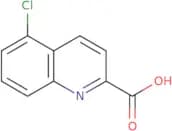
Formula:C12H18N4O4Purezza:Min. 95%Peso molecolare:282.3 g/mol5-Chloroquinoline-2-carboxylic acid
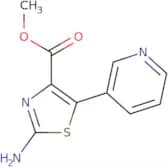
CAS:Versatile small molecule scaffoldFormula:C10H6ClNO2Purezza:Min. 95%Peso molecolare:207.61 g/molMethyl 2-amino-5-pyridin-3-yl-1,3-thiazole-4-carboxylate
CAS:Versatile small molecule scaffoldFormula:C10H9N3O2SPurezza:Min. 95%Peso molecolare:235.26 g/mol4-(Aminomethyl)pyridine-2-carbonitrile hydrochloride
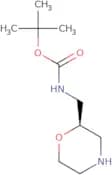
CAS:Versatile small molecule scaffoldFormula:C7H8ClN3Purezza:Min. 95%Peso molecolare:169.61 g/mol(R)-2-(N-Boc-aminomethyl)morpholine
CAS:Versatile small molecule scaffoldFormula:C10H20N2O3Purezza:Min. 95%Peso molecolare:216.28 g/mol1-Azaspiro[3.3]heptane hydrochloride
CAS:Versatile small molecule scaffold
Formula:C6H12ClNPurezza:Min. 95%Peso molecolare:133.62 g/mol4-(3-Aminopropyl)aniline
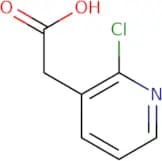
CAS:Versatile small molecule scaffoldFormula:C9H14N2Purezza:Min. 95%Peso molecolare:150.22 g/mol(2-Chloropyridin-3-yl)acetic acid
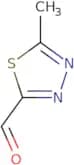
CAS:Versatile small molecule scaffoldFormula:C7H6ClNO2Purezza:Min. 95%Peso molecolare:171.6 g/mol5-Methyl-1,3,4-thiadiazole-2-carbaldehyde
CAS:Versatile small molecule scaffold
Formula:C4H4N2OSPurezza:Min. 95%Peso molecolare:128.16 g/molethyl 6-benzyl-2-oxa-6-azaspiro[3.4]octane-8-carboxylate
CAS:Versatile small molecule scaffold
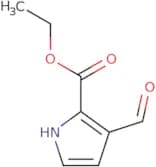
Formula:C16H21NO3Purezza:Min. 95%Peso molecolare:275.35 g/molethyl 3-formyl-1H-pyrrole-2-carboxylate
CAS:Ethyl 3-formyl-1H-pyrrole-2-carboxylate is a formyl compound with the molecular formula C8H8O3. It is a colorless liquid that has a strong odor. The compound can be obtained by the reaction of ethyl acetoacetate and pyrrole in the presence of aluminum chloride. The compound has been studied for its nuclear magnetic resonance (NMR) properties. It has two conformers, which are distinguished by their different chemical shifts, and this difference can be used to study coupling between the carbonyl group and other groups in the molecule.
Formula:C8H9NO3Purezza:Min. 95%Peso molecolare:167.2 g/mol2,4,6-Trichloronicotinaldehyde
CAS:Versatile small molecule scaffold
Formula:C6H2Cl3NOPurezza:Min. 95%Peso molecolare:210.45 g/mol


![(2S)-3-(3,4-dihydroxyphenyl)-2-{[(9H-fluoren-9-ylmethoxy)carbonyl]amino}propanoic acid](/_next/image/?url=https%3A%2Fstatic.cymitquimica.com%2Fproducts%2F3D%2Fthumb-webp%2FMFA01893.webp&w=3840&q=75)
![Spiro[3.3]heptane-2,6-dicarboxylic acid, 2,6-dimethyl ester](/_next/image/?url=https%3A%2Fstatic.cymitquimica.com%2Fproducts%2F3D%2Fthumb-webp%2FMBA94279.webp&w=3840&q=75)

![2,2-Difluorobenzo[d][1,3]dioxol-5-ol](/_next/image/?url=https%3A%2Fstatic.cymitquimica.com%2Fproducts%2F3D%2Fthumb-webp%2FLYB53982.webp&w=3840&q=75)



![1-Azaspiro[3.3]heptane hydrochloride](/_next/image/?url=https%3A%2Fstatic.cymitquimica.com%2Fproducts%2F3D%2Fthumb-webp%2FLED33729.webp&w=3840&q=75)

![ethyl 6-benzyl-2-oxa-6-azaspiro[3.4]octane-8-carboxylate](/_next/image/?url=https%3A%2Fstatic.cymitquimica.com%2Fproducts%2F3D%2Fthumb-webp%2FLBC69289.webp&w=3840&q=75)