


Building Blocks
Sottocategorie di "Building Blocks"
- Acidi boronici e derivati dell'acido boronico(5.780 prodotti)
- Building Blocks Chirali(1.241 prodotti)
- Building Blocks Idrocarburici(6.100 prodotti)
- Building Blocks organici(61.017 prodotti)
Trovati 205265 prodotti di "Building Blocks"
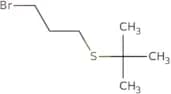
(3-Bromopropyl)(tert-butyl)sulfane
CAS:Versatile small molecule scaffold
Formula:C7H15BrSPurezza:Min. 95%Peso molecolare:211.17 g/molSodium 3-chlorobenzene-1-sulfinate
CAS:Versatile small molecule scaffold
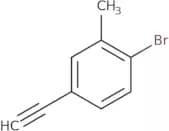
Formula:C6H4ClNaO2SPurezza:Min. 95%Peso molecolare:198.6 g/mol1-Bromo-4-ethynyl-2-methylbenzene
CAS:Versatile small molecule scaffold
Formula:C9H7BrPurezza:Min. 95%Peso molecolare:195.06 g/mol6,8-Dimethyl-1,2,3,4-tetrahydroquinoline hydrochloride
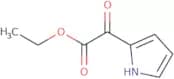
CAS:Versatile small molecule scaffoldFormula:C11H16ClNPurezza:Min. 95%Peso molecolare:197.7 g/molEthyl 2-oxo-2-(1H-pyrrol-2-yl)acetate
CAS:Versatile small molecule scaffold
Formula:C8H9NO3Purezza:Min. 95%Peso molecolare:167.16 g/molTributyl(methoxymethyl)stannane
CAS:Prodotto controllatoTributyl(methoxymethyl)stannane is a synthetic organo-tin compound that has antifungal, antiviral, and antibacterial properties. It is also used in the treatment of idiopathic pulmonary fibrosis, hepatitis, cirrhosis, heart disease, and scleroderma. Tributyl(methoxymethyl)stannane inhibits the synthesis of proteins by binding to the 30S ribosomal subunit through a number of mechanisms. It has been shown to inhibit the growth of many fungi including those that cause athlete's foot and ringworm. Tributyl(methoxymethyl)stannane also shows some promise as an anti-inflammatory agent.
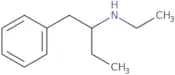
Formula:C14H32OSnPurezza:Min. 95%Peso molecolare:335.1 g/molEthyl(1-phenylbutan-2-yl)amine
CAS:Prodotto controllatoEthyl(1-phenylbutan-2-yl)amine is a fatty acid that has been shown to be effective in the treatment of HIV infection. It binds to the enzyme ns3 protease, which prevents the virus from replicating. The drug has also been shown to bind to monoclonal antibodies and show high values, making it resistant to resistant mutants. Ethyl(1-phenylbutan-2-yl)amine is soluble in organic solvents and can be crystallized as either an amorphous or a crystalline polymorph. It is an inhibitor of the cationic polymerization of hydrochloric acid and an activator of locomotor activity. This drug also acts as a receptor for urine samples.
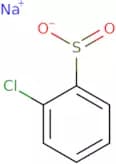
Formula:C12H19NPurezza:Min. 95%Peso molecolare:177.29 g/mol2-Chlorobenzenesulfinic acid sodium
CAS:Versatile small molecule scaffold
Formula:C6H4ClNaO2SPurezza:Min. 95%Peso molecolare:198.6 g/mol3-Methyl-5-oxocyclohexane-1,2-dicarboxylic acid
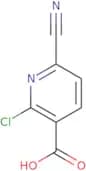
CAS:Versatile small molecule scaffoldFormula:C9H12O5Purezza:Min. 95%Peso molecolare:200.19 g/mol2-Chloro-6-cyanopyridine-3-carboxylic acid
CAS:Versatile small molecule scaffold
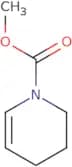
Formula:C7H3ClN2O2Purezza:Min. 95%Peso molecolare:182.56 g/molMethyl 1,2,3,4-tetrahydropyridine-1-carboxylate
CAS:Versatile small molecule scaffold
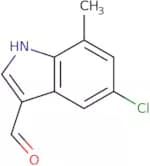
Formula:C7H11NO2Purezza:Min. 95%Peso molecolare:141.17 g/mol5-Chloro-7-methyl-1H-indole-3-carbaldehyde
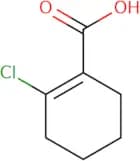
CAS:Versatile small molecule scaffoldFormula:C10H8ClNOPurezza:Min. 95%Peso molecolare:193.63 g/mol2-Chlorocyclohex-1-ene-1-carboxylic acid
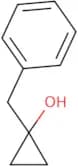
CAS:2-Chlorocyclohex-1-ene-1-carboxylic acid is a synthetic compound that has been used as a reactant for the production of phthalic anhydride. The reaction mechanism begins with the formation of isocyanide, which reacts with benzoic acid to form an intermediate benzoyl isocyanide. This intermediate reacts with the acetic acid to produce 2-chlorocyclohexanecarboxylic acid, which in turn undergoes hydrolysis to give phthalic anhydride.Formula:C7H9ClO2Purezza:Min. 95%Peso molecolare:160.6 g/mol1-Benzylcyclopropan-1-ol
CAS:1-Benzylcyclopropan-1-ol is an organic compound that has been shown to be a reactive intermediate in the mechanistic pathway of bond cleavage. It can be formed from diketones by ring opening and subsequent protonation. The functional groups on 1-Benzylcyclopropan-1-ol are mainly electron donating and electron withdrawing, which gives it the capability to form covalent bonds with electron rich and electron poor molecules, respectively.
Formula:C10H12OPurezza:Min. 95%Peso molecolare:148.2 g/molFuro[3,2-b]pyridine-5-carboxylic acid
CAS:Versatile small molecule scaffold
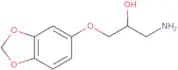
Formula:C8H5NO3Purezza:Min. 95%Peso molecolare:163.13 g/mol1-Amino-3-(1,3-dioxaindan-5-yloxy)propan-2-ol
CAS:Versatile small molecule scaffold
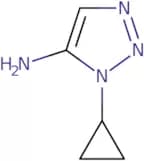
Formula:C10H13NO4Purezza:Min. 95%Peso molecolare:211.21 g/mol1-Cyclopropyl-1H-1,2,3-triazol-5-amine
CAS:Versatile small molecule scaffoldFormula:C5H8N4Purezza:Min. 95%Peso molecolare:124.14 g/mol8-chloroimidazo[1,5-a]pyrazine
CAS:8-Chloroimidazo[1,5-a]pyrazine is a potent insulin-like growth factor-I receptor (IGF-IR) inhibitor with potential therapeutic use for type II diabetes. It was found to inhibit IGF-I induced activation of the IR and downstream signaling pathways in a dose dependent manner. 8-Chloroimidazo[1,5-a]pyrazine inhibited IGF-I induced mitogenesis in human colon cancer cells and showed antiangiogenic activity in nude mice bearing xenografts of human colon cancer cells.
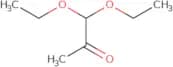
Formula:C6H4ClN3Purezza:Min. 95%Peso molecolare:153.57 g/mol1,1-Diethoxypropan-2-one
CAS:Versatile small molecule scaffold
Formula:C7H14O3Purezza:Min. 95%Peso molecolare:146.18 g/mol1-[5-(4-Chlorophenyl)-1,2,4-oxadiazol-3-yl]ethan-1-amine hydrochloride
CAS:Versatile small molecule scaffold
Formula:C10H11Cl2N3OPurezza:Min. 95%Peso molecolare:260.12 g/mol





![Furo[3,2-b]pyridine-5-carboxylic acid](/_next/image/?url=https%3A%2Fstatic.cymitquimica.com%2Fproducts%2F3D%2Fthumb-webp%2FGCA47391.webp&w=3840&q=75)
![8-chloroimidazo[1,5-a]pyrazine](/_next/image/?url=https%3A%2Fstatic.cymitquimica.com%2Fproducts%2F3D%2Fthumb-webp%2FGCA46823.webp&w=3840&q=75)
![1-[5-(4-Chlorophenyl)-1,2,4-oxadiazol-3-yl]ethan-1-amine hydrochloride](/_next/image/?url=https%3A%2Fstatic.cymitquimica.com%2Fproducts%2F3D%2Fthumb-webp%2FJFC42993.webp&w=3840&q=75)