Building Blocks
Sottocategorie di "Building Blocks"
- Acidi boronici e derivati dell'acido boronico(5.780 prodotti)
- Building Blocks Chirali(1.239 prodotti)
- Building Blocks Idrocarburici(6.100 prodotti)
- Building Blocks organici(61.005 prodotti)
Trovati 205234 prodotti di "Building Blocks"
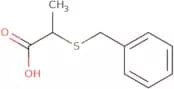
2-(Benzylthio)propanoic acid
CAS:2-Benzylthiopropanoic acid is a primary alcohol that is an antimicrobial agent. It is a n-oxide, which means it contains the –O–O– group. 2-Benzylthiopropanoic acid has two isomers, alpha and beta. The alpha form has a sulfamic acid group and the beta form has a carboxylic acid group. 2-Benzylthiopropanoic acid can be used to treat gram-negative bacterial infections, such as those caused by Escherichia coli, Klebsiella pneumoniae, Pseudomonas aeruginosa, or Enterobacter cloacae. The most effective way to use this drug is as an aerosol for inhalation therapy in patients with cystic fibrosis or bronchiectasis who have had chronic lung infection. In addition to being an antimicrobial agent, 2-benzylthiopropanoic acid has been shown to have antiinflammatory
Formula:C10H12O2SPurezza:Min. 95%Peso molecolare:196.27 g/molMethyl 2-[benzyl(2-methoxy-2-oxoethyl)amino]acetate
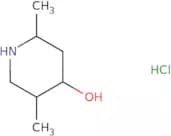
CAS:Versatile small molecule scaffoldFormula:C13H17NO4Purezza:Min. 95%Peso molecolare:251.28 g/mol2,5-Dimethylpiperidin-4-ol hydrochloride
CAS:Versatile small molecule scaffold
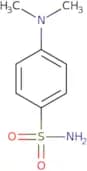
Formula:C7H16ClNOPurezza:Min. 95%Peso molecolare:165.66 g/mol4-(Dimethylamino)benzenesulfonamide
CAS:4-(Dimethylamino)benzenesulfonamide is a fluorescent dye used in analytical chemistry. It has been shown to be useful as a solvent for the separation of metal cations and anilines, as well as for the determination of binding constants. The fluorescence spectrum of 4-(dimethylamino)benzenesulfonamide is sensitive to metal cations and anilines, which can be used to determine their concentration. 4-(dimethylamino)benzenesulfonamide has a phenyl ring with amido groups that make it nonpolar, allowing it to dissolve in solvents such as acetonitrile. This molecule also binds to metal cations such as copper and zinc, which allows it to act as a sensor for those metals.
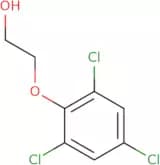
Formula:C8H12N2O2SPurezza:Min. 95%Peso molecolare:200.26 g/mol2-(2,4,6-Trichlorophenoxy)ethanol
CAS:2-(2,4,6-Trichlorophenoxy)ethanol is a chlorinating agent that catalyzes the reaction of chlorine with hydroxyl groups to form hypochlorite. 2-(2,4,6-Trichlorophenoxy)ethanol can be used to produce chlorinated water or other disinfectants. It has been shown to have a weak estrogenic effect and has been found in the urine of animals treated with this compound. This chemical also binds to glucuronic acid and is excreted in the urine as a conjugate with glucuronide. The fixation of 2-(2,4,6-trichlorophenoxy)ethanol onto the imidazole ring of histidine residues can be inhibited by prochloraz and chloramine T.
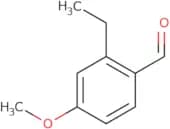
Formula:C8H7Cl3O2Purezza:Min. 95%Peso molecolare:241.5 g/mol2-Ethyl-4-methoxybenzaldehyde
CAS:2-Ethyl-4-methoxybenzaldehyde is an aromatic aldehyde that is used in the synthesis of estrogens. It can be synthesized by the Corey-Fuchs reaction between 2-methylphenol and ethyl acetoacetate. This product can also be reacted with bromine to produce bromoaldehydes, which have been used as estrogen analogues. The formylation of this compound produces formaldehyde, which is used in the elimination of steroids.
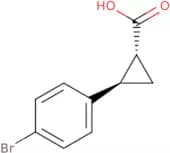
Formula:C10H12O2Purezza:Min. 95%Peso molecolare:164.2 g/molrac-(1R,2R)-2-(4-bromophenyl)cyclopropane-1-carboxylic acid, trans
CAS:Versatile small molecule scaffold
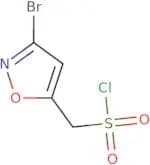
Formula:C10H9BrO2Purezza:Min. 95%Peso molecolare:241.1 g/mol(3-Bromo-1,2-oxazol-5-yl)methanesulfonyl chloride
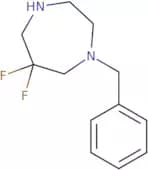
CAS:Versatile small molecule scaffoldFormula:C4H3BrClNO3SPurezza:Min. 95%Peso molecolare:260.49 g/mol1-Benzyl-6,6-difluoro-1,4-diazepane
CAS:Versatile small molecule scaffold
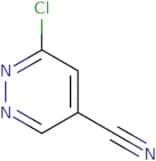
Formula:C12H16F2N2Purezza:Min. 95%Peso molecolare:226.27 g/mol3-Chloropyridazine-5-carbonitrile
CAS:Versatile small molecule scaffold
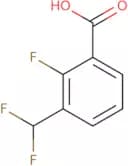
Formula:C5H2ClN3Purezza:Min. 95%Peso molecolare:139.54 g/mol3-(Difluoromethyl)-2-fluorobenzoic acid
CAS:Versatile small molecule scaffold
Formula:C8H5F3O2Purezza:Min. 95%Peso molecolare:190.12 g/mol(2-Phenylcyclobutyl)methanols
CAS:Versatile small molecule scaffold
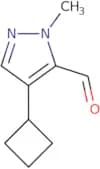
Formula:C11H14OPurezza:Min. 95%Peso molecolare:162.2 g/mol4-Cyclobutyl-1-methyl-1H-pyrazole-5-carbaldehyde
CAS:Versatile small molecule scaffold
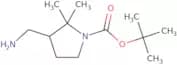
Formula:C9H12N2OPurezza:Min. 95%Peso molecolare:164.2 g/moltert-Butyl 3-(aminomethyl)-2,2-dimethylpyrrolidine-1-carboxylate
CAS:Versatile small molecule scaffoldFormula:C12H24N2O2Purezza:Min. 95%Peso molecolare:228.3 g/mol4-Hydroxy-5-methoxy-2-methylbenzonitrile
CAS:Versatile small molecule scaffold
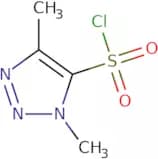
Formula:C9H9NO2Purezza:Min. 95%Peso molecolare:163.17 g/molDimethyl-1H-1,2,3-triazole-5-sulfonyl chloride
CAS:Versatile small molecule scaffoldFormula:C4H6ClN3O2SPurezza:Min. 95%Peso molecolare:195.63 g/mol2-(3-Fluoropyridin-2-yl)acetic acid hydrochloride
CAS:Versatile small molecule scaffold
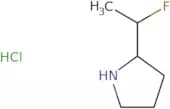
Formula:C7H7ClFNO2Purezza:Min. 95%Peso molecolare:191.59 g/mol2-(1-Fluoroethyl)pyrrolidine hydrochloride
CAS:Versatile small molecule scaffold
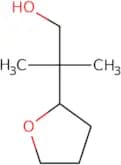
Formula:C6H13ClFNPurezza:Min. 95%Peso molecolare:153.6 g/mol2-Methyl-2-(oxolan-2-yl)propan-1-ol
CAS:Versatile small molecule scaffold
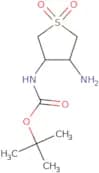
Formula:C8H16O2Purezza:Min. 95%Peso molecolare:144.21 g/moltert-Butyl N-(4-amino-1,1-dioxo-1λ6-thiolan-3-yl)carbamate
CAS:Versatile small molecule scaffold
Formula:C9H18N2O4SPurezza:Min. 95%Peso molecolare:250.3 g/mol

![Methyl 2-[benzyl(2-methoxy-2-oxoethyl)amino]acetate](/_next/image/?url=https%3A%2Fstatic.cymitquimica.com%2Fproducts%2F3D%2Fthumb-webp%2FGAA17526.webp&w=3840&q=75)