Building Blocks
Sottocategorie di "Building Blocks"
- Acidi boronici e derivati dell'acido boronico(5.774 prodotti)
- Building Blocks Chirali(1.237 prodotti)
- Building Blocks Idrocarburici(6.098 prodotti)
- Building Blocks organici(60.969 prodotti)
Trovati 205134 prodotti di "Building Blocks"
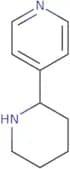
4-(Piperidin-2-yl)pyridine
CAS:Versatile small molecule scaffold
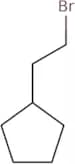
Formula:C10H14N2Purezza:Min. 95%Peso molecolare:162.23 g/mol(2-bromoethyl)cyclopentane
CAS:Versatile small molecule scaffold
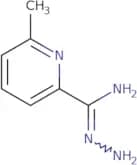
Formula:C7H13BrPurezza:Min. 95%Peso molecolare:177.09 g/molN-Amino-6-methylpyridine-2-carboximidamide
CAS:Versatile small molecule scaffold
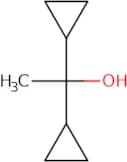
Formula:C7H10N4Purezza:Min. 95%Peso molecolare:150.18 g/mol1,1-Dicyclopropylethan-1-ol
CAS:Versatile small molecule scaffold
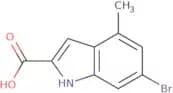
Formula:C8H14OPurezza:Min. 95%Peso molecolare:126.2 g/mol6-Bromo-4-methyl-1H-indole-2-carboxylic acid
CAS:Versatile small molecule scaffold
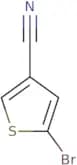
Formula:C10H8BrNO2Purezza:Min. 95%Peso molecolare:254.08 g/mol5-bromothiophene-3-carbonitrile
CAS:5-Bromothiophene-3-carbonitrile is a thiophene that has been substituted with two cyano groups. The 5-bromothiophene-3-carbonitrile molecule has anisotropic properties, which are due to the linear orientation of the molecules. These properties lead to refractive indices and parameters that depend on the angle of incidence. 5-Bromothiophene-3-carbonitrile can be used as a polar solvent for phenylthiophenes, biphenyls, and other compounds with similar structures because it is optically active. The molecule also has an optical activity that depends on the orientation of the dipole moment in relation to the electric field.
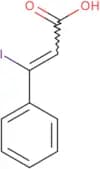
Formula:C5H2BrNSPurezza:Min. 95%Peso molecolare:188.04 g/mol(2Z)-3-Iodo-3-phenylprop-2-enoic acid
CAS:Versatile small molecule scaffold
Formula:C9H7IO2Purezza:Min. 95%Peso molecolare:274.1 g/molBenzo[4,5]thieno[2,3-D]pyrimidin-4(3H)-one
CAS:Versatile small molecule scaffold
Formula:C10H6N2OSPurezza:Min. 95%Peso molecolare:202.23 g/mol2-[Bis(ethylsulfanyl)methylidene]propanedinitrile
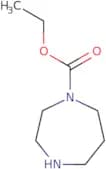
CAS:Versatile small molecule scaffoldFormula:C8H10N2S2Purezza:Min. 95%Peso molecolare:198.3 g/molEthyl 1,4-diazepane-1-carboxylate
CAS:Versatile small molecule scaffold
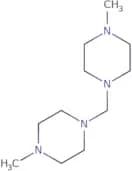
Formula:C8H16N2O2Purezza:Min. 95%Peso molecolare:172.22 g/molBis(4-methylpiperazin-1-yl)methane
CAS:Versatile small molecule scaffold
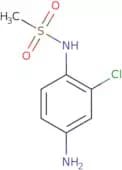
Formula:C11H24N4Purezza:Min. 95%Peso molecolare:212.34 g/molN-(4-Amino-2-chlorophenyl)methanesulfonamide
CAS:Versatile small molecule scaffold
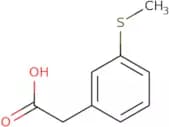
Formula:C7H9ClN2O2SPurezza:Min. 95%Peso molecolare:220.68 g/mol3-(Methylthio)phenyl acetic acid
CAS:Versatile small molecule scaffold
Formula:CH3SC6H4CH2CO2HPurezza:Min. 95%Peso molecolare:182.24 g/molBicyclo[2.2.2]octan-2-ol
CAS:Bicyclo[2.2.2]octan-2-ol is an antiplasmodial agent that is used to treat malaria caused by Plasmodium falciparum and P. vivax. It binds to the parasite's heme, preventing its conversion of heme to protoporphyrin IX and blocking the synthesis of ATP, leading to cell death. Bicyclo[2.2.2]octan-2-ol has also been shown to be effective against multiresistant strains of plasmodium and has a low toxicity in humans. This substance can be synthesized by epimerization of 2-(bromomethyl)cyclohexanol with maleic anhydride or 2-benzoylcyclohexanol with benzoic acid. The yields from these reactions are low, but the product can be easily tracked due to its distinctive chemical properties (e.g., high boiling point
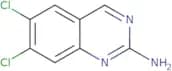
Formula:C8H14OPurezza:Min. 95%Peso molecolare:126.2 g/mol6,7-Dichloroquinazolin-2-amine
CAS:Versatile small molecule scaffold
Formula:C8H5Cl2N3Purezza:Min. 95%Peso molecolare:214.05 g/mol[(2-Methylphenyl)thio]acetic acid
CAS:Versatile small molecule scaffold
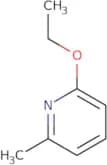
Formula:C9H10O2SPurezza:Min. 95%Peso molecolare:182.24 g/mol2-Ethoxy-6-methylpyridine
CAS:2-Ethoxy-6-methylpyridine is a polypeptide chain with anti-oxidant properties. It has been shown to significantly reduce oxidative damage to protein synthesis in the cytoplasm of animals. 2-Ethoxy-6-methylpyridine also inhibits lipid peroxidation and membrane damage, which may be due to its ability to act as an endoplasmic reticulum (ER) template. This compound is able to bind to ER membranes and alter their structure, which may lead to the prevention of cell death.
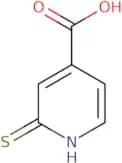
Formula:C8H11NOPurezza:Min. 95%Peso molecolare:137.18 g/mol2-Thioxo-1,2-dihydropyridine-4-carboxylic acid
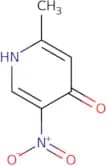
CAS:2-Thioxo-1,2-dihydropyridine-4-carboxylic acid (TDPCA) is a molecule that is structurally similar to the protonated form of 2-thioxoimidazole carboxylic acid. TDPCA has been shown to be an antibacterial agent against Staphylococcus aureus with surface-enhanced Raman scattering properties. TDPCA can also act as a fluorescence probe and has pharmacokinetic properties that are dependent on its molecular weight, which can be determined using plasma mass spectrometry. TDPCA absorbs light in the red region of the spectrum and shifts to the blue region when it reacts with silver ions. It also binds to carboxylate groups, which may be used for detection by nanosensors.Formula:C6H5NO2SPurezza:Min. 95%Peso molecolare:155.17 g/mol2-Methyl-5-nitropyridin-4-ol
CAS:Versatile small molecule scaffold
Formula:C6H6N2O3Purezza:Min. 95%Peso molecolare:154.12 g/mol5-Iodofuran-2-carboxylic acid
CAS:5-Iodofuran-2-carboxylic acid is an ionic compound that acts as a serotonin reuptake inhibitor. It is a hardener in liquid crystal display (LCD) screens, and has been used to increase the hardness of epoxy resin in coatings for plastic. 5-Iodofuran-2-carboxylic acid inhibits the serotonin transporter (SERT), which is responsible for the reuptake of serotonin from the synaptic cleft. This inhibition leads to increased extracellular concentrations of serotonin, which can result in serotonergic side effects such as nausea, vomiting, and headache.
Formula:C5H3IO3Purezza:Min. 95%Peso molecolare:237.98 g/mol

![Benzo[4,5]thieno[2,3-D]pyrimidin-4(3H)-one](/_next/image/?url=https%3A%2Fstatic.cymitquimica.com%2Fproducts%2F3D%2Fthumb-webp%2FTAA77449.webp&w=3840&q=75)
![2-[Bis(ethylsulfanyl)methylidene]propanedinitrile](/_next/image/?url=https%3A%2Fstatic.cymitquimica.com%2Fproducts%2F3D%2Fthumb-webp%2FTAA77138.webp&w=3840&q=75)
![Bicyclo[2.2.2]octan-2-ol](/_next/image/?url=https%3A%2Fstatic.cymitquimica.com%2Fproducts%2F3D%2Fthumb-webp%2FTAA68463.webp&w=3840&q=75)
![[(2-Methylphenyl)thio]acetic acid](/_next/image/?url=https%3A%2Fstatic.cymitquimica.com%2Fproducts%2F3D%2Fthumb-webp%2FTAA61915.webp&w=3840&q=75)