Building Blocks
Sottocategorie di "Building Blocks"
- Acidi boronici e derivati dell'acido boronico(5.780 prodotti)
- Building Blocks Chirali(1.241 prodotti)
- Building Blocks Idrocarburici(6.100 prodotti)
- Building Blocks organici(61.010 prodotti)
Trovati 205258 prodotti di "Building Blocks"
2-(2-Phenoxyethoxy)benzohydrazide
CAS:Versatile small molecule scaffold
Formula:C15H16N2O3Purezza:Min. 95%Peso molecolare:272.3 g/mol6-(Piperazin-1-yl)-8-oxa-3,5-diazatricyclo[7.4.0.0,2,7]trideca-1(9),2(7),3,5,10,12-hexaene
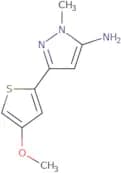
CAS:Versatile small molecule scaffoldFormula:C14H14N4OPurezza:Min. 95%Peso molecolare:254.29 g/mol3-(4-Methoxythiophen-2-yl)-1-methyl-1H-pyrazol-5-amine
CAS:Versatile small molecule scaffoldFormula:C9H11N3OSPurezza:Min. 95%Peso molecolare:209.27 g/mol2-[4-(N-Methylthiophene-2-sulfonamido)phenoxy]acetic acid
CAS:Prodotto controllato2-[4-(N-Methylthiophene-2-sulfonamido)phenoxy]acetic acid is a peptide that is used as a research tool in the study of protein interactions, antibody, cell biology and pharmacology. It is an inhibitor of ion channels and receptors. 2-[4-(N-Methylthiophene-2-sulfonamido)phenoxy]acetic acid has been shown to activate the nicotinic acetylcholine receptor by binding to it and preventing the displacement of acetylcholine from it.
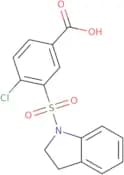
Formula:C13H13NO5S2Purezza:Min. 95%Peso molecolare:327.4 g/mol4-Chloro-3-(2,3-dihydro-1H-indole-1-sulfonyl)benzoic acid
CAS:Prodotto controllato4-Chloro-3-(2,3-dihydro-1H-indole-1-sulfonyl)benzoic acid is a ligand for the receptor for nerve growth factor. It has been shown to be an activator of ion channels and to inhibit protein interactions.
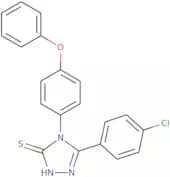
Formula:C15H12ClNO4SPurezza:Min. 95%Peso molecolare:337.8 g/mol5-(4-Chlorophenyl)-4-(4-phenoxyphenyl)-4H-1,2,4-triazole-3-thiol
CAS:Versatile small molecule scaffold
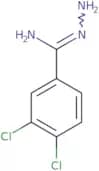
Formula:C20H14ClN3OSPurezza:Min. 95%Peso molecolare:379.9 g/molN-Amino-3,4-dichlorobenzene-1-carboximidamide
CAS:Versatile small molecule scaffold
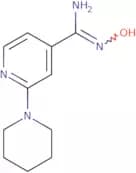
Formula:C7H7Cl2N3Purezza:Min. 95%Peso molecolare:204.05 g/molN'-Hydroxy-2-(piperidin-1-yl)pyridine-4-carboximidamide
CAS:Versatile small molecule scaffold
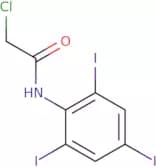
Formula:C11H16N4OPurezza:Min. 95%Peso molecolare:220.27 g/mol2-Chloro-N-(2,4,6-triiodophenyl)acetamide
CAS:Versatile small molecule scaffold
Formula:C8H5ClI3NOPurezza:Min. 95%Peso molecolare:547.3 g/mol2-Oxo-6-thia-1,8-diazatricyclo[7.4.0.0,3,7]trideca-3(7),4,8,10,12-pentaene-5-carboxylic acid
CAS:Versatile small molecule scaffold
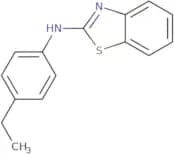
Formula:C11H6N2O3SPurezza:Min. 95%Peso molecolare:246.24 g/molN-(4-Ethylphenyl)-1,3-benzothiazol-2-amine
CAS:Versatile small molecule scaffoldFormula:C15H14N2SPurezza:Min. 95%Peso molecolare:254.4 g/mol[3-(4-Formylphenoxy)-propyl]-carbamic acid tert-butyl ester
CAS:Versatile small molecule scaffold
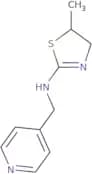
Formula:C15H21NO4Purezza:Min. 95%Peso molecolare:279.34 g/mol5-Methyl-N-(pyridin-4-ylmethyl)-4,5-dihydro-1,3-thiazol-2-amine
CAS:Versatile small molecule scaffold
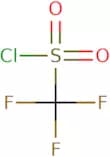
Formula:C10H13N3SPurezza:Min. 95%Peso molecolare:207.3 g/molTrifluoromethanesulfonyl chloride
CAS:Trifluoromethanesulfonyl chloride is a reactive chemical that reacts with nucleophilic groups in biological molecules. It is used for the treatment of infectious diseases and metabolic disorders. Trifluoromethanesulfonyl chloride has been shown to have receptor activity against various microorganisms, including resistant strains. Structural analysis has shown that the active form of trifluoromethanesulfonyl chloride binds to malonic acid and other coumarin derivatives. This binding prevents the formation of hydrogen bonds, which would otherwise stabilize the molecule, leading to its degradation. Trifluoromethanesulfonyl chloride also reacts with magnesium salt to produce trifluoroacetic acid, which is an organic solvent that can be used as a reaction medium or a reagent in organic synthesis.
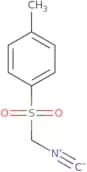
Formula:CClF3O2SPurezza:Min. 95%Peso molecolare:168.52 g/mol4-Toluenesulfonylmethylisonitrile
CAS:4-Toluenesulfonylmethylisonitrile is a potent antagonist of the malonic acid receptor that has been shown to be reactive. It is synthesized by reacting methyl ketones with trifluoroacetic acid and nitrogen gas in the presence of a catalyst. The reaction mechanism has been studied using gravimetric analysis and the thermodynamic data have been calculated for fatty acids. 4-Toluenesulfonylmethylisonitrile can be used to make esters.
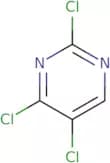
Formula:C9H9NO2SPurezza:Min. 95%Colore e forma:Off-White To Yellow SolidPeso molecolare:195.24 g/mol2,4,5-Trichloropyrimidine
CAS:2,4,5-Trichloropyrimidine is a chemical compound that has reactive properties. It can be used in the Suzuki coupling reaction to form new molecules. 2,4,5-Trichloropyrimidine can also be used as a potent inhibitor of epidermal growth factor receptors (EGFRs). It has been shown to inhibit the growth of cancer cells and other autoimmune diseases. 2,4,5-Trichloropyrimidine has shown significant inhibitory activity against kinases. It is selective for EGFRs and does not have any effect on other kinases. This suggests that it may be an effective therapeutic agent for the treatment of certain cancers and autoimmune diseases.
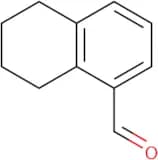
Formula:C4HCl3N2Purezza:Min. 95%Peso molecolare:183.42 g/mol5,6,7,8-Tetrahydronaphthalene-1-carbaldehyde
CAS:Please enquire for more information about 5,6,7,8-Tetrahydronaphthalene-1-carbaldehyde including the price, delivery time and more detailed product information at the technical inquiry form on this page
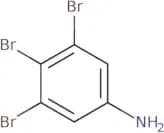
Formula:C11H12OPurezza:Min. 95%Colore e forma:Clear LiquidPeso molecolare:160.21 g/mol3,4,5-Tribromoaniline
CAS:Versatile small molecule scaffold
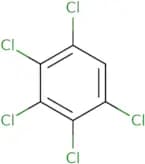
Formula:C6H4Br3NPurezza:Min. 95%Peso molecolare:329.81 g/mol1,2,3,4,5-Pentachlorobenzene
CAS:1,2,3,4,5-Pentachlorobenzene is a chlorinated hydrocarbon that is used in the production of pesticides and herbicides. It is an ingredient in the manufacturing of pentachlorophenol and pentachloronitrobenzene. 1,2,3,4,5-Pentachlorobenzene has been used as a chemical intermediate or solvent for the production of other chemicals. The emissions from this chemical can be harmful to humans and animals because it has been shown to affect enzyme activities at sublethal doses. It also affects rat liver microsomes and causes DNA damage that can lead to cancer.
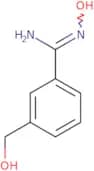
Formula:C6HCl5Purezza:Min. 95%Peso molecolare:250.34 g/mol3-(Hydroxymethyl)benzamidoxime
CAS:Versatile small molecule scaffold
Formula:C8H10N2O2Purezza:Min. 95%Peso molecolare:166.18 g/mol


![6-(Piperazin-1-yl)-8-oxa-3,5-diazatricyclo[7.4.0.0,2,7]trideca-1(9),2(7),3,5,10,12-hexaene](/_next/image/?url=https%3A%2Fstatic.cymitquimica.com%2Fproducts%2F3D%2Fthumb-webp%2FFQA33927.webp&w=3840&q=75)
![2-[4-(N-Methylthiophene-2-sulfonamido)phenoxy]acetic acid](/_next/image/?url=https%3A%2Fstatic.cymitquimica.com%2Fproducts%2F3D%2Fthumb-webp%2FFQA34267.webp&w=3840&q=75)
![2-Oxo-6-thia-1,8-diazatricyclo[7.4.0.0,3,7]trideca-3(7),4,8,10,12-pentaene-5-carboxylic acid](/_next/image/?url=https%3A%2Fstatic.cymitquimica.com%2Fproducts%2F3D%2Fthumb-webp%2FFQA34851.webp&w=3840&q=75)
![[3-(4-Formylphenoxy)-propyl]-carbamic acid tert-butyl ester](/_next/image/?url=https%3A%2Fstatic.cymitquimica.com%2Fproducts%2F3D%2Fthumb-webp%2FFQA43133.webp&w=3840&q=75)