Building Blocks
Sottocategorie di "Building Blocks"
- Acidi boronici e derivati dell'acido boronico(5.778 prodotti)
- Building Blocks Chirali(1.243 prodotti)
- Building Blocks Idrocarburici(6.099 prodotti)
- Building Blocks organici(61.038 prodotti)
Trovati 205376 prodotti di "Building Blocks"
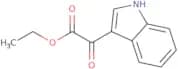
Ethyl 2-(indol-3-yl)-2-oxoacetate
CAS:Ethyl 2-(indol-3-yl)-2-oxoacetate is a hydroxy derivative of the amino acid tyrosine. It inhibits the enzyme tyrosine hydroxylase, which catalyzes the conversion of tyrosine to L-DOPA. This in turn affects dopamine synthesis and has an inhibitory effect on rat brain. Ethyl 2-(indol-3-yl)-2-oxoacetate also inhibits methylmagnesium borohydride in vitro, which is a reagent that breaks down esters, amides, and nitriles. Tyrosine hydroxylase is inhibited by the presence of two hydroxy groups on the ethyl side chain and one hydroxy group on the indole ring. It can be used as a structural analogue for other drugs that are used to treat Parkinson's disease or depression.
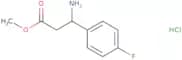
Formula:C12H11NO3Purezza:Min. 95%Peso molecolare:217.22 g/molMethyl (S)-3-amino-3-(4-fluorophenyl)propanoate hydrochloride
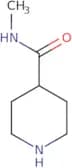
CAS:Versatile small molecule scaffoldFormula:C10H13ClFNO2Purezza:Min. 95%Peso molecolare:233.67 g/molN-Methylpiperidine-4-carboxamide
CAS:Versatile small molecule scaffold
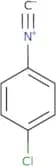
Formula:C7H14N2OPurezza:Min. 95%Peso molecolare:142.2 g/mol1-Chloro-4-isocyanobenzene
CAS:1-Chloro-4-isocyanobenzene (1CI) is an organic compound that has been used as a chemical probe for the detection of amines and other molecules on metal surfaces. The frequency shift in Raman spectra, which is observed after the addition of 1CI to the metal surface, is used to detect amines. 1CI has also been shown to be a potent inhibitor of mitochondrial function. This molecule binds to nucleophilic sites on metal surfaces and forms covalent bonds with them, leading to a high degree of inhibition.
1CI can be synthesized in three steps from commercially available starting materials and is relatively easy to purify.Formula:C7H4ClNPurezza:Min. 95%Peso molecolare:137.56 g/mol2-[3-(Propan-2-yl)phenoxy]acetic acid
CAS:2-[3-(Propan-2-yl)phenoxy]acetic acid is a chemical compound that is used as an additive in benzene, and is a phytotoxic chemical. It prevents the formation of chlorophyll by blocking electron transport and inhibiting photosynthesis. 2-[3-(Propan-2-yl)phenoxy]acetic acid is used to induce callus tissue from lettuce, radish, and other plants. This compound also inhibits the growth of various bacteria including Escherichia coli and Pseudomonas aeruginosa.
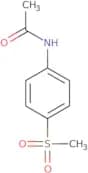
Formula:C11H14O3Purezza:Min. 95%Peso molecolare:194.23 g/mol4'-(Methylsulfonyl)acetanilide
CAS:4'-(Methylsulfonyl)acetanilide is an organic compound that has been shown to have antibacterial and antiviral activity. It targets the benzene nucleus, and inhibits the synthesis of nucleic acids by inhibiting the enzyme ribonucleotide reductase. 4'-(Methylsulfonyl)acetanilide also inhibits viral replication, by binding to the active site of a viral protein (a DNA polymerase), which blocks the incorporation of nucleotides into the virus's DNA. In addition, 4'-(methylsulfonyl)acetanilide is an anti-helminthic agent, as it can inhibit worm motility and kill larvae in vitro. The structure-activity relationships between this molecule and other benzimidazole derivatives were analysed in order to identify new potential drugs for treating diseases caused by viruses or parasites.
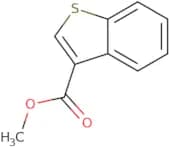
Formula:C9H11NO3SPurezza:Min. 95%Peso molecolare:213.26 g/molMethyl benzothiophene-3-carboxylate
CAS:Versatile small molecule scaffold
Formula:C10H8O2SPurezza:Min. 95%Peso molecolare:192.23 g/mol3-(5-Methyl-[1,3,4]oxadiazol-2-yl)-phenylamine
CAS:Versatile small molecule scaffold
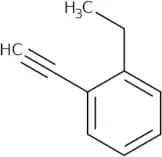
Formula:C9H9N3OPurezza:Min. 95%Peso molecolare:175.19 g/mol1-Ethyl-2-ethynylbenzene
CAS:1-Ethyl-2-ethynylbenzene is an indene that can be synthesized by the reaction of 1-ethylbenzene with ethynylmagnesium bromide and trifluoroacetyl chloride. 1-Ethyl-2-ethynylbenzene reacts as a nucleophile with electrophiles, such as phenylsulfonyl and acetylene compounds, to form sulfones and acetylenes. It can also react with tetrafluoroborates to form indenes.
Formula:C10H10Purezza:Min. 95%Peso molecolare:130.19 g/mol1,8-Dioxa-4-azaspiro[4.5]decane
CAS:Versatile small molecule scaffold
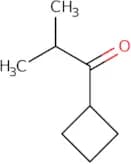
Formula:C7H13NO2Purezza:Min. 95%Peso molecolare:143.18 g/mol1-Cyclobutyl-2-methylpropan-1-one
CAS:Versatile small molecule scaffold
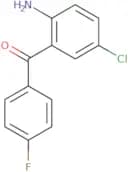
Formula:C8H14OPurezza:Min. 95%Peso molecolare:126.2 g/mol4-Chloro-2-(4-fluorobenzoyl)aniline
CAS:Versatile small molecule scaffold
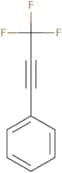
Formula:C13H9ClFNOPurezza:Min. 95%Peso molecolare:249.67 g/mol(3,3,3-Trifluoroprop-1-yn-1-yl)benzene
CAS:(3,3,3-Trifluoroprop-1-yn-1-yl)benzene is a reaction product that can be used to inhibit the activity of metalloprotease and as an anti-cancer agent. This compound inhibits the enzyme that causes chronic kidney disease and degenerative diseases. It is a potent inhibitor of metalloprotease, which is involved in cancer progression, fatty acid synthesis and bone formation. The effective dose for this drug is between 1 and 10mg/kg body weight. It has been shown to have an asymmetric synthesis with the use of amido groups. (3,3,3-Trifluoroprop-1-yn-1-yl)benzene also has antirheumatic properties due to its ability to inhibit proteases such as matrix metalloproteinases and cathepsins.
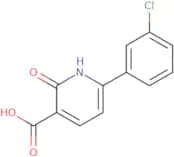
Formula:C9H5F3Purezza:Min. 95%Peso molecolare:170.13 g/mol6-(3-Chlorophenyl)-2-oxo-1,2-dihydropyridine-3-carboxylic Acid
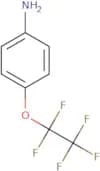
CAS:Versatile small molecule scaffoldFormula:C12H8ClNO3Purezza:Min. 95%Peso molecolare:249.65 g/mol4-(Perfluoroethoxy)aniline
CAS:Versatile small molecule scaffold
Formula:C8H6F5NOPurezza:Min. 95%Peso molecolare:227.13 g/mol(S)-(+)-1-Bromo-2-methylbutane
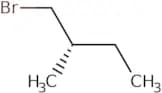
CAS:(S)-(+)-1-Bromo-2-methylbutane is a chiral molecule with two stereoisomers, the cis and trans forms. The cis form has been observed to be the more stable of the two. It is a functional theory that these two forms are not mirror images of each other because they have different conformations. (S)-(+)-1-Bromo-2-methylbutane has been used in the synthesis of a number of important molecules. The stereoisomers can be distinguished by conformational analysis and optical microscopy. (S)-(+)-1-Bromo-2-methylbutane also has an application in biotechnology for use as a precursor for hydrazones, which are important in organic chemistry and molecular biology, such as DNA sequencing.
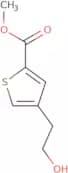
Formula:C5H11BrPurezza:Min. 95%Peso molecolare:151.04 g/molMethyl 4-(2-hydroxyethyl)thiophene-2-carboxylate
CAS:Versatile small molecule scaffold
Formula:C8H10O3SPurezza:Min. 95%Peso molecolare:186.23 g/mol[2-(2-Methoxyethoxy)pyridin-4-yl]methanol
CAS:Versatile small molecule scaffold
Formula:C9H13NO3Purezza:Min. 95%Peso molecolare:183.2 g/moltert-Butyl N-[(2R)-4-chloro-3-oxobutan-2-yl]carbamate
CAS:Versatile small molecule scaffold
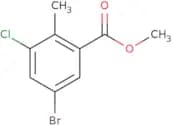
Formula:C9H16ClNO3Purezza:Min. 95%Colore e forma:PowderPeso molecolare:221.68 g/molMethyl 5-bromo-3-chloro-2-methylbenzoate
CAS:Versatile small molecule scaffold
Formula:C9H8BrClO2Purezza:Min. 95%Peso molecolare:263.51 g/mol

![2-[3-(Propan-2-yl)phenoxy]acetic acid](/_next/image/?url=https%3A%2Fstatic.cymitquimica.com%2Fproducts%2F3D%2Fthumb-webp%2FBAA87852.webp&w=3840&q=75)
![3-(5-Methyl-[1,3,4]oxadiazol-2-yl)-phenylamine](/_next/image/?url=https%3A%2Fstatic.cymitquimica.com%2Fproducts%2F3D%2Fthumb-webp%2FXEA73340.webp&w=3840&q=75)
![1,8-Dioxa-4-azaspiro[4.5]decane](/_next/image/?url=https%3A%2Fstatic.cymitquimica.com%2Fproducts%2F3D%2Fthumb-webp%2FXEA82412.webp&w=3840&q=75)
![[2-(2-Methoxyethoxy)pyridin-4-yl]methanol](/_next/image/?url=https%3A%2Fstatic.cymitquimica.com%2Fproducts%2F3D%2Fthumb-webp%2FXKB95076.webp&w=3840&q=75)
![tert-Butyl N-[(2R)-4-chloro-3-oxobutan-2-yl]carbamate](/_next/image/?url=https%3A%2Fstatic.cymitquimica.com%2Fproducts%2F3D%2Fthumb-webp%2FXKC24150.webp&w=3840&q=75)