Building Blocks
Sottocategorie di "Building Blocks"
- Acidi boronici e derivati dell'acido boronico(5.780 prodotti)
- Building Blocks Chirali(1.241 prodotti)
- Building Blocks Idrocarburici(6.100 prodotti)
- Building Blocks organici(61.023 prodotti)
Trovati 205289 prodotti di "Building Blocks"
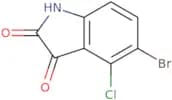
5-Bromo-4-chloro-2,3-dihydro-1H-indole-2,3-dione
CAS:Versatile small molecule scaffold
Formula:C8H3BrClNO2Purezza:Min. 95%Peso molecolare:260.47 g/mol1-Bromo-2-methyl-1-propene
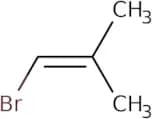
CAS:1-Bromo-2-methyl-1-propene is a brominated aliphatic solvent that is used as an intermediate in organic synthesis. The compound has been shown to be an efficient inhibitor of the enzyme pancreatic lipase, which is involved in the digestion of fats and oils. Autofluorescent properties are observed with this compound, which may be due to its ability to absorb light at wavelengths greater than 400 nm and reemit it at wavelengths less than 400 nm. 1-Bromo-2-methyl-1-propene also has antibacterial activity, with a kinetic energy of about 28 kcal/mol, which is slightly higher than that of penicillin G (19 kcal/mol). This property makes it a potential drug for preventing infections in patients undergoing surgery. 1-Bromo-2-methyl-1-propene can also inhibit lipofuscin production and has been shown to have therapeutic effects on age related macular degener
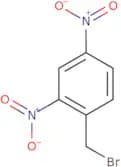
Formula:C4H7BrPurezza:Min. 95%Peso molecolare:135 g/mol1-(Bromomethyl)-2,4-dinitrobenzene
CAS:1-(Bromomethyl)-2,4-dinitrobenzene is a phenacyl derivative that can be used for the synthesis of β-unsaturated aldehydes. It is activated with chloride and reacted with various halides to generate the desired product. 1-(Bromomethyl)-2,4-dinitrobenzene has been shown to react with photoexcited acceptors such as benzophenone and tetrachloroethene to produce trisubstituted products. The mechanistic study of this compound provides insight into the activation process and the resulting products.
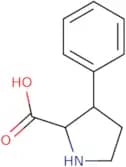
Formula:C7H5BrN2O4Purezza:Min. 95%Peso molecolare:261.03 g/mol3-Phenylpyrrolidine-2-carboxylic acid
CAS:3-Phenylpyrrolidine-2-carboxylic acid is a peptidomimetic that has been shown to have high affinity for melanocortin receptors. It is an agonist of the melanocortin receptor MC3 and MC4. 3-Phenylpyrrolidine-2-carboxylic acid has been synthesized, and its pharmacological properties have been simulated using molecular dynamic simulations. The molecule has a carbonyl group in the skeleton, which allows it to form steric interactions with the receptor. These interactions are important for the activation of the receptor by 3-Phenylpyrrolidine-2-carboxylic acid.
Formula:C11H13NO2Purezza:Min. 95%Peso molecolare:191.23 g/mol2-(Dimethylamino)-1-(3,4,5-trifluorophenyl)ethan-1-ol
CAS:Versatile small molecule scaffoldFormula:C10H12F3NOPurezza:Min. 95%Peso molecolare:219.2 g/mol2-Azaspiro[4.4]nonane-2-carboxamide
CAS:Versatile small molecule scaffold
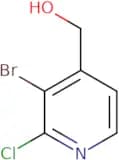
Formula:C9H16N2OPurezza:Min. 95%Peso molecolare:168.2 g/mol(3-Bromo-2-chloropyridin-4-yl)methanol
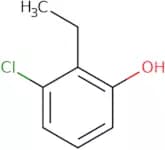
CAS:Versatile small molecule scaffoldFormula:C6H5BrClNOPurezza:Min. 95%Peso molecolare:222.47 g/mol3-Chloro-2-ethylphenol
CAS:Versatile small molecule scaffold
Formula:C8H9ClOPurezza:Min. 95%Peso molecolare:156.61 g/moltert-Butyl N-(5-tert-butylthiophen-2-yl)carbamate
CAS:Versatile small molecule scaffoldFormula:C13H21NO2SPurezza:Min. 95%Peso molecolare:255.4 g/mol2-{[4-(Trifluoromethyl)phenyl]methoxy}acetic acid
CAS:Versatile small molecule scaffold
Formula:C10H9F3O3Purezza:Min. 95%Peso molecolare:234.17 g/mol1-(Isocyanomethyl)-2-methoxybenzene
CAS:1-(Isocyanomethyl)-2-methoxybenzene is a reactive compound that can be used to make other chemicals. It is a member of the homodinuclear class of compounds, which means that it has only one type of atom in each molecule. This compound can be used to make polymers and plastics, as well as other chemicals. The reactivity of this compound is due to its ability to bind metal ions, such as copper and zinc, which are important for many chemical reactions. 1-(Isocyanomethyl)-2-methoxybenzene has been shown to react with x-rays in the diffraction technique.
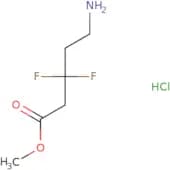
Formula:C9H9NOPurezza:Min. 95%Peso molecolare:147.17 g/molMethyl 5-amino-3,3-difluoropentanoate hydrochloride
CAS:Versatile small molecule scaffold
Formula:C6H12ClF2NO2Purezza:Min. 95%Peso molecolare:203.6 g/mol3-(Pentylamino)propanoic acid hydrochloride
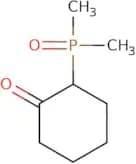
CAS:Versatile small molecule scaffoldFormula:C8H18ClNO2Purezza:Min. 95%Peso molecolare:195.7 g/mol2-(Dimethylphosphoryl)cyclohexan-1-one
CAS:Versatile small molecule scaffoldFormula:C8H15O2PPurezza:Min. 95%Peso molecolare:174.2 g/molEthyl 1-(aminomethyl)-2-oxabicyclo[3.1.1]heptane-5-carboxylate hydrochloride
CAS:Versatile small molecule scaffold
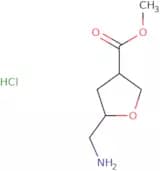
Formula:C10H18ClNO3Purezza:Min. 95%Peso molecolare:235.7 g/molMethyl 5-(aminomethyl)oxolane-3-carboxylate hydrochloride
CAS:Versatile small molecule scaffold
Formula:C7H14ClNO3Purezza:Min. 95%Peso molecolare:195.6 g/molDiiodopyrimidine-2,5-diamine
CAS:Versatile small molecule scaffold
Formula:C4H4I2N4Purezza:Min. 95%Peso molecolare:361.9 g/mol5-[Methoxy(methyl)amino]-3-methylpentan-1-ol
CAS:Versatile small molecule scaffold
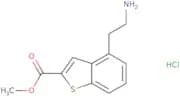
Formula:C8H19NO2Purezza:Min. 95%Peso molecolare:161.2 g/molMethyl 4-(2-aminoethyl)-1-benzothiophene-2-carboxylate hydrochloride
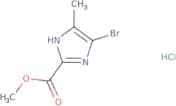
CAS:Versatile small molecule scaffoldFormula:C12H14ClNO2SPurezza:Min. 95%Peso molecolare:271.8 g/molMethyl 5-bromo-4-methyl-1H-imidazole-2-carboxylate hydrochloride
CAS:Versatile small molecule scaffoldFormula:C6H8BrClN2O2Purezza:Min. 95%Peso molecolare:255.5 g/mol


![2-Azaspiro[4.4]nonane-2-carboxamide](/_next/image/?url=https%3A%2Fstatic.cymitquimica.com%2Fproducts%2F3D%2Fthumb-webp%2FCZC07966.webp&w=3840&q=75)
![2-{[4-(Trifluoromethyl)phenyl]methoxy}acetic acid](/_next/image/?url=https%3A%2Fstatic.cymitquimica.com%2Fproducts%2F3D%2Fthumb-webp%2FCZA26241.webp&w=3840&q=75)

![Ethyl 1-(aminomethyl)-2-oxabicyclo[3.1.1]heptane-5-carboxylate hydrochloride](/_next/image/?url=https%3A%2Fstatic.cymitquimica.com%2Fproducts%2F3D%2Fthumb-webp%2FCVD03537.webp&w=3840&q=75)
![5-[Methoxy(methyl)amino]-3-methylpentan-1-ol](/_next/image/?url=https%3A%2Fstatic.cymitquimica.com%2Fproducts%2F3D%2Fthumb-webp%2FCVD03454.webp&w=3840&q=75)