Building Blocks
Sottocategorie di "Building Blocks"
- Acidi boronici e derivati dell'acido boronico(5.774 prodotti)
- Building Blocks Chirali(1.237 prodotti)
- Building Blocks Idrocarburici(6.098 prodotti)
- Building Blocks organici(60.970 prodotti)
Trovati 205135 prodotti di "Building Blocks"
Methyl 2-(difluoromethyl)-1H-benzo[D]imidazole-4-carboxylate
CAS:Versatile small molecule scaffold
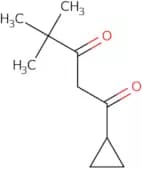
Formula:C10H8F2N2O2Purezza:Min. 95%Peso molecolare:226.18 g/mol1-Cyclopropyl-4,4-dimethylpentane-1,3-dione
CAS:Versatile small molecule scaffold
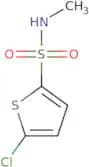
Formula:C10H16O2Purezza:Min. 95%Peso molecolare:168.23 g/mol5-Chloro-N-methylthiophene-2-sulfonamide
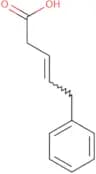
CAS:Versatile small molecule scaffoldFormula:C5H6ClNO2S2Purezza:Min. 95%Peso molecolare:211.7 g/mol(3E)-5-Phenylpent-3-enoic acid
CAS:Versatile small molecule scaffold
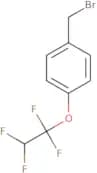
Formula:C11H12O2Purezza:Min. 95%Peso molecolare:176.21 g/mol1-(Bromomethyl)-4-(1,1,2,2-tetrafluoroethoxy)benzene
CAS:Versatile small molecule scaffold
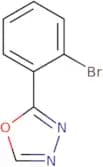
Formula:C9H7BrF4OPurezza:Min. 95%Peso molecolare:287.05 g/mol2-(2-Bromophenyl)-1,3,4-oxadiazole
CAS:Versatile small molecule scaffold
Formula:C8H5BrN2OPurezza:Min. 95%Peso molecolare:225.04 g/mol4-[(Methylsulfanyl)methyl]benzoic acid
CAS:4-[(Methylsulfanyl)methyl]benzoic acid is a chiral compound with a sulfur atom. It can be prepared by the reaction between methylsulfonyl chloride and benzoyl chloride in chloroform or by the reaction of methoxysulfur trifluoride with benzoic acid. 4-[(Methylsulfanyl)methyl]benzoic acid can also be synthesized by the reaction of sulfone and carboxylic acid derivatives, such as benzyl or cyano. 4-[(Methylsulfanyl)methyl]benzoic acid is used as a fungicide, insecticide, and herbicide. The substituents on this molecule are able to form bonds with other molecules to create an array of different structures. The most common substitution is for methoxy, which has a hydroxy group attached to it. This substitution is found in many different types of molecules including some drugs, hormones, vitamins,
Formula:C9H10O2SPurezza:Min. 95%Peso molecolare:182.24 g/mol3-[2-(1-Benzofuran-2-yl)-1,3-thiazol-4-yl]propanoic acid
CAS:Versatile small molecule scaffold
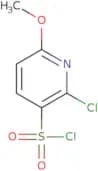
Formula:C14H11NO3SPurezza:Min. 95%Peso molecolare:273.3 g/mol2-Chloro-6-methoxy-pyridine-3-sulfonyl chloride
CAS:Versatile small molecule scaffold
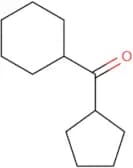
Formula:C6H5Cl2NO3SPurezza:Min. 95%Peso molecolare:242.08 g/molCyclohexyl(cyclopentyl)methanone
CAS:Cyclohexyl(cyclopentyl)methanone is a benzonitrile derivative with a cyclopentyl and cyclohexyl side chain. It can be synthesized by the reaction of phenylmagnesium bromide with methyl benzoate in the presence of sodium borohydride. Cyclohexyl(cyclopentyl)methanone is used as a reagent for the conversion of ketones to aminoketones, and can also be used in hydrolysis reactions involving Grignard reagents.
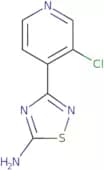
Formula:C12H20OPurezza:Min. 95%Peso molecolare:180.29 g/mol3-(3-Chloropyridin-4-yl)-1,2,4-thiadiazol-5-amine
CAS:Versatile small molecule scaffold
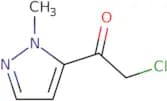
Formula:C7H5ClN4SPurezza:Min. 95%Peso molecolare:212.66 g/mol2-Chloro-1-(1-methyl-1H-pyrazol-5-yl)ethan-1-one
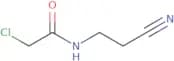
CAS:Versatile small molecule scaffoldFormula:C6H7ClN2OPurezza:Min. 95%Peso molecolare:158.58 g/mol2-Chloro-N-(2-cyanoethyl)acetamide
CAS:2-Chloro-N-(2-cyanoethyl)acetamide is a potent and selective inhibitor of the protein kinase C (PKC). The PKC protein kinases are enzymes that regulate the activity of cells in response to stimuli. 2-Chloro-N-(2-cyanoethyl)acetamide has been shown to be effective against some viruses and tumor cells, but not against bacteria. It inhibits the growth of some cancer cells and has been shown to inhibit the replication of animal viruses such as influenza virus. This drug is also used for treatment of abdominal infections, hepatitis, pancreatitis, mesenteric adenitis, and animals with cancer. 2-Chloro-N-(2-cyanoethyl)acetamide can act as a noncompetitive inhibitor by binding to a site on the enzyme that is different from ATP binding site.
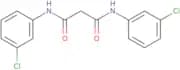
Formula:C5H7ClN2OPurezza:Min. 95%Peso molecolare:146.57 g/molN,N'-Bis(3-chlorophenyl)propanediamide
CAS:Versatile small molecule scaffold
Formula:C15H12Cl2N2O2Purezza:Min. 95%Peso molecolare:323.2 g/mol4-[(6-Chloropyridazin-3-yl)oxy]aniline
CAS:Versatile small molecule scaffold
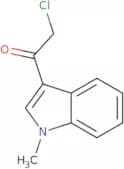
Formula:C10H8ClN3OPurezza:Min. 95%Peso molecolare:221.64 g/mol2-Chloro-1-(1-methyl-1H-indol-3-yl)-ethanone
CAS:Prodotto controllatoVersatile small molecule scaffoldFormula:C11H10ClNOPurezza:Min. 95%Peso molecolare:207.66 g/mol3-Cyclohexyl-1-propyne
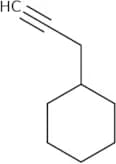
CAS:3-Cyclohexyl-1-propyne is a molecule that has been synthesized using palladium-catalyzed coupling. This compound has been shown to inhibit the growth of staphylococcus, and other bacteria, by inhibiting pyrazole synthesis. 3-Cyclohexyl-1-propyne can also be used for the preparation of conjugates with chemical species such as hydroxy groups. The use of homogeneous catalysts and the use of stereoselective reactions have made this process highly efficient.
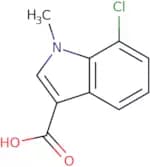
Formula:C9H14Purezza:Min. 95%Peso molecolare:122.21 g/mol7-Chloro-1-methyl-1H-indole-3-carboxylic acid
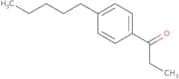
CAS:Prodotto controllatoVersatile small molecule scaffoldFormula:C10H8ClNO2Purezza:Min. 95%Peso molecolare:209.63 g/mol1-(4-Pentylphenyl)propan-1-one
CAS:Versatile small molecule scaffold
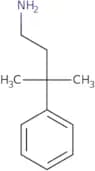
Formula:C14H20OPurezza:Min. 95%Peso molecolare:204.31 g/mol3-Methyl-3-phenylbutan-1-amine
CAS:Versatile small molecule scaffold
Formula:C11H17NPurezza:Min. 95%Peso molecolare:163.26 g/mol
![Methyl 2-(difluoromethyl)-1H-benzo[D]imidazole-4-carboxylate](/_next/image/?url=https%3A%2Fstatic.cymitquimica.com%2Fproducts%2F3D%2Fthumb-webp%2FLDC89032.webp&w=3840&q=75)

![4-[(Methylsulfanyl)methyl]benzoic acid](/_next/image/?url=https%3A%2Fstatic.cymitquimica.com%2Fproducts%2F3D%2Fthumb-webp%2FSCA00348.webp&w=3840&q=75)
![3-[2-(1-Benzofuran-2-yl)-1,3-thiazol-4-yl]propanoic acid](/_next/image/?url=https%3A%2Fstatic.cymitquimica.com%2Fproducts%2F3D%2Fthumb-webp%2FEED05795.webp&w=3840&q=75)
![4-[(6-Chloropyridazin-3-yl)oxy]aniline](/_next/image/?url=https%3A%2Fstatic.cymitquimica.com%2Fproducts%2F3D%2Fthumb-webp%2FFBA18497.webp&w=3840&q=75)