


Building Blocks
Sottocategorie di "Building Blocks"
- Acidi boronici e derivati dell'acido boronico(5.774 prodotti)
- Building Blocks Chirali(1.237 prodotti)
- Building Blocks Idrocarburici(6.098 prodotti)
- Building Blocks organici(60.980 prodotti)
Trovati 205158 prodotti di "Building Blocks"
2-Oxaspiro[4.4]nonan-3-one
CAS:Versatile small molecule scaffold
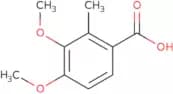
Formula:C8H12O2Purezza:Min. 95%Peso molecolare:140.18 g/mol3,4-Dimethoxy-2-methylbenzoic acid
CAS:Versatile small molecule scaffold
Formula:C10H12O4Purezza:Min. 95%Peso molecolare:196.2 g/mol2-Nitro-1H-benzo[d]imidazole
CAS:2-Nitro-1H-benzo[d]imidazole is an analog of benzimidazole compounds. It is used in the preparation of antibodies. 2-Nitro-1H-benzo[d]imidazole reacts with hydrochloric acid to form a trifluoroacetic acid, which can be purified by trichloroacetic acid and recrystallized from methanol. The purity of the product can be checked using a UV spectrophotometer, and it has a melting point of 141°C.
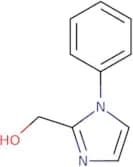
Formula:C7H5N3O2Purezza:Min. 95%Peso molecolare:163.13 g/mol(1-Phenyl-1H-imidazol-2-yl)methanol
CAS:Versatile small molecule scaffold
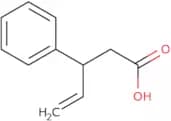
Formula:C10H10N2OPurezza:Min. 95%Peso molecolare:174.2 g/mol3-Phenylpent-4-enoic acid
CAS:3-Phenylpent-4-enoic acid is a natural product that is obtained from the lipophilic fraction of various plant species. It can be synthesized using chemoenzymatic reactions. 3-Phenylpent-4-enoic acid can be used as a chiral chemical intermediate in the synthesis of other compounds, such as olefinic compounds and alkene derivatives. This compound has been shown to have promiscuous reactivity, which is characterized by its ability to catalyze metathesis reactions with high enantiomeric excess. The isolated yield for this reaction was high at 96%.
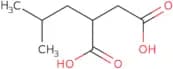
Formula:C11H12O2Purezza:Min. 95%Peso molecolare:176.21 g/mol2-(2-Methylpropyl)butanedioic acid
CAS:2-(2-Methylpropyl)butanedioic acid is an uncatalyzed chemical reaction that is used for the treatment of wastewater. It is a chiral compound, which means it has a non-superimposable mirror image. 2-(2-Methylpropyl)butanedioic acid can be synthesized by homochiral reactions, which are reactions that uses only one type of chiral molecule to produce a chiral product. The rate of this reaction is controlled by the concentration of reactants and the temperature at which it occurs. This reaction mechanism involves the formation of an enolate ion from 2-(2-methylpropyl) butanedioic acid, followed by deprotonation to form the conjugated enolate. Leukocyte elastase is an enzyme that breaks down elastin in cells, and this enzyme may be inhibited by gabapentin.
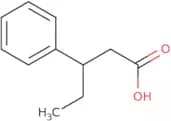
Formula:C8H14O4Purezza:Min. 95%Peso molecolare:174.19 g/mol3-phenylpentanoic acid
CAS:3-phenylpentanoic acid is an impurity of 2-phenylbutyric acid, which is used in the synthesis of some pharmaceuticals. It is also an optical isomer of 3-phenylpropanoic acid. The compound has been shown to inhibit the growth of pseudomonas strains and may be useful in the treatment of neurotoxicity. The precise mechanism by which 3-phenylpentanoic acid inhibits bacterial growth is not known, but it has been speculated that it may inhibit the synthesis of proteins, RNA, or DNA. This compound can be synthesized chemoenzymatically from 2-phenylethyl esters and proton donors, such as ethylene glycol and formaldehyde. The enantiomers can be separated by chiral HPLC.
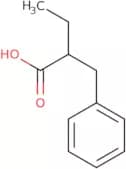
Formula:C11H14O2Purezza:Min. 95%Peso molecolare:178.22 g/mol2-Benzylbutanoic acid
CAS:2-Benzylbutanoic acid is a molecule that belongs to the class of β-amino acids. It is used as a drug for treating chronic pulmonary disease, and in pharmaceutical preparations for treating bowel disease, fatty acid metabolism disorders, and inflammatory diseases. 2-Benzylbutanoic acid has been shown to inhibit the activity of enzymes such as hydroxylases, which are involved in the synthesis of prostaglandins. Prostaglandins are involved in many physiological processes including pain perception and inflammation. 2-Benzylbutanoic acid has also been shown to have hypoglycemic effects on mice with diabetes mellitus type 1 when administered orally or intraperitoneally.
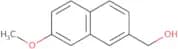
Formula:C11H14O2Purezza:Min. 95%Peso molecolare:178.23 g/mol(7-Methoxynaphthalen-2-yl)methanol
CAS:Versatile small molecule scaffold
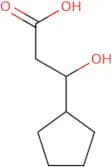
Formula:C12H12O2Purezza:Min. 95%Peso molecolare:188.22 g/mol3-Cyclopentyl-3-hydroxypropanoic acid
CAS:Versatile small molecule scaffold
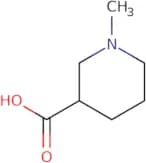
Formula:C8H14O3Purezza:Min. 95%Peso molecolare:158.19 g/mol1-Methylpiperidine-3-carboxylic acid
CAS:1-Methylpiperidine-3-carboxylic acid (1MP) is a neurotoxic compound that can be synthesized in vivo by the oxidation of choline. It has been shown to have a natriuretic and diuretic effect on the kidney, as well as stimulating the release of atrial natriuretic peptide. 1MP also has an agonistic effect on the dopamine receptors, and is a competitive antagonist for the binding of betaines to skin cells. Betaines are substances that are found in many foods, including wheat germ and spinach, which have been linked to nerve cell death in rats.
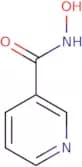
END>>Formula:C7H13NO2Purezza:Min. 95%Peso molecolare:143.19 g/molN-Hydroxypyridine-3-carboxamide
CAS:N-Hydroxypyridine-3-carboxamide is a hydroxylated metabolite of nicotinic acid that has been shown to have skin conditioning properties. The optimum pH for this product is 3.5 and its biological properties include an inhibitory effect on viral replication and a galacturonic acid complex. N-Hydroxypyridine-3-carboxamide also exhibits a high degree of hemolytic activity, which may be due to the methyl nicotinate moiety or the carbonyl oxygens present in this compound.
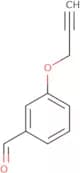
Formula:C6H6N2O2Purezza:Min. 95%Peso molecolare:138.12 g/mol3-Prop-2-ynyloxy-benzaldehyde
CAS:3-Prop-2-ynyloxy-benzaldehyde is a crystalline compound that can be used as an intermediate for the synthesis of azides. The crystal structure of 3-prop-2-ynyloxybenzaldehyde was determined by X-ray crystallography. This molecule has four nitro groups, which are in the form of methylenes. The active methylene is a tetradentate amine, which coordinates to the chloride ion and forms a supramolecular complex with it. The chloroformate group is also coordinated to this chloride ion. The azide group is coordinated to the chloride ion through an N–N bond, and the nitro group is coordinated through an N–O bond. This molecule has a high degree of symmetry due to its rigid geometry and planarity, which helps in its efficient synthesis methods.
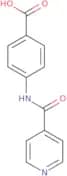
Formula:C10H8O2Purezza:Min. 95%Peso molecolare:160.17 g/mol4-(Pyridine-4-amido)benzoic acid
CAS:Versatile small molecule scaffold
Formula:C13H10N2O3Purezza:Min. 95%Peso molecolare:242.23 g/mol5-Phosphonopentanoic acid
CAS:5-Phosphonopentanoic acid is a neurotransmitter that activates voltage-dependent calcium channels and integrin receptors. It has been shown to bind to the dopamine receptor, as well as to other receptors such as the NMDA, GABA, and AMPA receptors. 5-Phosphonopentanoic acid also plays an important role in energy metabolism and neuronal function. This chemical can be used pharmacologically to study receptor activity, which may lead to a better understanding of brain functions and physiological mechanisms. In addition, 5-phosphonopentanoic acid is used in the production of electrochemical detectors for detecting histological tissue changes or pathological conditions.
Formula:C5H11O5PPurezza:Min. 95%Peso molecolare:182.11 g/mol5,6-Dihydrocyclopenta[b]thiophen-4-one
CAS:5,6-Dihydrocyclopenta[b]thiophen-4-one is a heterocycle that is formed from the condensation of two molecules of propanedioic acid. The reaction occurs in a catalytic fashion at 160 degrees Celsius. The yield of this reaction is low and no other information on reactivity or topology has been found.
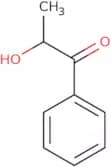
Formula:C7H6OSPurezza:Min. 95%Peso molecolare:138.19 g/mol2-Hydroxy-1-phenylpropan-1-one
CAS:2-Hydroxy-1-phenylpropan-1-one is a propiophenone derivative that is synthesized from phenol and acetone. The asymmetric synthesis of 2-hydroxy-1-phenylpropan-1-one has been achieved using magnetic particles and dry weight measurement, which are used to optimize the process. The biotransformations of 2-hydroxy-1-phenylpropan-1-one include oxidative injury, metal chelate formation, and salicylaldoxime formation. This compound has been shown to be toxic in rat liver microsomes at concentrations of 10 μM. It also displays hepatoprotective properties in liver cells grown under immobilized conditions. Structural analysis has shown that this compound is a chiral molecule with two stereocenters located at the alpha carbon atom and the beta carbon atom.
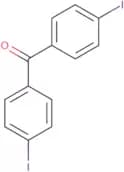
Formula:C9H10O2Purezza:Min. 95%Peso molecolare:150.17 g/molBis(4-iodophenyl)methanone
CAS:Versatile small molecule scaffold
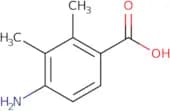
Formula:C13H8I2OPurezza:Min. 95%Peso molecolare:434.01 g/mol4-Amino-2,3-dimethyl-benzoic acid
CAS:4-Amino-2,3-dimethyl-benzoic acid is a benzene derivative that has been detected in wastewater treatment plants at median concentrations of 3.2 μg/L. It is used as a sunscreen agent and can be found in sunscreens, cosmetics, and soaps. 4-Amino-2,3-dimethyl-benzoic acid has been shown to induce cancer in the skin of mice. This drug may also have effects on the production of reactive oxygen species that cause DNA mutations. 4DMBBA binds to proteins and nucleic acids by hydrogen bonding interactions with amino groups. The binding of 4DMBBA to DNA prevents the transcription of genes encoding proteins involved in DNA repair, leading to cell death and cancer.
Formula:C9H11NO2Purezza:Min. 95%Peso molecolare:165.19 g/mol(2-Aminoethyl)[2-(piperidin-1-yl)ethyl]amine
CAS:Versatile small molecule scaffoldFormula:C9H21N3Purezza:Min. 95%Peso molecolare:171.28 g/mol
![2-Oxaspiro[4.4]nonan-3-one](/_next/image/?url=https%3A%2Fstatic.cymitquimica.com%2Fproducts%2F3D%2Fthumb-webp%2FFAA72462.webp&w=3840&q=75)

![2-Nitro-1H-benzo[d]imidazole](/_next/image/?url=https%3A%2Fstatic.cymitquimica.com%2Fproducts%2F3D%2Fthumb-webp%2FFAA70967.webp&w=3840&q=75)
![5,6-Dihydrocyclopenta[b]thiophen-4-one](/_next/image/?url=https%3A%2Fstatic.cymitquimica.com%2Fproducts%2F3D%2Fthumb-webp%2FFAA65051.webp&w=3840&q=75)
![(2-Aminoethyl)[2-(piperidin-1-yl)ethyl]amine](/_next/image/?url=https%3A%2Fstatic.cymitquimica.com%2Fproducts%2F3D%2Fthumb-webp%2FFAA62569.webp&w=3840&q=75)