Building Blocks
Sottocategorie di "Building Blocks"
- Acidi boronici e derivati dell'acido boronico(5.784 prodotti)
- Building Blocks Chirali(1.243 prodotti)
- Building Blocks Idrocarburici(6.105 prodotti)
- Building Blocks organici(61.066 prodotti)
Trovati 205426 prodotti di "Building Blocks"
3-Cyano-1-methylpyridin-1-ium iodide
CAS:3-Cyano-1-methylpyridin-1-ium iodide is a reactive chemical that can be used as an electrophilic reagent. It reacts with amines, anilines, and pyridones to produce N-substituted pyridinium salts. 3-Cyano-1-methylpyridin-1-ium iodide also reacts with chloride ions to form the corresponding chlorides. This compound has been used in the synthesis of nucleophilic attack products such as benzyl bromide and phenylacetaldehyde.
Formula:C7H7IN2Purezza:Min. 95%Peso molecolare:246.05 g/mol5-Bromopyrimidine-2,4-diamine
CAS:Versatile small molecule scaffold
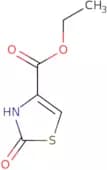
Formula:C4H5BrN4Purezza:Min. 95%Peso molecolare:189.02 g/molEthyl 2-hydroxy-1,3-thiazole-4-carboxylate
CAS:Versatile small molecule scaffold
Formula:C6H7NO3SPurezza:Min. 95%Peso molecolare:173.19 g/mol2-(Carbamoylmethoxy)benzoic acid
CAS:Versatile small molecule scaffold
Formula:C9H9NO4Purezza:Min. 95%Peso molecolare:195.17 g/molEthyl 5-(bromomethyl)-1,2,3-thiadiazole-4-carboxylate
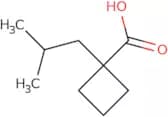
CAS:Versatile small molecule scaffoldFormula:C6H7BrN2O2SPurezza:Min. 95%Peso molecolare:251.1 g/mol1-(2-Methylpropyl)cyclobutane-1-carboxylic acid
CAS:Versatile small molecule scaffoldFormula:C9H16O2Purezza:Min. 95%Peso molecolare:156.22 g/molThiomorpholine-3,5-dione
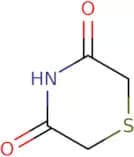
CAS:Thiomorpholine-3,5-dione is a chemical compound that has an x-ray crystal structure. It was first synthesized in 1892 and was the first organic molecule with a herringbone molecular geometry to be discovered. Thiomorpholine-3,5-dione is used as a precursor for dyes, pharmaceuticals, and other organic compounds.
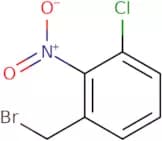
Formula:C4H5NO2SPurezza:Min. 95%Peso molecolare:131.16 g/mol3-Chloro-2-nitrobenzyl bromide
CAS:Versatile small molecule scaffold
Formula:C7H5BrClNO2Purezza:Min. 95%Peso molecolare:250.48 g/mol2-{4H,5H,6H,7H-Thieno[3,2-c]pyridin-5-yl}ethan-1-amine
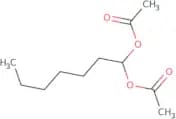
CAS:Versatile small molecule scaffoldFormula:C9H14N2SPurezza:Min. 95%Peso molecolare:182.29 g/mol1-(Acetyloxy)heptyl acetate
CAS:1-(Acetyloxy)heptyl acetate is an organic compound that has the molecular formula CH3COOC7H15. It is a colorless liquid with boiling point of 174°C at 1 mmHg. This compound is used as a solvent, and it is also used in the synthesis of some pharmaceuticals. The melting point of 1-(acetyloxy)heptyl acetate varies depending on the temperature because this compound exists as two polymorphs. The compound can be activated by heating to temperatures above 145°C, which will cause it to form hydrogen bonds with water molecules. One of the major uses for 1-(acetyloxy)heptyl acetate is as an excipient in tablets and capsules. The most common use for this substance is in pharmaceuticals that are taken orally and require solvents or solubilizers to dissolve other components such as inactive ingredients, active ingredients, or colors.
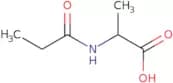
Formula:C11H20O4Purezza:Min. 95%Peso molecolare:216.27 g/mol(2S)-2-Propanamidopropanoic acid
CAS:(2S)-2-Propanamidopropanoic acid is a non-protein amino acid that is used in the synthesis of peptides. It has an acidic side chain and can be reacted with amines to form a beta-amide linkage. These reactions are catalyzed by enzymes such as proteases and thiols. This compound has been shown to inhibit the activity of proteases, which may be due to its ability to compete for binding sites on the enzyme. The equilibrium constant for this reaction is 1.5 x 10^9 M^(-1).
Formula:C6H11NO3Purezza:Min. 95%Peso molecolare:145.16 g/mol1-(3,5-Dichlorophenyl)cyclobutane-1-carboxylic acid
CAS:Versatile small molecule scaffoldFormula:C11H10Cl2O2Purezza:Min. 95%Peso molecolare:245.1 g/molSodium 1-[(4-chlorophenyl)methyl]-1H-pyrazolo[3,4-b]pyridine-5-carboxylate
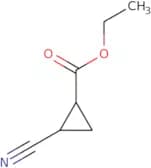
CAS:Versatile small molecule scaffoldFormula:C14H9ClN3NaO2Purezza:Min. 95%Peso molecolare:309.68 g/molethyl 2-cyanocyclopropane-1-carboxylate
CAS:Ethyl 2-cyanocyclopropane-1-carboxylate is a reactive chemical reagent that can be used to synthesize a variety of compounds. It is an aliphatic compound with a carbonyl group at the end of the molecule and belongs to a class of compounds called chlorohydrins. Ethyl 2-cyanocyclopropane-1-carboxylate has been used as an organoindium compound for the synthesis of stilbene derivatives. It can also be used to synthesize chlorinated alkenes, oxiranes, and other cyclopropanes. Ethyl 2-cyanocyclopropane-1-carboxylate can react with alcohols or phenols in presence of acid to form acetals or ketals, respectively.
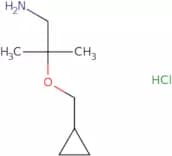
Formula:C7H9NO2Purezza:Min. 95%Peso molecolare:139.15 g/mol2-(Cyclopropylmethoxy)-2-methylpropan-1-amine hydrochloride
CAS:Versatile small molecule scaffold
Formula:C8H18ClNOPurezza:Min. 95%Peso molecolare:179.69 g/mol3-Isocyanato-5-methylpyridine
CAS:Versatile small molecule scaffold
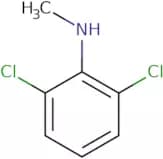
Formula:C7H6N2OPurezza:Min. 95%Peso molecolare:134.14 g/mol2,6-Dichloro-N-methylaniline
CAS:Versatile small molecule scaffold
Formula:C7H7Cl2NPurezza:Min. 95%Peso molecolare:176.04 g/mol5-(Aminomethyl)-2-fluoro-N-(propan-2-yl)benzene-1-sulfonamide hydrochloride
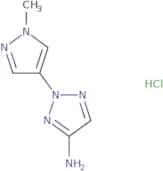
CAS:Versatile small molecule scaffoldFormula:C10H16ClFN2O2SPurezza:Min. 95%Peso molecolare:282.76 g/mol2-(1-Methyl-1H-pyrazol-4-yl)-2H-1,2,3-triazol-4-amine hydrochloride
CAS:Versatile small molecule scaffold
Formula:C6H9ClN6Purezza:Min. 95%Peso molecolare:200.6 g/mol4-(2,2-Dimethylpyrrolidin-1-yl)piperidine
CAS:Versatile small molecule scaffoldFormula:C11H22N2Purezza:Min. 95%Peso molecolare:182.31 g/mol




![2-{4H,5H,6H,7H-Thieno[3,2-c]pyridin-5-yl}ethan-1-amine](/_next/image/?url=https%3A%2Fstatic.cymitquimica.com%2Fproducts%2F3D%2Fthumb-webp%2FKGA44603.webp&w=3840&q=75)

![Sodium 1-[(4-chlorophenyl)methyl]-1H-pyrazolo[3,4-b]pyridine-5-carboxylate](/_next/image/?url=https%3A%2Fstatic.cymitquimica.com%2Fproducts%2F3D%2Fthumb-webp%2FJBD32709.webp&w=3840&q=75)