Building Blocks
Sottocategorie di "Building Blocks"
- Acidi boronici e derivati dell'acido boronico(5.780 prodotti)
- Building Blocks Chirali(1.241 prodotti)
- Building Blocks Idrocarburici(6.100 prodotti)
- Building Blocks organici(61.023 prodotti)
Trovati 205289 prodotti di "Building Blocks"
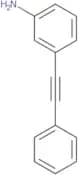
3-(phenylethynyl)aniline
CAS:3-(Phenylethynyl)aniline is a chemical compound that is insoluble in water and has a reactive crosslink. It is reactive with long-term exposure and has a gel permeation chromatography isolated yield. 3-(Phenylethynyl)aniline can be thermally decomposed to phenylethanethiol, which is an exothermic reaction. The technique of nmr spectroscopy can be used to study the reactivity of this compound. 3-(Phenylethynyl)aniline exhibits specific spectral features that can be used to identify it by nmr spectroscopy.
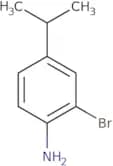
Formula:C14H11NPurezza:Min. 95%Peso molecolare:193.24 g/mol2-Bromo-4-isopropylaniline
CAS:2-Bromo-4-isopropylaniline is a spiroindoline that was synthesized by modification of the natural product, bryostatin. The compound has shown experimental activity against encephalomyelitis in mice. However, the mechanism of action is not known. 2-Bromo-4-isopropylaniline has been found to be an activator for ethylene and can catalyze reactions involving diphosphines and ligands. It binds to phenyl substituents on the molecule and forms x-ray crystallographic structures with high resolution. Optimization of the structure may lead to more potent analogs.
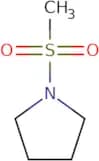
Formula:C9H12BrNPurezza:Min. 95%Peso molecolare:214.11 g/mol1-Methanesulfonylpyrrolidine
CAS:Versatile small molecule scaffold
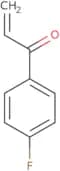
Formula:C5H11NO2SPurezza:Min. 95%Peso molecolare:149.21 g/mol1-(4-Fluorophenyl)prop-2-en-1-one
CAS:1-(4-Fluorophenyl)prop-2-en-1-one is a chalcone that has been shown to have anticancer activity. It has been shown to stabilize the response elements of the transcriptional regulatory protein NF-κB and induce apoptosis in colorectal adenocarcinoma cells. This compound is also able to inhibit cancer growth by inhibiting tumor angiogenesis and metastasis. 1-(4-Fluorophenyl)prop-2-en-1-one binds to DNA, preventing transcription and replication, which leads to cell death. 1-(4-Fluorophenyl)prop-2-en-1-one has also been found to bind withaferin A, a molecule that has been shown to have anticancer activity.
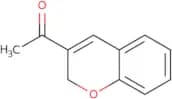
Formula:C9H7FOPurezza:Min. 95%Peso molecolare:150.15 g/mol1-(2H-chromen-3-yl)ethanone
CAS:Versatile small molecule scaffold
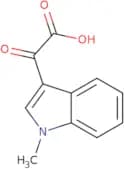
Formula:C11H10O2Purezza:Min. 95%Peso molecolare:174.19 g/molN-Methyl-3-indoleglyoxylic acid 97
CAS:Prodotto controllatoN-Methyl-3-indoleglyoxylic acid 97 is a potent and selective inhibitor of protein kinases, including the mitogen activated protein kinase (MAPK) family. It has been shown to inhibit proliferation of cells in vitro. In addition, N-Methyl-3-indoleglyoxylic acid 97 inhibits the activation of MAPK in response to stress or cytokine stimulation. This agent has been shown to be selective for different isotypes of protein kinases and displays good selectivity for inhibition of the enzyme activity.
Formula:C11H9NO3Purezza:Min. 95%Peso molecolare:203.19 g/molHS-173
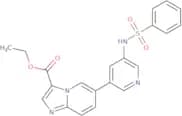
CAS:HS-173 is a synthetic nucleoside analog that has transcription-polymerase chain inhibitory activity. HS-173 inhibits the expression of genes by binding to the major groove of DNA and blocking the progression of transcription. This drug also induces autophagy to eliminate damaged or dysfunctional cells, as well as regulating cell proliferation and differentiation. In addition, HS-173 has been shown to have synergistic effects with epidermal growth factor (EGF) and radiation in hl-60 cells and monoclonal antibody against carcinoembryonic antigen in k562 cells.
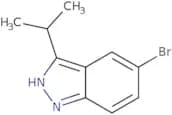
Formula:C21H18N4O4SPurezza:Min. 95%Peso molecolare:422.46 g/mol5-Bromo-3-isopropyl-1H-indazole
CAS:Versatile small molecule scaffold
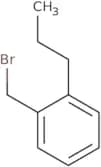
Formula:C10H11BrN2Purezza:Min. 95%Peso molecolare:239.12 g/mol1-(Bromomethyl)-2-propylbenzene
CAS:Versatile small molecule scaffold
Formula:C10H13BrPurezza:Min. 95%Peso molecolare:213.11 g/moltert-Butyl N-[1-(propane-1-sulfonyl)piperidin-4-yl]carbamate
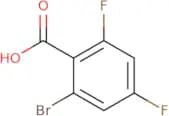
CAS:Versatile small molecule scaffoldFormula:C13H26N2O4SPurezza:Min. 95%Peso molecolare:306.42 g/mol2-Bromo-4,6-difluorobenzoic acid
CAS:Versatile small molecule scaffold
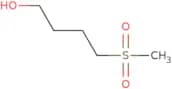
Formula:C7H3BrF2O2Purezza:Min. 95%Peso molecolare:237 g/mol4-Methanesulfonylbutan-1-ol
CAS:Versatile small molecule scaffold
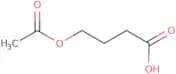
Formula:C5H12O3SPurezza:Min. 95%Peso molecolare:152.21 g/mol4-(Acetyloxy)butanoic acid
CAS:Prodotto controllato4-(Acetyloxy)butanoic acid is a vasoconstrictor that has been shown to be effective in the treatment of autoimmune diseases, cancer, and other types of disorders. This compound has been shown to modulate the immune system by increasing the number of T-cells and natural killer cells. 4-(Acetyloxy)butanoic acid also provides a targetable strategy for the treatment of cancer by implanting radioactive isotopes or chemotherapeutic drugs in proximity to tumor cells. The drug can also be administered through iontophoresis or hyperthermia, which have been shown to increase its effectiveness.
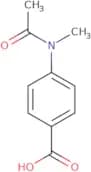
Formula:C6H10O4Purezza:Min. 95%Peso molecolare:146.14 g/mol4-(N-methylacetamido)benzoic acid
CAS:Versatile small molecule scaffold
Formula:C10H11NO3Purezza:Min. 95%Peso molecolare:193.2 g/mol7-Methyl-5H,7H-furo[3,4-b]pyridin-5-one
CAS:Versatile small molecule scaffold
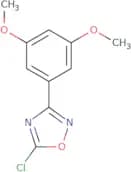
Formula:C8H7NO2Purezza:Min. 95%Peso molecolare:149.15 g/mol5-Chloro-3-(3,5-dimethoxyphenyl)-1,2,4-oxadiazole
CAS:Versatile small molecule scaffold
Formula:C10H9ClN2O3Purezza:Min. 95%Peso molecolare:240.64 g/molEthyl 8-chloro[1,3]dioxolo[4,5-g]quinoline-7-carboxylate
CAS:Versatile small molecule scaffold
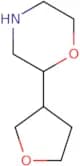
Formula:C13H10ClNO4Purezza:Min. 95%Peso molecolare:279.68 g/mol2-(Oxolan-3-yl)morpholine
CAS:Versatile small molecule scaffold
Formula:C8H15NO2Purezza:Min. 95%Peso molecolare:157.21 g/mol2-Cyclohexylmorpholine
CAS:Versatile small molecule scaffold
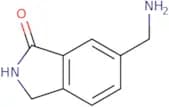
Formula:C10H19NOPurezza:Min. 95%Peso molecolare:169.26 g/mol6-(Aminomethyl)isoindolin-1-one
CAS:6-(Aminomethyl)isoindolin-1-one is a cyano compound that has been shown to be an effective hydrogenation catalyst. It can be used to catalyze reactions in which the hydrogen source is not the only carbon source. The synthetic reaction for 6-(aminomethyl)isoindolin-1-one involves the conversion of an aminomethyl ketone with sodium cyanide and a transition metal catalyst. This process produces two products: 6-(aminomethyl)isoindolin-1-one and 2,4,6-trichlorophenol. The use of this compound as a catalyst has been shown to be more efficient than traditional catalysts, such as palladium on carbon, in some instances.
Formula:C9H10N2OPurezza:Min. 95%Peso molecolare:162.19 g/mol

![tert-Butyl N-[1-(propane-1-sulfonyl)piperidin-4-yl]carbamate](/_next/image/?url=https%3A%2Fstatic.cymitquimica.com%2Fproducts%2F3D%2Fthumb-webp%2FBBB05654.webp&w=3840&q=75)
![7-Methyl-5H,7H-furo[3,4-b]pyridin-5-one](/_next/image/?url=https%3A%2Fstatic.cymitquimica.com%2Fproducts%2F3D%2Fthumb-webp%2FBBA91904.webp&w=3840&q=75)
![Ethyl 8-chloro[1,3]dioxolo[4,5-g]quinoline-7-carboxylate](/_next/image/?url=https%3A%2Fstatic.cymitquimica.com%2Fproducts%2F3D%2Fthumb-webp%2FBBA89317.webp&w=3840&q=75)