Building Blocks
Sottocategorie di "Building Blocks"
- Acidi boronici e derivati dell'acido boronico(5.780 prodotti)
- Building Blocks Chirali(1.241 prodotti)
- Building Blocks Idrocarburici(6.100 prodotti)
- Building Blocks organici(61.024 prodotti)
Trovati 205297 prodotti di "Building Blocks"
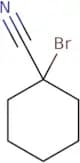
1-Bromocyclohexane-1-carbonitrile
CAS:1-Bromocyclohexane-1-carbonitrile (1BCC) is an orthogonal alkylation agent that can react with a wide variety of functionalized organic halides. It reacts with the carbon atom in the organic halide, forming a new carbon-carbon bond. This reaction is highly selective and does not require any protecting groups or activation by copper. 1BCC also has high activity with nitroalkanes, which makes it a useful reagent for synthesizing diamines. 1BCC can be used as an efficient synthetic method for aromatic and nonaromatic diamines.
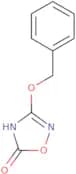
Formula:C7H10BrNPurezza:Min. 95%Peso molecolare:188.06 g/mol3-(Benzyloxy)-4,5-dihydro-1,2,4-oxadiazol-5-one
CAS:Versatile small molecule scaffold
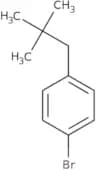
Formula:C9H8N2O3Purezza:Min. 95%Peso molecolare:192.17 g/mol1-Bromo-4-(2,2-dimethylpropyl)benzene
CAS:Versatile small molecule scaffold
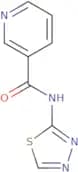
Formula:C11H15BrPurezza:Min. 95%Peso molecolare:227.14 g/molN-(1,3,4-Thiadiazolyl)nicotinamide
CAS:N-(1,3,4-Thiadiazolyl)nicotinamide is an intracellular drug that inhibits the release of a growth factor, which may be involved in the development of migraine. It has been shown to inhibit the activity of the enzyme VEGF and reduces infarction volume in rats. N-(1,3,4-Thiadiazolyl)nicotinamide also has a neuroprotective effect by reducing reactive astrocytes and inhibiting fibrillary acidic protein expression in the cerebral cortex of rats. This drug is osmotically active and can induce neuronal damage due to brain swelling. N-(1,3,4-Thiadiazolyl)nicotinamide is also used as a stain for neurons in histological studies.
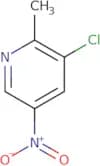
Formula:C8H6N4OSPurezza:Min. 95%Peso molecolare:206.22 g/mol3-Chloro-2-methyl-5-nitropyridine
CAS:Versatile small molecule scaffold
Formula:C6H5ClN2O2Purezza:Min. 95%Peso molecolare:172.57 g/mol2-Amino-6-isopropyl-4,5,6,7-tetrahydrothieno[2,3-c]pyridine-3-carbonitrile
CAS:Versatile small molecule scaffold
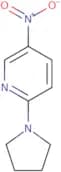
Formula:C11H15N3SPurezza:Min. 95%Peso molecolare:221.33 g/mol5-Nitro-2-pyrrolidinopyridine
CAS:Versatile small molecule scaffold
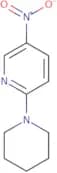
Formula:C9H11N3O2Purezza:Min. 95%Peso molecolare:193.21 g/mol5-Nitro-2-(piperidine-1-yl)pyridine
CAS:5-Nitro-2-(piperidine-1-yl)pyridine is a product that is formed by the nucleophilic addition of nitric acid to 1,3-diketones. It has been used in the synthesis of phenyl and isoxazole derivatives. The reaction was rationalized using amines as nucleophiles, which attack the electrophilic carbon atom in the ketone. This product has also been shown to be an effective nucleophile for attacking other molecules, such as azides and nitrates. In the Australian outback, 5-Nitro-2-(piperidine-1-yl)pyridine can be found in soils and plants.
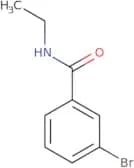
Formula:C10H13N3O2Purezza:Min. 95%Peso molecolare:207.23 g/mol3-Bromo-N-ethylbenzamide
CAS:Versatile small molecule scaffold
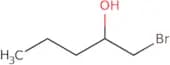
Formula:C9H10BrNOPurezza:Min. 95%Peso molecolare:228.09 g/mol1-Bromopentan-2-ol
CAS:1-Bromopentan-2-ol is an additive that is used in lubricating preparations, as well as a solvent in spectroscopy. It has been shown to have antimicrobial properties against fungi and bacteria. 1-Bromopentan-2-ol's antimicrobial effects are due to its ability to inhibit the growth of bacteria by binding to amine groups on proteins and preventing the formation of new cell walls. 1-Bromopentan-2-ol also has the ability to react with formaldehyde, generating formaldehyde gas which inhibits microbial growth.
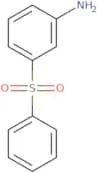
Formula:C5H11BrOPurezza:Min. 95%Peso molecolare:167.04 g/mol3-(Benzenesulfonyl)aniline
CAS:Versatile small molecule scaffold
Formula:C12H11NO2SPurezza:Min. 95%Peso molecolare:233.29 g/molethyl 3-hydroxybicyclo[3.1.0]hexane-6-carboxylate
CAS:Versatile small molecule scaffold
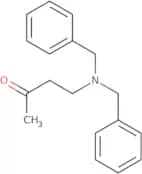
Formula:C9H14O3Purezza:Min. 95%Peso molecolare:170.21 g/mol4-(dibenzylamino)butan-2-one
CAS:Versatile small molecule scaffold
Formula:C18H21NOPurezza:Min. 95%Peso molecolare:267.37 g/mol1-Bromo-4-[(2-chloroethane)sulfonyl]benzene
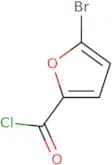
CAS:Versatile small molecule scaffoldFormula:C8H8BrClO2SPurezza:Min. 95%Peso molecolare:283.57 g/mol5-Bromo-furan-2-carbonyl chloride
CAS:5-Bromo-furan-2-carbonyl chloride is a colorless liquid that is soluble in organic solvents. It has a thionyl, polymerized odor and can be used as a feedstock for the production of amines, cyclopentadienyl, and chloride. 5-Bromo-furan-2-carbonyl chloride also has radiation damage properties and can be used in radiochemical synthesis of pyrrole. This chemical has been used to produce glycosides by reacting with diluents such as methanol and ethanol.
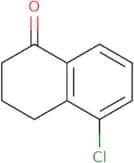
Formula:C5H2BrClO2Purezza:Min. 95%Peso molecolare:209.42 g/mol5-Chloro-1-tetralone
CAS:5-Chloro-1-tetralone is an oxime that is used as a topical agent for the treatment of staphylococcal infections. It acts by inhibiting bacterial cell wall synthesis, preventing the formation of cross-links between the peptidoglycan chains. 5-Chloro-1-tetralone has potent antibacterial activity against many bacteria and fungi. This compound has shown to be effective against escherichia coli, pneumoniae, and imidazole derivatives. The mechanism of action is not well understood, but it may involve inhibition of protein synthesis or DNA replication by binding to enzymes involved in these processes.
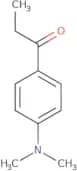
Formula:C10H9ClOPurezza:Min. 95%Peso molecolare:180.63 g/mol1-(4-(Dimethylamino)phenyl)propan-1-one
CAS:1-(4-(Dimethylamino)phenyl)propan-1-one is a planar molecule with a molecular formula of C9H11NO. It has been synthesized in Australia from pyrazine and ammonium acetate. The molecule has the potential for rearrangement to form an ionic intermediate, which is similar in structure to the starting material. The mechanism of this reaction involves a transfer of hydrogen atoms from the hydroxyl group on the pyrazine to the amine group on the 1-(4-(dimethylamino)phenyl)propan-1-one. This process also results in quaternary carbon atoms that are coplanar with one another.
Formula:C11H15NOPurezza:Min. 95%Peso molecolare:177.24 g/mol1-Methyl-3-nitro-1H-1,2,4-triazole
CAS:1-Methyl-3-nitro-1H-1,2,4-triazole is a potential chemical warfare agent. Its chemical formula is C6H5N3O2. It has an experimental frequency of 607.8 MHz and a vibrational constant of 0.038 (cm). This molecule has two potential energy levels for vibration:
Formula:C3H4N4O2Purezza:Min. 95%Peso molecolare:128.09 g/mol1-azabicyclo[2.2.2]octan-4-ylmethanol
CAS:Sinensetin is an anti-inflammatory compound that belongs to the chromones class of compounds. Sinensetin has been shown to have anti-inflammatory properties at high temperatures in experimental models. The mechanism of action for sinensetin is not well understood, but it may be due to the inhibition of prostaglandin synthesis or by direct interaction with TNF-α. Sinensetin also has antioxidant and antifungal properties, which are attributed to its ability to scavenge free radicals and inhibit lipid peroxidation. Sinensetin was found in a variety of plants from China, including Acanthopanax senticosus and Eurycoma longifolia.
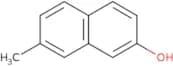
Formula:C8H15NOPurezza:Min. 95%Peso molecolare:141.21 g/mol7-Methylnaphthalen-2-ol
CAS:Versatile small molecule scaffold
Formula:C11H10OPurezza:Min. 95%Peso molecolare:158.2 g/mol

![2-Amino-6-isopropyl-4,5,6,7-tetrahydrothieno[2,3-c]pyridine-3-carbonitrile](/_next/image/?url=https%3A%2Fstatic.cymitquimica.com%2Fproducts%2F3D%2Fthumb-webp%2FBBA83040.webp&w=3840&q=75)
![ethyl 3-hydroxybicyclo[3.1.0]hexane-6-carboxylate](/_next/image/?url=https%3A%2Fstatic.cymitquimica.com%2Fproducts%2F3D%2Fthumb-webp%2FBBA78636.webp&w=3840&q=75)
![1-Bromo-4-[(2-chloroethane)sulfonyl]benzene](/_next/image/?url=https%3A%2Fstatic.cymitquimica.com%2Fproducts%2F3D%2Fthumb-webp%2FBBA73225.webp&w=3840&q=75)

![1-azabicyclo[2.2.2]octan-4-ylmethanol](/_next/image/?url=https%3A%2Fstatic.cymitquimica.com%2Fproducts%2F3D%2Fthumb-webp%2FBBA60858.webp&w=3840&q=75)