Building Blocks
Sottocategorie di "Building Blocks"
- Acidi boronici e derivati dell'acido boronico(5.784 prodotti)
- Building Blocks Chirali(1.242 prodotti)
- Building Blocks Idrocarburici(6.105 prodotti)
- Building Blocks organici(61.061 prodotti)
Trovati 205399 prodotti di "Building Blocks"
4-[1-(Morpholin-4-yl)ethyl]aniline
CAS:Versatile small molecule scaffold
Formula:C12H18N2OPurezza:Min. 95%Peso molecolare:206.28 g/mol8-Methoxyquinolin-6-amine
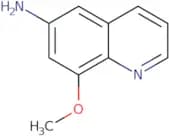
CAS:Versatile small molecule scaffold
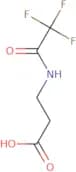
Formula:C10H10N2OPurezza:Min. 95%Peso molecolare:174.2 g/mol3-(Trifluoroacetamido)propanoic acid
CAS:Versatile small molecule scaffold
Formula:C5H6F3NO3Purezza:Min. 95%Peso molecolare:185.1 g/mol1H,4H,5H,6H,7H,8H-Pyrrolo[3,2-c]azepine
CAS:1H,4H,5H,6H,7H,8H-Pyrrolo[3,2-c]azepine is a tranquilizer that is chemically related to piperazine. It has no analgesic properties and is used as a tranquilizer.
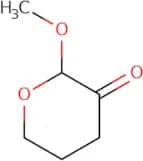
Formula:C8H12N2Purezza:Min. 95%Peso molecolare:136.19 g/mol2-Methoxyoxan-3-one
CAS:Versatile small molecule scaffold
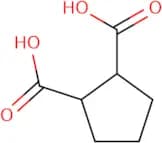
Formula:C6H10O3Purezza:Min. 95%Peso molecolare:130.14 g/molCyclopentane-1,2-dicarboxylic acid
CAS:Cyclopentane-1,2-dicarboxylic acid is a bioactive chemical that contains nitrogen atoms. It has a structural formula of C5H8O4 and an x-ray structure with antibacterial properties. Cyclopentane-1,2-dicarboxylic acid can be found in cocatalyst preparations for organic solvents such as benzene, toluene, and xylene. This compound has been shown to inhibit the growth of bacteria by binding to amines and forming coordination complexes with carboxylate groups on the surface of bacterial cells. The crystal structures of cyclopentane-1,2-dicarboxylic acid have not yet been determined due to its alicyclic nature.
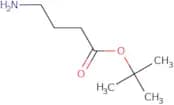
Formula:C7H10O4Purezza:Min. 95%Peso molecolare:158.15 g/moltert-Butyl 4-aminobutanoate
CAS:tert-Butyl 4-aminobutanoate is an amine that has been shown to stabilize the natural formyl group of the molecule. It is a nucleophilic reactant, which means it will react with electrophiles. The nucleophilic attack occurs when a nucleophile reacts with an electrophile, leading to the formation of a new bond between the two molecules. Tert-butyl 4-aminobutanoate also has a hydroxymethyl group on its side chain. This hydroxymethyl group can be reduced by pyridoxal phosphate in order to form gamma-aminobutyric acid.
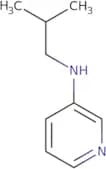
Formula:C8H17NO2Purezza:Min. 95%Peso molecolare:159.23 g/molN-(2-Methylpropyl)pyridin-3-amine
CAS:Versatile small molecule scaffold
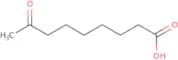
Formula:C9H14N2Purezza:Min. 95%Peso molecolare:150.22 g/mol8-Oxononanoic acid
CAS:8-Oxononanoic acid is a fatty acid that is found in the human body. It has been shown to have health effects such as decreasing the risk of cancer and lowering the rate of cardiovascular disease. 8-Oxononanoic acid is a coeluting compound, which means that it shares properties with other molecules. It has been shown to inhibit the growth of cancer cells by inhibiting tyrosinase, β-glucosidase, and lipid biosynthesis. 8-Oxononanoic acid also inhibits the production of lipids by blocking the enzyme acetyl-CoA carboxylase (ACCase). This enzyme catalyzes the conversion of acetyl-CoA into malonyl-CoA, which is then used in fatty acid synthesis.
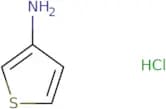
Formula:C9H16O3Purezza:Min. 95%Peso molecolare:172.22 g/molThiophen-3-amine hydrochloride
CAS:Thiophen-3-amine hydrochloride is a heterocyclic amine that is structurally related to quinaldine. It has shown nitro transfer and nitroso transfer, which are mechanisms for the formation of nitro and nitrosamines. Thiophen-3-amine hydrochloride has low energy, which makes it an excellent candidate for rechargeable batteries. The amines in this compound have affinity for functional groups on the backbones of polymers and monomers, making them useful in research and optimization.
Formula:C4H6ClNSPurezza:Min. 95%Peso molecolare:135.62 g/mol2-Methylpyrazolo[1,5-a]quinazolin-5(4H)-one
CAS:Versatile small molecule scaffold
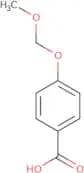
Formula:C11H9N3OPurezza:Min. 95%Peso molecolare:199.21 g/mol4-(Methoxymethoxy)benzoic acid
CAS:4-(Methoxymethoxy)benzoic acid (MMBA) is a synthetic compound that is used in the synthesis of allyl compounds. MMBA is not chemically reactive and does not undergo any reactions at room temperature. This substance can be activated by adding a nucleophile, such as an alcohol or water molecule, which will then react with the electrophilic carbon atom. This reaction produces epoxide and an alkene product. The most common reaction occurs with methanol, producing methoxypropane, which can then be converted to other organic compounds. Research has shown that MMBA has anticancer properties due to its ability to inhibit cell growth and induce apoptosis in humans.
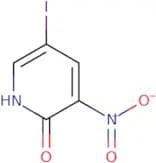
Formula:C9H10O4Purezza:Min. 95%Peso molecolare:182.17 g/mol2-Hydroxy-5-iodo-3-nitropyridine
CAS:Versatile small molecule scaffold
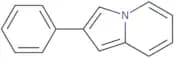
Formula:C5H3IN2O3Purezza:Min. 95%Peso molecolare:265.99 g/mol2-Phenylindolizine
CAS:2-Phenylindolizine is a chemical compound that can be used in the synthesis of other compounds. It has been shown to react with acrylonitrile to form a nitrile, which is an important intermediate in organic chemistry. 2-Phenylindolizine has also been shown to react with benzaldehyde, creating an acetal and a diazo compound. The reaction of 2-phenylindolizine with a chiral electrophile yields two different products. This reaction is highly efficient and can be screened for desirable products using fluorescence and yield measurements.
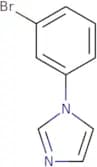
Formula:C14H11NPurezza:Min. 95%Peso molecolare:193.24 g/mol1-(3-Bromophenyl)-1H-imidazole
CAS:Versatile small molecule scaffold
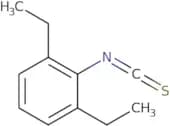
Formula:C9H7BrN2Purezza:Min. 95%Peso molecolare:223.07 g/mol2,6-Diethylphenylisothiocyanate
CAS:2,6-Diethylphenylisothiocyanate is an aliphatic anesthetic agent that binds to the acceptor site of the ligand-gated ion channels. It has a hydrophobic nature and can be used for research as a potential drug candidate for a variety of protein targets. This compound also has the ability to alter conformations of proteins such as apoferritin, which may lead to new insights into how these proteins function.
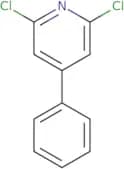
Formula:C11H13NSPurezza:Min. 95%Peso molecolare:191.29 g/mol2,6-Dichloro-4-phenylpyridine
CAS:2,6-Dichloro-4-phenylpyridine is a chemosensor that can be used to detect the presence of aromatic compounds. It has a modular structure consisting of an emission domain and a substrate binding domain. The fluorophore is reversibly bound to the substrate binding domain, which means that it can be detached from the substrate when the desired molecule is detected. This sensor has been shown to have high selectivity for aromatic molecules in both water and organic solvents. 2,6-Dichloro-4-phenylpyridine has also been studied structurally and found to react with a number of other chemical entities such as thiocyanate ion, nitrobenzene, and nitrophenol.
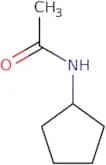
Formula:C11H7Cl2NPurezza:Min. 95%Peso molecolare:224.09 g/molN-Cyclopentylacetamide
CAS:N-Cyclopentylacetamide is a reactive alkylating agent that is used in the synthesis of organic chemicals. It reacts with chlorine to form chloroform, and with acetonitrile to form acetanilide. N-Cyclopentylacetamide also reacts electrochemically with fission products such as uranium to form uranium hexafluoride. The reaction of N-Cyclopentylacetamide with bromides yields a spectrum of cyclopentyl bromides. This compound can be used for the synthesis of pharmaceuticals and other chemical compounds.
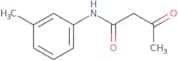
Formula:C7H13NOPurezza:Min. 95%Peso molecolare:127.18 g/molN-(3-Methylphenyl)-3-oxobutanamide
CAS:Versatile small molecule scaffold
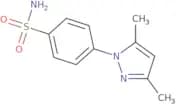
Formula:C11H13NO2Purezza:Min. 95%Peso molecolare:191.23 g/mol4-(3,5-Dimethyl-1H-pyrazol-1-yl)benzene-1-sulfonamide
CAS:4-(3,5-Dimethyl-1H-pyrazol-1-yl)benzenesulfonamide is a centrosymmetric molecule with a dimer in the central position. It has hydrogen bonds that form between two molecules of the same type. The molecule has two hydrogen atoms bonded to each oxygen atom on the sulfonamide group and one hydrogen atom bonded to each carbon atom on the benzene ring. This molecule also has coordinated bonds, which are formed when an electron is shared by two atoms. This molecule also has symmetry in its molecular structure and can be found in nature as a component of some enzymes.Formula:C11H13N3O2SPurezza:Min. 95%Peso molecolare:251.31 g/mol
![4-[1-(Morpholin-4-yl)ethyl]aniline](/_next/image/?url=https%3A%2Fstatic.cymitquimica.com%2Fproducts%2F3D%2Fthumb-webp%2FADB80406.webp&w=3840&q=75)

![1H,4H,5H,6H,7H,8H-Pyrrolo[3,2-c]azepine](/_next/image/?url=https%3A%2Fstatic.cymitquimica.com%2Fproducts%2F3D%2Fthumb-webp%2FACA61514.webp&w=3840&q=75)
![2-Methylpyrazolo[1,5-a]quinazolin-5(4H)-one](/_next/image/?url=https%3A%2Fstatic.cymitquimica.com%2Fproducts%2F3D%2Fthumb-webp%2FABA46850.webp&w=3840&q=75)