Building Blocks
Sottocategorie di "Building Blocks"
- Acidi boronici e derivati dell'acido boronico(5.784 prodotti)
- Building Blocks Chirali(1.242 prodotti)
- Building Blocks Idrocarburici(6.105 prodotti)
- Building Blocks organici(61.061 prodotti)
Trovati 205399 prodotti di "Building Blocks"
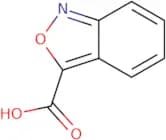
2,1-benzisoxazole-3-carboxylic acid
CAS:2,1-benzisoxazole-3-carboxylic acid (BIX) is a small molecule with antimicrobial and anticancer activity. It has been shown to be selective against candidum, a fungus that causes oral thrush in humans. BIX has also been shown to suppress the growth of plasmodium, the malaria parasite that causes malaria. This compound is synthesized by diazo coupling of 2-aminobenzoic acid and benzisoxazole with potassium carbonate and potassium chloride. BIX has also been shown to have an antiplasmodial effect against Plasmodium falciparum, the most virulent form of this parasite, which is responsible for more than 90% of deaths from malaria. The mechanism of action is not yet known but may be due to inhibition of protein synthesis or inhibition of mitochondrial function.
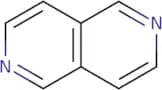
Formula:C8H5NO3Purezza:Min. 95%Peso molecolare:163.13 g/mol2,6-Naphthyridine
CAS:2,6-Naphthyridine is a small molecule that binds to the response elements in the promoter region of genes and alters gene expression. This compound has been shown to affect the brain cells and may be useful for treating brain diseases such as Parkinson's disease. 2,6-Naphthyridine has also been shown to have vibrational properties that can be used in spectroscopy. The compound has been shown to cause cardiac hypertrophy in rats when given at high doses. 2,6-Naphthyridine is a competitive inhibitor of ferroptosis protein binding and inhibits human proteins. It also inhibits the synthesis of naphthalene, which is known for its carcinogenic potential. 2,6-Naphthyridine has been shown to have sublethal effects on organisms such as yeast and nematodes; however, it was not toxic to mice or rats at low doses.
Formula:C8H6N2Purezza:Min. 95%Peso molecolare:130.15 g/molImidazo[4,3-b][1,3]thiazole
CAS:Imidazo[4,3-b][1,3]thiazole is a heterocyclic aromatic compound. It is stable in air and water, but hydrolyzes in alkaline media to form an alkylthio that is relatively stable. Imidazo[4,3-b][1,3]thiazole has been shown to have antibacterial activity against enterococci and β-lactamase-producing strains of bacteria. It has been used as a component of topical ointments for the treatment of skin infections caused by gram-positive bacteria. Imidazo[4,3-b][1,3]thiazole also has antiviral properties and can be used as a component of influenza vaccines. This drug may also act as a nitroaromatic explosive or as an antimicrobial agent when it reacts with carbapenems such as ertapenem or doripenem.
Formula:C5H4N2SPurezza:Min. 95%Peso molecolare:124.17 g/mol1-Oxaspiro[2.6]nonane
CAS:Versatile small molecule scaffold
Formula:C8H14OPurezza:Min. 95%Peso molecolare:126.2 g/mol2-Azaspiro[5.5]undecane
CAS:2-Azaspiro[5.5]undecane is a perchlorate amide, which is a quinoline derivative. It has been used in the synthesis of spirocyclic compounds and yields high yields, including carbon-carbon bonds. 2-Azaspiro[5.5]undecane can be used in the synthesis of aliphatic alcohols and formaldehyde, which is also a chemical known as an aliphatic or an alcohol. 2-Azaspiro[5.5]undecane can also be used in the synthesis of phthalimide and 2-naphthylamine, both of which are organic compounds that belong to the class of aliphatic amines.
Formula:C10H19NPurezza:Min. 95%Peso molecolare:153.26 g/mol2,8-Diazaspiro[4.5]decane
CAS:2,8-Diazaspiro[4.5]decane is a competitive antagonist of the receptor α-adrenergic. It has been shown to significantly activate ATP-binding cassette transporter proteins in bone cells and increase bone mass. 2,8-Diazaspiro[4.5]decane is also an enantiomer that can be used for the treatment of cancer, as well as other diseases such as depression and anxiety. The pharmacokinetic properties of this drug have been studied in rats and mice with significant concentration levels achieved in plasma after 1 hour. The half-life of 2,8-Diazaspiro[4.5]decane is 3 hours and it is metabolized by hydrolysis by carboxylesterase or hydroxylase enzymes to form an inactive compound.
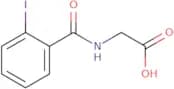
Formula:C8H16N2Purezza:Min. 95%Peso molecolare:140.23 g/mol2-Iodohippuric acid
CAS:2-Iodohippuric acid (2HPA) is a diagnostic agent that is used to measure the renal function of patients with chronic kidney disease. It is a radionuclide that is taken up by the renal tubules and excreted in the urine. 2HPA has been shown to be effective in diagnosing acute renal injury and chronic kidney disease, as well as estimating the glomerular filtration rate (GFR). This drug binds to metals such as cadmium, mercury, lead, and nickel and can be used for the treatment of metal poisoning. 2HPA has been shown to have a pharmacokinetic profile that includes a rapid uptake phase followed by an elimination phase with a half-life of approximately 9 hours.
Formula:IC6H4CONHCH2CO2HPurezza:Min. 95%Peso molecolare:305.07 g/molButyl benzoate
CAS:Butyl benzoate is a glycol ester that is used as a chemical solvent and as a catalyst for chemical reactions. It has been shown to be an effective catalyst for the synthesis of polymers, such as polybutylene terephthalate (PBT), from the monomers butanediol and terephthalic acid. Butyl benzoate also has been used in the production of fatty acids and pharmaceuticals, such as warfarin. The activation energy for butyl benzoate is 10.5 kJ/mol, which is higher than the activation energy for water at 10.2 kJ/mol.
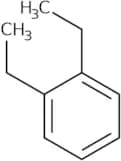
Formula:C11H14O2Purezza:Min. 95%Peso molecolare:178.23 g/mol1,2-Diethylbenzene
CAS:1,2-Diethylbenzene is a trifluoroacetic acid derivative that is used as an acylation agent and a solid catalyst. 1,2-Diethylbenzene has been shown to increase the energy metabolism in cultured human cells. It also influences fatty acid synthesis and nmr spectra of plant families. 1,2-Diethylbenzene was found to be safe for use in sciatic nerve regeneration in Sprague-Dawley rats with axonopathy. This chemical can also be used as an analytical reagent for the separation of urine samples by liquid chromatography methods.
Formula:C10H14Purezza:Min. 95%Peso molecolare:134.22 g/molDiallylamine
CAS:Diallylamine is a colorless, volatile liquid that is miscible with water and most organic solvents. It is chemically stable and has a constant boiling point. Diallylamine has the ability to bind nitrogen atoms from the air and transfer them to other substances. It can also react with trifluoroacetic acid in the presence of water vapor to produce polymers and particles. This reaction mechanism is determined by structural analysis, which shows that diallylamine has an ester hydrochloride linkage between two fatty acids with hydroxyl groups on each end.
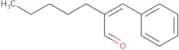
Formula:C8H17NPurezza:Min. 95%Peso molecolare:127.23 g/mol±-Amylcinnamaldehyde
CAS:±-Amylcinnamaldehyde is a hydrocarbon that has been used as a fragrance and flavoring agent. The compound is found naturally in plants such as cinnamon, nutmeg, and cumin. It can be synthesized from acetone and benzaldehyde by the reaction of trifluoroacetic acid. ±-Amylcinnamaldehyde has been shown to stimulate growth factor production and to inhibit the growth of bacteria. This compound has also been shown to possess detergent compositions for use in detergent compositions, including hypochlorite-based detergents. The chemical structure of ±-Amylcinnamaldehyde is shown below: CH3COCH=CH2 ±-AMYLCINNAMALDEHYDE Molecular Weight: 180.25 Boiling Point: n/a Melting Point: n/a Density: 1.00 g/mL at 25°C
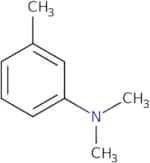
Formula:C14H18OPurezza:90%MinPeso molecolare:202.3 g/molN,N,3-Trimethylaniline
CAS:N,N,3-Trimethylaniline is a precursor for the production of 3-isopropylaniline. The compound is an isomer of trimethylamine. N,N,3-trimethylaniline undergoes cationic polymerization with acrylonitrile to produce a polyacrylonitrile. It also reacts with cellulose acetate to form cellulose nitrate. This compound has been shown to be useful in the synthesis of anthracene and peroxide. It can be used as a reagent for the demethylation of phenols and quinones.
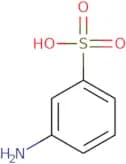
Formula:C9H13NPurezza:Min. 95%Peso molecolare:135.21 g/mol3-Aminobenzenesulfonic acid
CAS:3-Aminobenzenesulfonic acid (ABAS) is a chemical that belongs to the group of inhibitor molecules. It has been shown to be an efficient inhibitor of the enzyme carbonic anhydrase, which is essential for the conversion of CO2 to bicarbonate and protons. This inhibition causes a decrease in pH and increased thermal expansion, leading to increased permeability of water through cell walls. ABAS has also been shown to have antibacterial efficacy against bacteria such as Escherichia coli, Pseudomonas aeruginosa, and Staphylococcus aureus. Furthermore, it has been used in wastewater treatment due to its ability to break down organic matter into simpler compounds.
Formula:H2NC6H4SO3HPurezza:Min. 95%Peso molecolare:173.19 g/molEthyl cyclobutylideneacetate
CAS:Ethyl cyclobutylideneacetate is a compound that is used as an intermediate in the synthesis of pyrimidine compounds. It has autophagy-inducing activity and can stimulate the growth of epidermal cells. This compound has not been shown to have any direct effects on kinases, but it is known to act as a modulator for factors such as epidermal growth factor, which can regulate cell proliferation. Ethyl cyclobutylideneacetate is active in the presence of solvates and regulators. The tautomers of this compound are stereoisomers that are also homologues, with some polymorphs possible depending on the solvent conditions.
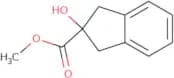
Formula:C8H12O2Purezza:Min. 95%Peso molecolare:140.18 g/molMethyl 2-hydroxy-2,3-dihydro-1H-indene-2-carboxylate
CAS:Versatile small molecule scaffoldFormula:C11H12O3Purezza:Min. 95%Peso molecolare:192.21 g/mol4-(Aminomethyl)piperidin-4-ol
CAS:Versatile small molecule scaffold
Formula:C6H14N2OPurezza:Min. 95%Peso molecolare:130.19 g/mol4-(Butan-2-yloxy)-6-chloro-2-methylpyrimidine
CAS:Versatile small molecule scaffold
Formula:C9H13ClN2OPurezza:Min. 95%Peso molecolare:200.66 g/mol5-Ethynyl-2-methoxy-1,3-thiazole
CAS:Versatile small molecule scaffold
Formula:C6H5NOSPurezza:Min. 95%Peso molecolare:139.18 g/mol2-ethyl-4-methylpyridin-3-amine
CAS:Versatile small molecule scaffold
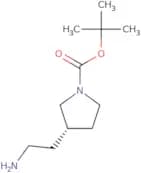
Formula:C8H12N2Purezza:Min. 95%Peso molecolare:136.2 g/mol(S)-tert-butyl 3-(2-Aminoethyl)pyrrolidine-1-carboxylate ee
CAS:Versatile small molecule scaffold
Formula:C11H22N2O2Purezza:Min. 95%Peso molecolare:214.3 g/mol

![Imidazo[4,3-b][1,3]thiazole](/_next/image/?url=https%3A%2Fstatic.cymitquimica.com%2Fproducts%2F3D%2Fthumb-webp%2FAAA25189.webp&w=3840&q=75)
![1-Oxaspiro[2.6]nonane](/_next/image/?url=https%3A%2Fstatic.cymitquimica.com%2Fproducts%2F3D%2Fthumb-webp%2FAAA18585.webp&w=3840&q=75)
![2-Azaspiro[5.5]undecane](/_next/image/?url=https%3A%2Fstatic.cymitquimica.com%2Fproducts%2F3D%2Fthumb-webp%2FAAA18048.webp&w=3840&q=75)
![2,8-Diazaspiro[4.5]decane](/_next/image/?url=https%3A%2Fstatic.cymitquimica.com%2Fproducts%2F3D%2Fthumb-webp%2FAAA17667.webp&w=3840&q=75)