


Building Blocks
Sottocategorie di "Building Blocks"
- Acidi boronici e derivati dell'acido boronico(5.780 prodotti)
- Building Blocks Chirali(1.241 prodotti)
- Building Blocks Idrocarburici(6.100 prodotti)
- Building Blocks organici(61.024 prodotti)
Trovati 205297 prodotti di "Building Blocks"
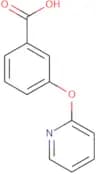
3-(Pyridin-2-yloxy)benzoic acid
CAS:3-(Pyridin-2-yloxy)benzoic acid is an organic compound that belongs to the group of anilides. It has been shown to be toxic to plants by inhibiting their chlorophyll production and by causing phytotoxicity. 3-(Pyridin-2-yloxy)benzoic acid also inhibits the germination of seeds, primarily due to its inhibition of growth hormone activity. 3-(Pyridin-2-yloxy)benzoic acid can be used as a herbicide because it is highly effective against broadleaf plants, but not grasses. This compound is also relatively non-toxic to mammals and birds, but can cause skin irritation in humans.
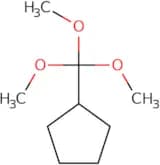
Formula:C12H9NO3Purezza:Min. 95%Peso molecolare:215.2 g/mol(Trimethoxymethyl)cyclopentane
CAS:Versatile small molecule scaffold
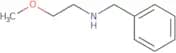
Formula:C9H18O3Purezza:Min. 95%Peso molecolare:174.24 g/molN-Benzyl-n-(2-methoxyethyl)amine
CAS:Versatile small molecule scaffold
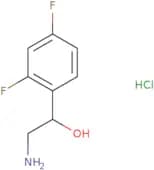
Formula:C10H15NOPurezza:Min. 95%Peso molecolare:165.23 g/mol2-Amino-1-(2,4-difluorophenyl)ethan-1-ol hydrochloride
CAS:Versatile small molecule scaffold
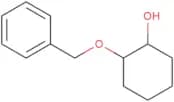
Formula:C8H10ClF2NOPurezza:Min. 95%Peso molecolare:209.62 g/molrac-(1R,2R)-2-(Benzyloxy)cyclohexan-1-ol
CAS:Versatile small molecule scaffold
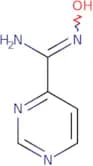
Formula:C13H18O2Purezza:Min. 95%Peso molecolare:206.28 g/molN'-Hydroxypyrimidine-4-carboximidamide
CAS:Versatile small molecule scaffold
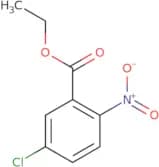
Formula:C5H6N4OPurezza:Min. 95%Peso molecolare:138.13 g/molEthyl 5-chloro-2-nitrobenzoate
CAS:Versatile small molecule scaffold
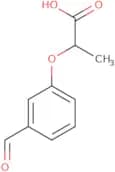
Formula:C9H8ClNO4Purezza:Min. 95%Peso molecolare:229.62 g/mol2-(3-Formylphenoxy)propanoic acid
CAS:Versatile small molecule scaffold
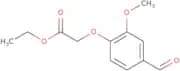
Formula:C10H10O4Purezza:Min. 95%Peso molecolare:194.18 g/mol4-Formyl-2-methoxy-phenoxy-acetic acid ethyl ester
CAS:Versatile small molecule scaffold
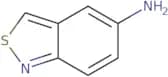
Formula:C12H14O5Purezza:Min. 95%Peso molecolare:238.24 g/mol2,1-Benzothiazol-5-amine
CAS:Versatile small molecule scaffold
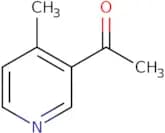
Formula:C7H6N2SPurezza:Min. 95%Peso molecolare:150.2 g/mol1-(4-Methyl-3-pyridinyl)ethanone
CAS:1-(4-Methyl-3-pyridinyl)ethanone is an organic compound that yields optical pyruvic acid on hydrolysis. It also has unselective dehydrogenase activity on a variety of substrates, including dioxane and 2,2,2-trichloroethanol. 1-(4-Methyl-3-pyridinyl)ethanone can be used as a reagent for the synthesis of chiral iminium salts or as a dehydrating agent in organic synthesis. It is also used to synthesize vitamin B6 and indole alkaloids. The chemical structure of 1-(4-methyl-3-pyridinyl)ethanone is similar to that of benzaldehyde (C6H5CH2CHO), which has benzylic hydroxyl group on the benzene ring. This compound can be oxidized to yield a dianion that can be used as a photocat
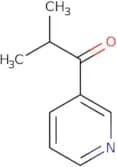
Formula:C8H9NOPurezza:Min. 95%Peso molecolare:135.16 g/mol2-Methyl-1-(pyridin-3-yl)propan-1-one
CAS:Versatile small molecule scaffold
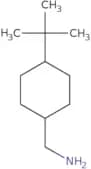
Formula:C9H11NOPurezza:Min. 95%Peso molecolare:149.19 g/mol(4-tert-Butylcyclohexyl)methanamine
CAS:Versatile small molecule scaffold
Formula:C11H23NPurezza:Min. 95%Peso molecolare:169.31 g/moltert-Butyl 3-bromopropionate
CAS:Tert-butyl 3-bromopropionate is a linker for the synthesis of pleuromutilin derivatives. It has been used as a model substrate for studying the effects of hypertrophy on cardiac muscle. Tert-butyl 3-bromopropionate has also been shown to inhibit the production of proinflammatory cytokines in response to bacterial infection, and can be used as an antibacterial agent. Tert-butyl 3-bromopropionate binds to RNA and inhibits protein synthesis, which leads to cell death by preventing the production of proteins vital for cell division. Tert-butyl 3-bromopropionate is also a potent inhibitor of chloride channels that are found in nerve cells and prevents the flow of chloride ions through these channels, leading to paralysis. This drug also inhibits hydrogen fluoride excretion in rats, which may be due to its ability to bind with chloride ions in the kidney tubules, preventing their
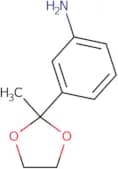
Formula:C7H13BrO2Purezza:Min. 95%Colore e forma:Colorless Clear LiquidPeso molecolare:209.08 g/mol3-(2-Methyl-1,3-dioxolan-2-yl)aniline
CAS:Versatile small molecule scaffold
Formula:C10H13NO2Purezza:Min. 95%Peso molecolare:179.22 g/mol1-[2-Amino-3-(4-methylbenzoyl)-4H,5H,6H,7H-thieno[2,3-c]pyridin-6-yl]ethan-1-one
CAS:Versatile small molecule scaffold
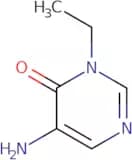
Formula:C17H18N2O2SPurezza:Min. 95%Peso molecolare:314.4 g/mol5-Amino-3-ethyl-3,4-dihydropyrimidin-4-one
CAS:Versatile small molecule scaffold
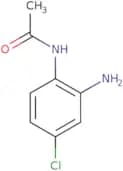
Formula:C6H9N3OPurezza:Min. 95%Peso molecolare:139.16 g/molN-(2-Amino-4-chlorophenyl)acetamide
CAS:Versatile small molecule scaffold
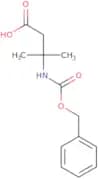
Formula:C8H9ClN2OPurezza:Min. 95%Peso molecolare:184.62 g/mol3-(((Benzyloxy)carbonyl)amino)-3-methylbutanoic acid
CAS:3-(((Benzyloxy)carbonyl)amino)-3-methylbutanoic acid (BMAA) is a quaternary ammonium compound that has antimicrobial activities. BMAA is active against Gram-positive and Gram-negative bacteria, including some strains of Staphylococcus aureus and Escherichia coli. It also has antimicrobial activity against yeast and fungi. BMAA exhibits stability in the presence of organic solvents, detergents, and water. This product is used as an antimicrobial agent in industrial processes such as wastewater treatment, oil exploration, pulp milling, and food processing. It can be used as a substitute for other quaternary ammonium compounds such as benzalkonium chloride or cetrimide, which are toxic to aquatic life. There are no known analogs to this chemical compound.
Formula:C13H17NO4Purezza:Min. 95%Peso molecolare:251.28 g/mol[4-(Prop-2-yn-1-yl)phenyl]methanol
CAS:Allylbromide is an organic compound that has a cyclic, allenyl ring structure. It is produced by the reaction of magnesium and ethylene glycol with bromobenzene in the presence of tetrahydrofuran. Allylbronide is used as an insecticide and has been shown to be effective against mosquitoes, fleas, and ticks. Allylbronide also has a strong anticholinesterase activity which makes it useful for the treatment of acute organophosphate poisoning. It binds to the active site of acetylcholinesterase and blocks its function, leading to accumulation of acetylcholine at nerve endings.
Formula:C10H10OPurezza:Min. 95%Peso molecolare:146.19 g/mol


![1-[2-Amino-3-(4-methylbenzoyl)-4H,5H,6H,7H-thieno[2,3-c]pyridin-6-yl]ethan-1-one](/_next/image/?url=https%3A%2Fstatic.cymitquimica.com%2Fproducts%2F3D%2Fthumb-webp%2FGAC25771.webp&w=3840&q=75)
![[4-(Prop-2-yn-1-yl)phenyl]methanol](/_next/image/?url=https%3A%2Fstatic.cymitquimica.com%2Fproducts%2F3D%2Fthumb-webp%2FBCA17648.webp&w=3840&q=75)