Building Blocks
Sottocategorie di "Building Blocks"
- Acidi boronici e derivati dell'acido boronico(5.774 prodotti)
- Building Blocks Chirali(1.237 prodotti)
- Building Blocks Idrocarburici(6.098 prodotti)
- Building Blocks organici(60.980 prodotti)
Trovati 205158 prodotti di "Building Blocks"
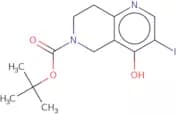
tert-Butyl 4-hydroxy-3-iodo-5,6,7,8-tetrahydro-1,6-naphthyridine-6-carboxylate
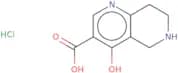
CAS:Versatile small molecule scaffoldFormula:C13H17IN2O3Purezza:Min. 95%Peso molecolare:376.2 g/mol4-Hydroxy-5,6,7,8-tetrahydro-1,6-naphthyridine-3-carboxylic acid hydrochloride
CAS:Versatile small molecule scaffold
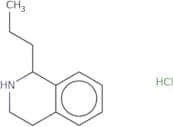
Formula:C9H11ClN2O3Purezza:Min. 95%Peso molecolare:230.6 g/mol1-Propyl-1,2,3,4-tetrahydroisoquinoline hydrochloride
CAS:Versatile small molecule scaffoldFormula:C12H18ClNPurezza:Min. 95%Peso molecolare:211.7 g/mol[4-(1H-1,2,4-Triazol-3-yl)phenyl]methanamine dihydrochloride
CAS:Versatile small molecule scaffold
Formula:C9H12Cl2N4Purezza:Min. 95%Peso molecolare:247.1 g/mol6-{[(9H-Fluoren-9-yl)methoxy]carbonyl}-4H,5H,6H,7H-thieno[2,3-c]pyridine-2-carboxylic acid
CAS:Versatile small molecule scaffold
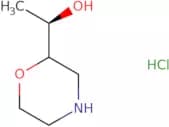
Formula:C23H19NO4SPurezza:Min. 95%Peso molecolare:405.5 g/mol(1R)-1-(Morpholin-2-yl)ethan-1-ol hydrochloride
CAS:Versatile small molecule scaffold
Formula:C6H14ClNO2Purezza:Min. 95%Peso molecolare:167.6 g/mol2-(2-Chloro-4-nitrophenyl)acetic acid
CAS:Versatile small molecule scaffold
Formula:C8H6ClNO4Purezza:Min. 95%Peso molecolare:215.59 g/mol(Chloromethyl)cyclohexane
CAS:(Chloromethyl)cyclohexane is a synthase gene that is responsible for synthesizing the enzyme chloromethyl cyclohexane, which is used as a solid catalyst. The synthesis of (chloromethyl)cyclohexane from phenyl groups and liquid crystal composition has been demonstrated using expression plasmids and active oxygen. The compound inhibits inflammatory diseases by preventing the production of arachidonic acid, which is an inflammatory agent. This compound also inhibits the production of prostaglandins, which are involved in the release of histamine from mast cells. Pharmaceutical preparations that contain this compound are primarily used to treat rheumatoid arthritis and other inflammatory diseases.
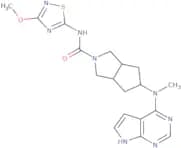
Formula:C7H13ClPurezza:Min. 95%Peso molecolare:132.63 g/molSHR 0302
CAS:Please enquire for more information about SHR 0302 including the price, delivery time and more detailed product information at the technical inquiry form on this page
Formula:C18H22N8O2SPurezza:Min. 95%Peso molecolare:414.49 g/molRef: 3D-FS182635
Prodotto fuori produzione6,7-dihydro-5h-pyrrolo[3,4-d]pyrimidin-2-amine 2hcl
CAS:Versatile small molecule scaffold
Formula:C6H10Cl2N4Purezza:Min. 95%Peso molecolare:209.07 g/molMethyl 4-chlorobenzenesulfonate
CAS:Versatile small molecule scaffold
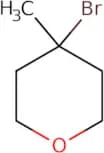
Formula:C7H7ClO3SPurezza:Min. 95%Peso molecolare:206.65 g/mol4-Bromo-4-methyltetrahydropyran
CAS:Versatile small molecule scaffold
Formula:C6H11BrOPurezza:Min. 95%Peso molecolare:179.06 g/molMethyl 3-bromopyrrole-2-carboxylate
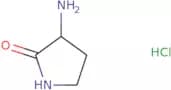
CAS:Versatile small molecule scaffoldFormula:C6H6BrNO2Purezza:Min. 95%Peso molecolare:204.02 g/mol3-aminopyrrolidin-2-one hcl
CAS:3-Aminopyrrolidin-2-one hcl is an antibiotic that is used to treat tuberculosis. It inhibits the enzyme transacylase, which catalyses the conversion of L-lysine into L-pipecolic acid in bacteria. This antibiotic has been shown to be effective against Mycobacterium tuberculosis and Mycobacterium avium complex. 3-Aminopyrrolidin-2-one hcl has a broad spectrum of activity against gram positive and gram negative bacteria, but it is not active against acid-fast bacteria.
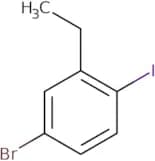
Formula:C4H9ClN2OPurezza:Min. 95%Peso molecolare:136.58 g/mol4-Bromo-2-ethyliodobenzene
CAS:Versatile small molecule scaffold
Formula:C8H8BrIPurezza:Min. 95%Peso molecolare:310.96 g/mol4-Bromo-2,3-difluoropyridine
CAS:Versatile small molecule scaffold
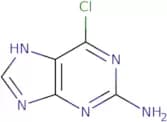
Formula:C5H2BrF2NPurezza:Min. 95%Peso molecolare:193.98 g/mol2-Amino-6-chloropurine
CAS:2-Amino-6-chloropurine is a nucleophilic substituent that is used in the synthesis of 2-amino-6-chloropurine. It reacts with hydroxyl groups to form a palladium-catalyzed coupling reaction solution, which is then treated with hydrochloric acid and trifluoroacetic acid. The product is purified by crystallization and recrystallization. This compound has potent antitumor activity against carcinoma cell lines, but it has not been shown to have any effect against Mycobacterium tuberculosis.
Formula:C5H4ClN5Purezza:Min. 95%Colore e forma:Off-White PowderPeso molecolare:169.57 g/mol4-Bromopyridine hydrochloride
CAS:4-Bromopyridine HCl is a chemical compound with the molecular formula C6H5BrN. It is an aromatic heterocycle and is used in organic synthesis as a coupling partner in cross-coupling reactions. The bromine atom of 4-bromopyridine is replaced by chloride, resulting in 4-chloropyridine. The chlorination reaction can be conducted using either hydrochloric acid or thionyl chloride. This process can be done on an industrial scale and the chlorinated product has been used in the manufacture of pharmaceuticals, dyes, and pesticides. The reaction mechanism for this substitution reaction involves a nucleophilic attack by chlorine on the pyridine ring at carbon atom 2 followed by displacement of hydrogen from the adjacent position on nitrogen atom 3. Acylation reactions are oxidation processes that involve conversion of carboxylic acids to acyl halides or acyl chlorides through treatment with acidified halogenating agents such
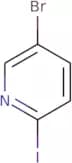
Formula:C5H4BrN•HClPurezza:Min. 95%Colore e forma:White PowderPeso molecolare:194.46 g/mol5-Bromo-2-iodopyridine
CAS:5-Bromo-2-iodopyridine is an antibiotic that is used to treat bacterial infections. It has been shown to inhibit the growth of bacteria by binding to the 50S ribosomal subunit. This drug also has a toxic effect on respiratory system cells, which may be due to its ability to induce apoptosis. 5-Bromo-2-iodopyridine interacts with DNA in a triazine ring and inhibits bacterial growth by inhibiting protein synthesis. The drug binds to the 50S ribosomal subunit at a site that is different from that of rifampin and other antibiotics. The reaction is catalyzed by palladium at high temperatures and takes place in organic solvents such as chloroform or benzene. This synthetic process can be made more efficient by using inexpensive starting materials, such as bromine, iodine, and acetone, rather than expensive starting materials like platinum or gold salts.
Formula:C5H3BrINPurezza:Min. 95%Colore e forma:Slightly Yellow PowderPeso molecolare:283.89 g/mol1-Bromo-4-iodobenzene
CAS:1-Bromo-4-iodobenzene is an aryl halide that can be synthesized by the cross coupling of ethyl formate and hydrochloric acid. This compound is useful in analytical applications, such as chromatographic methods, due to its high solubility in organic solvents. It is also used in synthetic procedures for the preparation of other aryl halides. 1-Bromo-4-iodobenzene has been used to synthesize calcium carbonate via the Suzuki coupling reaction with sodium salts, which are nucleophiles. The carbonyl group on this molecule reacts with the nucleophile, forming an alkyl group and a metal salt. Transfer reactions involving these salts can produce other products with different functional groups.
Formula:C6H4BrIPurezza:Min. 95%Colore e forma:PowderPeso molecolare:282.9 g/mol

![[4-(1H-1,2,4-Triazol-3-yl)phenyl]methanamine dihydrochloride](/_next/image/?url=https%3A%2Fstatic.cymitquimica.com%2Fproducts%2F3D%2Fthumb-webp%2FUND36862.webp&w=3840&q=75)
![6-{[(9H-Fluoren-9-yl)methoxy]carbonyl}-4H,5H,6H,7H-thieno[2,3-c]pyridine-2-carboxylic acid](/_next/image/?url=https%3A%2Fstatic.cymitquimica.com%2Fproducts%2F3D%2Fthumb-webp%2FUND36853.webp&w=3840&q=75)


![6,7-dihydro-5h-pyrrolo[3,4-d]pyrimidin-2-amine 2hcl](/_next/image/?url=https%3A%2Fstatic.cymitquimica.com%2Fproducts%2F3D%2Fthumb-webp%2FHGA32752.webp&w=3840&q=75)