Building Blocks
Questa sezione contiene prodotti fondamentali per la sintesi di composti organici e biologici. Building blocks sono i materiali di partenza essenziali utilizzati per costruire molecole complesse attraverso varie reazioni chimiche. Svolgono un ruolo critico nella scoperta di farmaci, nella scienza dei materiali e nella ricerca chimica. Presso CymitQuimica, offriamo una gamma diversificata di building blocks di alta qualità per supportare le tue ricerche innovative e progetti industriali, assicurandoti di avere i componenti essenziali per una sintesi di successo.
Sottocategorie di "Building Blocks"
- Acidi boronici e derivati dell'acido boronico(5.756 prodotti)
- Building Blocks Chirali(1.242 prodotti)
- Building Blocks Idrocarburici(6.095 prodotti)
- Building Blocks organici(60.526 prodotti)
Trovati 195848 prodotti di "Building Blocks"
Ordinare per
Purezza (%)
0
100
|
0
|
50
|
90
|
95
|
100
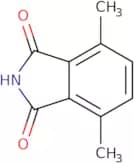
4,7-Dimethyl-2,3-dihydro-1H-isoindole-1,3-dione
CAS:<p>Versatile small molecule scaffold</p>Formula:C10H9NO2Purezza:Min. 95%Peso molecolare:175.18 g/mol2-Amino-3,6-dimethylbenzoic acid
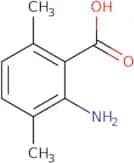
CAS:<p>2-Amino-3,6-dimethylbenzoic acid is an equilibrating agent that has been used to study the interaction and kinetics of hydrogen bonds. It is a white crystalline solid with a molecular weight of 164.2 g/mol and a melting point of 127 °C. The kinetic method has been used to study the equilibration between its two forms: 3,4-dihydroxybenzoic acid (DHB) and 2-hydroxybenzoic acid (HBA). This equilibrium can be described by the equation DHB + HBA ⇌ DHB + HBA, where the equilibrium constant is K = [DHB][HBA]/[DHB][HBA]. The kinetic method was also applied to study the reaction between 2-amino-3,6-dimethylbenzoic acid and methyl derivatives of olefins. In this case, the kinetic method was used to determine</p>Formula:C9H11NO2Purezza:Min. 95%Peso molecolare:165.19 g/molbicyclo[2.2.1]heptane-1,4-dicarboxylic acid
CAS:<p>Versatile small molecule scaffold</p>Formula:C9H12O4Purezza:Min. 95%Peso molecolare:184.19 g/mol4-(Hydroxymethyl)oxazolidin-2-one
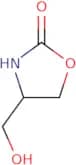
CAS:<p>4-(Hydroxymethyl)oxazolidin-2-one is an activated form of oxazolidinones that can react with potassium ions to form a stable, water soluble salt. This reaction is catalyzed by lanthanum ion and the reaction mechanism involves the formation of fatty acid esters. It has been found to be effective in the synthesis of methyl palmitate, which is a fatty acid that can be used as a raw material for biodiesel production. The reaction intermediates are dehydrating and constant, and the metal ion is lanthanum. 4-(Hydroxymethyl)oxazolidin-2-one has impurities such as adiponitrile, acidic impurities, and stereoselective impurities.</p>Formula:C4H7NO3Purezza:Min. 95%Peso molecolare:117.1 g/mol4-[(Ethoxycarbonyl)oxy]benzoic acid
CAS:<p>Versatile small molecule scaffold</p>Formula:C10H10O5Purezza:Min. 95%Peso molecolare:210.18 g/mol2-(2,6-Dimethoxyphenyl)acetic acid
CAS:<p>2-(2,6-Dimethoxyphenyl)acetic acid is a phenolic compound that can be found in the urine of people suffering from alcaptonuria. This disease is caused by the accumulation of homogentisic acid in the body and results in abnormalities such as neural tube defects. 2-(2,6-Dimethoxyphenyl)acetic acid is formed during the conversion of resorcinol to dihydroxybenzene by demethylation. It also has low yields when synthesized from methyl ester and benzene, which makes it difficult to produce synthetically.</p>Formula:C10H12O4Purezza:Min. 95%Peso molecolare:196.2 g/mol4-(2-Chloro-4-methoxyphenyl)-4-oxobutanoic acid
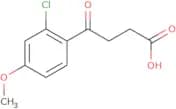
CAS:<p>Versatile small molecule scaffold</p>Formula:C11H11ClO4Purezza:Min. 95%Peso molecolare:242.65 g/mol2-(4-Hydroxyphenyl)-2-oxoacetic acid
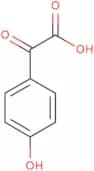
CAS:<p>2-Hydroxyphenyl-2-oxoacetic acid (HPPAA) is a pharmaceutical preparation used to treat insulin resistance and type 2 diabetes. It has been shown to increase the activity of mitochondrial enzymes, inhibit oxidative phosphorylation, and increase the oxidation of fatty acids. HPPAA has also been shown to reduce carnitine levels in muscle tissue, which may contribute to its anti-obesity effects. HPPAA is an analytical method for detecting insulin resistance in Sprague-Dawley rats. This method is based on UV absorption at 280 nm and can be used with other analytical methods such as gas chromatography or liquid chromatography.</p>Formula:C8H6O4Purezza:Min. 95%Peso molecolare:166.13 g/mol{7-Oxabicyclo[2.2.1]heptan-1-yl}methanol
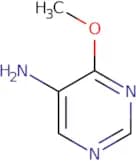
CAS:<p>Versatile small molecule scaffold</p>Formula:C7H12O2Purezza:Min. 95%Peso molecolare:128.2 g/mol4-methoxypyrimidin-5-amine
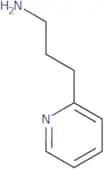
CAS:<p>Versatile small molecule scaffold</p>Formula:C5H7N3OPurezza:Min. 95%Peso molecolare:125.12 g/mol3-(Pyridin-2-yl)propan-1-amine
CAS:<p>Versatile small molecule scaffold</p>Formula:C8H12N2Purezza:Min. 95%Peso molecolare:136.2 g/molN-Methyl-3-(pyridin-2-yl)propan-1-amine
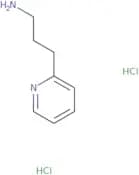
CAS:<p>Versatile small molecule scaffold</p>Formula:C9H14N2Purezza:Min. 95%Peso molecolare:150.22 g/mol3-(Pyridin-2-yl)propan-1-amine dihydrochloride
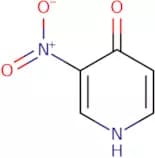
CAS:<p>Versatile small molecule scaffold</p>Formula:C8H14Cl2N2Purezza:Min. 95%Peso molecolare:209.11 g/mol3-Nitropyridin-4(1H)-one
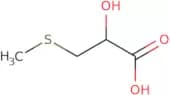
CAS:<p>3-Nitropyridin-4(1H)-one is an organic solvent that has a number of industrial applications. It is used as a raw material for the production of other chemicals and as a cleaning agent in wastewater treatment plants. 3-Nitropyridin-4(1H)-one is also used in the synthesis of amines and nitro compounds. This compound is found in high concentrations in urban air due to its use as a solvent and its presence as a contaminant in carbon tetrachloride. The sublimed form of 3-nitropyridin-4(1H)-one has been shown to react with primary amines, amines, and tautomeric compounds, leading to the formation of nitro compounds or chloride ions. The nmr spectra show that this compound interacts with low energy radiation.</p>Formula:C5H4N2O3Purezza:Min. 95%Peso molecolare:140.1 g/mol2-Hydroxy-3-(methylsulfanyl)propanoic acid
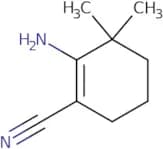
CAS:<p>2-Hydroxy-3-(methylsulfanyl)propanoic acid is a polychromatic compound that has been used as an x-ray contrast agent. It has been shown to be useful in imaging techniques such as diffraction, x-ray, and electron microscopy. 2-Hydroxy-3-(methylsulfanyl)propanoic acid is also used in the study of human genome structure and function. This molecule has been found to bind to DNA in the nucleus, which is believed to help with its ability to transport electrons along DNA molecules. 2-Hydroxy-3-(methylsulfanyl)propanoic acid has been shown to have anticancer properties and has also been found useful for tissue imaging.</p>Formula:C4H8O3SPurezza:Min. 95%Peso molecolare:136.17 g/mol2-Amino-3,3-dimethylcyclohex-1-ene-1-carbonitrile
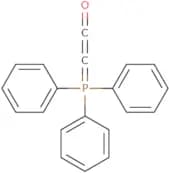
CAS:<p>Versatile small molecule scaffold</p>Formula:C9H14N2Purezza:Min. 95%Peso molecolare:150.22 g/mol(Triphenylphosphoranylidene)ketene
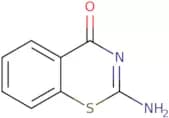
CAS:<p>Triphenylphosphoranylidene)ketene is an amine-containing compound that is used as a catalyst in organic synthesis. It can be used in reactions involving the cleavage of carbon-carbon bonds and has been shown to oxidize alcohols, ethers, and esters. Triphenylphosphoranylidene)ketene was first synthesized in 1887 by the reaction of triphenylphosphine with ethylene dione.</p>Formula:C20H15OPPurezza:Min. 95%Peso molecolare:302.31 g/mol2-Amino-4H-1,3-benzothiazin-4-one
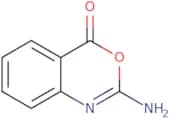
CAS:<p>Versatile small molecule scaffold</p>Formula:C8H6N2OSPurezza:Min. 95%Peso molecolare:178.21 g/mol2-Amino-4H-3,1-benzoxazin-4-one
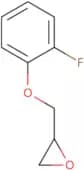
CAS:<p>Quinazolone is a quinazoline derivative with a 2-amino-4H-3,1-benzoxazin-4-one moiety. It is an inhibitor of enzymes that catalyze the phosphorylation of alkenes and alkynes, such as malonate decarboxylase and acetoacetyl-CoA thiolase. Quinazolones are also used in pharmaceuticals, mainly as anticonvulsants or antipsychotics. The quinazolone group is obtained by condensation of cyanamide with diethyl malonate or ethyl malonate. The resulting quinazoline can be converted to the corresponding quinazolone by replacement of the amino group with an amine. This reaction is called the Baeyer–Villiger oxidation. Quinazolones can also be synthesized from aralkyl chlorides by treatment with phenylurea followed by hydrolysis</p>Formula:C8H6N2O2Purezza:Min. 95%Peso molecolare:162.15 g/mol2-(2-Fluorophenoxymethyl)oxirane
CAS:<p>2-(2-Fluorophenoxymethyl)oxirane is an organic compound that has been used as a diagnostic agent for the detection of Staphylococcus. It reacts with 2-amino-3-ketobutyric acid, which is the end product of bacterial metabolism and can be detected by gas chromatography. The sensitivity of this assay is approximately 10 CFU/mL. This compound has also been used as a probe for the study of bacterial metabolites in aerogenes cultures. In addition, it has been utilized as a sensor for bacterial growth in supernatants from subtilis bacteria cultures. 2-(2-Fluorophenoxymethyl)oxirane is not active against resistant strains of bacteria such as enterobacter and epidermidis species.</p>Formula:C9H9FO2Purezza:Min. 95%Peso molecolare:168.16 g/mol

![bicyclo[2.2.1]heptane-1,4-dicarboxylic acid](/_next/image/?url=https%3A%2Fstatic.cymitquimica.com%2Fproducts%2F3D%2Fthumb-webp%2FQAA54451.webp&w=3840&q=75)
![4-[(Ethoxycarbonyl)oxy]benzoic acid](/_next/image/?url=https%3A%2Fstatic.cymitquimica.com%2Fproducts%2F3D%2Fthumb-webp%2FQAA55232.webp&w=3840&q=75)

![{7-Oxabicyclo[2.2.1]heptan-1-yl}methanol](/_next/image/?url=https%3A%2Fstatic.cymitquimica.com%2Fproducts%2F3D%2Fthumb-webp%2FQAA57403.webp&w=3840&q=75)