Building Blocks
Sottocategorie di "Building Blocks"
- Acidi boronici e derivati dell'acido boronico(5.783 prodotti)
- Building Blocks Chirali(1.242 prodotti)
- Building Blocks Idrocarburici(6.105 prodotti)
- Building Blocks organici(61.055 prodotti)
Trovati 205383 prodotti di "Building Blocks"
1,4-Diacetylbenzene
CAS:1,4-Diacetylbenzene (1,4-DAB) is a tetradentate ligand that binds to metal ions. It has been used to model the active site of acetylcholinesterase, as well as for supramolecular chemistry. 1,4-DAB has been shown to have anticholinesterase activity and is used in crosslinkers. 1,4-DAB forms hydrogen bonds with the nitrogen atom of the carbonyl group and also stabilizes molecules through its dipole interactions. The kinetic properties of 1,4-DAB have been studied by modelling studies and by Nuclear Magnetic Resonance spectroscopy. Metformin hydrochloride (MET) is a biguanide antihyperglycemic agent that inhibits glucose production in the liver and promotes insulin sensitivity in peripheral tissues.Formula:C10H10O2Purezza:Min. 99.0 Area-%Colore e forma:White PowderPeso molecolare:162.19 g/mol(2,4-Difluorophenyl)acetone
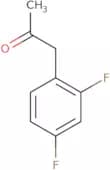
CAS:(2,4-Difluorophenyl)acetone is a high quality chemical that can be used as a reagent, intermediate or building block for the synthesis of complex compounds. It is also a versatile building block for the synthesis of speciality chemicals, research chemicals and reaction components. (2,4-Difluorophenyl)acetone is an important intermediate in the synthesis of fluoroquinolones and it has been shown to be useful in the preparation of dyes such as indigo and phthalocyanine. This compound is also used to synthesize other pharmaceuticals such as aspirin and acetaminophen.
Formula:C9H8F2OPurezza:Min. 95%Colore e forma:PowderPeso molecolare:170.16 g/mol3,5-Dibromo-4-methoxybenzonitrile
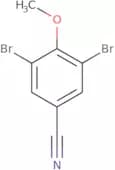
CAS:3,5-Dibromo-4-methoxybenzonitrile (DBMB) is a pentane that can be synthesized in the laboratory. DBMB is used as a weed control agent to kill weeds and grasses in neoprene rubber products and other materials. The chemical reacts with nitro groups on the surface of the material, producing an unstable intermediate that decomposes into pentane and nitric acid. 3,5-Dibromo-4-methoxybenzonitrile has been shown to have low toxicity to mammals at high doses. The compound may also be used as a chemical intermediate for the synthesis of other compounds or drugs. Nitro groups may be reduced by reductants such as sodium borohydride or lithium aluminium hydride to produce analdehyde derivatives.Formula:C8H5Br2NOPurezza:Min. 95%Colore e forma:White Off-White PowderPeso molecolare:290.94 g/mol2-Methyl-5-nitropyridine
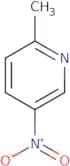
CAS:2-Methyl-5-nitropyridine is an enamine that can be synthesized by the reaction of a primary amine with nitrous acid. It has been shown to react with hydrazines to form 2-methyl-5-nitropyridinium hydrazones, which are useful in organic synthesis. The reaction of 2-methyl-5-nitropyridine with acid anhydrides yields protonated carboxylic acids, which can be used as nucleophiles in the presence of metal ions. This amino acid also forms aliphatic amines and anions and reacts with aldehydes to form nitroalkenes.Formula:C6H6N2O2Purezza:Min. 95%Colore e forma:Beige PowderPeso molecolare:138.12 g/mol4-Amino-3-hydroxybenzoic acid
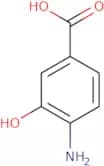
CAS:4-Amino-3-hydroxybenzoic acid is a small molecule that has been shown to inhibit the activity of epidermal growth factor receptor (EGFR) and human epidermal growth factor (HER2). It is also an inhibitor of cytochrome P450 enzymes, which are involved in the metabolism of drugs. 4-Amino-3-hydroxybenzoic acid is used in vitro as an antifungal agent for Candida albicans and other pathogenic fungi. This drug inhibits the growth of cancer cells by binding to specific cell surface receptors, causing them to detach from their surroundings and die. 4-Amino-3-hydroxybenzoic acid may have potential as a drug for treating metastatic colorectal cancer. The mechanism of action is not yet fully understood but it may be related to the inhibition of intermolecular hydrogen bonding and water permeability.
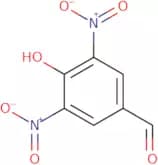
Formula:C7H7NO3Purezza:Min. 97.5 Area-%Colore e forma:Off-White PowderPeso molecolare:153.14 g/mol3,5-Dinitro-4-hydroxybenzaldehyde
CAS:Please enquire for more information about 3,5-Dinitro-4-hydroxybenzaldehyde including the price, delivery time and more detailed product information at the technical inquiry form on this pageFormula:C7H4N2O6Purezza:Min. 95%Colore e forma:PowderPeso molecolare:212.12 g/mol2,4,6-Triisopropylbenzenesulfonyl chloride
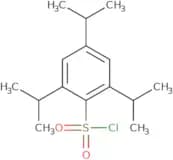
CAS:2,4,6-Triisopropylbenzenesulfonyl chloride is a molecule that belongs to the class of ethylene diamine. It has been shown to inhibit the replication of herpes simplex virus in cell culture. This compound has an intramolecular hydrogen and steric interactions with a hydroxyl group. The analog of this molecule is 2,4,6-triisopropylbenzenesulfonic acid. 2,4,6-Triisopropylbenzenesulfonyl chloride can be used as a sulfonation agent and is known for its ability to react with nitrogen nucleophiles such as amines or ammonia.Formula:C15H23SO2ClPurezza:Min. 95%Peso molecolare:302.86 g/mol1,2-Phenylenedimethanamine dihydrochloride
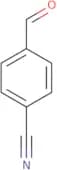
CAS:1,2-Phenylenedimethanamine dihydrochloride is a colorless to white crystalline solid that is soluble in diethyl ether, ethyl acetate and methanol. It is insoluble in water and most organic solvents. 1,2-Phenylenedimethanamine dihydrochloride is used as a reagent for the preparation of primary amines from alkyl halides. This chemical has been shown to be stable in air and remains unchanged when heated at 100°C. Synonyms include: 2-Amino-1,2-phenylene dichloride; 2-Amino-1,2-diphenylethane dichloride; 2-[(1,2)-Phenylenebis(amino)]dichloroethene; 2-[(1,2)-Phenylenebis(amino)]dichloroethene; and PhenFormula:C8H14Cl2N2Purezza:Min. 95%Colore e forma:PowderPeso molecolare:209.12 g/mol4-Cyanobenzaldehyde
CAS:4-Cyanobenzaldehyde is an acid that inhibits tyrosinase, an enzyme involved in the production of melanin. It has been shown to have a strong inhibitory effect on the activity of this enzyme in a variety of biological studies. 4-Cyanobenzaldehyde is chemically stable and does not react with hydrochloric acid or water at room temperature, making it suitable for use in experiments involving these substances. This chemical also has antiinflammatory properties and can be used as a substitute for phenols in some chemical reactions. 4-Cyanobenzaldehyde is soluble in methanol and reacts with diphenolase, an enzyme involved in the synthesis of lignin, to produce benzophenone and benzoic acid. This reaction may be important for the formation of lignin during wood decomposition.Formula:C8H5NOPurezza:80%Colore e forma:PowderPeso molecolare:131.13 g/mol2-Mercapto-5-benzimidazole sulfonic acid sodium salt dihydrate
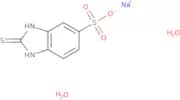
CAS:2-Mercapto-5-benzimidazole sulfonic acid sodium salt dihydrate is a molecule that can be used in devices. It has been shown to reversibly change the morphology of a monolayer and to generate asymmetric structures. 2-Mercapto-5-benzimidazole sulfonic acid sodium salt dihydrate can be used to generate fluorescent emulsions, which are systems where the magnetic particles are suspended in an oil droplet and illuminated by light of an appropriate wavelength. The molecules that make up 2-Mercapto-5-benzimidazole sulfonic acid sodium salt dihydrate have been shown to function as acceptors for molecular orbitals, which are wave functions that describe electron distribution around the atomic nucleus. These properties make it a promising candidate for use in microscopy techniques, such as scanning tunneling microscopy (STM) or atomic force microscopy (AFM).Formula:C7H5N2NaO3S2·2H2OPurezza:Min. 95%Colore e forma:PowderPeso molecolare:288.28 g/mol(3-Methoxypyridin-2-yl)methanamine
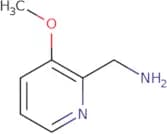
CAS:Versatile small molecule scaffold
Formula:C7H10N2OPurezza:Min. 95%Colore e forma:Clear LiquidPeso molecolare:138.17 g/mol4-(2-Amino-1,3-thiazol-4-yl)benzene-1,3-diol
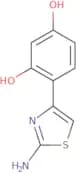
CAS:Versatile small molecule scaffoldFormula:C9H8N2O2SPurezza:Min. 95%Colore e forma:PowderPeso molecolare:208.24 g/mol2,5-Dimethylbenzaldehyde
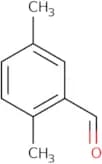
CAS:2,5-Dimethylbenzaldehyde is a chemical that is used in the synthesis of various compounds. It has been shown to have anticancer and energy metabolism properties. 2,5-Dimethylbenzaldehyde can be used as an energy source in the mitochondria. This compound also prevents the formation of fatty acids by inhibiting the conversion of acetyl-CoA into malonyl-CoA. The phase transition temperature for 2,5-dimethylbenzaldehyde is approximately −20 °C. The reaction mechanism for this compound is not well understood, but it has been shown to react with piperonal to form 3,4-dimethylbenzyl alcohol and methyl ethyl ether, which are both carcinogenic compounds. Chemical ionization mass spectrometry experiments have shown that protonated 2,5-dimethylbenzaldehyde reacts with methane gas to form methyl ethane and hydrogen gas. Thermodynamic data suggest that 2,5-dimethylFormula:C9H10OPurezza:Min. 98.0 Area-%Colore e forma:Slightly Yellow Clear LiquidPeso molecolare:134.18 g/mol2,4-Dihydroxy-6-pentylbenzoic acid
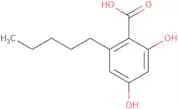
CAS:An intermediate in the phytocannabinoid biosynthetic pathway.Formula:C12H16O4Purezza:Min. 98 Area-%Colore e forma:PowderPeso molecolare:224.25 g/mol4-Diazobenzenesulfonic acid - moistened with water (H2O~50%)
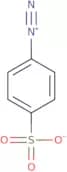
CAS:4-Diazobenzenesulfonic acid is a reagent used for the determination of phenols, amines and, bilirubin. It also has extensive usage as a protein-modifying reagent. This is because it reacts with a wide variety of functional groups in proteins including: tyrosine, histidine, amino, and thiol residues. It is known to react with proteins located on the exterior of erythrocytes; additionally, it has been used to study chloroplast and mitochondrial membranes.Formula:C6H4N2O3SPurezza:Min. 95%Colore e forma:PowderPeso molecolare:184.17 g/molDiethyltoluenediamine (2,4 and 2,6 diamine regioisomers)
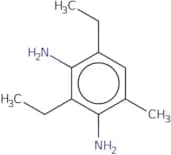
CAS:Chain extender for elastomeric polyurethane; curing agent for epoxy resinFormula:C11H18N2Purezza:Min. 95%Colore e forma:Clear LiquidPeso molecolare:178.27 g/mol(R)-5-Methoxy-2,3-dihydro-1H-inden-1-amine hydrochloride
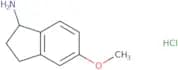
CAS:Prodotto controllatoVersatile small molecule scaffold
Formula:C10H14ClNOPurezza:Min. 95%Colore e forma:PowderPeso molecolare:199.68 g/mol2,6-Dichloro-3,5-dihydroxybenzoic acid
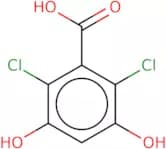
CAS:2,6-Dichloro-3,5-dihydroxybenzoic acid is a reagent with a wide range of applications in the research and development of chemical products. It is also a useful intermediate for the synthesis of other compounds. 2,6-Dichloro-3,5-dihydroxybenzoic acid has been shown to be used as a building block for the synthesis of various complex compounds. It is also an important reaction component that can be used in many different reactions to produce valuable products.Formula:C7H4Cl2O4Purezza:Min. 95%Colore e forma:PowderPeso molecolare:223.01 g/mol2-Acetyl cyclohexanone
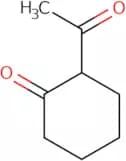
CAS:2-Acetylcyclohexanone is a chemical compound that belongs to the group of aryl halides. It is used as a raw material in the production of other chemicals, such as ethylene diamine and acetic anhydride. The reaction mechanism of 2-acetylcyclohexanone is mainly via nucleophilic substitution with hydrochloric acid or trifluoroacetic acid. The reaction with acetic anhydride or ethylene diamine has been shown to be through an acetylation reaction. 2-acetylcyclohexanone can be synthesized by reacting acetaldehyde with sodium cyclopentadienide in the presence of hydrochloric acid, followed by elimination of hydrogen chloride by heating. This compound has two tautomers: keto and enol.Formula:C8H12O2Purezza:Min. 95%Colore e forma:Colorless Clear LiquidPeso molecolare:140.18 g/mol2,4-Dinitrobenzoic acid
CAS:2,4-Dinitrobenzoic acid (2,4-DNBA) is a chemical reagent that has been used as a positive control for the detection of hydrogen bonding interactions. It is also used in analytical methods to detect protonation, carboxylate, and hydroxyl groups. This compound can be prepared from picric acid by nitration with nitric acid and then reacting with aniline. The 2,4-DNBA molecule contains two intramolecular hydrogen bonds and four intermolecular hydrogen bonds. 2,4-DNBA is classified as a trifluoroacetic acid derivative.Formula:C7H4N2O6Purezza:Min. 96 Area-%Colore e forma:Slightly Yellow PowderPeso molecolare:212.12 g/mol